How to Light Artwork: South African Collector and Decorator Guide

Lighting your art collection is more than just flipping a switch. South African experts have found that using the wrong type of light can destroy watercolours or photographs in a matter of months. That sounds stressful, right, but the surprise is that the best-looking displays often come from simple changes anyone can do. This is where the real magic happens for both protecting your investments and creating jaw-dropping spaces without needing a museum budget.
Table of Contents
- Choosing The Best Lights For Artwork
- Placing Fixtures To Enhance Art Displays
- Preventing Damage To Art Through Safe Lighting
- Lighting Art For Different Spaces And Styles
Quick Summary
| Takeaway | Explanation |
|---|---|
| Choose LED lights for preservation | LED lights minimize UV emissions, protecting artwork from fading and degradation. |
| Maintain a 30-degree light angle | Position lights at this angle to reduce glare and enhance visibility of details. |
| Use adjustable fixtures for versatility | Dimmable and track lighting systems allow control over light intensity and direction. |
| Limit light exposure for sensitive artworks | Keep light levels to a maximum of 50 lux to avoid damage to delicate materials. |
| Tailor lighting to different artwork types | Different mediums require specific lighting techniques to highlight their unique properties. |
Choosing the Best Lights for Artwork
Artwork lighting requires precision and understanding to protect and enhance visual treasures. South African collectors and decorators must approach artwork illumination as both an art and a science, carefully balancing aesthetic presentation with preservation techniques.
Understanding Light Quality and Art Preservation
The selection of appropriate lighting goes far beyond aesthetic considerations. According to the Smithsonian Institution’s Museum Conservation Institute, museum-grade artwork preservation demands strategic light management. LED lights emerge as the premier choice for art illumination, offering remarkable benefits that traditional lighting cannot match.
Key considerations for artwork lighting include:
- Color Temperature: Warm light around 3,000K creates an inviting atmosphere while minimizing potential artwork damage
- Color Rendering Index (CRI): Seek lights with a CRI above 90 to ensure accurate color representation
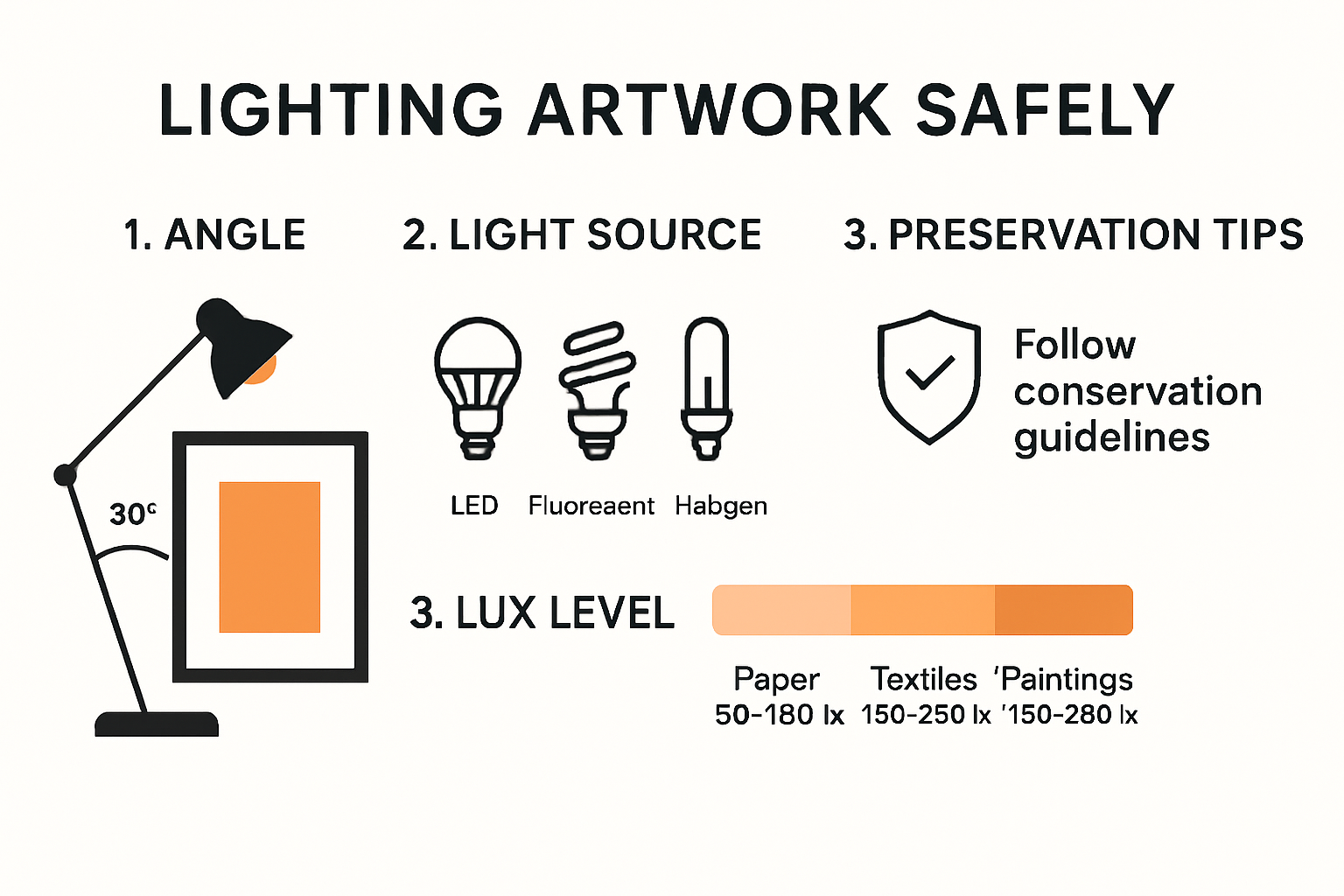
- Light Angle: Position lights at approximately 30 degrees to minimize glare and unwanted shadows
Professional art conservators emphasize that improper lighting can cause irreversible damage. Ultraviolet and infrared radiation can fade pigments, degrade canvas materials, and compromise the artwork’s long-term integrity. By selecting appropriate LED technology, collectors can simultaneously showcase and protect their valuable pieces.
Strategic Lighting Techniques for Different Artwork Types
Different artwork mediums require nuanced lighting approaches. Oil paintings, watercolors, and mixed media pieces each demand specific illumination strategies. Research from the Getty Conservation Institute recommends tailored lighting solutions that respect each artwork’s unique characteristics.
Below is a summary table outlining the recommended lighting strategies for different artwork types, as discussed in the article. This helps collectors quickly identify the best lighting approaches for various mediums.
| Artwork Type | Recommended Lighting Approach |
|---|---|
| Watercolours & Prints | Low-intensity, indirect lighting; avoid direct heat |
| Oil Paintings | Slightly more direct illumination; manage angle & intensity |
| Mixed Media | Experimental lighting to highlight textures & materials |
| Photographs | Minimise UV exposure; use LED lights with filters |
| Textiles | Soft, diffused lighting; strict exposure control |
For delicate watercolors and prints, consider using low-intensity, indirect lighting that prevents direct heat exposure. Oil paintings can tolerate slightly more direct illumination but still require careful angle and intensity management. Contemporary mixed media works might benefit from more experimental lighting techniques that highlight textural elements and material complexity.
Collectors should invest in adjustable lighting systems that allow precise control. Dimmable LED track lights, museum-grade picture lights, and strategically placed accent lights can transform how artwork is perceived. The goal is not just illumination but creating an immersive visual experience that honors the artist’s original intent.
Professional Recommendations for South African Art Collectors
Local art collectors can explore our guide on protecting artistic investments to understand comprehensive preservation techniques. While professional lighting design might seem complex, several practical strategies can significantly enhance artwork presentation.
Consider working with a professional lighting designer who understands both aesthetic and conservation principles. They can help select fixtures that complement your specific artwork collection and interior design. Remember that lighting is an investment in preserving and showcasing cultural heritage.
Ultimately, thoughtful artwork lighting transforms spaces, turning individual pieces into focal points that tell compelling visual stories. By applying scientific understanding and artistic sensitivity, South African collectors can create environments where art truly comes alive.
Placing Fixtures to Enhance Art Displays
Precise fixture placement represents a critical strategy for transforming artwork displays from ordinary presentations to extraordinary visual experiences. South African collectors and decorators must understand that lighting is not merely about illumination but about creating narrative and emotional connections with displayed artworks.
Strategic Lighting Positioning Techniques
According to the Nelson-Atkins Museum of Art, professional art lighting demands meticulous attention to angle and intensity. Their research recommends positioning light sources at a 30-degree angle to minimize glare while maximizing artwork visibility. This precise approach ensures that artwork details emerge without harsh shadows or distracting reflections.
Key positioning principles include:
- Vertical Projection: Mount fixtures directly above artwork to create uniform illumination
- Angle Precision: Maintain a consistent 30-degree projection angle
- Distance Management: Position lights approximately 18-24 inches from artwork surfaces
The goal transcends simple illumination. Each lighting placement should interpret the artwork’s texture, color, and emotional depth, transforming static pieces into dynamic visual narratives.
Fixture Selection for Different Artwork Types
Research from the Getty Conservation Institute highlights the importance of matching specific fixture types to artwork characteristics. Different mediums require nuanced lighting approaches that respect their unique material properties.
For instance, delicate watercolors demand softer, more diffused lighting to prevent pigment degradation. Oil paintings can tolerate more direct illumination, allowing for dramatic highlight and shadow interplay. Contemporary mixed media pieces might benefit from adjustable track lighting that can be repositioned to emphasize varying textural elements.
Professional decorators recommend investing in versatile lighting systems with dimming capabilities. Adjustable fixtures allow dynamic presentation, enabling collectors to modify lighting based on time of day, exhibition context, or personal aesthetic preferences.
Advanced Lighting Design Considerations
The Illuminating Engineering Society’s museum lighting guidelines provide sophisticated insights into creating museum-quality displays within private collections. They emphasize that effective lighting design balances three critical elements: artwork preservation, visual aesthetics, and emotional engagement.
Collectors should consider implementing layered lighting strategies. Combine ambient, accent, and task lighting to create depth and dimensionality. Use low-voltage LED fixtures with high Color Rendering Index (CRI) ratings to ensure color accuracy and minimal heat emission.
Explore our guide on protecting artistic investments for additional insights into maintaining artwork integrity through intelligent lighting design. Professional lighting consultations can provide personalized recommendations tailored to specific collections and spatial constraints.
Ultimately, fixture placement is an art form unto itself. By understanding technical principles and embracing creative experimentation, South African collectors can transform their spaces into captivating visual narratives that celebrate artistic expression.
Preventing Damage to Art Through Safe Lighting
Artwork preservation requires sophisticated understanding of light’s potential destructive capabilities. South African collectors must recognize that improper illumination can cause irreversible damage to valuable artistic pieces, transforming cherished investments into faded memories.
Understanding Light’s Destructive Potential
According to the Smithsonian Institution, artwork illumination demands precise scientific management. Different art mediums possess varying sensitivities to light exposure, with some materials deteriorating rapidly under inappropriate lighting conditions.
Key light damage mechanisms include:
The following table summarises the key light damage mechanisms that can affect different types of artwork, helping collectors understand specific risks and protective strategies.
| Damage Mechanism | Description | Most Affected Artworks |
|---|---|---|
| Photochemical Degradation | Light triggers molecular changes in pigments/quicker fading | Watercolours, Photographs, Textiles |
| Thermal Stress | Excessive heat causes warping or material breakdown | Canvas, Mix Media, Textiles |
| Cumulative Radiation Exposure | Repeated light exposure accelerates deterioration | All artworks, especially organic materials |
- Photochemical Degradation: Light triggers molecular changes in pigments and materials
- Thermal Stress: Excessive heat causes physical warping and material breakdown
- Cumulative Radiation Exposure: Repeated light exposure accelerates artwork deterioration
Professional conservators emphasize that prevention requires understanding each artwork’s unique vulnerability. Organic materials like textiles, watercolors, and photographs remain particularly susceptible to light-induced damage.
Strategic Light Exposure Management
Light exposure management involves calculating and controlling multiple environmental factors. The Smithsonian recommends maintaining light levels no higher than 50 lux for sensitive artworks, which translates to approximately 5 foot-candles of illumination.
Effective strategies include:
- Implementing UV filters on all light sources
- Using museum-grade LED lighting with minimal infrared radiation
- Rotating displayed artworks to limit cumulative light exposure
- Installing adjustable lighting systems with precise intensity controls
Explore our comprehensive guide on art preservation techniques to gain deeper insights into protecting your artistic investments. Professional conservators recommend periodic assessments to monitor potential light-induced deterioration.
Advanced Conservation Techniques
Advanced collectors should consider investing in specialized conservation technologies. Spectral filtering, time-controlled lighting systems, and professional-grade monitoring equipment can significantly extend artwork longevity.
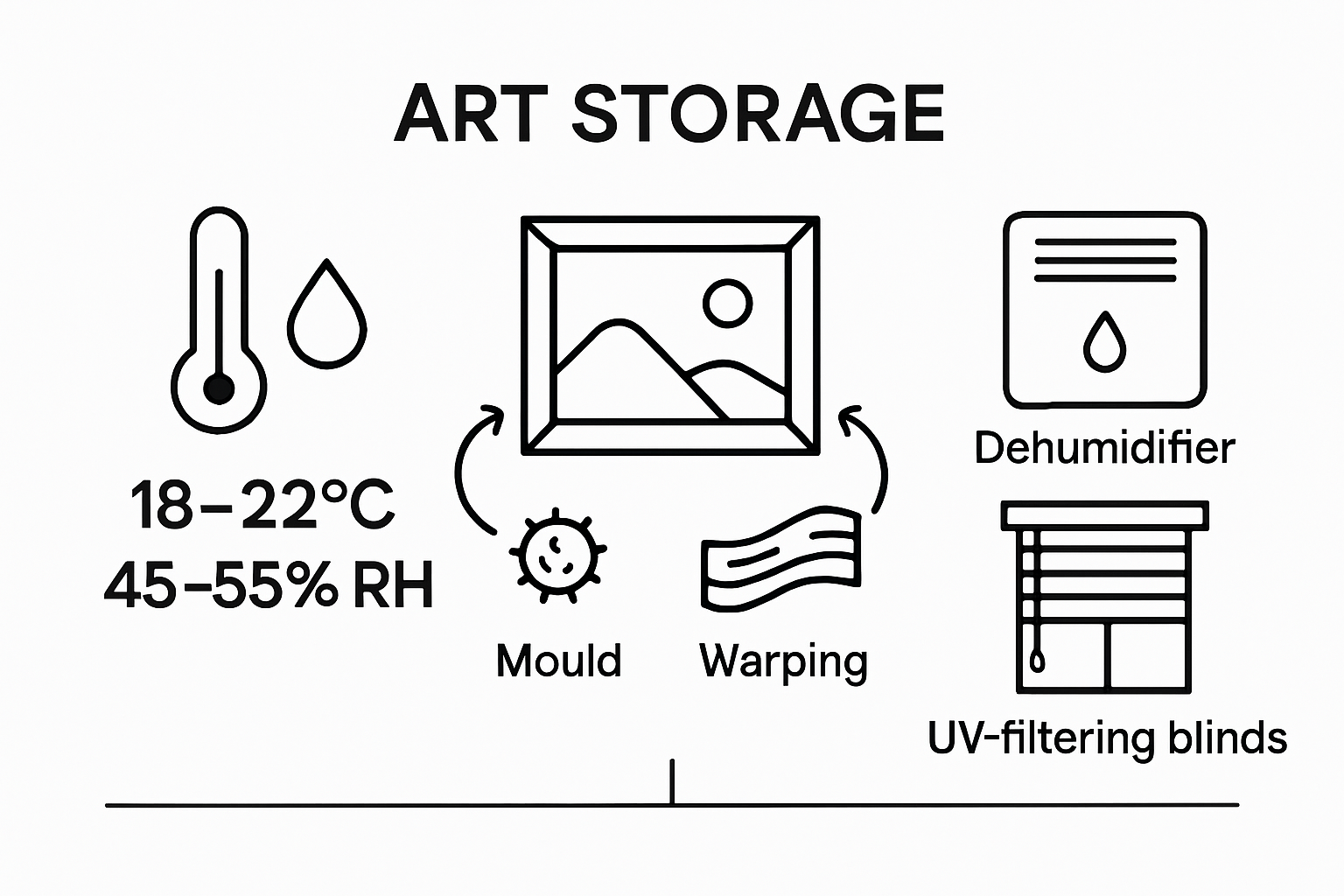
Sophisticated collectors approach artwork lighting as a holistic preservation strategy. This involves understanding not just illumination techniques, but also environmental humidity, temperature fluctuations, and material-specific conservation requirements.
Consider consulting professional art conservators who can provide personalized recommendations tailored to your specific collection. Each artwork represents a unique preservation challenge, demanding individualized scientific and aesthetic approaches.
Ultimately, preventing light-induced damage requires a delicate balance between aesthetic presentation and scientific preservation. By applying rigorous, research-based lighting strategies, South African collectors can ensure their artistic treasures remain vibrant and intact for future generations to appreciate and enjoy.
Lighting Art for Different Spaces and Styles
Artwork illumination transcends technical precision it is an intricate dance between spatial design, artistic expression, and environmental context. South African collectors and decorators must understand that each space demands a unique lighting approach tailored to its architectural characteristics and artistic collection.
Strategic Beam Angles and Illumination Techniques
According to Curatorial’s museum lighting expertise, beam angles play a critical role in artwork presentation. Different artwork sizes and formats require specific lighting strategies:
- Small Artworks: Use spotlights with beam angles under 20 degrees
- Medium Framed Works: Employ floodlights between 20 and 35 degrees
- Large Wall Installations: Utilize wide floodlights over 35 degrees
These precision techniques ensure even illumination, minimizing shadows and enhancing visual impact. Professional decorators recognize that beam angle selection is not merely technical but an artistic decision that influences how viewers perceive and interact with artwork.
Adapting Lighting to Space Characteristics
The American Institute for Conservation’s guidelines recommend sophisticated dimming technologies for managing light exposure. Programmable dimmer systems allow collectors to:
- Automatically adjust light intensity
- Reduce exposure during low-traffic periods
- Create dynamic visual environments
- Protect sensitive artworks from prolonged illumination
Space configuration significantly influences lighting design. Modern minimalist interiors might require different strategies compared to traditional Cape Dutch-style homes. Factors like ceiling height, wall color, and natural light availability all contribute to designing optimal artwork illumination.
Color Temperature and Viewer Perception
The Kruithof curve provides fascinating insights into human perception of light. At typical indoor illumination levels around 400 lux, color temperatures between 3000K and 6000K are generally perceived as most comfortable and visually appealing.
Explore our comprehensive guide on South African artistic styles to understand how different art movements might require nuanced lighting approaches. Contemporary abstract pieces might benefit from cooler color temperatures, while traditional landscape paintings could shine under warmer tones.
Collectors should consider professional lighting consultations to develop personalized strategies. Each artwork represents a unique canvas not just for the artist, but for the lighting designer who helps reveal its hidden depths and emotional resonance.
Ultimately, lighting artwork is an art form itself. By understanding technical principles, spatial dynamics, and human perception, South African collectors can transform their spaces into immersive visual narratives that celebrate artistic expression in all its complexity.
Frequently Asked Questions
What type of lighting is best for preserving artwork?
LED lights are best for preserving artwork as they minimize UV emissions and heat, reducing the risk of fading and degradation.
How can I prevent damage to sensitive artworks through lighting?
Limit light exposure to a maximum of 50 lux for delicate artworks, and use fixtures with UV filters to protect against harmful radiation.
What angle should I position lights for optimal artwork visibility?
Lights should be positioned at approximately a 30-degree angle to minimize glare and enhance the visibility of details in the artwork.
How does color temperature affect the way artwork is perceived?
Color temperature influences viewer perception; warmer light (around 3000K) creates a cozy atmosphere, while cooler light can enhance modern, abstract pieces. Understanding the Kruithof curve can help find the most visually appealing temperatures.
Display Your Collection With Confidence – Unlock Professional Art Lighting Solutions
Do you worry about damaging your favourite pieces or failing to show off your collection’s true beauty? Many South African art lovers struggle to balance stunning displays with protecting their artworks from harmful light and fading. Our article has shown that details like the right LED, precise angling, and sensitive fixture choices are all essential to preserve and highlight your artworks. But what if bringing out the best in your collection could be simple and stress-free?

Let Art Online help you get it right from day one. Explore an exclusive range of South Africa’s most celebrated artists on Art Online – each piece comes with expert advice and resources to help you display your new treasure in the perfect light. If you want practical steps for safeguarding your investment and presenting your collection beautifully, start with our insider guide on art material must-haves or get inspired by the diversity of South African styles in our landscape art guide. Your dream display is only a click away.
Recommended
- Famous South African Artists: 2025 Guide for Collectors & Decorators – Art-Online
- Top Art Festivals in South Africa 2025 for Collectors & Decorators – Art-Online
- What Is Still Life? Guide for South African Collectors 2025 – Art-Online
- Black Artists in South Africa: Top Trends and Collectors’ Guide 2025 – Art-Online