
Expert Tips for Buying Art as a Gift: A Complete Guide

Choosing art as a gift sounds daunting. Most people worry they’ll never match the recipient’s taste or pick the right piece. Yet, there is surprising freedom in the process. Emerging artists’ works often start from just R500 and can be tailored perfectly to someone’s style. It turns out that the most personal gifts are not just about big budgets or famous names but about seeing and understanding the soul behind someone’s space.
Table of Contents
- Step 1: Identify The Recipient’s Taste And Preferences
- Step 2: Set A Realistic Budget For The Art Purchase
- Step 3: Research Local Artists And Galleries
- Step 4: Choose The Right Artwork Aligning With The Recipient’s Style
- Step 5: Verify The Artwork’s Authenticity And Provenance
- Step 6: Arrange For Proper Delivery And Presentation As A Gift
Quick Summary
| Key Point | Explanation |
|---|---|
| 1. Understand the recipient’s art preferences | Observe their environment and engage in conversations to grasp their tastes and emotional connections to art. |
| 2. Set a realistic art budget | Determine a budget based on financial comfort and the recipient’s aesthetic to guide your purchase choices. |
| 3. Research local artists and galleries | Explore nearby galleries and online platforms to discover art that aligns with the recipient’s personal style and story. |
| 4. Verify artwork’s authenticity | Ensure the artwork comes with proper documentation and provenance to protect your investment and honor the artist’s legacy. |
| 5. Present the artwork thoughtfully | Use professional packaging and a meaningful presentation to enhance the emotional impact of the gift, making it memorable. |
Step 1: Identify the recipient’s taste and preferences
Buying art as a gift requires thoughtful consideration of the recipient’s personal aesthetic and emotional connection to visual art. Understanding their taste is more than a casual observation – it demands careful exploration and sensitivity to their unique artistic sensibilities.
Understanding Personal Art Preferences
Start by observing the recipient’s existing environment. Look closely at their home or office decor, noting color schemes, design styles, and the artwork they currently display. These existing visual elements provide critical insights into their artistic preferences. Do they gravitate towards minimalist, contemporary pieces or traditional, detailed artworks? Are their spaces filled with bold, vibrant colors or subdued, neutral tones?
Engaging the recipient in subtle conversations about art can reveal deeper insights. Ask about memorable art exhibitions they’ve visited, artists they admire, or art styles that resonate with them. Listen carefully to their descriptions, paying attention to emotional language and specific details they emphasize. Some individuals might be drawn to landscape paintings that remind them of childhood memories, while others might prefer abstract art that challenges traditional representation.
Practical Exploration Strategies
Consider creating a discreet mood board or digital collection of potential artwork styles. Share these images casually and observe their reactions. Their spontaneous responses can be more telling than carefully considered answers. Pay attention to which pieces make their eyes light up or prompt detailed comments.
Remember that art is deeply personal. A successful art gift transcends mere visual appeal – it should connect emotionally with the recipient, reflecting something profound about their inner world. Your goal is not just to select a beautiful piece, but to choose an artwork that speaks directly to their heart and aesthetic sensibilities.

By investing time in understanding their artistic preferences, you transform the gift of art from a simple transaction into a meaningful, personal gesture of connection and appreciation.
Step 2: Set a realistic budget for the art purchase
Establishing a realistic budget is a critical step in buying art as a gift, requiring careful financial planning and strategic thinking. Your budget determines not just the potential artwork you can acquire, but also sets realistic expectations for the entire gift selection process.
Understanding Art Price Ranges
Art prices vary dramatically, from affordable prints to investment-grade original pieces. Emerging artists’ works typically range from R500 to R5,000, while established artists can command prices between R10,000 and R100,000. Luxury or historically significant pieces might exceed R250,000. Your budget should reflect both your financial comfort and the recipient’s artistic preferences.
Consider the artwork’s context beyond its immediate cost. A slightly more expensive piece that perfectly matches the recipient’s taste is often more valuable than a cheaper artwork that lacks emotional resonance. Think about the artwork’s potential longevity, emotional impact, and personal significance.
Financial experts recommend allocating your art budget across different potential scenarios. For instance, if you’re comfortable spending R5,000, consider exploring options like:
- Limited edition prints from respected artists
- Original works by emerging talents
- High-quality reproductions of significant artworks
Remember that exploring painting prices can help you make an informed decision. Research different art market segments to understand pricing dynamics and find the most suitable artwork within your budget.
Additional budget considerations include potential framing costs, which can add 10-30% to the artwork’s price. Some galleries offer framing services, while independent framers might provide more competitive rates. Factor these additional expenses into your initial budget planning.
Below is a summary table comparing typical art price ranges, artist status, and what you can expect in each segment when budgeting for gifting art in South Africa.
| Artist/Artwork Status | Typical Price Range | What You Get | Additional Considerations |
|---|---|---|---|
| Emerging Artists | R500 – R5,000 | Original works, limited edition prints, unique personal touches | Good for tailored gifts |
| Established Artists | R10,000 – R100,000 | Signature pieces, higher recognition, investment potential | Consider emotional resonance |
| Luxury/Significant Pieces | R250,000+ | Historical value, prestige, major investment | Requires authentication |
| Prints/Reproductions | R500 – R5,000 | Affordable versions of famous works, accessible entry level | May add meaning if well chosen |
| Framing Costs | Add 10-30% | Enhances presentation and protection | Some galleries offer services |
Ultimately, buying art as a gift is about creating an emotional connection. Your budget is a tool to facilitate this connection, not a limitation. By approaching the purchase with thoughtfulness and strategic financial planning, you can find a meaningful artwork that delights the recipient without causing financial strain.
Step 3: Research local artists and galleries
Researching local artists and galleries transforms art purchasing from a transaction into a meaningful exploration of creative talent. This step involves strategic investigation that goes beyond simply finding an artwork, but discovering the stories and passions behind each piece.
Navigating the Local Art Scene
Start by exploring local galleries, art exhibitions, and cultural centers in your area. These spaces offer direct exposure to emerging and established artists. Many galleries host monthly exhibitions where you can meet artists, understand their creative processes, and view artworks in person. Online platforms and social media have also revolutionized art discovery, allowing you to explore artists’ portfolios from the comfort of your home.
Pay attention to artists whose styles align with the recipient’s taste. Look for artwork that demonstrates technical skill, emotional depth, and originality. Don’t just focus on the visual appeal – consider the narrative behind each piece. An artwork that tells a compelling story or evokes a specific emotion can be far more meaningful than a technically perfect but emotionally distant piece.
Local art communities often have networking events, workshops, and exhibitions that provide excellent opportunities for art discovery. Check out our guide on famous South African artists to understand the rich artistic landscape and potential options for your gift.
When researching, keep these strategic exploration tips in mind:
- Visit multiple galleries and art spaces
- Attend local art exhibitions and openings
- Follow artists and galleries on social media platforms
- Read artist statements and exhibition catalogs
Authenticity and provenance are crucial when purchasing art. Request certificates of authenticity, understand the artwork’s background, and verify the artist’s reputation. Reputable galleries will provide comprehensive documentation and be transparent about an artwork’s history.
Remember that buying art as a gift is about creating an emotional connection. Your research should aim to find an artwork that not only looks beautiful but resonates deeply with the recipient’s personal aesthetic and emotional landscape. Take your time, enjoy the exploration, and trust your intuition in selecting a truly meaningful piece.
Step 4: Choose the right artwork aligning with the recipient’s style
Selecting the perfect artwork requires a delicate balance between aesthetic appreciation and deep personal understanding. This step transforms your art purchase from a generic gift to a meaningful, personalized expression of connection and thoughtfulness.
Understanding Visual Compatibility
Carefully analyze the recipient’s existing environment and personal style. Look beyond surface level preferences and consider the subtle nuances of their aesthetic sensibilities. An artwork should not just complement their space but also reflect their inner emotional landscape. Consider factors like color palette, mood, artistic style, and the potential emotional resonance of the piece.
Imagine the artwork in the recipient’s living or working space. Will it create a sense of harmony or introduce an intriguing visual contrast? Some individuals appreciate art that seamlessly blends with their existing decor, while others seek pieces that challenge and disrupt their visual environment. Your goal is to find an artwork that feels both surprising and familiar.
Matching Art with Personal Narrative
Art is a powerful storytelling medium. Explore our guide on why buying original art matters to understand the deeper significance of your selection. Consider artworks that might connect with the recipient’s personal history, professional journey, or emotional landscape. A landscape that reminds them of a cherished memory, an abstract piece that reflects their professional complexity, or a portrait that captures a certain emotional depth can transform the artwork from a mere visual object to a profound personal statement.
Key considerations when selecting the artwork include:
- Alignment with recipient’s color preferences
- Emotional resonance of the artwork
- Technical quality and artistic execution
- Potential for long-term appreciation
Don’t be afraid to seek expert advice. Gallery curators, art consultants, and knowledgeable sales representatives can provide invaluable insights. They can help you navigate the nuanced world of art selection, offering perspective on how different pieces might resonate with your recipient.
Ultimately, choosing the right artwork is an act of empathy. It requires you to step into the recipient’s perspective, understanding their visual language and emotional landscape. The perfect artwork is not just a gift – it’s a bridge of understanding, a visual dialogue that speaks volumes about your relationship and your perception of their unique identity.
Step 5: Verify the artwork’s authenticity and provenance
Authenticity and provenance are the cornerstones of a meaningful art purchase, transforming a beautiful object into a valuable and trustworthy investment. This critical step protects your financial commitment and ensures the artwork’s genuine artistic and historical significance.
Understanding Art Authentication
Provenance represents the artwork’s documented history, tracing its journey from the artist’s studio through previous owners and exhibitions. A comprehensive provenance provides transparency, legitimacy, and often increases the artwork’s value. Request detailed documentation that includes original certificates of authenticity, signed statements from the artist or gallery, exhibition catalogs, and historical records of ownership.
Careful verification requires a multi-layered approach. Professional art dealers and reputable galleries will readily provide comprehensive documentation. Look for clear, traceable evidence of the artwork’s origin, including artist signatures, gallery stamps, unique identification numbers, and professional appraisal reports. Beware of vague or incomplete documentation, as this might indicate potential issues with the artwork’s legitimacy.
Learn more about purchasing original art with confidence to understand the nuanced world of art authentication. Expertise and careful investigation are your best tools in this process.
Key authentication verification steps include:
- Requesting original certificates of authenticity
- Checking artist signatures and unique identifying marks
- Verifying gallery or artist documentation
- Consulting independent art authentication experts
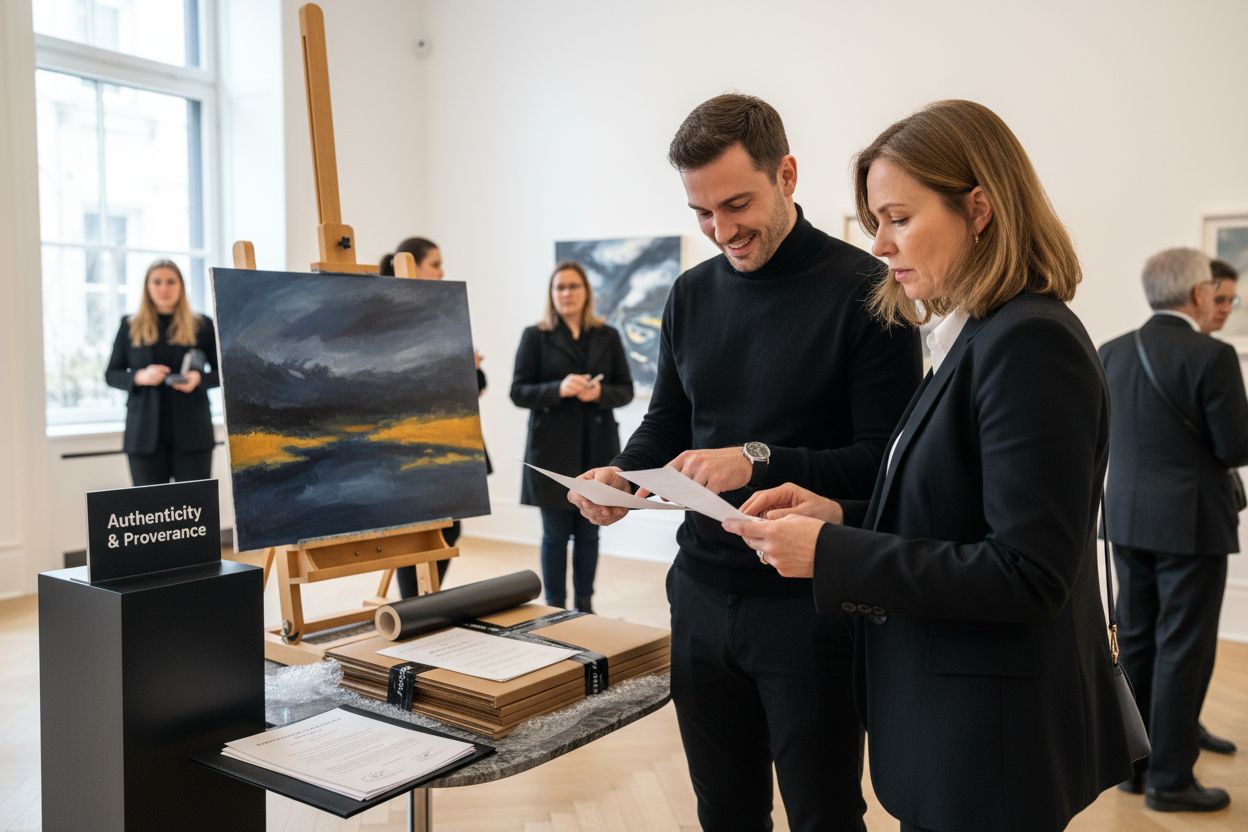
Consider engaging an independent art appraiser or authentication expert for high-value artworks. These professionals can provide an unbiased evaluation of the piece’s origin, condition, and potential historical significance. Their expert assessment offers an additional layer of confidence in your purchase.
Use this checklist to ensure you thoroughly verify the artwork’s authenticity and provenance before making your art gift purchase.
| Verification Step | What to Look For | Who to Consult |
|---|---|---|
| Request certificate of authenticity | Official documentation from artist or gallery | Gallery, artist, art dealer |
| Check artist signatures and unique marks | Clear, match to artist’s style, not smudged/faded | Art consultant, gallery staff |
| Verify artwork’s provenance documentation | Record of previous owners and exhibitions | Gallery, auction house, independent expert |
| Review gallery or artist documentation | Gallery stamps, identification numbers, sales records | Gallery, artist |
| Seek independent art authentication advice | For high-value works, get impartial assessment | Certified appraiser, authentication expert |
Remember that authentication is not just about protecting your investment – it’s about honoring the artist’s work and preserving artistic legacy. A well-documented artwork tells a rich story, connecting you and the recipient to a broader artistic narrative. By meticulously verifying the artwork’s authenticity, you’re not just buying a piece of art, but participating in a meaningful cultural exchange.
Step 6: Arrange for proper delivery and presentation as a gift
The final stage of buying art as a gift involves transforming your carefully selected artwork into a memorable and emotionally impactful presentation. This step is about creating a holistic gifting experience that honors both the artwork and the recipient’s emotional journey.
Strategic Art Packaging and Transportation
Professional packaging is crucial for protecting your artwork’s integrity. Depending on the artwork’s size, medium, and fragility, consider specialized art transportation services. Delicate pieces like canvas paintings, watercolors, or framed works require careful handling to prevent damage during transit. Professional art handlers understand the nuanced requirements of different artistic mediums and can ensure your gift arrives in pristine condition.
Explore expert guidance on shipping art internationally to understand the intricate logistics of art transportation. Each artwork presents unique challenges, and professional insight can make a significant difference in preserving its quality.
Consider these essential packaging and transportation considerations:
- Use acid-free tissue paper for initial wrapping
- Select sturdy, custom-sized boxes with cushioning
- Include clear handling instructions
- Consider insurance for valuable pieces
- Choose temperature-controlled transportation for sensitive artworks
Crafting a Meaningful Gift Presentation
Presentation transforms a beautiful artwork into an unforgettable gift. Select high-quality wrapping materials that complement the artwork’s aesthetic. A thoughtful accompanying card explaining the artwork’s significance or your selection process can elevate the gifting experience. Share the story behind the piece – why you chose it, what makes it special, and how it connects to the recipient’s personal narrative.
If possible, plan the artwork’s reveal as a memorable moment. Consider the setting, lighting, and emotional context of the gift presentation. Some recipients might appreciate a private, intimate reveal, while others might enjoy a more celebratory unveiling among friends or family.
Remember that buying art as a gift is more than a transaction – it’s an expression of understanding, appreciation, and connection. By approaching the delivery and presentation with the same care and intention you applied to selecting the artwork, you create a truly meaningful gift experience that will be cherished for years to come.
Discover the Perfect Art Gift With Art Online’s Trusted Expertise
Choosing the right art as a gift can often feel daunting. From identifying your recipient’s unique taste to verifying authenticity and arranging a memorable presentation, each step poses its own set of challenges. If you have ever wondered how to confidently navigate painting prices, select authentic South African masterpieces, or ensure an artwork’s safe delivery, know that you are not alone—many South Africans face these concerns when wanting their art gift to have true impact.
Let your journey become simpler with Art Online, South Africa’s largest online art gallery. Here, you gain:
- A curated selection from South Africa’s most renowned artists
- Detailed artwork backgrounds and authenticity information
- Easy browsing to match any personal style or budget

Ready to turn your thoughtful search into the perfect gift? Visit https://art-online.co.za now to explore our expertly sourced collection, use our guides on painting prices and collecting original art, and ensure your next art purchase is both meaningful and worry-free for every occasion. Make your selection today and transform your next gift into a cherished memory.
Frequently Asked Questions
How can I understand the recipient’s taste in art before buying a gift?
Start by observing the recipient’s home or office decor for clues about their personal aesthetic. Engage in casual conversations about their favorite art styles or exhibitions they’ve enjoyed to gather deeper insights into their preferences.
What is a realistic budget for buying art as a gift?
A realistic budget for art gifts can range from R500 to R100,000, depending on the artist’s reputation and the artwork type. Determine your financial comfort and allocate your budget accordingly, considering potential framing costs that can add 10-30% to the total.
How do I research local artists and galleries effectively?
Research local artists and galleries by visiting exhibitions, cultural centers, and online platforms showcasing artists’ portfolios. Attend networking events and workshops to discover emerging talents that align with the recipient’s taste for a more personalized gift.
What factors should I consider when selecting the right artwork for a gift?
Consider factors such as the recipient’s color preferences, the emotional resonance of the artwork, and how well it complements their existing decor. Aim for a piece that not only fits their aesthetic but also tells a story relevant to their life or experiences.
How can I verify the authenticity of the artwork before purchasing it?
Verify the artwork’s authenticity by requesting original certificates, artist signatures, and documentation tracing its provenance. Ensure clarity in the documentation and consider consulting an independent art appraiser for high-value pieces to secure your investment.
What steps should I take to present the artwork as a special gift?
Ensure proper packaging and transportation by using acid-free materials and sturdy boxes to protect the artwork. Pair the gift with a thoughtful card explaining its significance, and plan a memorable reveal moment to enhance the emotional impact of your gift.
Recommended
- Art Material Must-Haves: Transforming Cape Town’s Artists – Art-Online
- Why Buy Original Art in South Africa: Key 2025 Insights – Art-Online
- Famous South African Artists: 2025 Guide for Collectors & Decorators – Art-Online
- Painting Prices Unveiled: Explore 5 Types of Captivating Paintings and Their Exceptional Values – Art-Online
- Mastering Building an Artbook Collection: A Practical Guide – The Mansion Press