
What Is Land Art? Guide for South African Collectors
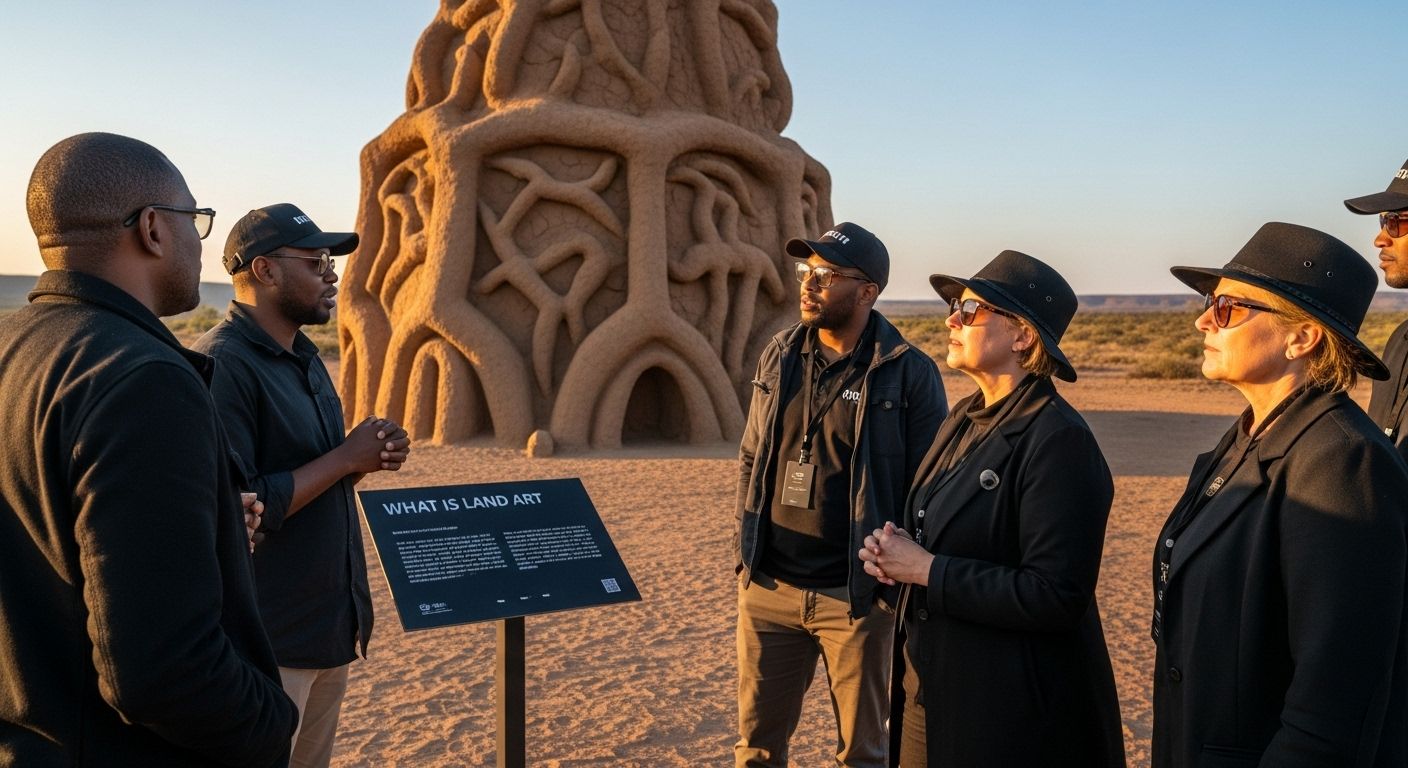
Land art might sound like art in a garden but it is so much more than that. Think about this. Some artists have literally moved over 240,000 tons of earth to create sculptures that stretch across deserts and shape the landscape itself. What surprises most people is that these monumental works are actually meant to disappear over time, making the story of land art as much about nature’s changes as human creativity.
Table of Contents
- Understanding What Is Land Art
- Key Land Artworks And Their Meaning
- How Land Art Inspires Interior Design In South Africa
- Collecting And Showcasing Land Art Locally
Quick Summary
| Takeaway | Explanation |
|---|---|
| Land art redefines art boundaries. | It uses natural landscapes as both medium and canvas, creating immersive experiences. |
| Ephemeral nature engages viewers. | Many land artworks change over time, prompting reflections on nature’s cycles and human creativity. |
| Support local land artists. | Collectors can actively promote and document regional land artists, fostering cultural and ecological dialogue. |
| Integrate nature in design. | Interior designs in South Africa now reflect land art principles, connecting spaces with natural elements. |
| Preserve land art through documentation. | Collectors should use photos and sketches to capture the essence of ephemeral land artworks for future understanding. |
Understanding What Is Land Art
Land art represents a transformative artistic movement that challenges traditional artistic boundaries by using the natural environment as both canvas and medium. Earth art emerged in the late 1960s as artists sought to break free from conventional gallery spaces and create immersive experiences that directly engage with the natural world.
Origins and Philosophical Foundations
The movement fundamentally reimagines the relationship between art, artists, and the environment. Unlike traditional art forms confined to galleries or museums, land art integrates directly with natural landscapes, transforming sites into dynamic artistic expressions. Artists working in this genre view the earth not merely as a backdrop but as an active participant in the creative process.
According to Oxford Reference, land art is intrinsically linked with other conceptual art movements of its time, including Minimalism and Conceptual Art. These artists challenged traditional art market dynamics by creating works that could not be easily commodified or transported.
Techniques and Artistic Approach
Land artists employ various techniques to interact with natural environments. These might include sculpting earth, arranging natural materials like rocks and branches, creating temporary installations, or using the landscape as a canvas for large-scale interventions. The artwork often changes with natural processes – erosion, weather, and time become integral components of the piece.
The ephemeral nature of land art distinguishes it from more permanent artistic forms. Many land art installations are designed to gradually transform or disappear, reflecting the artists’ philosophical commitment to natural cycles and impermanence. This approach invites viewers to contemplate the dynamic relationship between human creativity and natural processes.
For South African collectors interested in exploring unique artistic perspectives, land art offers a profound connection to environmental aesthetics and conceptual creativity. By collecting or experiencing land art, enthusiasts engage with an art form that transcends traditional boundaries and celebrates the intricate dialogue between human expression and natural landscapes.
Key Land Artworks and Their Meaning
Land art transforms landscapes into profound artistic statements that challenge traditional perceptions of art and environment. According to the Smithsonian Magazine, these artworks represent complex dialogues between human creativity and natural spaces, transcending mere visual representation.
Global Landmark Installations
Some of the most influential land art installations reveal deep philosophical and environmental narratives. Michael Heizer’s ‘Double Negative’ stands as a monumental example, where the artist removed 240,000 tons of rock from Nevada’s desert, creating two massive cuts in the earth that challenge conventional sculpture concepts. This artwork confronts viewers with negative space, transforming absence into a powerful artistic statement.
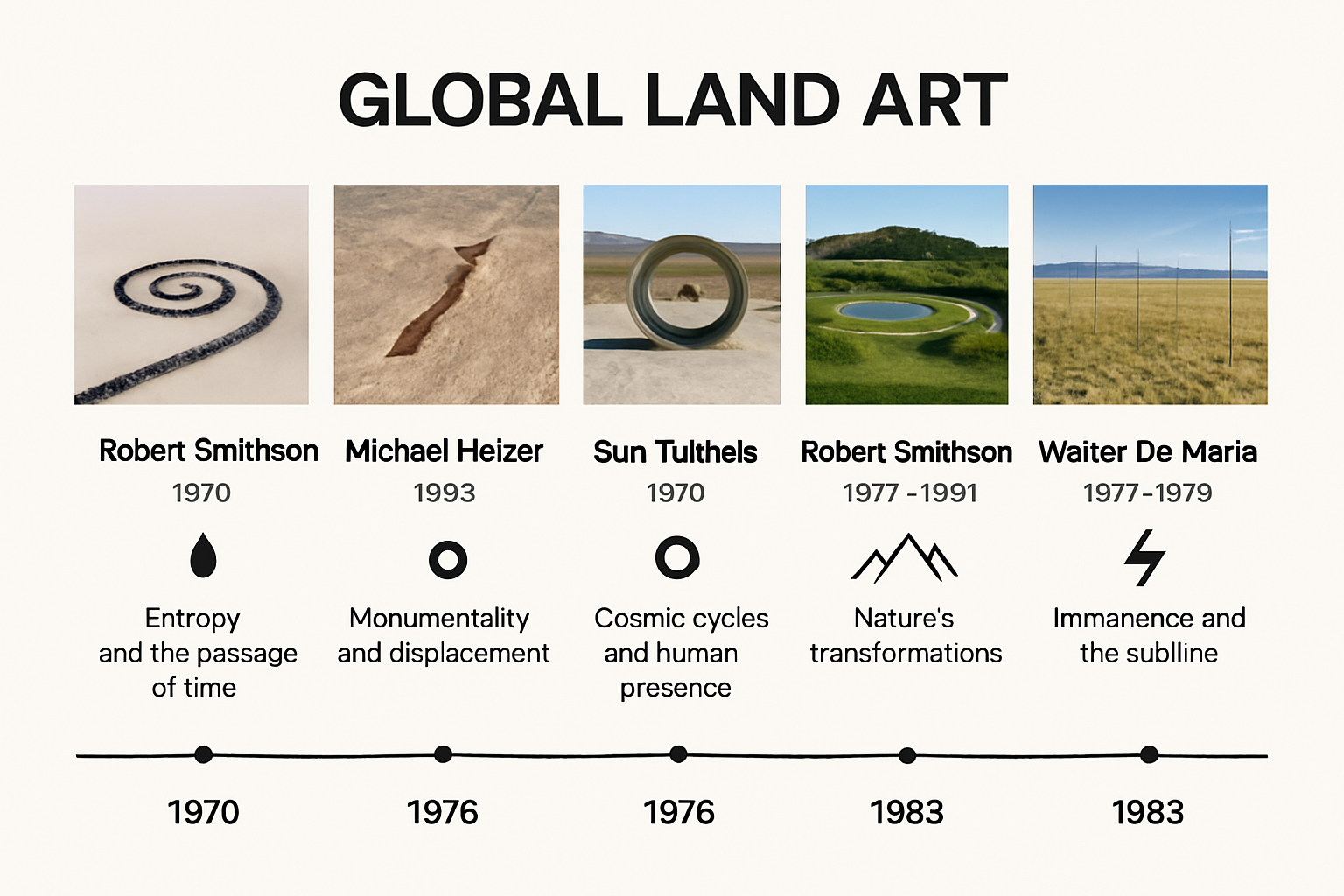
Nancy Holt’s ‘Sun Tunnels’ offers another remarkable exploration of landscape interaction. Located in Utah’s desert, these four massive concrete tunnels align with solar trajectories, creating intricate light patterns that change with seasonal movements. The installation becomes a living astronomical instrument, demonstrating how land art can transform environmental understanding.
To help readers quickly understand prominent examples and meanings behind globally significant land art installations, the following table summarises artists, their works, locations, and the main conceptual significance as mentioned in the text.
| Artist | Work | Location | Main Significance |
|---|---|---|---|
| Michael Heizer | Double Negative | Nevada, USA | Removed 240,000 tons of rock, challenges the concept of sculpture via negative space |
| Nancy Holt | Sun Tunnels | Utah, USA | Aligns with solar paths, creates changing light patterns and astronomical impacts |
| Robert Smithson | Spiral Jetty | Great Salt Lake, Utah, USA | Changes with water levels and salt, embodies nature’s transformation |
Conceptual Significance and Environmental Dialogue
Land artworks fundamentally reimagine artistic engagement with natural environments. They are not static objects but dynamic processes that evolve through environmental interactions. Artists like Robert Smithson, with his iconic ‘Spiral Jetty’ in Utah’s Great Salt Lake, created works that deliberately interact with natural transformation. Smithson’s spiral, constructed from basalt rocks, changes appearance with water levels and salt crystallization, embodying the artwork’s continuous metamorphosis.
These installations challenge traditional art market dynamics by creating pieces that cannot be easily commodified or transported. South African art enthusiasts interested in expanding their collection perspectives can appreciate how land art represents a radical reimagining of artistic creation.
Moreover, land art serves as a profound environmental commentary. By directly manipulating or integrating with natural landscapes, artists draw attention to ecological relationships, human intervention, and the delicate balance between creation and preservation. Each artwork becomes a statement about human interaction with the environment, inviting viewers to reconsider their perceptions of landscape, art, and spatial relationships.
For collectors and art enthusiasts, understanding land art means recognizing these works not just as visual experiences, but as complex philosophical and environmental dialogues that challenge traditional artistic boundaries.
How Land Art Inspires Interior Design in South Africa
Land art’s profound connection to natural environments has significantly influenced interior design approaches in South Africa, transforming how designers and homeowners conceptualize living spaces. By drawing inspiration from the intricate relationships between art, landscape, and cultural heritage, interior design has evolved to embrace more organic, contextually responsive aesthetic principles.
Cultural Artistic Traditions and Design Integration
Traditional South African artistic practices offer rich precedents for integrating environmental aesthetics into interior spaces. Research from botanical garden studies demonstrates how natural elements can be thoughtfully incorporated into design, creating spaces that reflect both scientific understanding and artistic expression.
Litema, a traditional Sotho mural art form, exemplifies this approach. Characterized by intricate geometric patterns created through engraving and painting on home walls, Litema represents a profound method of integrating artistic expression directly into living environments. Similarly, Ndebele house painting showcases vibrant, geometric patterns that transform architectural surfaces into canvases of cultural storytelling.
Natural Materials and Spatial Narratives
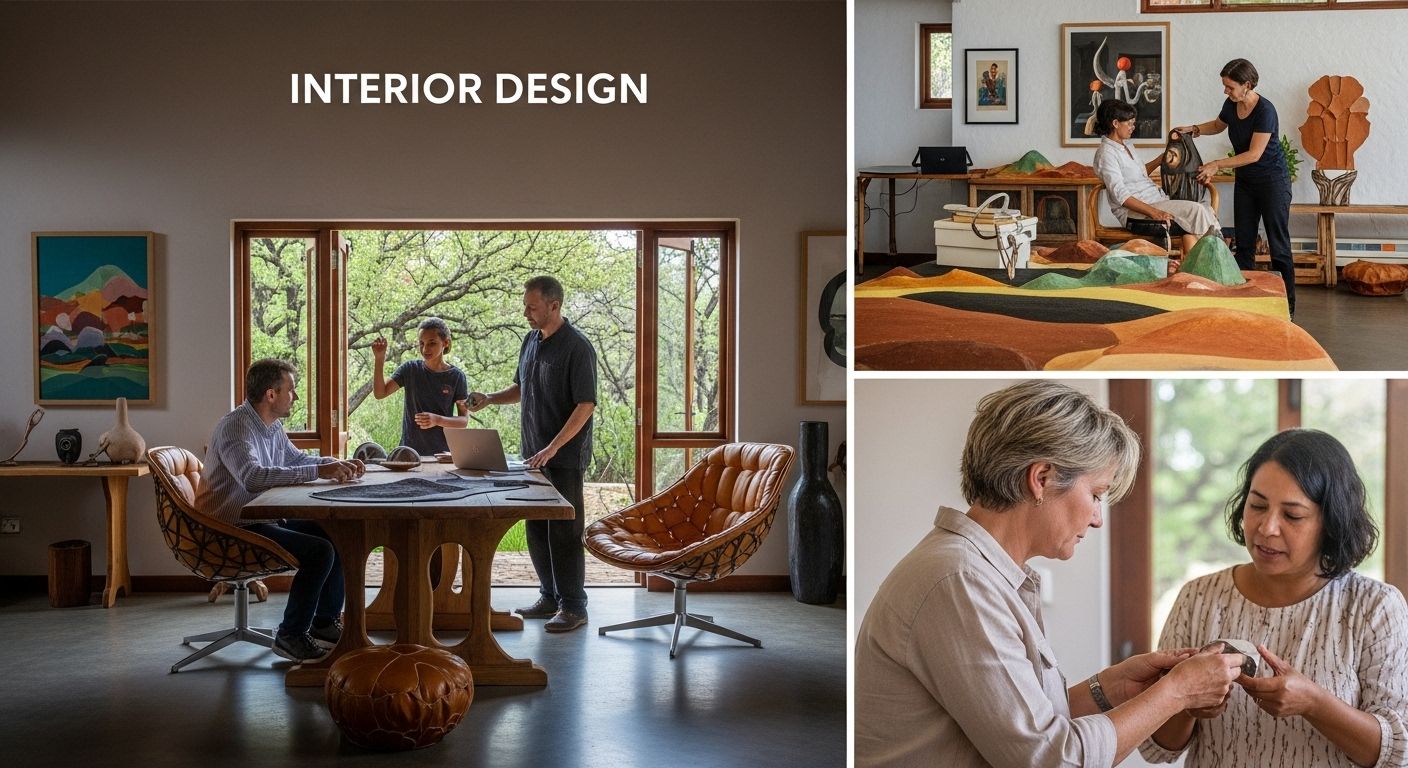
Contemporary South African interior designers increasingly draw from land art’s principles of using natural materials and creating immersive spatial experiences. This approach goes beyond mere decoration, transforming interiors into dynamic environments that dialogue with the surrounding landscape. Designers incorporate raw materials like locally sourced stone, indigenous wood, and organic textures that echo the principles of land art’s direct engagement with natural environments.
These design strategies create interiors that are not just visually compelling but also deeply connected to their geographical and cultural contexts. By exploring innovative design perspectives, interior designers are developing spaces that reflect the complexity and beauty of South Africa’s diverse landscapes.
Sustainable Design and Environmental Consciousness
Land art’s inherent environmental consciousness has profoundly influenced sustainable interior design practices. Designers now prioritize materials and techniques that minimize ecological impact, drawing inspiration from land artists who view the environment as an active collaborator in the creative process.
This approach manifests in choices like using recycled materials, implementing energy-efficient design principles, and creating spaces that seamlessly integrate indoor and outdoor environments. The result is a holistic design philosophy that respects and celebrates the natural world, transforming interior spaces into dynamic, responsive environments that reflect the principles of land art.
For South African art collectors and design enthusiasts, understanding land art offers a profound lens through which to reimagine interior spaces as living, breathing artistic expressions that connect deeply with our natural and cultural heritage.
Collecting and Showcasing Land Art Locally
Collecting land art presents unique challenges and opportunities for South African art enthusiasts, requiring a nuanced approach that goes beyond traditional art acquisition. According to art market experts, collecting land art demands innovative strategies that capture the essence of these site-specific and often ephemeral artistic expressions.
Documentation and Preservation Strategies
Given the inherent transient nature of land art, collectors must develop sophisticated methods of documentation and preservation. Photographs, sketches, artist’s notes, and detailed documentation become critical components of the collection. These materials not only serve as historical records but also as valuable artistic artifacts that capture the conceptual and visual essence of the original installation.
Local collectors can build comprehensive archives that demonstrate the evolution of land art practices. This approach transforms collection from mere ownership to curatorship, preserving important cultural and artistic narratives that might otherwise be lost to environmental transformations.
Local Exhibitions and Educational Initiatives
South African art enthusiasts interested in expanding their artistic perspectives can leverage local museums, galleries, and educational institutions to showcase and interpret land art. Educational programs demonstrate the potential for creating immersive experiences that help audiences understand the complex relationships between art, environment, and cultural expression.
Local exhibitions can recreate land art experiences through multimedia installations, combining original documentation, artist interviews, contextual information, and interactive elements. These displays not only preserve the artistic vision but also educate viewers about the philosophical and environmental principles underlying land art.
Supporting Local Land Artists
Collectors play a crucial role in supporting and promoting local land artists by commissioning projects, providing resources, and creating platforms for artistic exploration. This support extends beyond financial investment, encompassing advocacy for environmental awareness and artistic innovation.
By developing relationships with local artists and institutions, collectors can help document and preserve land art interventions specific to South African landscapes. This approach recognizes land art as a dynamic, evolving form of artistic expression that reflects complex interactions between human creativity and natural environments.
For South African collectors, land art represents more than an aesthetic choice. It is a profound engagement with artistic practices that challenge conventional boundaries, celebrate environmental diversity, and offer deep insights into cultural and ecological narratives. The collection and showcasing of land art become acts of cultural preservation and artistic dialogue.
The table below outlines practical strategies South African collectors can adopt for collecting and showcasing land art, as described in the article. It highlights the approach, key activities, and their importance.
| Strategy/Approach | Key Activities | Importance/Outcome |
|---|---|---|
| Documentation & Preservation | Photos, sketches, artist notes, archives | Captures ephemeral works for cultural/artistic record |
| Local Exhibitions & Education | Museum/gallery shows, multimedia, educational programmes | Preserves and explains land art, builds public understanding |
| Supporting Local Artists | Commissions, resource provision, advocacy | Encourages new works and environmental awareness; preserves local narratives |
Frequently Asked Questions
What is land art?
Land art is an artistic movement that uses the natural landscape as both canvas and medium. It emerged in the late 1960s and often features monumental works that are designed to change over time, engaging with nature’s processes.
How do land artists create their works?
Land artists utilize various techniques such as sculpting earth, arranging natural materials, creating temporary installations, and even altering the landscape itself. Their works often reflect environmental changes, making time and nature integral to the art piece.
Why is land art significant in terms of environmental dialogue?
Land art serves as a commentary on ecological relationships and human intervention in nature. By directly engaging with landscapes, it invites viewers to reflect on their connections to the environment and raises awareness about preservation and the balance of natural ecosystems.
How can collectors support local land artists in South Africa?
Collectors can support local land artists by commissioning projects, providing resources, and advocating for environmental awareness. Additionally, engaging with local exhibitions and educational initiatives can promote the appreciation and preservation of land art within the community.
Experience the Impact of Land Art in Your Collection
As a South African art lover, you know the challenges of preserving the fleeting beauty of land art and fostering a meaningful connection between art and nature. Many collectors wish to document or own works that reflect these concepts of impermanence, natural transformation, and cultural heritage, but struggle to find authentic contemporary pieces that capture these values.

Start shaping your personal collection with work from South Africa’s most renowned artists. Visit Art Online to discover curated contemporary art that draws inspiration from land art principles. Our platform gives you access to powerful works that echo the connection between nature, environment and creativity.
Ready to turn inspiration into action? Explore Art Online’s featured artists and bring the spirit of land art into your own space today. Complete your journey by browsing and purchasing works rooted in the beauty of our landscape. There has never been a better moment to invest in art that celebrates your South African identity and love for nature.