
What Is Fine Art? Guide for Collectors & Decorators 2025

Fine art is often seen as untouchable and reserved for galleries, but in South African homes it is making a real difference. Picture this, artworks chosen thoughtfully can actually help to reduce stress and boost your mental health at home. Most assume fine art is just about price or prestige, yet the real value sits quietly in its ability to turn everyday spaces into places of deep cultural meaning and personal expression.
Table of Contents
- Understanding What Is Fine Art Today
- Key Differences: Fine Art Vs Decorative Art
- Why Fine Art Matters In South African Homes
- Tips For Collecting Fine Art In 2025
Quick Summary
| Takeaway | Explanation |
|---|---|
| Fine art conveys deep emotional and cultural narratives. | It serves as a powerful communication tool reflecting complex societal themes in human experiences. |
| Understand the distinction between fine art and decorative art. | Fine art focuses on intellectual and emotional expression; decorative art prioritizes functionality and aesthetic appeal. |
| Engage in thorough research before collecting art. | Successful collecting involves understanding the market, artist backgrounds, and historical contexts of artworks. |
| Consider ethical collecting practices. | Support diverse voices in art while acknowledging the cultural significance of artworks in your collection. |
| Fine art enhances emotional well-being in homes. | Thoughtfully chosen art can reduce stress and promote mental health in residential spaces. |
Understanding What Is Fine Art Today
Fine art represents a sophisticated form of creative expression that transcends mere aesthetic appeal, embodying complex cultural and emotional experiences. Merriam-Webster defines fine art as art primarily concerned with creating beautiful objects, yet this definition merely scratches the surface of its profound significance.
The Essence of Fine Art
Fine art is distinguished by its intentional focus on aesthetic and intellectual value rather than practical utility. Unlike decorative or applied arts, fine art aims to communicate ideas, emotions, and perspectives through visual, auditory, or performative mediums. According to art education experts, fine arts encompass visual arts, dance, music, and theatre, each discipline offering unique modes of creative expression.
Traditionally, fine art categories include painting, sculpture, drawing, photography, printmaking, and architectural design. Contemporary interpretations have expanded to include digital art, video installations, performance art, and mixed media techniques that challenge conventional artistic boundaries. This evolution reflects the dynamic nature of artistic creativity and cultural representation.
Artistic Significance and Cultural Context
Fine art serves multiple critical functions beyond visual pleasure. It acts as a powerful medium for social commentary, historical documentation, and personal narrative. Artists use their chosen medium to explore complex themes such as identity, social justice, environmental concerns, and human experiences.
Collectors and decorators appreciate fine art not just for its aesthetic qualities but for its potential to provoke thought, evoke emotion, and transform spaces. Learn more about selecting exceptional artworks that can elevate both personal and professional environments.
The value of fine art extends beyond monetary worth. Each piece represents a unique intersection of technical skill, creative vision, emotional depth, and cultural context. Whether a classical oil painting or a contemporary digital installation, fine art invites viewers to engage in a dialogue that transcends verbal communication, offering insights into human creativity and perception.
Understanding fine art requires an open mind and willingness to explore diverse artistic expressions. It is not about finding a singular, universal definition but embracing the rich, multifaceted nature of human creativity. As artistic boundaries continue to blur and expand, fine art remains a testament to our collective imagination and capacity for profound visual storytelling.
Key Differences: Fine Art vs Decorative Art
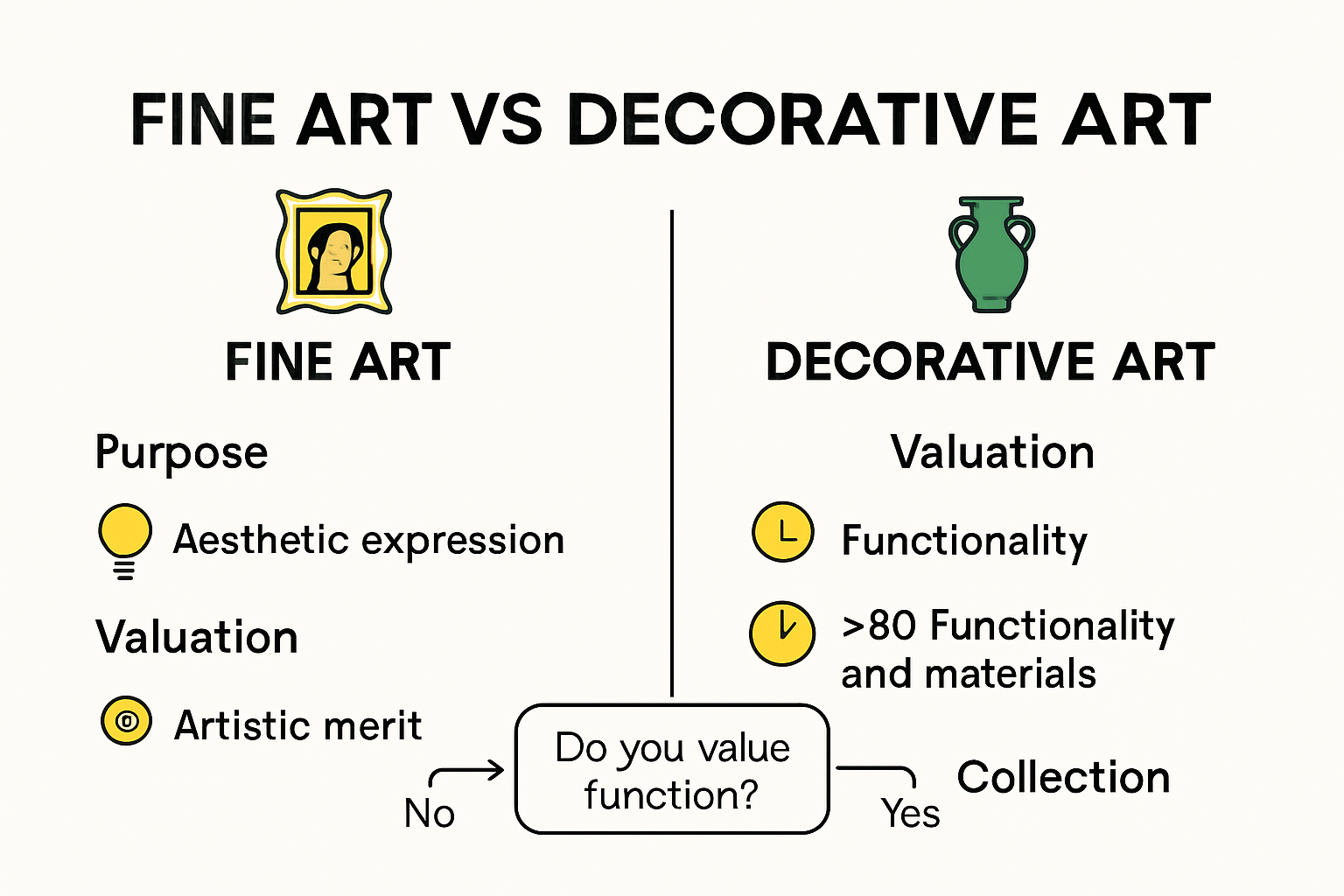
Fine art and decorative art represent two distinct approaches to creative expression, each with unique characteristics and purposes that significantly impact how collectors and decorators perceive and utilize artistic works. While both forms involve aesthetic design and creative skill, their fundamental intentions and value propositions differ substantially.
Purpose and Functionality
Decorative art primarily serves a functional purpose, focusing on creating objects that are both aesthetically pleasing and practical. These items are designed to enhance the utility and visual appeal of living or working spaces. Examples include ceramic vases, ornamental furniture, tapestries, and intricate glassware. In contrast, fine art exists primarily for aesthetic contemplation and emotional expression, according to the Metropolitan Museum of Art, with its primary value derived from its ability to communicate ideas, provoke thought, and evoke profound emotional responses.
The distinction becomes evident in how these art forms are perceived and valued. Decorative art pieces are often selected to complement interior design schemes, match color palettes, or fulfill specific functional requirements. Fine art, however, is chosen for its conceptual depth, artistic technique, and potential to transform intellectual and emotional landscapes.
Artistic Intention and Valuation
Fine art prioritizes creative expression and conceptual exploration over practical utility. Artists working in fine art mediums such as painting, sculpture, or photography aim to communicate complex narratives, challenge societal norms, or explore philosophical concepts. Research from the International Art Market Studies Association indicates that fine art valuation is driven by factors like artistic innovation, historical significance, the artist’s reputation, and the work’s ability to represent broader cultural or aesthetic movements.
Decorative art, while requiring significant skill and creativity, is typically valued based on craftsmanship, design complexity, materials used, and how effectively it enhances a particular space. Check out our curated selection of artistic pieces that bridge the gap between functional design and artistic expression.
Collecting and Display Strategies
Collectors and interior decorators approach fine art and decorative art with different strategies. Fine art collectors often seek pieces that represent significant artistic movements, showcase exceptional technical skill, or hold potential investment value. They are interested in the artwork’s provenance, the artist’s reputation, and its potential to appreciate over time.
Decorative art collectors and interior designers, by contrast, focus more on how a piece integrates with existing design elements, complements architectural styles, and fulfills aesthetic and functional requirements. They prioritize pieces that create harmonious visual environments and serve practical purposes while maintaining a high level of aesthetic appeal.
Understanding these nuanced differences allows collectors and decorators to make more informed decisions, appreciating each art form’s unique qualities and selecting pieces that align with their specific aesthetic, functional, and conceptual goals. Whether seeking a thought-provoking fine art piece or an exquisitely crafted decorative object, the key is recognizing and celebrating the distinctive value each art form brings to our living and working spaces.
Here’s a comparison table to help readers easily distinguish between Fine Art and Decorative Art, summarizing their characteristics, purposes, and approaches as discussed in this section:
| Feature / Aspect | Fine Art | Decorative Art |
|---|---|---|
| Primary Purpose | Aesthetic contemplation & emotional expression | Functionality & enhancing interior spaces |
| Intent / Focus | Intellectual, conceptual, cultural exploration | Practical use, craftsmanship, visual appeal |
| Valuation Factors | Artistic innovation, artist reputation, historical context | Design complexity, materials, integration with décor |
| Collector Approach | Investment potential, provenance, artistic movements | Aesthetic harmony, utility, complementing interiors |
| Common Examples | Painting, sculpture, photography, installations | Vases, furniture, tapestries, glassware |
Why Fine Art Matters in South African Homes
Fine art transcends mere decoration, serving as a powerful medium for cultural expression, personal identity, and social narrative within South African homes. It represents more than aesthetic embellishment – it is a profound communication tool that reflects the complex tapestry of South African experiences, histories, and aspirations.
Cultural Representation and Identity
In South African homes, fine art becomes a critical element of cultural storytelling. Research from the South African National Arts Council highlights how artistic expressions provide visual narratives that capture the nation’s diverse heritage, reconciliation journey, and ongoing social transformations. Artists use their creative platforms to explore themes of identity, resilience, and collective memory, making each artwork a meaningful dialogue about South African lived experiences.
Collectors and homeowners increasingly recognize that selecting art is not just about visual appeal but about curating spaces that reflect personal and collective narratives. Learn about influential South African artists who have significantly contributed to this cultural dialogue through their remarkable works.
Emotional and Psychological Impact
Fine art in residential spaces does more than beautify environments – it profoundly influences emotional well-being and psychological states. Psychological studies from the University of Cape Town demonstrate that engaging with meaningful artworks can reduce stress, stimulate creativity, and promote mental wellness. South African homes that incorporate thoughtfully selected art pieces create environments that inspire, challenge, and provide emotional resonance.
Artworks depicting landscapes, cultural scenes, or abstract representations of social experiences can transform living spaces into personal sanctuaries. They serve as constant reminders of beauty, struggle, hope, and the rich complexity of human experience, making them far more than decorative elements.
Investment and Cultural Preservation
Beyond emotional and cultural significance, fine art represents a strategic investment for South African homeowners. Art pieces by emerging and established local artists not only appreciate in monetary value but also contribute to preserving and promoting South African artistic heritage. Collectors who invest in fine art are essentially supporting the broader artistic ecosystem, enabling creative professionals to continue producing meaningful work.
The selection of art becomes a nuanced process of understanding an artwork’s historical context, the artist’s background, and its potential future value. Each piece acquired is a contribution to personal collections and the broader narrative of South African artistic expression.
Fine art in South African homes is a dynamic, multifaceted phenomenon. It bridges personal spaces with broader cultural conversations, transforms environments, and offers profound insights into individual and collective experiences. By thoughtfully integrating art, homeowners create living spaces that are not just aesthetically pleasing but deeply meaningful – true reflections of South Africa’s rich, complex, and continuously evolving identity.
Tips for Collecting Fine Art in 2025
Collecting fine art in 2025 requires a strategic approach that balances aesthetic appreciation, financial insight, and cultural understanding. The art market continues to evolve rapidly, presenting both exciting opportunities and complex challenges for collectors seeking meaningful and valuable artistic investments.
Research and Market Intelligence
Successful art collecting begins with comprehensive research and market intelligence. The Smithsonian American Art Museum recommends maintaining detailed documentation for each artwork, including provenance, artist background, and historical context. Contemporary collectors must leverage digital platforms, online galleries, and art market databases to gain insights into emerging artists, market trends, and potential investment opportunities.
Understanding the artistic landscape requires more than casual observation. Attend art exhibitions, participate in online art forums, and engage with professional curators and art experts. Explore emerging trends in South African art to develop a nuanced understanding of the current artistic ecosystem.
Financial and Authentication Strategies
Modern art collecting demands a sophisticated approach to financial planning and artwork authentication. Research from Art Basel and UBS indicates that the global art market continues to transform, with digital platforms and blockchain technology playing increasingly significant roles in verification and provenance tracking.
Key financial considerations include:
- Diversifying art investments across different mediums and artists
- Understanding potential tax implications of art acquisitions
- Securing proper insurance for art collections
- Evaluating long-term appreciation potential
Authentication has become more complex in the digital age. Collectors should work with certified art appraisers, request comprehensive documentation, and use advanced verification technologies to ensure the legitimacy of their acquisitions.
Emerging Trends and Ethical Collecting
The art collecting landscape in 2025 emphasizes ethical considerations and cultural representation. Collectors are increasingly prioritizing works by historically marginalized artists, supporting diverse artistic voices, and understanding the broader social context of their acquisitions.
Digital platforms and virtual exhibitions have transformed how art is discovered, purchased, and experienced. Augmented reality technologies now allow collectors to visualize artworks in their personal spaces before making a purchase, bridging the gap between digital exploration and physical collection.
Successful art collecting is no longer just about acquiring beautiful objects – it is about participating in a dynamic cultural dialogue. By approaching art collection with curiosity, research, and ethical consideration, collectors can build meaningful collections that reflect both personal taste and broader artistic movements.
Remember that each artwork represents more than a financial investment. It is a conversation piece, a cultural artifact, and a potential legacy that connects personal spaces with broader artistic narratives. Approach your collection with passion, intellect, and a commitment to understanding the rich stories behind each piece.
Below is a summary table outlining practical tips for collecting fine art in 2025, breaking down key strategies and considerations already mentioned in the text for quick reference:
| Tip / Strategy | Key Action Point | Benefit |
|---|---|---|
| Research & Market Intelligence | Use digital galleries, attend exhibitions, consult experts | Informed purchases, spot trends, know artists |
| Financial Strategy | Diversify, understand tax, insure collections | Protects investment, reduces risk |
| Authentication | Obtain documentation, use certified appraisers, adopt verification tech | Ensures artwork legitimacy, prevents fraud |
| Ethical Collecting | Support marginalized artists, consider cultural context | Promotes diversity, enriches cultural dialogue |
| Utilise Technology | Use virtual exhibitions, AR tools | Visualise art at home, expands access |

Frequently Asked Questions
What defines fine art?
Fine art is defined as a sophisticated form of creative expression focused on aesthetic and intellectual value rather than practical utility. It encompasses various disciplines, including painting, sculpture, photography, and contemporary art forms, aiming to communicate ideas, emotions, and cultural narratives.
How does fine art differ from decorative art?
Fine art prioritizes emotional expression and intellectual engagement, serving as an aesthetic contemplation, while decorative art emphasizes functionality and visual appeal. Fine art is often chosen for its conceptual depth, whereas decorative art beautifies living spaces with practical design.
Why is fine art significant in South African homes?
Fine art plays a vital role in South African homes as a medium for cultural expression, reflecting personal identity and social narratives. It fosters emotional well-being, enhances mental health, and serves as a strategic investment, contributing to both personal spaces and cultural preservation.
What should collectors consider when investing in fine art?
Collectors should engage in thorough research, understanding the artist’s background, historical context, and market trends. Additionally, considering financial strategies, authenticity verification, and ethical collecting practices will ensure a meaningful and valuable art collection.
Transform Your Home with South African Fine Art Today
Are you feeling that your home or workspace is missing a sense of true personality and meaning? The article highlights how thoughtfully chosen fine art can deeply reduce stress, strengthen your cultural identity, and even become an investment in both your wellbeing and your future. Yet, finding authentic South African artworks that reflect these values is often challenging.

Discover a vibrant range of curated local artworks at Art Online, South Africa’s largest art gallery. You can easily browse by style or artist and find pieces that speak to your own narrative. If you are ready to bring emotional and cultural richness into your space, start your search with our trusted guide on painting prices or explore works by famous South African artists. Visit Art Online now and choose art that lets your story shine.
Recommended
- Top Art Festivals in South Africa 2025 for Collectors & Decorators – Art-Online
- Famous South African Artists: 2025 Guide for Collectors & Decorators – Art-Online
- Top Art Competitions in South Africa 2025 for Collectors – Art-Online
- Famous African Art Pieces for Collectors and Decorators 2025 – Art-Online