
Complete Guide to Outsider Art in South Africa

Did you know that some of the world’s most powerful artworks come from creators who never set foot in an art school? Outsider art breaks the mold by thriving outside formal institutions and often captures raw emotion and unique perspectives rarely found in mainstream galleries. As outsider artists in South Africa share deeply personal stories through their unconventional creations, they challenge what we think art can be and reveal powerful narratives that deserve recognition.
Key Takeaways
| Point | Details |
|---|---|
| Definition of Outsider Art | Outsider art is created by marginalized artists without formal artistic training, emphasizing personal expression beyond mainstream conventions. |
| Misconceptions | Contrary to common beliefs, outsider art is not low-quality or amateur; it presents authentic and raw emotional insights. |
| Cultural Significance | In South Africa, outsider art reflects complex social dynamics and individual experiences, challenging traditional narratives. |
| Collecting Strategies | Collectors should prioritize cultural significance, understand artists’ background, and support local preservation efforts when acquiring outsider art. |
Table of Contents
- Defining Outsider Art And Common Misconceptions
- Types And Influences In Outsider Art
- Core Characteristics And Distinguishing Features
- Collecting Outsider Art In South Africa
- Comparisons With Mainstream And Contemporary Art
Defining Outsider Art and Common Misconceptions
Outsider art represents a profound artistic movement that challenges traditional art world boundaries, celebrating creativity beyond formal training and institutional recognition. Outsider art emerges from individuals who create without conventional artistic education, producing works that are raw, authentic, and deeply personal.
According to Britannica, outsider art fundamentally represents artwork created by marginalized creators who often exist outside standard artistic networks. These artists typically:
- Work in isolation from mainstream art culture
- Develop unique artistic expressions uninfluenced by formal training
- Create works reflecting deeply individual perspectives
- Challenge established artistic conventions
Contrary to popular misconceptions, outsider art is not synonymous with low-quality or amateur work. Wikipedia’s research emphasizes that these creations represent a distinct artistic vision, transcending mere technical skill. The art form captures unfiltered emotional landscapes, offering viewers an unmediated glimpse into the artist’s inner world.
In the South African context, outsider art becomes particularly fascinating, reflecting the complex social dynamics and individual experiences of artists who might have been historically marginalized. Read more about unique South African art movements to understand how these unconventional artistic expressions challenge and expand our understanding of creativity.
Types and Influences in Outsider Art
Outsider art emerges from deeply personal narratives, transcending traditional artistic boundaries by drawing on unique cultural backgrounds and individual lived experiences. Vaia’s research reveals that these artistic expressions often incorporate unconventional materials sourced directly from the artist’s immediate environment, creating a raw and authentic representation of their inner world.
In the South African context, outsider artists have developed distinctive styles that reflect profound personal and spiritual journeys. According to Brand South Africa, remarkable artists like Jackson Hlungwane and Helen Martins represent quintessential outsider art creators who:
- Create art rooted in personal spiritual experiences
- Use locally sourced materials and imagery
- Develop unique visual languages outside mainstream art institutions
- Transform personal narratives into powerful visual expressions
These artists’ works are characterized by their intensely personal nature, often exploring themes of:
- Spiritual transformation
- Local cultural symbolism
- Individual psychological landscapes
- Resistance to conventional artistic representation
Discover more about remarkable South African artists who have shaped the unique landscape of outsider art, challenging traditional artistic boundaries and offering profound insights into individual human experiences.
Core Characteristics and Distinguishing Features
Outsider art represents a profound artistic expression that defies traditional aesthetic boundaries, characterized by its raw authenticity and deeply personal creative approach. Vaia’s research highlights the fundamental characteristics that distinguish this unique art form from conventional artistic practices.
The core distinguishing features of outsider art include:
- Unfiltered Creativity: Artists work without formal training or institutional constraints
- Emotional Rawness: Artwork emerges directly from personal psychological landscapes
- Material Innovation: Unconventional materials become powerful artistic mediums
- Authentic Expression: Each piece represents an unmediated individual narrative
What sets outsider art apart is its complete rejection of artistic conventions. These creators are not attempting to conform to established art world standards, but instead are driven by an intrinsic need to express their inner worlds. Their work becomes a direct translation of personal experiences, spiritual journeys, and psychological states, unencumbered by academic or commercial considerations.
By prioritizing emotional truth over technical perfection, outsider artists create visual languages that are simultaneously challenging and profoundly intimate.
IMAGE:descriptive_key_1] [Learn more about unique artistic expressions that challenge our understanding of creativity and personal storytelling.
Collecting Outsider Art in South Africa
Collecting outsider art in South Africa represents a nuanced journey of cultural preservation and artistic appreciation, where value extends far beyond traditional market dynamics. Wikipedia’s research highlights remarkable examples like The Owl House in Nieu-Bethesda, which demonstrates how outsider art can be transformed from individual expression into collective cultural heritage.
Collectors interested in South African outsider art should consider several critical strategies:
- Prioritize cultural significance over market valuation
- Research the artist’s personal narrative and context
- Understand the historical and social implications of the artwork
- Support local foundations and preservation efforts
- Seek authentication from specialized art historians
According to Brand South Africa, artists like Hlungwane and Martins often enter collections through fascinating rediscovery processes. This means collectors are not just acquiring art, but participating in a broader narrative of cultural recognition and historical documentation.
Understanding the unique landscape of South African outsider art requires deep contextual knowledge. Explore the rich cultural power of South African art to gain deeper insights into collecting strategies that honor both artistic expression and cultural heritage. The most compelling collections emerge from a genuine appreciation of the artist’s individual journey and the broader social narratives embedded in their work.
Comparisons With Mainstream and Contemporary Art
Outsider art challenges the fundamental conventions of mainstream artistic practices, presenting a radical departure from traditional art world hierarchies and expectations. Brand South Africa highlights that while mainstream South African art often prioritizes commercial success and formal training, outsider artists like Martins and Hlungwane offer deeply personal, often marginalized perspectives.
Key differences between outsider and mainstream art include:
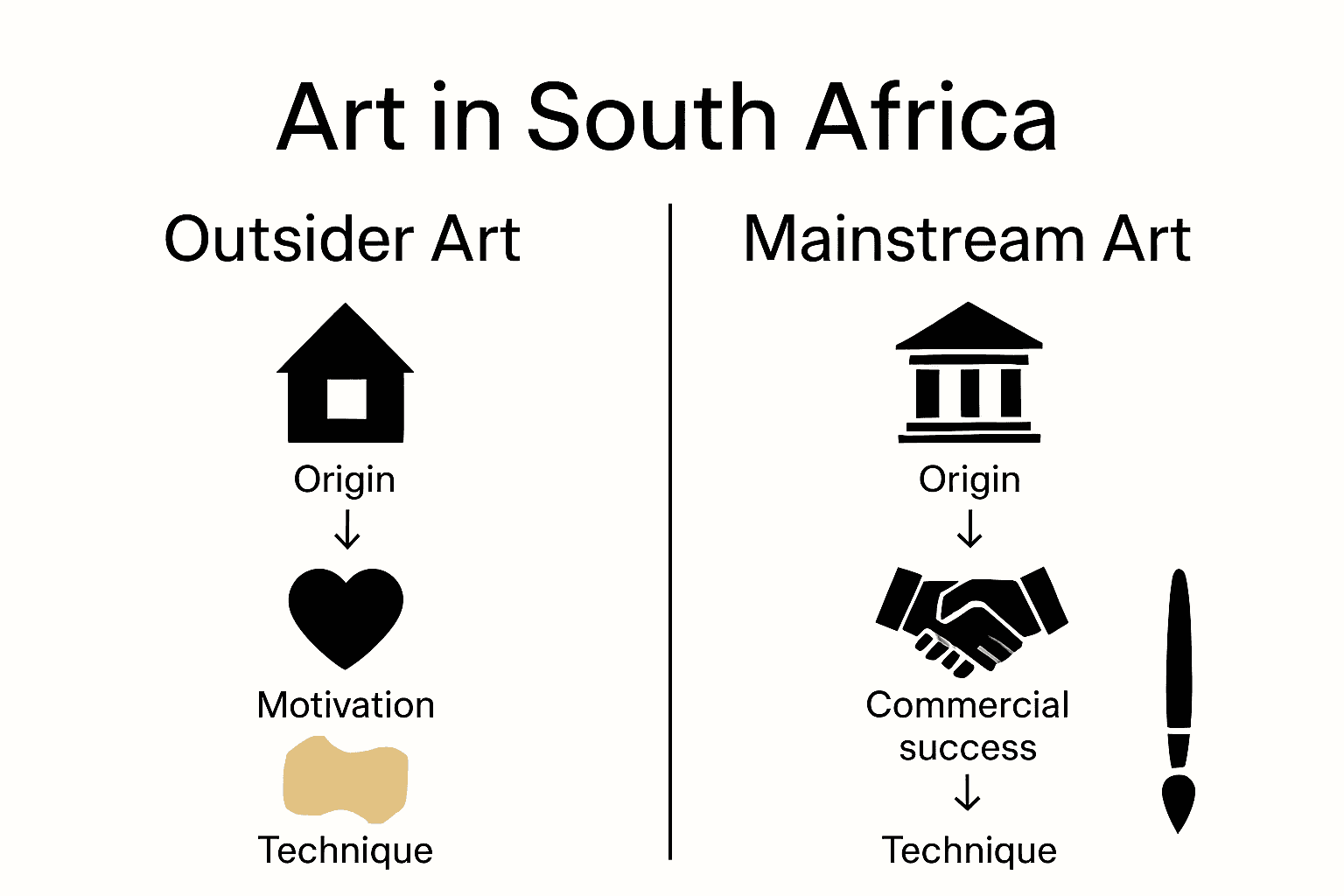
Here’s a comparison of outsider art and mainstream art in the South African context:
| Aspect | Outsider Art | Mainstream Art |
|---|---|---|
| Origin | Personal experience | Institutional training |
| Motivation | Inner expression | Commercial or academic success |
| Technique | Intuitive Raw materials |
Technically refined Standard media |
| Perspective | Marginalised voices | Dominant cultural narratives |
| Cultural Impact | Challenges norms Highlights individuality |
Reinforces traditions Market-driven |
- Origin: Outsider art emerges from personal experience, mainstream art from institutional training
- Motivation: Personal expression versus commercial or academic recognition
- Technique: Intuitive and raw versus technically refined
- Cultural Representation: Marginalized narratives versus dominant cultural perspectives
However, the boundaries between outsider and mainstream art are increasingly blurring. Research from digital humanities suggests that digitization and market commodification are gradually absorbing outsider art into broader artistic landscapes, potentially diluting its distinctive character.
Explore the fascinating world of traditional South African artistic expressions to understand how different art forms interact and evolve. The true power of outsider art lies not in its separation from mainstream practices, but in its ability to challenge, provoke, and expand our understanding of artistic creativity.
Discover Authentic Outsider Art and Make It Yours
Are you captivated by the raw emotional truth and unique perspectives found in outsider art? The article has shown how traditional art spaces sometimes overlook deeply personal artistic expressions, leaving passionate collectors and enthusiasts struggling to connect with these powerful works. Many South Africans want genuine ways to explore outsider art, appreciate local artistic voices, and build meaningful collections that tell authentic stories.

Now is your chance to experience the true diversity of South African art at Art Online. Browse a curated selection of artworks that celebrate individuality beyond mainstream boundaries. Find pieces that connect with your story or explore more by visiting our page on famous South African artists. Do not let unique talent pass you by. Visit Art Online today and discover the next masterpiece for your collection.
Frequently Asked Questions
What is outsider art?
Outsider art refers to artwork created by artists who lack formal training and exist outside mainstream artistic norms, often conveying deeply personal and unique perspectives.
What distinguishes outsider art from mainstream art?
Outsider art is characterized by personal experience, inner expression, and the use of raw materials, while mainstream art typically prioritizes technical refinement and commercial success.
How does outsider art reflect the experiences of marginalized artists?
Outsider art captures the individual narratives and cultural symbolism of marginalized creators, offering an unfiltered glimpse into their personal psychological landscapes and social contexts.
Why is collecting outsider art culturally significant?
Collecting outsider art holds cultural significance as it preserves unique narratives and highlights the importance of marginalized voices, fostering a deeper understanding of individual and community experiences.