Posted on Leave a comment

Understanding What is Art Patronage in South Africa

South African art patronage gallery

People often think art survives on inspiration and talent alone, especially in South Africa where creativity thrives from every corner. But the real lifeblood of our artistic world comes from a much quieter force. Did you know that financial patronage is responsible for launching thousands of new art projects and exhibitions every year? Art patronage is far more than just buying a painting or giving a grant. The true story lies in the powerful role it plays in driving culture, creating jobs, and documenting our history in ways most people never imagine.

Table of Contents

Quick Summary

Takeaway Explanation
Art patronage supports diverse artists. It plays a crucial role in providing financial resources for historically marginalized voices, ensuring representation in the arts.
Patrons enable cultural preservation. By funding artistic projects, patrons help document and maintain diverse cultural narratives integrated into society.
Investing in art fosters social dialogue. Support for various art forms encourages discussions around social justice and community healing, enhancing public understanding.
Digital platforms broaden access to art. Emerging technologies facilitate virtual exhibitions and crowdfunding opportunities that allow new artists to gain visibility.
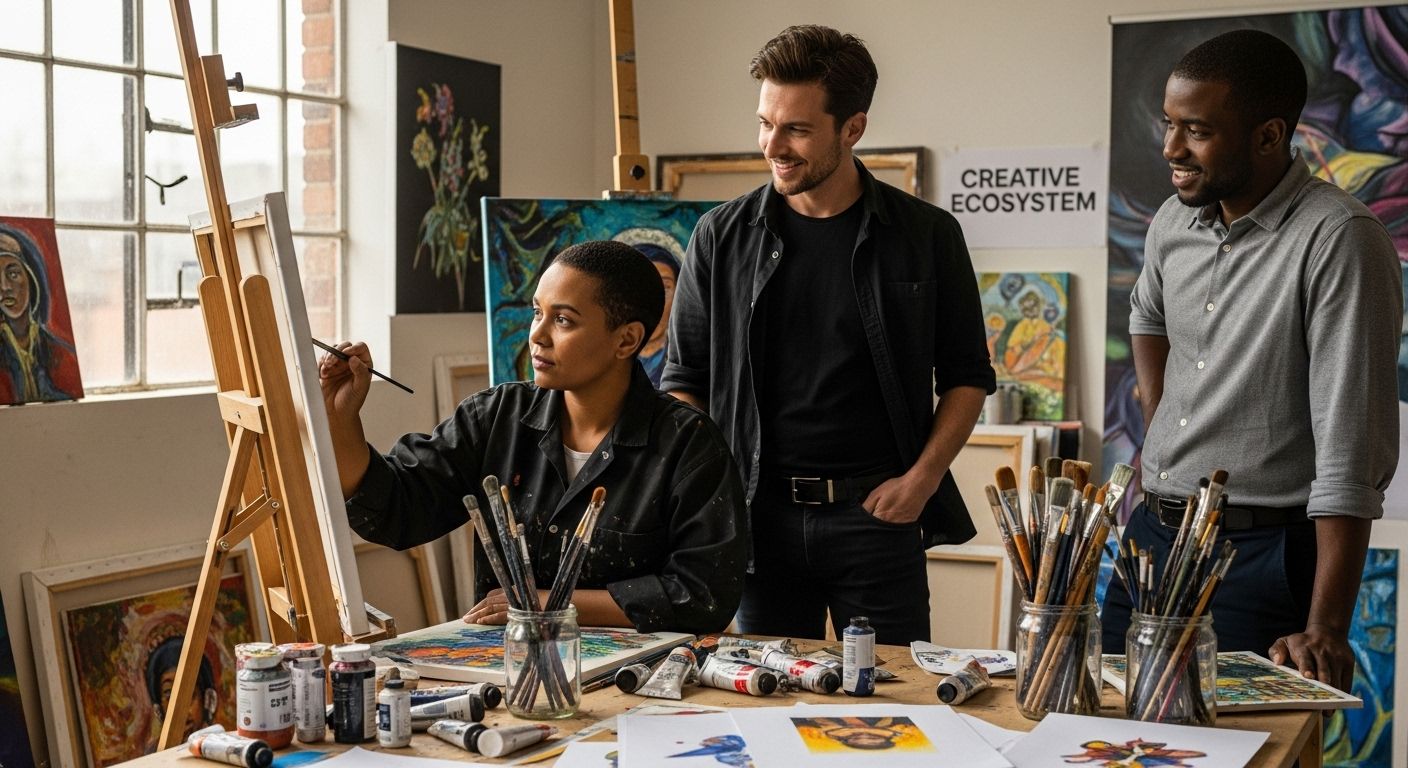
Art patronage nurtures creative ecosystems. It supports the development of entire artistic communities, fostering collaboration and sustainable practices within the arts.

Defining Art Patronage: What is it?

Art patronage represents a fundamental relationship between art creators and their financial supporters, representing a critical mechanism for artistic development and cultural preservation. At its core, art patronage involves individuals or organizations providing financial support, resources, and opportunities to artists, enabling them to create, develop, and showcase their artistic works.

The Essence of Art Patronage

In the South African context, art patronage goes beyond mere financial transactions. It serves as a powerful mechanism for cultural expression, social transformation, and historical documentation. Patrons play a multifaceted role in the artistic ecosystem by:

  • Providing direct financial resources for artistic projects
  • Offering platforms for artists to exhibit their work
  • Supporting artistic training and professional development
  • Preserving cultural narratives and historical experiences

According to the National Arts Council, art patronage is crucial for sustaining creative industries and fostering national identity through artistic expression.

Types of Art Patronage

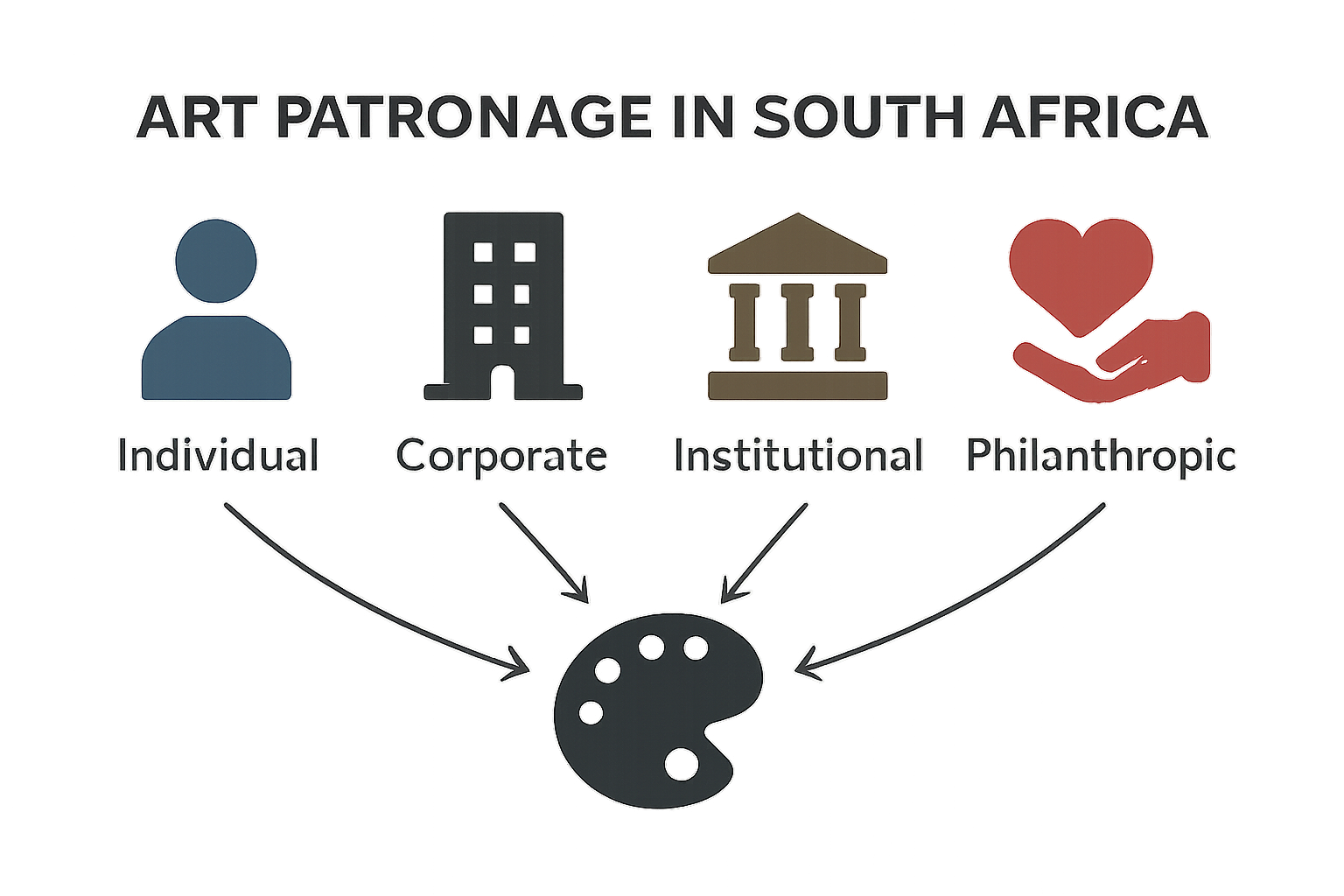
Art patronage manifests in various forms within South Africa, each contributing uniquely to the artistic landscape. These include:

  • Individual Patronage: Wealthy individuals or collectors who purchase artwork, commission pieces, or provide direct financial support to artists
  • Corporate Patronage: Companies investing in art through sponsorships, acquisitions, and supporting cultural events
  • Institutional Patronage: Museums, galleries, and government agencies providing grants, residencies, and exhibition spaces
  • Philanthropic Patronage: Non-profit organizations and trusts dedicating resources to artistic development and cultural preservation

The Arts & Culture Trust exemplifies how strategic patronage can empower artists and strengthen cultural networks across communities. By understanding art patronage as more than a transactional relationship, we recognize its profound role in nurturing creativity, preserving heritage, and driving social dialogue through artistic expression.

Below is a table comparing the different types of art patronage found in South Africa, highlighting who provides support and their primary contributions to the artistic community.

Type of Patronage Who Provides Support Primary Contributions
Individual Patronage Private collectors, wealthy individuals Direct funding, commissions, personal mentorship
Corporate Patronage Companies, business entities Sponsorships, event funding, collection acquisitions
Institutional Patronage Museums, galleries, government agencies Grants, exhibition space, artist residencies
Philanthropic Patronage Non-profits, trusts, foundations Project funding, community and developmental support

Infographic showing four main types of art patronage in South Africa

The Historical Role of Art Patronage

Art patronage in South Africa has deep historical roots, reflecting complex social, political, and cultural transformations throughout different historical periods. From colonial times to the post-apartheid era, art patronage has served as a powerful mechanism for cultural expression, social commentary, and national identity formation.

Colonial and Apartheid Era Patronage

During the colonial and apartheid periods, art patronage was predominantly controlled by white European settlers and institutions. These patrons often commissioned artworks that reinforced colonial narratives and perspectives, primarily depicting landscapes, indigenous people, and cultural scenes through a European lens. Key characteristics of this era included:

  • Eurocentric artistic representations
  • Limited opportunities for Black and indigenous artists
  • Artworks primarily serving colonial documentation and aesthetic interests
  • Restricted access to artistic platforms and resources

According to research from Wits University, public art during this period functioned as a tool for maintaining dominant cultural narratives and power structures.

Post-Apartheid Transformation

The post-1994 era marked a significant shift in art patronage, with a focus on representing diverse cultural experiences and promoting previously marginalized artistic voices. Patronage became a critical tool for national healing, cultural reclamation, and social transformation. Institutions, corporations, and philanthropic organizations began actively supporting artists from various backgrounds, enabling more inclusive and representative artistic expressions.

Interested in exploring how art investment is changing? Learn more about art investment trends that are reshaping the South African art landscape.

Key transformative elements of post-apartheid art patronage included:

  • Supporting Black and indigenous artists
  • Funding projects that explore social justice themes
  • Creating platforms for diverse artistic narratives
  • Investing in community-based art initiatives

Through strategic patronage, South Africa has not only preserved its rich cultural heritage but also created powerful mechanisms for social dialogue, healing, and collective understanding.

To illustrate the shifting context of art patronage in South Africa, the following table contrasts the characteristics and focus areas of patronage during the colonial/apartheid era with those of the post-apartheid period.

Era Characteristics of Patronage Focused Support Areas
Colonial & Apartheid Eurocentric, dominated by white institutions, exclusive Colonial narratives, landscape art
Limited opportunities for Black artists Documentation of settler perspectives
Post-Apartheid Transformation Inclusive, diverse patrons (corporations, institutions) Social justice, cultural reclamation
Support for marginalised voices, community engagement Community-based art, diverse narratives

Why Art Patronage Matters in the Art Community

Art patronage serves as the critical lifeblood of artistic ecosystems, providing essential support that enables creative practitioners to transform conceptual visions into tangible artistic expressions. Beyond financial transactions, art patronage represents a profound commitment to cultural preservation, social dialogue, and individual artistic development.

Economic Sustainability for Artists

For artists, patronage represents more than monetary support – it is a lifeline that enables professional sustainability and creative freedom. Financial support through patronage allows artists to:

  • Invest in high-quality materials and equipment
  • Dedicate uninterrupted time to creative practice
  • Develop experimental and innovative artistic approaches
  • Participate in exhibitions and professional development opportunities

According to the National Arts Council, strategic patronage is fundamental to nurturing South Africa’s diverse artistic talents and maintaining a vibrant cultural landscape.

Cultural Preservation and Social Transformation

Art patronage plays a pivotal role in documenting, preserving, and reimagining cultural narratives. By supporting artists from diverse backgrounds, patrons contribute to broader social transformation processes. Patronage enables:

  • Documentation of marginalized historical experiences
  • Creation of platforms for underrepresented voices
  • Challenging dominant cultural narratives
  • Facilitating intercultural understanding and dialogue

If you are interested in understanding the broader impact of art investment, explore our comprehensive guide on supporting South African artists.

Nurturing Creative Ecosystem

Patronage extends beyond individual artist support to cultivating entire creative ecosystems. By investing in artistic infrastructure, training, and opportunities, patrons help build sustainable creative industries. This approach transforms art from an individual practice into a collective cultural resource that generates social capital, economic opportunities, and national pride.

Through strategic and thoughtful patronage, South Africa continues to develop a rich, diverse, and dynamic artistic landscape that reflects its complex social history and vibrant cultural potential.
artist patronage South Africa studio

How Art Patronage Functions: The Relationship Between Patrons and Artists

The relationship between art patrons and artists is a complex, dynamic interaction that transcends simple financial transactions. It represents a nuanced partnership where mutual interests, cultural understanding, and creative vision converge to support artistic expression and development.

Commissioning and Negotiation Processes

Art patronage typically begins with a formal or informal commissioning process, where patrons and artists engage in detailed discussions about artistic vision, project scope, and financial arrangements. Key elements of this negotiation include:

  • Defining the artwork’s conceptual framework
  • Establishing clear financial terms and compensation
  • Determining creative autonomy and artistic limitations
  • Agreeing on timeline and delivery expectations

According to research from Wits University, corporate sponsorship plays a significant role in shaping artistic production and perceived value in South Africa.

Power Dynamics and Creative Freedom

The patron-artist relationship involves complex power dynamics that can significantly impact artistic creation. While financial support provides necessary resources, it can also potentially limit creative expression. Successful patronage requires:

  • Mutual respect for artistic integrity
  • Transparent communication
  • Balanced negotiation of creative boundaries
  • Recognition of the artist’s unique perspective

If you are curious about the economic aspects of art investment, discover insights into painting valuations.

Mutual Benefits and Cultural Impact

Effective art patronage creates a symbiotic relationship where both artists and patrons benefit. For artists, patronage provides financial stability and platform expansion. For patrons, it offers cultural capital, potential investment appreciation, and the opportunity to support meaningful artistic narratives.

Through thoughtful, respectful partnerships, art patronage becomes a powerful mechanism for cultural preservation, social dialogue, and creative innovation in South Africa.

The landscape of art patronage in South Africa continues to transform, reflecting broader social, economic, and technological changes. Contemporary art patronage has evolved from traditional models to more dynamic, inclusive, and innovative approaches that challenge historical barriers and create new opportunities for artistic expression.

Digital and Corporate Patronage Strategies

Digital platforms and corporate initiatives are reshaping art patronage, providing unprecedented access and support for emerging artists. Key emerging trends include:

  • Virtual exhibitions and online art marketplaces
  • Corporate sponsorship programs targeting young artists
  • Crowdfunding platforms for artistic projects
  • Digital documentation and archiving of artistic works

According to the Public Art Development Programme, these strategies aim to create employment opportunities and attract investment across diverse geographical regions.

Diverse and Inclusive Patronage Models

Contemporary art patronage in South Africa increasingly emphasizes representation, diversity, and social transformation. Patrons are actively seeking to support artists from historically marginalized communities, creating platforms that challenge traditional artistic narratives. Emerging patronage approaches prioritize:

  • Supporting Black and indigenous artists
  • Funding projects addressing social justice themes
  • Creating mentorship and professional development programs
  • Promoting intersectional artistic narratives

Interested in exploring remarkable artistic talents? Discover South Africa’s most influential artists.

Sustainability and Social Impact

Modern art patronage extends beyond aesthetic appreciation to include broader social and environmental considerations. Patrons are increasingly viewing art as a catalyst for social change, supporting projects that address critical societal challenges. This approach emphasizes:

  • Environmental sustainability themes
  • Community engagement and development
  • Cultural preservation and storytelling
  • Economic empowerment through artistic initiatives

Through these innovative approaches, art patronage in South Africa continues to serve as a powerful mechanism for cultural dialogue, social transformation, and creative expression.

Support South African Art and Become a Modern Patron Today

Are you passionate about art patronage but unsure how to make a real impact? Many South Africans still face barriers when trying to support and invest in artworks from diverse, talented local artists. This article highlighted the urgent need for economic sustainability, cultural preservation and stronger, more inclusive artistic communities. Imagine if your next purchase could nurture a creative ecosystem and help underrepresented artists tell their stories.

https://art-online.co.za

Join Art Online, South Africa’s largest online art gallery, and take the next step in meaningful art patronage. Browse original works by renowned and emerging local talents in one trusted space. Explore how your support can bring cultural narratives to life by tapping into our guide on why buying original art supports South African artists. Start building your own legacy and invest in our rich artistic heritage now. Visit Art Online and experience the transformative power of art patronage firsthand.

Frequently Asked Questions

What is art patronage?

Art patronage involves individuals or organizations providing financial support, resources, and opportunities to artists, enabling them to create, develop, and showcase their artistic works.

What are the different types of art patronage in South Africa?

In South Africa, art patronage typically manifests as individual patronage, corporate patronage, institutional patronage, and philanthropic patronage, each contributing uniquely to the artistic landscape.

How does art patronage impact artists in South Africa?

Art patronage provides essential financial support that enables artists to invest in materials, dedicate time to their creative practice, and participate in professional development, helping sustain their careers.

Why is art patronage important for cultural preservation?

Art patronage plays a crucial role in documenting and preserving diverse cultural narratives, allowing underrepresented voices to be heard and promoting social transformation through artistic expression.
Posted on Leave a comment

Understanding Modern Sculpture Techniques: A Comprehensive Guide

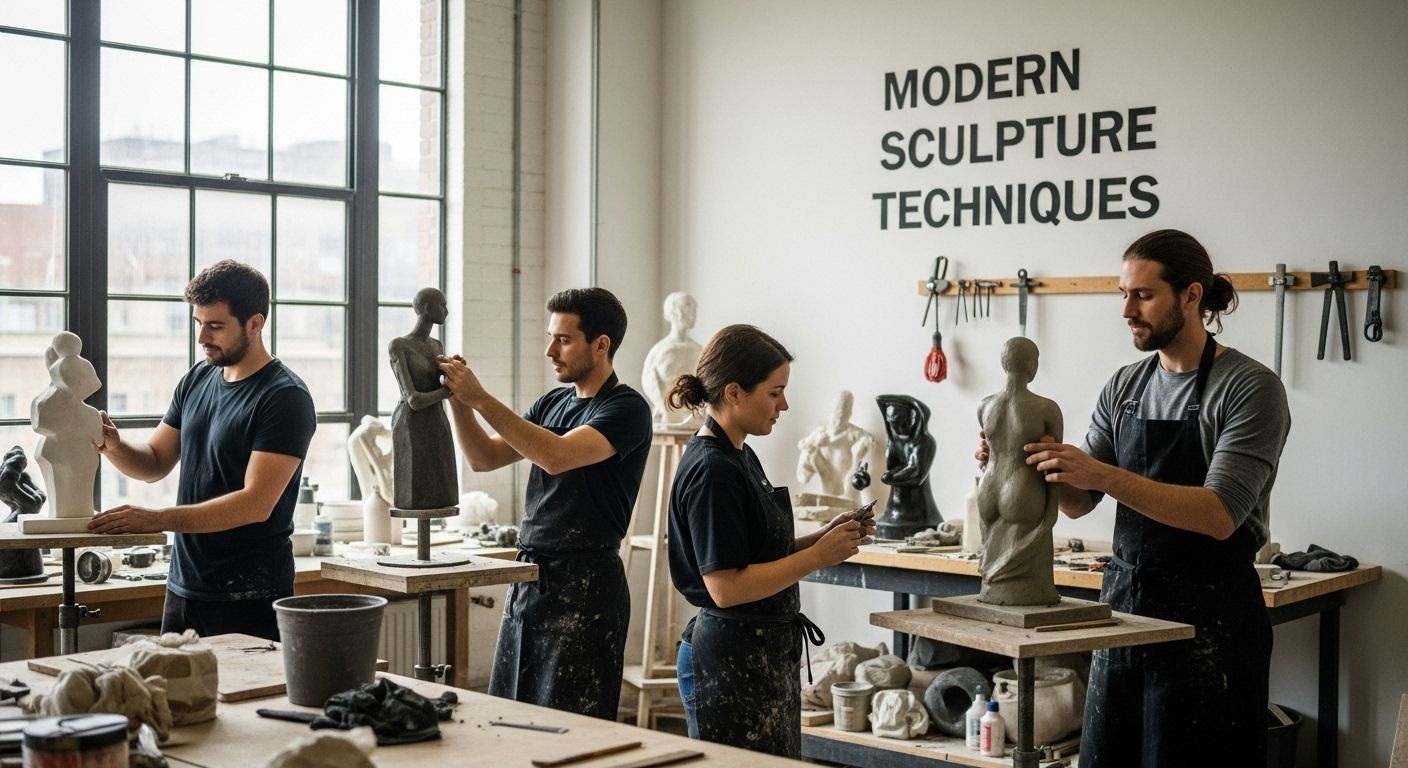
modern sculpture workshop

Modern sculpture shakes up everything we thought art should be. More than 75 percent of top contemporary sculptures now use materials like steel, resin, or found objects instead of stone or marble. That sounds wild for an art form once obsessed with perfect human figures. But the biggest surprise is not the new look or the strange materials. It is how sculptors today use these forms to tell bold stories, challenge what we see, and dig deep into the emotions and ideas behind each piece.

Table of Contents

Quick Summary

Takeaway Explanation
Modern sculpture prioritizes abstract forms It focuses on emotion and conceptual interpretations over realistic representations, allowing for deeper expressions of human experience.
Innovative materials redefine sculptural practice Artists use unconventional materials and advanced technologies, which expand creative possibilities and challenge traditional aesthetic norms.
Sculpture as a medium for social commentary Modern sculptors use their work to explore and critique societal issues, creating dialogues on identity and cultural narratives.
Material selection impacts artistic communication The choice of materials adds symbolic meaning, influencing how the audience interprets the artwork’s message and emotional resonance.
Technology enhances traditional sculpting techniques Digital tools allow artists to blend historical methods with innovation, preserving heritage while pushing creative boundaries.

Defining Modern Sculpture: Key Characteristics and Styles

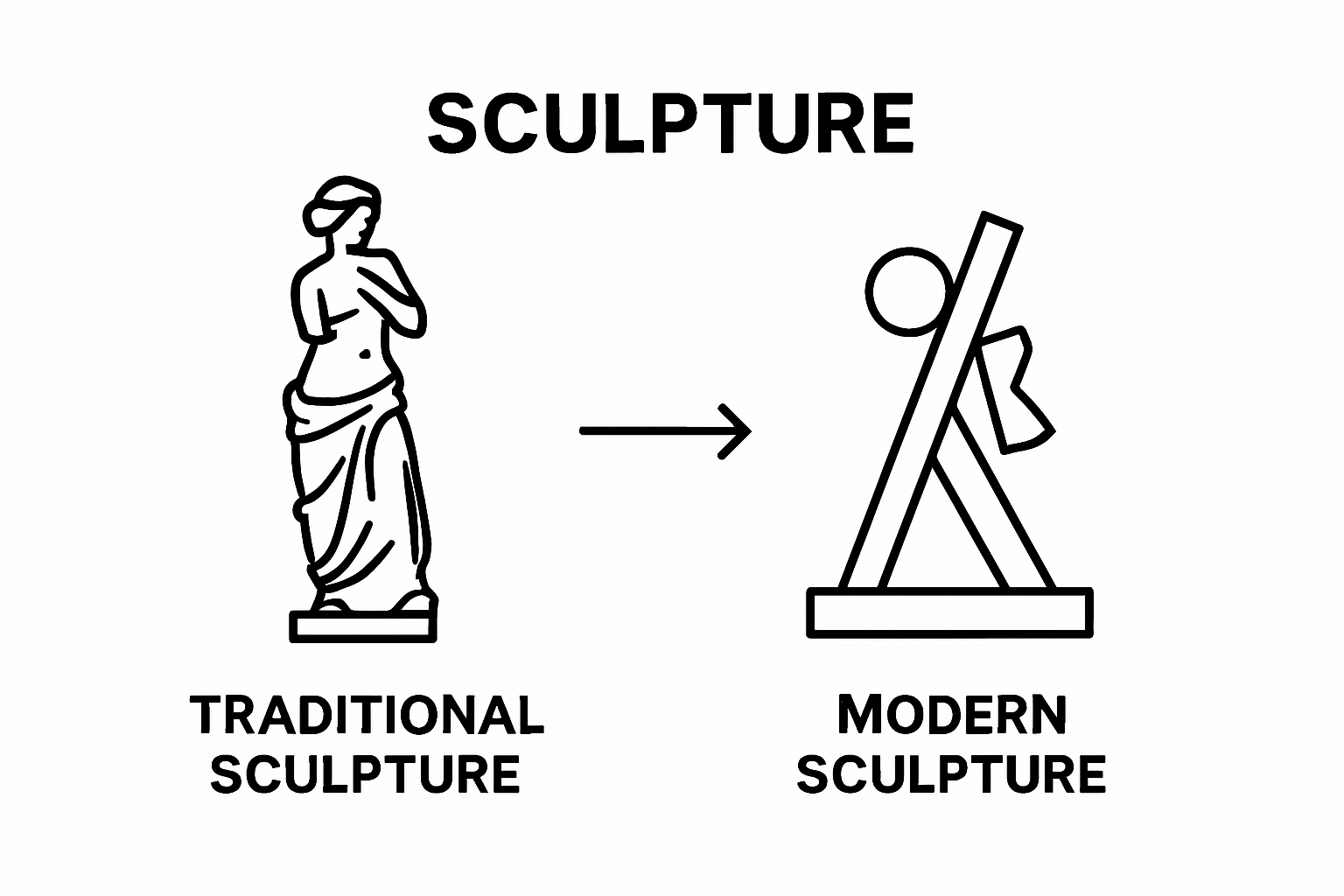
Modern sculpture represents a radical transformation in artistic expression, breaking away from traditional representational techniques and exploring new forms of visual communication. Unlike classical sculpture that emphasized realistic human figures and precise anatomical details, modern sculpture challenges conventional aesthetic boundaries by prioritizing emotional expression, abstraction, and conceptual interpretation.

Breaking Traditional Boundaries

Modern sculptural techniques emerged in the late 19th and early 20th centuries as artists began rejecting strict representational norms. Pioneers like Auguste Rodin pioneered approaches that emphasized emotional texture over perfect anatomical precision. These artists understood sculpture as more than mere physical representation but as a medium for exploring complex human experiences and psychological states.

Key characteristics of modern sculpture include:

  • Emphasis on abstract forms and conceptual representations
  • Exploration of unconventional materials like industrial metals, found objects, and synthetic substances
  • Focus on expressing internal emotional landscapes rather than external realities

Material Innovation and Conceptual Exploration

According to research from Iziko Museums of South Africa, modern sculptors fundamentally reimagined their artistic practice by experimenting with diverse materials and challenging traditional sculpting techniques. Sculptors began incorporating industrial materials like steel, aluminum, and synthetic resins, transforming sculpture from a purely aesthetic medium into a commentary on technological advancement and social change.

This innovative approach to contemporary African sculpture techniques allowed artists to communicate complex narratives about identity, cultural transformation, and personal experiences through their three-dimensional creations. Modern sculptors viewed their work not just as static objects but as dynamic representations of human complexity and societal evolution.

The transition from classical to modern sculpture represents more than a stylistic shift it signifies a profound philosophical reimagining of artistic expression, where form, emotion, and conceptual depth intertwine to create powerful visual narratives that challenge viewers’ perceptions and invite deeper contemplation.

Below is a table comparing traditional and modern sculpture characteristics, helping clarify their key differences mentioned throughout the article.

Aspect Traditional Sculpture Modern Sculpture
Primary Focus Realistic representation of human figures Emotion, abstraction, and conceptual expression
Materials Used Stone, marble, bronze Steel, resin, found objects, synthetic substances
Technique Emphasis Precise anatomical detail Texture, form, and conceptual exploration
Artistic Approach Aesthetic perfection Communication of complex narratives
Role of Material Technical foundation Symbolic and emotional resonance

Traditional vs. Modern Sculpture comparison

The Importance of Modern Sculpture Techniques in Contemporary Art

Modern sculpture techniques represent a profound transformation in artistic expression, offering artists unprecedented freedom to communicate complex ideas and emotions through three-dimensional forms. These innovative approaches transcend traditional aesthetic constraints, enabling creators to challenge societal perceptions and explore deeper psychological and cultural narratives.

Expanding Artistic Communication

Contemporary sculptors utilize techniques that transform raw materials into powerful vehicles of communication. By moving beyond literal representation, artists can encode multilayered meanings into their work, creating pieces that provoke intellectual and emotional responses. Modern sculpture techniques allow for nuanced exploration of themes like identity, social dynamics, and personal experiences through strategic material manipulation and conceptual design.

Key aspects of modern sculpture’s communicative power include:

  • Breaking conventional aesthetic boundaries
  • Utilizing unconventional materials as narrative tools
  • Transforming abstract concepts into tangible visual experiences

Material Innovation and Conceptual Depth

According to research from the University of Pretoria, contemporary sculptors view material engagement as a critical aspect of artistic expression. The direct interaction between artist and medium becomes a metaphorical dialogue, where each material’s inherent properties contribute to the artwork’s conceptual framework. This approach transforms sculpture from a static object into a dynamic narrative platform.
By integrating innovative bronze sculpting techniques, artists can explore complex cultural narratives and personal experiences. These techniques enable sculptors to push technological and creative boundaries, creating works that challenge viewers’ perceptions and invite deeper contemplation of social and personal dynamics.

Modern sculpture techniques ultimately represent more than artistic methodology they are powerful tools for cultural dialogue, personal expression, and societal reflection. Through strategic material selection, conceptual depth, and innovative approaches, contemporary sculptors continue to redefine the boundaries of artistic communication.

Materials and Tools: How They Influence Sculpture Creation

Materials and tools represent the fundamental foundation of sculptural expression, serving as the critical interface between an artist’s conceptual vision and its physical manifestation. Modern sculptors understand that material selection transcends mere technical consideration, becoming a profound language of artistic communication and emotional exploration.

The Language of Materials

Every material possesses unique characteristics that significantly influence artistic narrative and visual communication. Sculptors carefully select materials not just for their physical properties but for their inherent symbolic and emotional resonance. Wood might communicate warmth and organic complexity, while metal can represent industrial strength and technological precision.

Key considerations in material selection include:

  • Emotional and symbolic potential of different materials
  • Structural integrity and manipulation possibilities
  • Cultural and historical associations embedded in specific materials

Technological Innovation and Material Exploration

According to research from the Durban Institute of Technology, contemporary sculptors are increasingly exploring unconventional materials and advanced technological techniques. This approach transforms traditional sculpting practices, enabling artists to push creative boundaries and develop innovative ways of expressing complex ideas.

Modern sculptors now incorporate diverse materials ranging from industrial metals to synthetic polymers, allowing for unprecedented creative flexibility. Artists are discovering unique material combinations that challenge conventional aesthetic expectations and expand the potential of three-dimensional artistic expression.
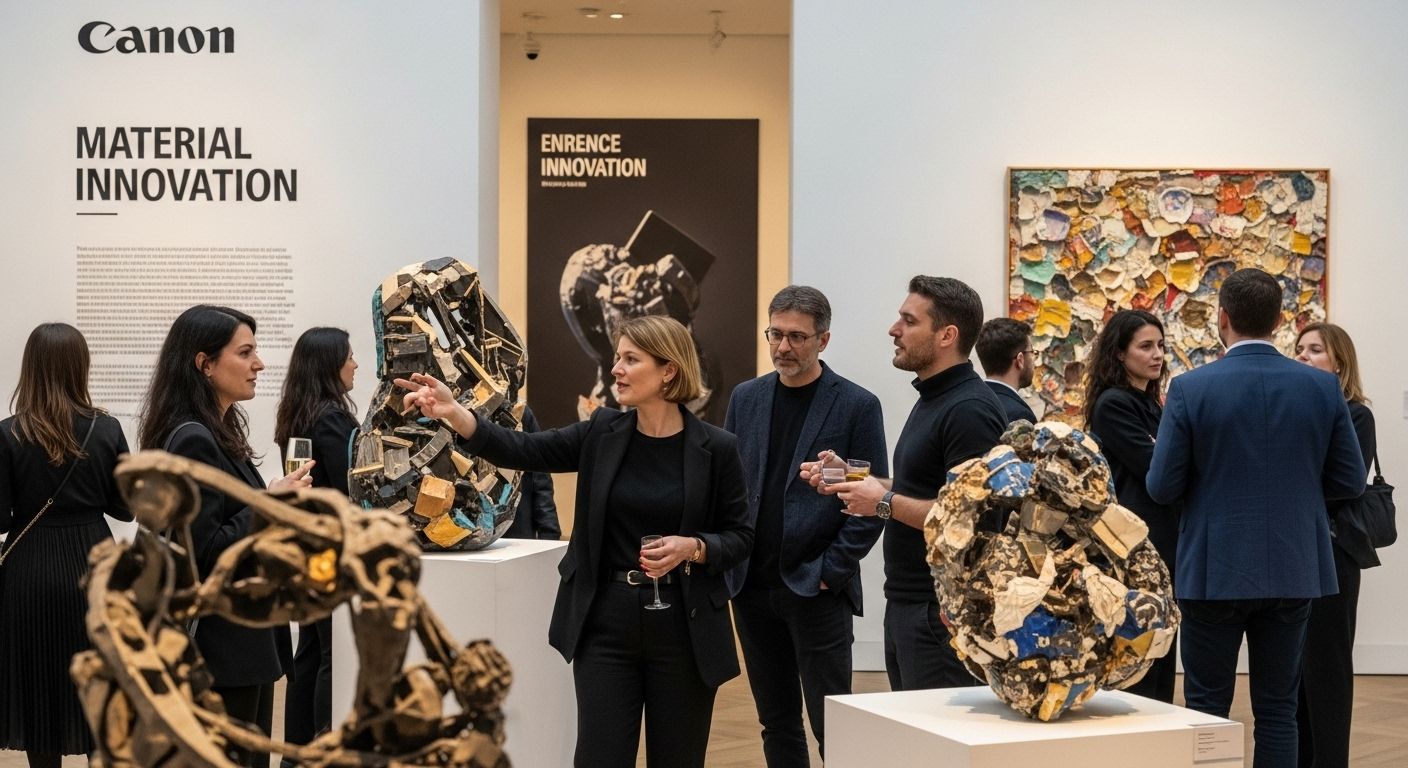
gallery material innovation sculpture

The relationship between an artist and their chosen materials represents a dynamic dialogue where technical skill, creative vision, and material properties intersect.

This table outlines how different materials influence modern sculpture, as described in the discussion on material selection and narrative impact.

Material Symbolic/Emotional Potential Common Usage or Implication
Steel Industrial strength, progress Technological themes
Resin Malleability, versatility Innovation, abstraction
Found objects Contextual history, narrative Social commentary, transformation
Wood Warmth, organic complexity Nature, tradition
Metal (general) Precision, durability Industrialisation, permanence
Tools become extensions of artistic intention, transforming raw substances into powerful vehicles of cultural and personal narrative, ultimately redefining the boundaries of sculptural creation.

Innovative Techniques: Blending Tradition with Technology

The intersection of traditional sculptural practices and cutting-edge technology represents a revolutionary frontier in contemporary art. Modern sculptors are reimagining artistic creation by seamlessly integrating centuries-old craftsmanship with digital innovations, creating a dynamic dialogue between historical techniques and futuristic approaches.

Preserving Cultural Heritage through Technological Innovation

Contemporary sculptors recognize technology not as a replacement for traditional methods, but as a powerful complementary tool that can enhance and expand artistic expression. By leveraging digital technologies, artists can preserve intricate cultural techniques while simultaneously pushing the boundaries of creative possibilities. This approach allows for a nuanced exploration of artistic heritage that respects traditional skills while embrace contemporary methodologies.
Key aspects of blending tradition with technology include:

  • Digitally documenting and preserving traditional sculpting techniques
  • Using advanced technologies to reimagine historical artistic practices
  • Creating hybrid artistic approaches that honor cultural roots

Digital Transformation of Sculptural Practices

According to research from Wits University, digital technologies are transforming how artists conceptualize and create sculptural works. Three-dimensional scanning, computer-aided design, and advanced modeling software enable sculptors to experiment with complex forms that would be challenging or impossible through traditional methods.

Modern sculptors are increasingly exploring innovative digital sculpting tools that allow for unprecedented precision and creative freedom. These technologies enable artists to manipulate digital representations, prototype designs, and even create sculptures using 3D printing techniques that blend computational accuracy with artistic vision.

The convergence of traditional craftsmanship and technological innovation represents more than a mere technical evolution it is a profound reimagining of artistic creation. By bridging historical techniques with contemporary tools, sculptors are expanding the boundaries of artistic expression and creating entirely new paradigms of creative communication.

Exploring Themes and Messages in Modern Sculpture

Modern sculpture transcends aesthetic representation, emerging as a powerful medium for communicating complex social, political, and personal narratives. Artists leverage sculptural techniques not merely as visual expressions but as profound vehicles for exploring fundamental human experiences, challenging societal norms, and creating transformative dialogues.

Narrative through Form and Material

Contemporary sculptors understand that every artistic choice carries symbolic potential. Materials, textures, and structural compositions become languages through which artists articulate nuanced messages about identity, cultural heritage, social dynamics, and personal transformation. A sculpture’s physical presence becomes a narrative platform, inviting viewers to engage with deeper layers of meaning beyond surface aesthetics.

Key thematic exploration strategies include:

  • Utilizing material symbolism to communicate cultural experiences
  • Representing marginalized perspectives through artistic representation
  • Creating visual metaphors that challenge existing social narratives

Social Commentary and Artistic Expression

According to research from the University of Cape Town, modern South African sculptors have consistently used their work as instruments of social commentary. By translating complex historical experiences and contemporary challenges into three-dimensional forms, artists create powerful platforms for dialogue and reflection.

Exploring the evolution of African sculptural narratives reveals how artists transform personal and collective memories into compelling visual statements. Sculptors strategically employ techniques that invite viewers to confront uncomfortable truths, challenge established perspectives, and reimagine social possibilities through artistic interpretation.

Modern sculpture represents more than aesthetic objects they are dynamic cultural artifacts that capture the complexity of human experience. By translating abstract emotions, social tensions, and personal narratives into tangible forms, sculptors create profound bridges between individual perspectives and collective understanding.

Discover Modern Sculpture That Speaks to You

Exploring the countless techniques and breakthroughs discussed in our guide, you might find yourself craving more than just theory. Many art lovers struggle to truly experience the powerful emotional expression and innovative material use found in modern sculpture. You deserve to see how themes of identity and personal narrative come alive beyond the page—right in your own space.

https://art-online.co.za

Why wait to be inspired? Browse authentic works created by South Africa’s leading artists who embody these modern techniques and philosophies. Visit Art Online now to find original sculptures that channel abstraction, material innovation and cultural storytelling. Let your collection reflect the passion and depth explored throughout our comprehensive guide on modern sculpture techniques. Experience the transformation for yourself—start your journey with a piece that tells your story today.

Frequently Asked Questions

What are the key characteristics of modern sculpture?

Modern sculpture is characterized by an emphasis on abstract forms, the use of unconventional materials, and a focus on expressing internal emotional landscapes rather than realistic representations.

How have materials influenced modern sculpture techniques?

Materials play a crucial role in modern sculpture as they determine the emotional and symbolic resonance of a piece. Sculptors explore various materials, including industrial metals and synthetic substances, to convey complex narratives and ideas.

What techniques do contemporary sculptors use to blend tradition with technology?

Contemporary sculptors integrate traditional techniques with modern technology by using digital tools such as 3D modeling and printing, enabling them to preserve cultural heritage while exploring innovative artistic expressions.

How do modern sculptures serve as a medium for social commentary?

Modern sculptures communicate complex social, political, and personal narratives by using form and material to challenge societal norms and provoke dialogue. Artists often employ symbolic elements to address cultural experiences and perspectives.

Posted on Leave a comment

Understanding Cultural Diversity in Art: A Deep Dive

cultural diversity art gallery

Cultural diversity in art is not just about different styles or bright colours. Look at this. Each culture brings its own unique visual language and artistic method that you will not find anywhere else in the world. People might think art is only for galleries or the rich, but the real story is that art from different cultures actually connects communities, preserves lost traditions, and sparks new ideas every day.

Table of Contents

Quick Summary

Takeaway Explanation
Cultural diversity enriches art It showcases unique perspectives and traditions from various societies, celebrating human expression.
Art fosters social understanding Through diverse narratives, art breaks barriers, promoting empathy among different cultural groups.
Economic benefits arise from artistic diversity Supporting cultural expressions creates job opportunities and preserves traditional knowledge while driving local economies.
Artistic exchange enhances creativity Collaborations across cultures inspire new techniques and perspectives, transforming artistic practices into innovative dialogues.
Representation in art is crucial Inclusive art collections amplify marginalized voices, creating spaces for diverse stories and experiences in society.

What is Cultural Diversity in Art and Its Origins?

Cultural diversity in art represents the rich tapestry of human expression across different societies, ethnicities, and historical contexts. At its core, it reflects the unique perspectives, traditions, and lived experiences that shape artistic creation worldwide. Cultural perspectives in visual arts demonstrate how artistic expression becomes a powerful medium for understanding societal complexity and human identity.

The Foundations of Cultural Diversity in Art

Art serves as a profound communication platform where cultural narratives, historical experiences, and collective memories intersect. By transcending linguistic barriers, artworks communicate complex emotional and social realities that words often cannot fully capture. Cultural diversity in art emerges from multiple interconnected dimensions:

  • Representation of unique cultural experiences
  • Preservation of traditional artistic techniques
  • Exploration of collective and individual identities
  • Challenging dominant cultural narratives

These dimensions reveal how art becomes more than aesthetic expression transforming into a dynamic dialogue about human experiences across different social contexts.

Below is a table outlining the main characteristics of cultural diversity in art, highlighting how each contributes to a richer and more inclusive artistic landscape.

Characteristic Explanation
Unique cultural representation Reflects distinct traditions and lived experiences
Preservation of traditional methods Maintains historical techniques and indigenous knowledge
Exploration of identity Investigates both collective and individual identities
Challenging dominant narratives Questions mainstream interpretations and power dynamics
Inclusive artistic innovation Merges diverse perspectives leading to new creative expressions

Historical Evolution and Global Significance

The concept of cultural diversity in art has evolved significantly throughout human history. From indigenous traditions to contemporary global exchanges, artistic expressions have continuously reflected societies’ complex interactions. Each cultural tradition contributes unique visual languages, ranging from African tribal art and Asian calligraphy to European Renaissance paintings.

Understanding cultural diversity in art requires recognizing that artistic creation is never neutral. It represents power dynamics, historical struggles, and ongoing negotiations of identity. Artists become crucial storytellers who translate collective experiences into visual narratives that challenge, celebrate, and reimagine cultural understanding.

By embracing cultural diversity, art transforms from a mere aesthetic practice into a profound mechanism for mutual understanding, respect, and global dialogue.

Why Cultural Diversity in Art Matters for Society

Cultural diversity in art transcends aesthetic appreciation and serves as a critical mechanism for social understanding, empowerment, and transformation. Cultural heritage contributes significantly to national development, offering profound insights into collective experiences and individual identities.

Social Understanding and Empathy

Art functions as a powerful communication bridge between different societal groups, enabling people to experience perspectives beyond their immediate lived realities. By presenting diverse narratives, art challenges preconceived notions and encourages deeper cross-cultural comprehension. Exploring influential South African artists reveals how artistic expressions can transform social dialogues.

Key aspects of art’s social impact include:

  • Breaking down cultural barriers
  • Facilitating emotional connections across differences
  • Promoting mutual respect and understanding
  • Challenging systemic prejudices

Economic and Cultural Preservation

Cultural diversity in art represents more than symbolic representation. It becomes an economic driver that supports creative industries, preserves traditional knowledge, and generates sustainable economic opportunities. Artistic traditions serve as living repositories of collective memory, ensuring that cultural practices continue to evolve and remain relevant.

By valuing diverse artistic expressions, societies invest in:

  • Protecting indigenous knowledge systems
  • Supporting local artisan communities
  • Creating economic opportunities for marginalized groups
  • Promoting cultural tourism and heritage experiences

Ultimately, cultural diversity in art functions as a dynamic dialogue that continuously reshapes our understanding of human experience, challenging us to recognize the profound complexity and beauty of our shared global heritage.

How Cultural Diversity in Art Influences Artistic Expression

Cultural diversity fundamentally transforms artistic expression by introducing complex layers of narrative, technique, and perspective that challenge traditional artistic boundaries. Decolonizing Indigenous art practices demonstrates how cultural diversity becomes a powerful mechanism for reimagining artistic representation.

Techniques and Aesthetic Innovations

Artistic expression emerges from deep cultural roots, with each tradition contributing unique visual languages and methodological approaches. When diverse cultural perspectives intersect, they generate innovative artistic techniques that transcend conventional artistic frameworks. Exploring contemporary African art trends reveals how artists blend traditional and modern approaches.

Key transformative elements include:

  • Integrating indigenous symbolic systems
  • Reinterpreting traditional artistic techniques
  • Challenging dominant aesthetic narratives
  • Developing hybrid artistic methodologies

Narrative and Representational Complexity

Cultural diversity introduces multifaceted narratives that expand artistic representation beyond singular perspectives. Artists from different cultural backgrounds bring nuanced storytelling approaches, challenging monolithic interpretations of historical and contemporary experiences. These diverse narratives create rich, complex visual dialogues that reflect the intricate nature of human experience.

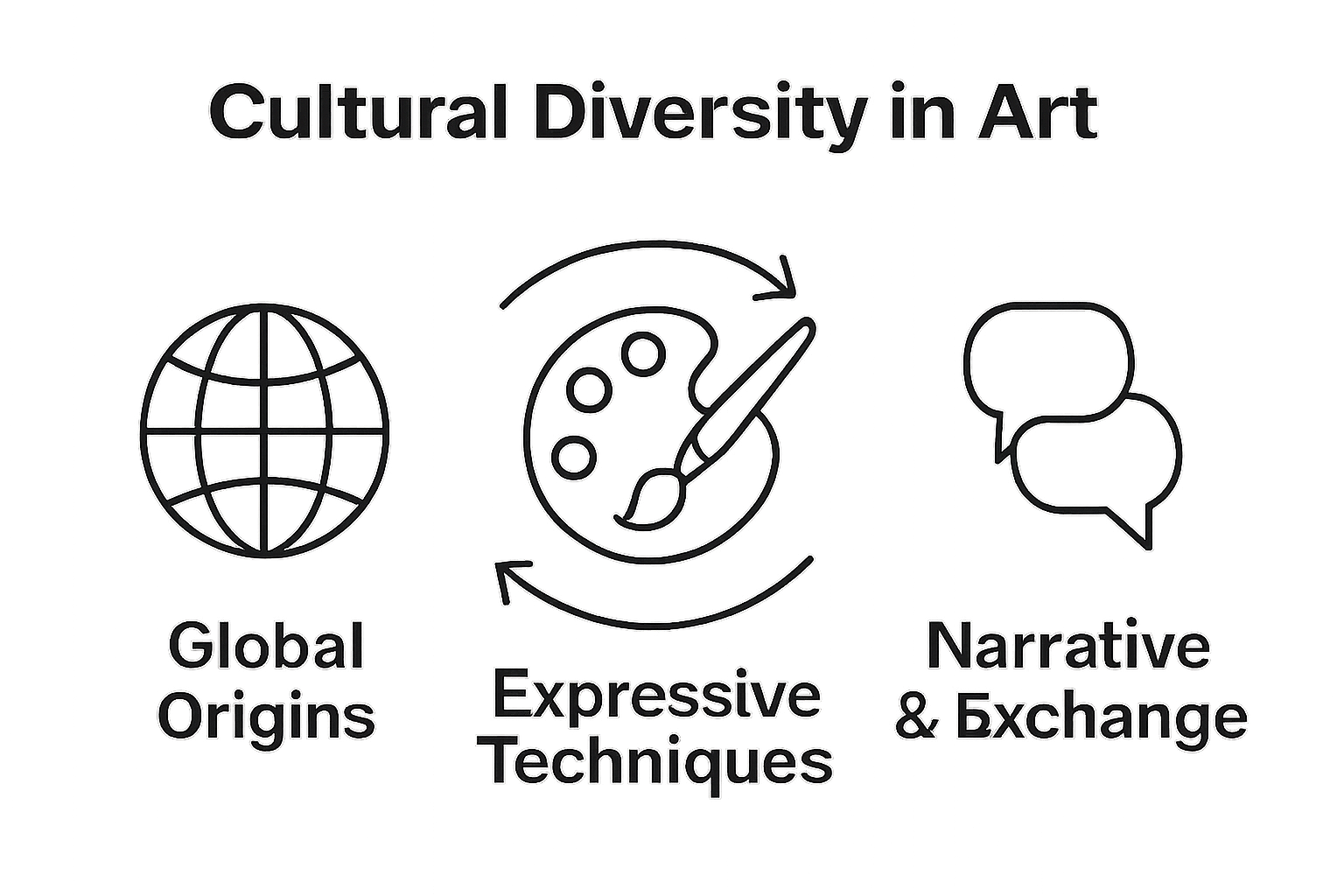
Infographic showing how cultural origins, artistic techniques, and storytelling connect in diverse art

Diverse artistic expressions enable:

  • Amplifying marginalized voices
  • Presenting alternative historical interpretations
  • Challenging systemic visual representation
  • Creating more inclusive artistic landscapes

Through cultural diversity, artistic expression becomes a dynamic, evolving platform for understanding human complexity, challenging viewers to engage with multiple perspectives and reimagine traditional artistic boundaries.

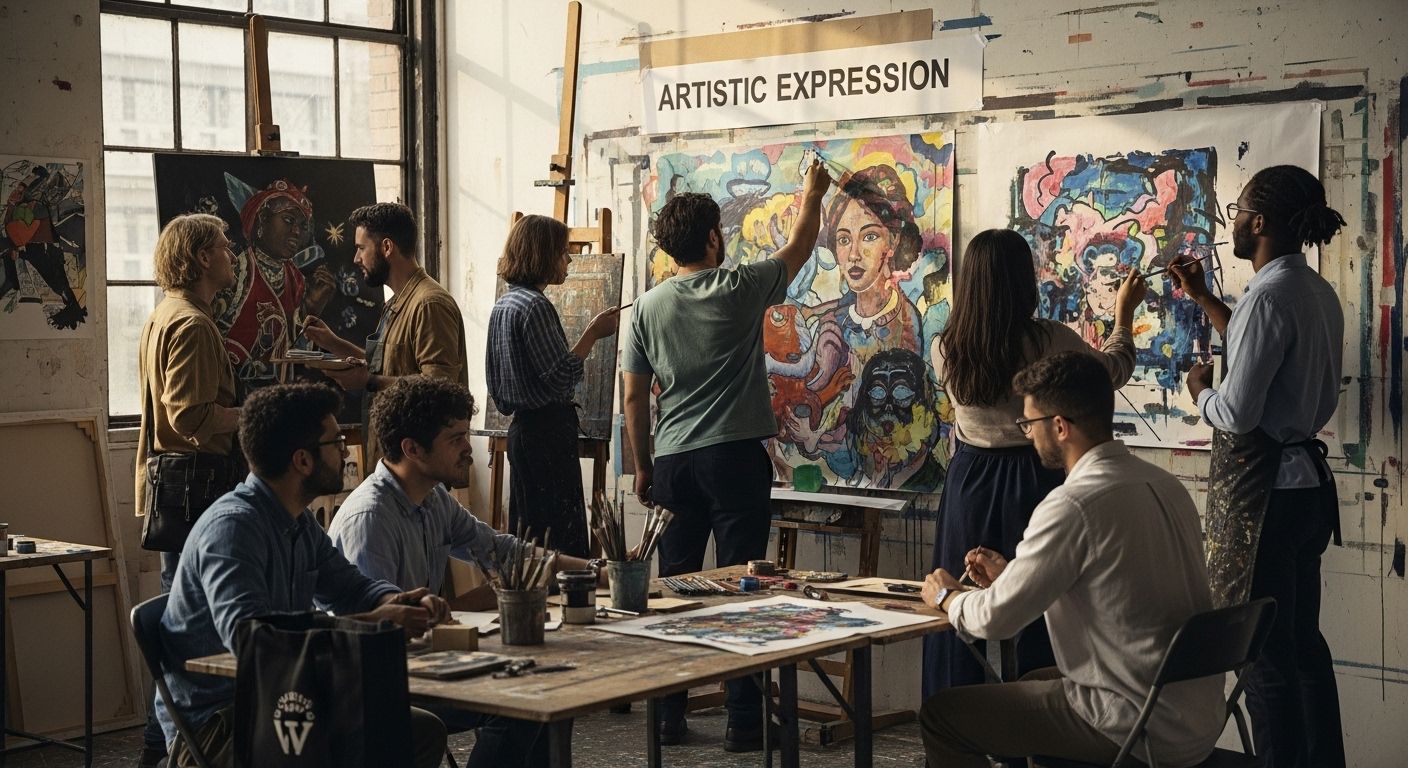
collaborative multicultural art studio

Key Concepts of Cultural Exchange in Art

Cultural exchange in art represents a dynamic process of mutual learning, understanding, and transformation through artistic interactions across different cultural boundaries. Strategic international arts partnerships demonstrate how artistic collaboration can transcend geographical and cultural limitations.

Mechanisms of Artistic Dialogue

Artistic exchange functions as a sophisticated communication platform, enabling artists to share complex cultural narratives through visual, performative, and interpretative mediums. Exploring traditional tribal art influences reveals the intricate ways cultural knowledge transfers between different artistic traditions.

Key mechanisms of cultural exchange include:

  • Collaborative artistic projects
  • Cross-cultural artistic residencies
  • International art exhibitions
  • Transnational creative workshops

Transformation and Mutual Understanding

Cultural exchange in art goes beyond simple representation. It involves profound processes of translation, interpretation, and reimagination where artists negotiate complex cultural identities and shared human experiences. These interactions create nuanced platforms for understanding differences and discovering universal connections.

The transformative potential of artistic exchange manifests through:

  • Breaking down cultural stereotypes
  • Creating hybrid artistic languages
  • Developing mutual respect and empathy
  • Generating innovative creative methodologies

Ultimately, cultural exchange in art becomes a powerful mechanism for global dialogue, enabling societies to communicate, learn, and grow beyond traditional linguistic and geographical boundaries.

The following table summarises some of the key mechanisms and transformative outcomes of cultural exchange in art, providing a clear comparison between processes and their results.

Mechanism of Cultural Exchange Description Example Outcome
Collaborative artistic projects Artists from different backgrounds work together Creation of hybrid art forms
Cross-cultural artistic residencies Artists immerse in another cultural environment Adopting new artistic techniques
International art exhibitions Showcasing art from multiple cultures side by side Increased mutual understanding
Transnational creative workshops Shared spaces for learning and experimentation Innovative creative methodologies

Real-World Examples of Cultural Diversity in Art

Cultural diversity in art emerges through tangible projects that showcase the rich tapestry of human experiences and artistic expressions. Exploring notable African art collections reveals the profound ways different cultural traditions intersect and communicate through visual mediums.

Institutional Representations of Diversity

Institutional art collections serve as powerful platforms for cultural representation, documenting and preserving diverse artistic narratives. Significant cultural art initiatives demonstrate how systematic approaches can amplify marginalized artistic voices and promote social inclusion.

Key institutional approaches include:

  • Curating comprehensive multicultural collections
  • Developing inclusive acquisition strategies
  • Creating educational programs about cultural diversity
  • Supporting artists from underrepresented communities

Collaborative Artistic Projects

Cross-cultural artistic collaborations exemplify how cultural diversity transforms creative practices. These projects go beyond simple representation, creating dynamic spaces where different artistic traditions dialogue, challenge, and inspire each other. Artists become cultural ambassadors, translating complex social experiences through shared creative processes.

Examples of transformative collaborative approaches involve:

  • International artist exchange programs
  • Multidisciplinary performance projects
  • Joint community art installations
  • Cross-cultural research and documentation initiatives

Through these real-world examples, cultural diversity in art becomes more than an abstract concept. It emerges as a living, breathing mechanism for mutual understanding, social transformation, and collective storytelling.

Discover True Cultural Diversity Through South African Art

Do you ever feel that finding authentic, diverse art that reflects the richness of real South African cultures is almost impossible? As highlighted in “Understanding Cultural Diversity in Art: A Deep Dive”, people often struggle to access art that truly honours unique identities, traditions, and stories. If you are searching for genuine works that celebrate cultural diversity or want to support the preservation of traditional artistic techniques, you are not alone. Many art lovers want their collections to speak to both history and innovation.

https://art-online.co.za

See how South Africa’s artistic voices come alive across the widest range of talent and heritage at Art Online, the country’s largest online art gallery. Experience works by influential South African artists, explore new trends rooted in diverse traditions, and choose pieces that make your space a celebration of inclusion. Visit our curated selection of Famous African Art Pieces for Collectors and Decorators or discover the lasting impact of Contemporary African Art Trends. Take the next step now to own a part of South Africa’s cultural story and let your walls become a canvas for real connection and understanding.

Frequently Asked Questions

What is cultural diversity in art?

Cultural diversity in art refers to the variety of artistic expressions emerging from different societies, ethnicities, and historical contexts. It showcases unique perspectives and traditions that influence artistic creation worldwide.

Why is cultural diversity in art important for society?

Cultural diversity in art fosters social understanding, challenges prejudices, and promotes empathy across various communities. It serves as a critical mechanism for social empowerment and economic development, supporting cultural heritage and creative industries.

How does cultural diversity influence artistic expression?

Cultural diversity introduces complex narratives and innovative techniques in art. When different cultural perspectives intersect, they create new methodologies and aesthetics that challenge traditional artistic boundaries and enrich the artistic landscape.

What role do collaborations play in cultural exchange within art?

Collaborative artistic projects facilitate cultural exchange by creating dynamic dialogues among diverse traditions. These interactions help break down cultural stereotypes, promote mutual respect, and lead to the development of hybrid artistic languages.

Posted on Leave a comment

Art Subjects: 7 Popular Every Collector Should Know

Art Subjects: art gallery, diverse art subjects, human interaction

Art Subjects

South African art is one of the richest visual conversations on earth. It stretches across vibrant landscapes, clever still lifes, soulful portraits, and abstract works that stir up deep feelings. But did you know that abstract artworks can trigger consistent emotional responses in people, according to neuroscience research? Most would think art only stands out for its looks, but it is the stories, emotions, and history woven into each piece that set South African art apart from the rest.

Table of Contents

Quick Summary

TakeawayExplanation
Landscape art evokes strong emotions.It transforms natural scenes into powerful emotional experiences, inviting viewers to connect with environmental beauty.
Still life elevates everyday objects.Artists rearrange ordinary items, revealing deeper meanings and encouraging viewers to appreciate their beauty and significance.
Portraits reveal human identity.These artworks communicate complex emotional and cultural dimensions, going beyond mere likeness to showcase personal narratives.
Abstract art communicates complex emotions.By using non-representational imagery, abstract pieces invite diverse interpretations and evoke visceral emotional responses.
Wildlife art celebrates biodiversity.It captures the beauty of South Africa’s fauna, encouraging appreciation for ecological systems and the animal kingdom’s rich diversity.

1: Landscapes: Nature’s Inspiration and Beauty

Landscape art represents one of the most profound and enduring forms of artistic expression, capturing the sublime beauty and raw essence of natural environments. Artists have long been drawn to landscapes as a medium for exploring visual narratives of terrain, atmosphere, and emotional connection to place.

At its core, landscape art transcends mere geographical representation. It transforms natural scenes into powerful emotional experiences that invite viewers to see the world through an artist’s unique perspective. By translating terrain, light, texture, and atmosphere onto canvas, landscape painters create immersive visual journeys that connect viewers intimately with environmental beauty.

Some key characteristics that define exceptional landscape art include:

  • Emotional Resonance: The ability to evoke feelings of tranquility, wonder, or contemplation
  • Technical Mastery: Skillful rendering of light, perspective, and environmental details
  • Narrative Depth: Suggesting stories beyond the visual scene

Collectors appreciate landscape art for its versatility and timeless appeal. Discover more about landscape painting techniques that transform natural scenes into compelling artistic statements. Whether depicting serene rural vistas, dramatic mountain ranges, or intimate natural environments, landscape paintings offer a window into both physical and emotional terrain.

The power of landscape art lies in its capacity to communicate universal human experiences through visual language. Artists capture not just what a landscape looks like, but how it feels – translating geographical scenes into profound emotional landscapes that resonate deeply with viewers.

2: Still Life: Capturing Everyday Objects with Style

Still life art represents a profound artistic approach that transforms ordinary objects into extraordinary visual narratives. By carefully arranging and depicting everyday items like fruits, flowers, kitchen utensils, or personal artifacts, artists create compelling compositions that reveal deeper meanings beyond surface appearances.

The artistic significance of still life extends far beyond simple representation. These paintings invite viewers to appreciate the inherent beauty and symbolic potential of seemingly mundane objects. Artists use light, texture, color, and composition to elevate commonplace items into powerful aesthetic statements that challenge perceptions and evoke emotional responses.

Key elements that define exceptional still life artwork include:

  • Compositional Balance: Strategic arrangement of objects to create visual harmony
  • Symbolic Representation: Objects that communicate metaphorical or cultural meanings
  • Technical Precision: Meticulous rendering of textures, shadows, and details

Learn more about contemporary still life techniques that push artistic boundaries. Modern artists continue to reinvent this genre, incorporating innovative approaches that challenge traditional representations and explore complex cultural narratives.

Still life art offers collectors a unique opportunity to acquire pieces that are simultaneously intimate, intellectual, and visually stunning. By capturing moments of quiet contemplation and transforming ordinary objects into extraordinary visual experiences, these artworks invite viewers to see the world through a more nuanced and appreciative lens.

3: Portraits: The Power of Human Connection in Art

Portrait art stands as a profound exploration of human identity, capturing not just physical appearances but the intricate emotional landscapes of individuals. These artworks transcend simple representation, delving into the complex psychological and cultural dimensions that define human experience.

The artistic significance of portraiture lies in its ability to communicate stories, emotions, and inner worlds through visual representation. Artists use subtle techniques of light, expression, posture, and contextual elements to reveal deeper narratives about their subjects, transforming a mere likeness into a powerful emotional document.

Critical elements that distinguish exceptional portrait art include:

  • Psychological Depth: Revealing inner emotional states beyond surface appearances
  • Technical Mastery: Precise rendering of human features and subtle emotional nuances
  • Cultural Context: Embedding broader social and personal narratives within individual representations

Explore the rich cultural dimensions of South African portrait art that illuminate individual and collective experiences. Contemporary portrait artists continue to push boundaries, using innovative techniques to challenge traditional representations and explore complex identity narratives.

For art collectors, portraits offer a unique opportunity to acquire works that are simultaneously personal, historical, and universally resonant. These artworks invite viewers to connect deeply with human experiences, transcending individual stories to illuminate broader aspects of our shared human condition.

4: Abstract Art: Understanding Emotion and Perception

Abstract art represents a profound exploration of human perception, challenging traditional artistic representation by translating emotional experiences into pure visual language. This artistic approach moves beyond literal depiction, inviting viewers to engage with art through intuitive emotional and intellectual responses.

The artistic significance of abstract art lies in its capacity to communicate complex feelings and concepts without relying on recognizable imagery. Artists use color, form, texture, and composition to create visual experiences that resonate on deeply personal and universal levels, transforming subjective experiences into tangible aesthetic expressions.

Critical characteristics that define exceptional abstract artwork include:

  • Emotional Resonance: Ability to evoke visceral responses without representational imagery
  • Conceptual Complexity: Layered meanings that invite multiple interpretations
  • Compositional Innovation: Unique approaches to visual arrangement and spatial relationships

Discover the intriguing world of contemporary abstract art techniques that challenge traditional artistic boundaries. Contemporary abstract artists continue to push creative limits, exploring how visual elements can communicate profound emotional and intellectual experiences.

According to neuroscience research, abstract artworks trigger consistent emotional responses across different viewers, suggesting a fundamental human capacity to interpret complex visual languages. For art collectors, abstract pieces offer more than aesthetic beauty they provide windows into sophisticated emotional landscapes, inviting continuous reinterpretation and personal engagement.

5: Wildlife: Celebrating South Africa’s Unique Fauna

Wildlife art represents a profound celebration of South Africa’s extraordinary biodiversity, capturing the raw beauty and intricate dynamics of the continent’s remarkable animal kingdom. These artworks go beyond mere visual representation, serving as powerful visual narratives that illuminate the complex relationships between wildlife, landscape, and ecological systems.

The artistic significance of wildlife art lies in its ability to connect viewers intimately with nature’s most magnificent creatures. Artists meticulously render animal forms, capturing nuanced details of movement, texture, and emotional essence that reveal the depth and complexity of wildlife existence.

Critical elements that distinguish exceptional wildlife artwork include:

  • Anatomical Precision: Accurate and detailed representation of animal physiology
  • Contextual Environment: Integrating animals within their natural habitats
  • Emotional Authenticity: Capturing the spirit and character of wildlife subjects

Explore remarkable wildlife art by South African artists who bring our continent’s incredible fauna to life through their distinctive visual language. Contemporary wildlife artists continue to push artistic boundaries, using innovative techniques that highlight conservation narratives and ecological awareness.

For art collectors, wildlife artworks offer more than aesthetic beauty they represent a powerful connection to the natural world, documenting the remarkable biodiversity that makes an ecological treasure. These pieces invite viewers to appreciate the intricate, magnificent life forms that inhabit our diverse landscapes.

6: Historical Events: Art as a Reflection of Society

Historical event art serves as a powerful visual chronicle, transforming complex societal narratives into profound aesthetic experiences. These artworks transcend mere documentation, offering deep insights into the emotional landscapes of pivotal moments that shape collective human understanding.

The artistic significance of historical event art lies in its ability to communicate nuanced perspectives beyond traditional historical narratives. Artists carefully translate complex social dynamics, political tensions, and human experiences into visual languages that invite viewers to engage critically with historical contexts.

Critical elements that distinguish exceptional historical event artwork include:

  • Emotional Authenticity: Capturing the psychological depth of historical moments
  • Contextual Complexity: Revealing multilayered social and political interpretations
  • Narrative Depth: Presenting alternative perspectives on established historical accounts

Explore the transformative power of South African historical art that illuminates our collective cultural journey. Contemporary artists continue to challenge traditional historical representations, using innovative visual techniques to reframe and reimagine significant societal moments.

For art collectors, historical event artworks represent more than aesthetic investments they are powerful cultural documents that preserve and reinterpret collective memory. These pieces invite continuous dialogue about how societies understand, remember, and process transformative experiences, offering profound insights into the complex tapestry of human social evolution.

7: Cultural Heritage: Embracing Local Styles and Techniques

Cultural heritage art represents a profound exploration of identity, tradition, and collective memory through visual expression. These artworks serve as powerful repositories of cultural knowledge, preserving and reimagining the rich tapestry of human experience across generations and communities.

The artistic significance of cultural heritage art lies in its capacity to communicate complex narratives of belonging, resistance, and transformation. Artists use traditional techniques, symbols, and aesthetic approaches to create visual languages that speak to both historical roots and contemporary experiences.

Critical elements that distinguish exceptional cultural heritage artwork include:

  • Symbolic Authenticity: Incorporating meaningful cultural motifs and representations
  • Intergenerational Dialogue: Bridging traditional and contemporary artistic expressions
  • Narrative Complexity: Revealing nuanced cultural histories and experiences

Discover the depth of African art symbolism that illuminates our rich cultural landscapes. Contemporary artists continue to innovate, using traditional techniques and styles to create powerful visual narratives that challenge, celebrate, and reinterpret cultural identities.

For art collectors, cultural heritage artworks represent more than aesthetic objects they are living documents of human creativity, resilience, and social evolution. These pieces invite viewers to engage with complex cultural narratives, offering profound insights into the ways communities understand, preserve, and continually reinvent their collective identities.

Below is a comprehensive table summarising the seven most popular art subjects every collector should know, highlighting their core focus, unique features, and key benefits for South African art collectors.

Art SubjectCore FocusUnique FeaturesKey Collector Benefit
LandscapesNature, environment, and atmosphereEvokes strong emotions, technical mastery, narrative depthTimeless appeal and emotional connection
Still LifeEveryday objects rendered with styleCompositional balance, symbolic representation, technical precisionAppreciation of beauty in the ordinary
PortraitsHuman identity, emotion, and storyPsychological depth, cultural context, expressive techniquesDeep connection with human experience
Abstract ArtEmotion and perception via non-representational formsEmotional resonance, conceptual complexity, compositional innovationElicits diverse interpretations and feelings
WildlifeSouth Africa’s unique fauna and biodiversityAnatomical precision, habitat context, emotional authenticityCelebrates natural heritage, highlights conservation
Historical EventsSocietal reflection, pivotal cultural momentsEmotional authenticity, contextual complexity, narrative depthPreserves and reinterprets collective memory
Cultural HeritageLocal styles, tradition, collective memorySymbolic motifs, fusion of tradition and modernity, narrative richnessConnects to and celebrates cultural identity

Bring Iconic Art Subjects Into Your Home with Art Online

Are you inspired by the unique visual journeys explored in “7 Popular Art Subjects Every Collector Should Know”? Many collectors crave more than just beautiful pieces—they seek works that truly resonate with their emotions, capture rich narratives like wildlife, landscapes and cultural heritage, and reflect South Africa’s creative brilliance. Yet, finding authentic art that embodies these profound subjects and connects you with the heart of our local culture can be a real challenge.

https://art-online.co.za

At Art Online, we make it easy for collectors to discover exceptional South African artworks that go beyond surface beauty. Whether you are moved by the raw emotion of South African portrait art, fascinated by the detail in wildlife masterpieces, or inspired by the meanings within African art symbolism, our platform connects you directly with celebrated local creators. Start building your collection today on Art Online and secure one-of-a-kind works that capture the stories and subjects you care about most.

Frequently Asked Questions

What are the main characteristics of landscape art?

Landscape art is defined by its emotional resonance, technical mastery, and narrative depth, inviting viewers to connect with the beauty of natural environments.

How does still life art convey deeper meanings?

Still life art elevates ordinary objects through compositional balance, symbolic representation, and technical precision, encouraging viewers to appreciate the beauty and significance of everyday items.

What defines exceptional portrait art?

Exceptional portrait art reveals psychological depth, displays technical mastery in rendering human features, and contextualizes individuals within broader cultural narratives.

Why is abstract art significant in contemporary art?

Abstract art is significant for its ability to evoke emotional responses and present conceptual complexities without relying on recognizable imagery, thus allowing for a diverse range of interpretations.

Posted on Leave a comment

Master the Art Commission Process: A Step-by-Step Guide

art commission vision

Commissioning original art might sound like a high-stakes move for collectors and everyday buyers alike, especially when every choice could shape your space and story. Surprise yourself here. The most successful commissions often come down to just one thing: how well you communicate your artistic vision from the start. You would think talent alone seals the deal but the real magic happens when client and artist build trust and clarity right from day one.

Table of Contents

Quick Summary

Key Point Explanation
1. Clearly define your artistic vision Art commissions start with a detailed understanding of desired emotions, styles, and themes to guide the creative process.
2. Select artists based on compatibility Research various artists to find those whose style aligns with your vision and who communicate effectively.
3. Establish clear communication early Initial conversations with the artist should cover visions, expectations, and practical details to ensure mutual understanding.
4. Draft a comprehensive contract Create an agreement detailing the scope, payment structure, and revision policies to protect both parties.
5. Provide structured feedback during progress Maintain regular check-ins and offer specific, constructive feedback to help the artist align with your vision without undermining creativity.

Step 1: Identify Your Artistic Vision and Needs

Successful art commissions begin with crystal clear communication and a profound understanding of your artistic goals. This initial step is about transforming abstract ideas into a concrete vision that will guide the entire creative process. Defining your artistic vision is not just about describing what you want but understanding the emotional and aesthetic impact you desire.

Start by reflecting deeply on the purpose of your commissioned artwork. Are you seeking a piece that captures a specific emotion, commemorates a significant moment, or complements a particular space? Consider the mood, color palette, style, and overall atmosphere you want the artwork to evoke. This introspective phase requires honest self-assessment and clarity about your aesthetic preferences.

Documenting your vision becomes crucial during this stage. Create a comprehensive artistic brief that includes key details such as preferred mediums, size requirements, color schemes, and any specific themes or subjects you want represented. If you are uncertain about certain technical aspects, consider exploring artist consultation resources that can help refine your artistic direction.

While developing your vision, remain open to collaborative input. Professional artists often bring unique perspectives that can enhance your initial concept. Communicate your ideas clearly but also be receptive to creative suggestions. The most successful commissions emerge from a dynamic dialogue between the client and the artist, where mutual understanding and creative respect form the foundation of the project.

To verify you have successfully completed this step, ask yourself these key questions:

  • Have I clearly articulated the emotional and aesthetic goals of the artwork?
  • Can I describe the artwork in vivid, specific terms?
  • Have I documented my vision in a detailed artistic brief?
  • Am I prepared to have an open, collaborative conversation with potential artists?

By meticulously defining your artistic vision, you set the stage for a commission that not only meets but potentially exceeds your creative expectations.

Step 2: Research and Select Suitable Artists

Researching and selecting the right artist represents a critical phase in the art commission process where your vision transforms from concept to potential reality. Strategic artist selection goes beyond aesthetic preference it requires understanding an artist’s unique creative language and professional compatibility.

Begin your research by exploring multiple channels. Professional art galleries, online portfolios, social media platforms, and recommended artist networks offer diverse opportunities to discover talented artists. Pay attention to their previous works, technical skills, and stylistic approaches. Look for artists whose existing portfolio demonstrates a resonance with the emotional and visual aesthetic you outlined in your initial artistic vision.

Your selection process should involve a comprehensive evaluation. Review each potential artist’s professional background, understanding their training, exhibitions, and prior commission experiences. Technical proficiency matters, but equally important is their ability to interpret and translate client visions. Request portfolios, review their past commission work, and if possible, arrange preliminary discussions to assess their creative approach and communication style.

When narrowing your selection, consider practical factors beyond artistic skill. Evaluate the artist’s availability, turnaround times, pricing structure, and willingness to collaborate. Some artists might specialize in specific mediums or styles that align perfectly with your project requirements. Transparent communication during initial interactions can reveal whether an artist is genuinely interested in bringing your vision to life.

To verify you have successfully completed this step, confirm the following:

  • Have I researched multiple artists across different platforms?
  • Does the selected artist’s portfolio demonstrate relevant skills and style?
  • Have I initiated preliminary conversations with potential artists?
  • Am I comfortable with the artist’s communication style and professional approach?

By methodically evaluating potential artists, you significantly increase the likelihood of finding a creative partner who can transform your artistic vision into a compelling, personalized artwork.

Step 3: Initiate Contact and Discuss Commission Details

Initiating contact with your selected artist marks a pivotal moment in the art commission process. This step transforms your artistic vision from a personal concept into a collaborative creative journey. Professional, clear, and respectful communication sets the foundation for a successful artistic partnership.

Reach out to your chosen artist through their preferred professional communication channel, whether that is email, professional portfolio platforms, or gallery contact information. Craft an initial message that is concise, professional, and comprehensive. Introduce yourself briefly, explain your artistic vision, and express genuine interest in their specific artistic style. Learn more about connecting with local artists to refine your approach and understand the nuanced communication protocols in the art world.

During your initial discussions, focus on establishing mutual understanding and exploring creative possibilities. Transparency about your expectations, budget, timeline, and artistic requirements is crucial. Discuss practical details such as artwork dimensions, preferred medium, color palette, and any specific contextual or emotional elements you want incorporated. Encourage the artist to share their perspective, creative interpretations, and potential recommendations that might enhance your original vision.

Navigate the financial aspects of the commission with professionalism and clarity. Discuss pricing structures, including potential deposit requirements, progress payment schedules, and final artwork delivery terms. Request a detailed proposal that outlines the project scope, estimated completion timeline, revision policies, and total cost. Be prepared to negotiate respectfully, understanding that artists invest significant time, skill, and creative energy into commissioned work.

To verify you have successfully completed this step, confirm the following:

  • Have I communicated my artistic vision clearly and comprehensively?
  • Did I discuss practical details like size, medium, and timeline?
  • Have I received a detailed project proposal from the artist?
  • Am I comfortable with the proposed financial terms and creative approach?

By fostering open, respectful communication, you create an environment of collaborative creativity that increases the likelihood of a remarkable commissioned artwork.

Step 4: Establish Payment Terms and Contractual Agreement

Establishing clear payment terms and a comprehensive contractual agreement represents the foundational legal framework that protects both the artist and the client. This critical step transforms your artistic collaboration from an informal conversation into a professional, legally recognized arrangement.

Begin by drafting a detailed contract that comprehensively outlines every aspect of the commission. This document should explicitly state the scope of work, including precise artwork specifications, dimensions, medium, color palette, and any specific creative requirements you discussed during initial conversations. Explore professional art commission resources to understand standard contractual practices in the art world.

Payment structure requires meticulous attention. Most professional art commissions follow a staged payment model that protects both parties. Typically, this involves an initial deposit ranging from 30% to 50% of the total project cost, with subsequent payments tied to specific project milestones. These milestones might include initial concept approval, preliminary sketch completion, and final artwork delivery. Clearly outline payment amounts, due dates, and acceptable payment methods to prevent potential misunderstandings.

Address potential scenarios that might arise during the creative process. Include provisions for project revisions, defining the number of complimentary modifications and the cost of additional changes. Specify delivery expectations, including artwork ownership transfer, potential reproduction rights, and any exhibition or publication permissions. Your contract should also detail cancellation terms, protecting both the artist’s time investment and your financial commitment.

To verify you have successfully completed this step, confirm the following:

  • Have I drafted a comprehensive contract covering all project details?
  • Are payment terms clearly defined with specific milestones?
  • Does the agreement outline revision processes and associated costs?
  • Have both parties reviewed and agreed to all contract terms?

By establishing a clear, fair contractual agreement, you create a professional foundation that allows creative energy to flourish while maintaining mutual respect and legal protection.

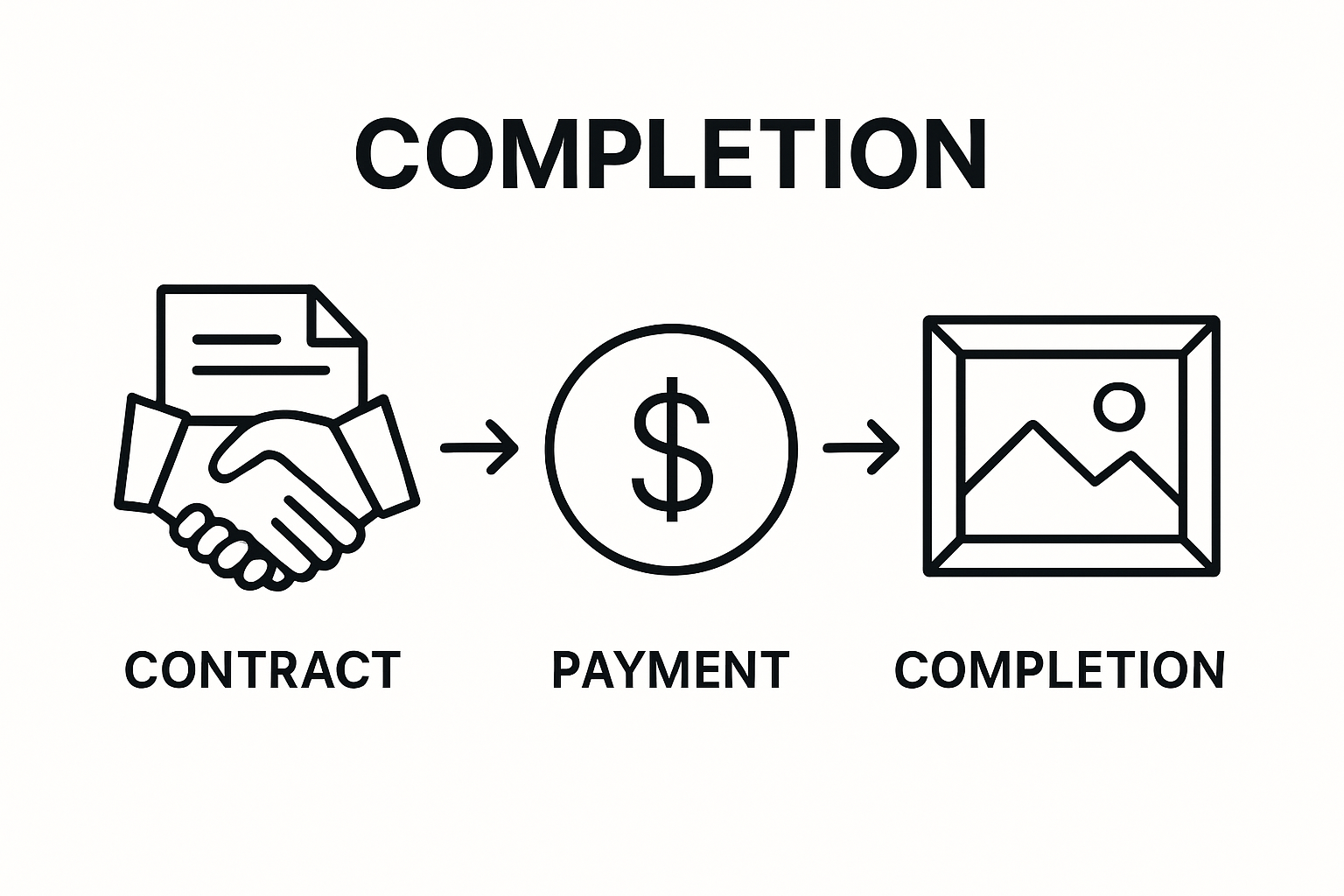
Infographic showing art commission contract, payment, and artwork delivery steps

Step 5: Monitor the Artistic Progress and Provide Feedback

Monitoring artistic progress and providing constructive feedback represents a delicate balance between maintaining your artistic vision and respecting the creative process. This step is about fostering collaborative communication that nurtures the artwork’s development while ensuring alignment with your original expectations.

Establish a structured communication rhythm with your artist, scheduling regular check-ins that allow you to review progress without micromanaging the creative process. These interactions should be designed to provide meaningful insights and gentle guidance. Explore professional art consultation techniques to refine your feedback approach and understand effective communication strategies with artists.

Effective feedback requires a careful, nuanced approach. When reviewing preliminary sketches or work-in-progress, focus on specific elements rather than making broad, sweeping statements. Describe what you observe, articulate your emotional response, and offer constructive suggestions that provide clear direction without undermining the artist’s creative autonomy. For instance, instead of saying “I don’t like this,” try “The color palette feels different from our initial discussion. Could we explore how to bring it closer to the warm, earthy tones we originally discussed?”

Remain open to the artist’s creative interpretations and professional expertise. Sometimes, their unique perspective might offer unexpected and exciting dimensions to your original concept. Approach each interaction with respect, curiosity, and a willingness to collaborate. Document your feedback in writing, ensuring clarity and providing a reference point for both parties.

To verify you have successfully completed this step, confirm the following:

  • Have I maintained regular, constructive communication with the artist?
  • Are my feedback sessions specific, respectful, and solution-oriented?
  • Have I documented all feedback and artist responses?
  • Am I balancing my vision with the artist’s creative expertise?

By approaching artistic progress monitoring with empathy, clarity, and professionalism, you create an environment that nurtures creativity and increases the likelihood of a truly remarkable commissioned artwork.

Step 6: Verify Final Artwork and Complete the Transaction

Verifying the final artwork and completing the transaction represents the culmination of your artistic collaboration, transforming months of creative dialogue into a tangible masterpiece. This step requires meticulous attention to detail, ensuring the artwork meets every specification outlined in your original agreement.

Initiate the verification process by scheduling an in-person or virtual review of the completed artwork. Carefully examine the piece against the original brief, comparing it with the preliminary sketches and progress discussions. Explore professional art verification techniques to ensure a comprehensive assessment. Pay close attention to technical details such as color accuracy, dimensionality, medium consistency, and overall artistic interpretation.

During the verification, document your observations methodically. Create a comprehensive review that acknowledges the artwork’s strengths and identifies any potential discrepancies from the original vision. If minor adjustments are necessary, discuss them professionally with the artist, referring back to your original contract’s revision clauses. Approach these conversations with respect, understanding that the final artwork represents a collaborative creative journey.

Once you are satisfied with the artwork, proceed with the final transaction. Confirm that all contractual obligations have been met, including any agreed-upon reproduction rights, framing specifications, or delivery arrangements. Process the final payment promptly and according to the terms established in your original agreement. Request proper documentation, including a certificate of authenticity, detailed artwork description, and any relevant provenance information.

To verify you have successfully completed this step, confirm the following:

  • Have I thoroughly examined the artwork against the original brief?
  • Did I document my observations and any potential adjustments?
  • Have all contractual obligations been fulfilled?
  • Have I processed the final payment and received necessary documentation?

By approaching the final verification with professionalism, attention to detail, and mutual respect, you conclude the art commission process on a positive note, potentially establishing a foundation for future creative collaborations.

Below is a concise checklist table to help you verify successful completion of each stage in the art commission process as outlined in this guide.

Commission Stage Key Completion Checks
Define Artistic Vision Emotional and aesthetic goals articulated; vision described in detail; brief documented; open to collaboration
Select Suitable Artist Artists researched on various platforms; portfolio matches style; conversations held; comfortable with professionalism
Discuss Commission Details Vision communicated; practical requirements covered; detailed proposal received; agreeable on financial/creative terms
Finalise Contract and Payment Comprehensive contract drafted; milestones and payments specified; revision/cancellation terms included; both parties agreed
Monitor Progress and Feedback Regular, constructive communication; respectful, specific feedback; ongoing documentation; balance of vision and artistic input
Verify Final Artwork and Complete Payment Thorough review of artwork; discrepancies noted; contract fulfilled; payment processed; documentation received

art commission final step

Bring Your Art Commission Vision to Life with South Africa’s Top Talent

Are you struggling to find the perfect artist who truly understands your creative brief, communicates clearly, and delivers exactly what you imagine? Many art lovers face challenges with unclear project details, communication breakdowns, or uncertainty about secure transactions. At Art Online, we solve these pain points so you can commission artwork with total confidence. Our guide helped you define your vision, select the right artist, and understand each step. Now, take the next leap and access the country’s largest collection of proven artists, ready to collaborate and create.

https://art-online.co.za

Discover the joy of a hassle-free art commission experience. Explore South Africa’s largest online art gallery where you can view artist portfolios, send detailed artistic briefs, and secure trustworthy transactions. Ready to see your one-of-a-kind artwork come to life? Visit Art Online today and connect with South Africa’s most renowned artists. Start your commission now for a result that exceeds your creative expectations.

Frequently Asked Questions

How do I define my artistic vision for a commission?

To define your artistic vision, reflect on the emotional and aesthetic impact you desire from the artwork. Document key details such as the mood, color palette, style, and purpose of the piece in a comprehensive artistic brief.

What should I look for when selecting an artist for my commission?

When selecting an artist, evaluate their portfolio for relevant skills and style. Consider their professional background, communication style, and ability to interpret your vision. Look for previous commission experiences that resonate with your artistic goals.

What details should I include in the commission proposal to the artist?

In your commission proposal, include the artwork specifications such as dimensions, medium, color palette, and emotional elements. Additionally, discuss your expectations regarding budget, timeline, and any artistic requirements you wish to outline.

How can I provide effective feedback to the artist during the commission process?

Provide specific, constructive feedback by focusing on particular elements of the artwork and articulating your emotional response. Be respectful and encourage dialogue, remaining open to the artist’s creative interpretations while ensuring alignment with your vision.

Posted on Leave a comment

Understanding Digital Art vs Traditional Art: Key Differences

digital art versus traditional

Art has always been about how humans express creativity and emotion. Now the world is witnessing something wild. Digital art sales topped 69 million dollars for a single piece in 2021, turning centuries of art tradition on its head. But while tech platforms seem to be taking over, the heart of artistic impact still often lies in the medium itself, and the ways materials shape the stories we see and feel.

Table of Contents

Quick Summary

Takeaway Explanation
Traditional art uses physical materials. Traditional art relies on tangible mediums like canvas and paint, requiring manual craftsmanship.
Digital art relies on technology. Digital art employs software and devices, allowing complex creations and easier edits.
Medium choice influences emotional impact. The selected medium shapes how emotions are conveyed and how audiences perceive the artwork.
Market dynamics differ for both mediums. Traditional art values physical scarcity, while digital art’s worth is influenced by technology like NFTs.
Both art forms provide unique experiences. Traditional art offers tactile engagement, while digital art enables rapid creativity and broader emotional expression.

Defining Digital Art and Traditional Art

The world of art has undergone significant transformation with the emergence of digital technologies, creating fascinating distinctions between digital art and traditional art. Understanding these differences provides insight into how artistic expression continues to evolve in the modern era.

What Defines Traditional Art

Traditional art represents artistic creation using physical materials and manual techniques that have been practiced for centuries. Artists work directly with tangible mediums like canvas, paper, paint, clay, or sculpture materials. These art forms require physical skill, precise hand movements, and direct manipulation of artistic tools. Traditional art includes painting, drawing, sculpture, printmaking, and other techniques that involve direct human craftsmanship.

The Emergence of Digital Art

Digital art represents a revolutionary approach to artistic creation utilizing digital technologies and computational tools. According to Adobe Creative, digital art encompasses various forms created using digital platforms, including graphic design, digital painting, 3D modeling, and computer-generated imagery. Unlike traditional art, digital art relies on software, electronic devices, and advanced technological interfaces to produce visual expressions.

Key Differences Between Digital and Traditional Art

While both digital and traditional art share the fundamental goal of creative expression, they differ significantly in creation process and characteristics:

  • Tools and Materials: Traditional art uses physical tools like brushes, pencils, and canvases, while digital art requires computers, graphic tablets, and specialized software.
  • Reproducibility: Digital art can be easily replicated and distributed electronically, whereas traditional art pieces are typically unique physical objects.
  • Manipulation Capabilities: Digital art allows unprecedented editing and transformation possibilities that are more challenging in traditional art mediums.
  • Skill Requirements: Traditional art demands manual dexterity and physical technique, while digital art requires technical software proficiency and digital design skills.

Understanding these distinctions helps art enthusiasts, collectors, and creators appreciate the unique attributes of both artistic approaches.

To help clarify the key distinctions between digital and traditional art, the following table compares their primary features as discussed throughout the article.

Aspect Traditional Art Digital Art
Tools and Materials Physical (canvas, paint, pencils, sculpture materials) Electronic devices (computers, tablets, software)
Creation Process Manual, direct hands-on techniques Technology-driven, utilises digital interface
Reproducibility Unique, original pieces Easily replicated, electronically distributed
Manipulation Capabilities Limited modifications, error correction is challenging Effortless editing, instant undo and transformation
Skill Requirements Manual dexterity, craftsmanship Technical proficiency in software and digital design
Emotional Impact Tactile, authentic, sensory connection Dynamic, flexible, enables broader emotional range
Market Dynamics Valued for scarcity, provenance, historical context Influenced by technology (NFTs, blockchain)

Infographic comparing key differences of digital and traditional art

The Significance of Artistic Medium: Why It Matters

The artistic medium represents far more than a simple tool for creation. It serves as a critical language through which artists communicate their vision, emotions, and conceptual ideas. Understanding the profound significance of artistic medium reveals how the selection of materials fundamentally transforms the artistic experience and viewer perception.

Artistic Medium as Creative Expression

Each artistic medium carries unique inherent characteristics that shape artistic expression. Oil paints offer rich texture and depth, watercolors provide translucent luminosity, digital platforms enable complex manipulations, and sculpture materials allow three-dimensional exploration. Artists strategically choose mediums that best translate their creative intentions, understanding that the medium itself becomes an integral part of the artwork’s narrative and emotional resonance.
The Psychological Impact of Medium Selection

According to Tate Modern, the selection of artistic medium profoundly influences both the creator’s process and the audience’s interpretation. Different mediums evoke distinct psychological responses. Traditional mediums like oil painting might communicate permanence and historical depth, while digital art can suggest dynamism, technological innovation, and contemporary complexity. Learn more about exploring artistic materials that expand creative possibilities.

Technical and Conceptual Considerations

Choosing an artistic medium involves nuanced considerations beyond aesthetic preferences:

  • Technical Skill Requirements: Each medium demands specific techniques and expertise
  • Emotional Transmission: Mediums have inherent capacities to convey different emotional intensities
  • Cultural and Historical Context: Some mediums carry deeper cultural significance and historical associations
  • Accessibility and Cost: Practical considerations like material availability and expense influence medium selection

The artistic medium transforms from a mere instrument to a profound communication channel, bridging the artist’s inner world with audience perception through carefully selected materials and techniques.

artistic medium human gallery

Exploring the Creative Process: How Each Medium Works

The creative process varies dramatically between digital and traditional art mediums, reflecting unique approaches to artistic expression. Each medium demands distinct techniques, mental frameworks, and technological interactions that shape how artists conceptualize and realize their visual ideas.
Traditional Art Creation Workflow

Traditional art creation is a tactile, physically intimate process involving direct manipulation of materials. Artists engage with their medium through hands-on techniques like brushstrokes, sculpting, or drawing. Physical skills such as hand-eye coordination, precise motor control, and understanding material properties become critical. Oil painters layer pigments carefully, watercolor artists manage fluid transparency, and sculptors shape three-dimensional forms through direct physical engagement.

Digital Art: A Technological Creative Journey

Digital art creation represents a fundamentally different workflow driven by technological interfaces. According to Creative Bloq, digital artists use graphic tablets, styluses, and sophisticated software to translate creative visions. Discover innovative art tools that expand artistic possibilities in the digital realm. The process involves layers, complex editing capabilities, and instantaneous transformations that are impossible in traditional mediums.

Comparative Creative Considerations

Both artistic approaches share core creative principles while presenting unique workflow characteristics:

  • Conceptualization: Traditional art relies more on pre-planning and physical sketching
  • Error Correction: Digital art allows immediate undo and modification
  • Time Investment: Traditional mediums often require longer completion times
  • Experimentation: Digital platforms enable rapid iteration and style exploration

Understanding these workflow differences illuminates how technological and physical tools fundamentally shape artistic creation, offering artists diverse pathways for expressing creative vision.

This table offers a succinct comparison of the unique creative process characteristics found in digital and traditional art as described above.

Creative Process Aspect Traditional Art Digital Art
Conceptualisation Involves pre-planning and physical sketching Enables rapid idea generation and iteration
Error Correction Manual corrections, often permanent Instant undo, non-destructive editing
Time Investment Generally longer to complete Faster production through digital workflows
Experimentation Slower, often limited by materials Quick, wide range of styles and options
Physical Engagement Tactile, direct manipulation of materials Engages primarily through digital interfaces

Comparing the Emotional and Cultural Impact

Art serves as a profound communication medium that transcends mere visual representation, deeply connecting with human emotions and cultural narratives. The emotional and cultural impact varies significantly between digital and traditional art forms, reflecting complex psychological and societal dynamics.

Emotional Resonance of Artistic Mediums

Traditional art carries an inherent emotional depth rooted in physical interaction and sensory experience. The tactile qualities of brushstrokes, the texture of canvas, and the tangible presence of a physical artwork create a visceral connection that digital mediums struggle to replicate. Traditional art often communicates emotional nuances through subtle material imperfections and personal touch, generating a sense of authenticity and intimacy.

Cultural Representation and Contextual Significance

According to Frontiers in Psychology, cultural background profoundly influences aesthetic appreciation. Different artistic mediums carry unique cultural narratives and historical significance. Traditional art forms often represent generational knowledge, cultural heritage, and community storytelling, while digital art symbolizes technological progression and contemporary global interconnectedness. Explore the evolution of artistic expression and understand how mediums reflect societal transformations.

Comparative Emotional Dimensions

Each artistic medium offers distinct emotional engagement opportunities:

  • Sensory Experience: Traditional art provides direct physical interaction
  • Emotional Accessibility: Digital art enables broader emotional expression through technological flexibility
  • Cultural Preservation: Traditional mediums maintain historical artistic traditions
  • Global Communication: Digital platforms facilitate cross-cultural artistic dialogue

Understanding these emotional and cultural nuances reveals how artistic mediums are not just tools of creation but powerful vehicles of human expression and connection.

The art market has undergone significant transformation with the emergence of digital art, challenging traditional notions of value, ownership, and collectibility. Both traditional and digital art forms present unique market dynamics that reflect evolving technological and collector preferences.

Traditional Art Market Dynamics

Traditional art maintains a robust market position rooted in historical value and physical scarcity. Collectors prize original pieces for their tangible qualities, provenance, and potential appreciation. Physical artworks like oil paintings, sculptures, and limited edition prints continue to command significant prices at auction houses and galleries. The intrinsic value stems from the artwork’s unique physical existence, artist reputation, and historical significance.

Digital Art and Emerging Valuation Models

Digital art has revolutionized market valuation through technologies like blockchain and non-fungible tokens (NFTs). According to Belfer Center, digital platforms are expanding art market accessibility and transforming traditional collection models. Discover insights into art investment and understand the evolving landscape of art ownership. Digital artworks can now be authenticated, traded, and valued with unprecedented transparency, creating new economic opportunities for artists and collectors.

Comparative Market Considerations

Both artistic mediums present distinctive market characteristics:

  • Authenticity: Traditional art relies on physical provenance, digital art uses blockchain verification
  • Reproduction Rights: Digital art allows easier duplication, traditional art maintains scarcity
  • Investment Potential: Traditional art has established long-term value metrics
  • Global Accessibility: Digital platforms enable worldwide art trading and collection

Understanding these market trends reveals the complex ecosystem of art valuation, where technological innovation and traditional appreciation coexist and evolve.

Experience the Power of Mediums – Bring Meaningful Art into Your World

The article explores the emotional connection and unique qualities that digital art and traditional art each offer. Have you ever wished you could actually see and own artworks that embrace these distinct differences – from the tactile comfort of oil on canvas to the energy of digital creation? Many art lovers struggle to find truly original pieces that speak to both heart and heritage, especially when it comes to South African talent.

Your search for authenticity and innovation ends here. At Art Online, you will find an unrivalled collection featuring both traditional and digital artworks from South Africa’s most celebrated artists. Explore original paintings, digital prints and rare works that capture the richness and diversity described in our article. Every piece is curated to reflect genuine creativity, technical mastery and cultural resonance.

https://art-online.co.za

Find art that resonates with your story today. Whether you desire the timeless impact of traditional mediums or the bold spirit of digital innovation, discover your next investment or statement piece at Art Online. Do not miss this chance to own a uniquely South African masterpiece and experience the real difference the right medium can make to your home or collection. Start browsing and let the perfect artwork find you now.

Frequently Asked Questions

What is the primary difference between digital art and traditional art?

Digital art uses digital technologies and software for creation, while traditional art involves physical materials and manual techniques such as painting or sculpting.

How does the creative process differ between digital and traditional art?

The creative process in traditional art is tactile and involves hands-on techniques, while digital art allows for complex editing and manipulation through technology, enabling faster iteration of ideas.

Can digital art be easily reproduced compared to traditional art?

Yes, digital art can be easily replicated and distributed electronically, whereas traditional art pieces are often unique physical objects that cannot be duplicated without losing their original essence.

What skills are necessary for creating digital art versus traditional art?

Traditional art requires manual dexterity and craftsmanship, whereas digital art necessitates proficiency in software and understanding of digital design tools.

Posted on Leave a comment

How to Research an Artist for Your Collection

researching artist how-to

Researching an artist can feel overwhelming with all the biographies, market stats, and expert opinions floating about. Yet, most people do not realise that simply defining your research goals upfront can cut your workload in half. In fact, studies reveal that having clear objectives makes your entire search much more focused and effective. So why do so many overlook this simple trick and end up drowning in useless details?

Table of Contents

Quick Summary

Key Point Explanation
1. Define clear research goals Establish specific objectives to guide your artist investigation and focus your research efforts effectively.
2. Gather foundational artist information Collect essential biographical details to understand the artist’s background and context for deeper research.
3. Explore artistic background and style Delve into the artist’s training and creative influences to reveal their unique artistic expression.
4. Analyze market trends for investment Assess sales history and market fluctuations to make informed decisions about an artist’s potential value.
5. Evaluate artwork authenticity and condition Conduct thorough provenance research and physical examination to ensure the artwork is genuine and in good condition.

Step 1: Define Your Research Goals

Researching an artist requires a strategic approach that begins with clearly defining your research goals. This initial step serves as the foundation for a comprehensive and meaningful investigation into an artist’s background, artistic style, and significance. Understanding precisely what you want to achieve will help you focus your efforts and prevent becoming overwhelmed by the vast amount of potential information.

Your research goals might vary depending on your specific purpose. Art collectors often seek to understand an artist’s market value, historical context, and unique artistic contributions. Interior decorators might focus on understanding an artist’s style, color palette, and how their work might complement specific design aesthetics. Regardless of your motivation, establishing clear objectives will streamline your research process.

Start by asking yourself specific questions about what aspects of the artist you want to explore. Are you interested in their biographical details? Their artistic evolution? The cultural or historical context of their work? Perhaps you want to understand their techniques, preferred mediums, or the themes that recur in their art. According to research from the University of North Carolina at Pembroke, defining clear research goals provides critical direction and prevents aimless investigation.

Consider creating a structured research plan that outlines your specific objectives. This might include:

  • Identifying the primary sources you’ll explore
  • Determining the depth of research you require
  • Setting realistic timelines for your investigation
  • Establishing specific questions you want to answer about the artist

Remember that your research goals should be flexible and adaptable. As you delve deeper into your investigation, you might discover unexpected insights that reshape your initial objectives. The key is to remain open to new information while maintaining a structured approach to your research.

Verify that your research goals are concrete and actionable. A well-defined goal might sound like “Understand the artistic influences of [Artist Name] during their formative years” rather than a vague statement like “Learn about the artist.” This specificity will guide your research and help you locate the most relevant information efficiently.

Step 2: Gather Basic Information About the Artist

Once you have defined your research goals, the next critical step is gathering foundational information about the artist. This initial research phase serves as the cornerstone for a deeper understanding, providing context and essential background that will guide your subsequent investigation. Think of this stage as building the first layer of your artistic knowledge framework.

Begin with the most accessible and fundamental sources of information. Art gallery websites, museum catalogues, artist monographs, and comprehensive art encyclopedias can offer reliable biographical details. Online platforms like artist websites, professional portfolios, and reputable art databases can provide quick insights into an artist’s background, birth year, nationality, primary artistic periods, and notable achievements.

According to the Library of Congress research guidelines, documenting basic biographical information requires systematic and thorough documentation. Key details to collect include the artist’s full name, date and place of birth, artistic training or education, primary artistic movements or styles they represent, and significant career milestones.

Consider exploring multiple information sources to cross-reference and verify the details you uncover. Reliable sources might include:

  • Official artist websites
  • Academic art publications
  • Museum and gallery archives
  • Professional artist registries
  • Comprehensive art history books

Your research should aim to construct a comprehensive yet concise profile of the artist. Pay attention to chronological progression and significant turning points in their artistic journey. Look for information about their early influences, formal training, breakthrough moments, and the evolution of their artistic style.

Three-step graphic: identify, verify, organize artist info

As you gather information, create a structured document or digital folder to organize your findings. This will help you track sources, cross-reference information, and build a coherent narrative about the artist. Verify the credibility of each source, prioritizing academic and professional publications over casual online content.

Successful completion of this step means you have a clear, factual overview of the artist’s basic biographical information, setting the stage for more in-depth research into their artistic practice and significance.

Step 3: Investigate the Artist’s Background and Style

Delving deeper into an artist’s background and style requires a nuanced approach that goes beyond basic biographical information. This step involves understanding the artistic DNA that defines the artist’s unique creative expression, exploring the cultural, historical, and personal contexts that shape their work.

Begin by examining the artist’s formal training and educational background. Art schools, mentors, and early artistic influences often provide crucial insights into the development of their distinctive style. Look for patterns in their artistic journey that reveal how their technique, subject matter, and creative approach have evolved over time. According to research from the National Gallery of Art, understanding an artist’s educational and professional trajectory helps contextualize their artistic contributions.

Artistic style investigation involves more than simply categorizing their work. Pay attention to the unique visual language the artist employs. Examine their preferred mediums, color palettes, recurring themes, and the emotional or conceptual underpinnings of their artwork. Some artists draw inspiration from personal experiences, cultural heritage, or specific historical movements. Learn more about exploring artist backgrounds in our comprehensive guide to South African artists.

Consider the following approaches to understand an artist’s style:

  • Analyze a comprehensive collection of their works
  • Study critical reviews and scholarly writings about their art
  • Explore interviews or artist statements
  • Compare their work with contemporaries in similar artistic movements

Contextual research is paramount. Look into the historical and cultural environment that influenced the artist’s work. This might include political movements, social changes, or artistic trends prevalent during their most active periods. Understanding these broader contexts can provide deeper insights into the motivations and significance of their artistic expression.
Verify the depth of your investigation by creating a comprehensive profile that captures not just the technical aspects of their style, but the emotional and intellectual essence of their artistic practice. A successful investigation reveals the artist’s unique perspective, the evolution of their creative journey, and the distinctive qualities that set their work apart from other artists in their genre.

Analyzing the market trends and value of an artist’s work is a critical step for collectors and art enthusiasts seeking to make informed investment decisions. This process involves a comprehensive examination of the artist’s current market position, historical pricing trends, and potential future value appreciation.

Begin by tracking the artist’s sales history through reputable art auction houses, galleries, and online art marketplaces. Pay close attention to recent sale prices, frequency of sales, and the trajectory of the artist’s market performance. According to research from Artnet’s Market Analysis, understanding these patterns provides crucial insights into an artist’s economic potential.

Research the artist’s representation and exhibition history. Prestigious gallery affiliations, museum exhibitions, and critical acclaim significantly impact an artist’s market value. Artists featured in renowned institutions or with consistent representation by top-tier galleries often demonstrate more stable and potentially appreciating value. Look for patterns of recognition such as awards, critical reviews, and inclusion in important art collections.

Consider the following key factors when assessing market value:

  • Total number of works produced
  • Rarity of specific pieces or series
  • Historical sales performance
  • Critical reception and artistic reputation
  • Current market demand

Utilize specialized art market databases and price tracking tools to gather comprehensive market data. Comparative analysis is crucial – examine how similar works by the artist or comparable artists in the same genre have been valued over time. This approach helps you understand the potential long-term investment potential of the artist’s work.

Pay attention to broader art market trends that might impact the artist’s value. Economic conditions, shifts in artistic preferences, and emerging art market dynamics can significantly influence an artist’s market position. Learn more about current art market insights for South African artists.

Verify your market analysis by compiling a comprehensive report that includes sales history, current market valuation, potential growth indicators, and a clear assessment of the artist’s market position. A successful market analysis provides a strategic overview that supports informed collecting and investment decisions.

Step 5: Evaluate Artwork Authenticity and Condition

Evaluating the authenticity and condition of an artwork is a critical step that requires meticulous attention to detail and expert-level scrutiny. This process protects your investment and ensures you are acquiring a genuine, high-quality piece that meets professional collecting standards.

Provenance research forms the foundation of artwork authentication. Trace the artwork’s complete ownership history, examining documentation such as certificates of authenticity, previous sale records, gallery receipts, and exhibition catalogs. These documents provide critical evidence of the artwork’s origin and legitimacy. According to the Smithsonian Museum Conservation Institute, comprehensive provenance verification is essential in determining an artwork’s authenticity.

Physical examination requires a systematic approach. Inspect the artwork meticulously for signs of age, original materials, and potential restoration. Look for the artist’s signature, examine the artwork’s surface under different lighting conditions, and check for consistent aging patterns. Professional art conservators can provide detailed technical assessments using specialized equipment like ultraviolet light, infrared reflectography, and microscopic analysis. Discover more about acquiring original artworks with confidence.

Consider the following key evaluation criteria:

  • Signature authenticity and placement
  • Material consistency with the artist’s known work
  • Evidence of professional conservation
  • Structural integrity of the artwork
  • Preservation of original artistic elements

Seek expert validation through professional appraisers and authentication experts specializing in the specific artist or artistic period. These professionals can provide comprehensive reports that validate the artwork’s authenticity, assess its condition, and estimate its market value. Their expertise goes beyond visual inspection, incorporating scientific analysis and deep art historical knowledge.

artwork authenticity evaluation

Documentation is crucial throughout this process. Maintain a detailed record of all examinations, expert consultations, and supporting evidence. This comprehensive documentation not only protects your investment but also provides valuable information for future provenance research and potential resale.

This table presents common evaluation criteria to keep in mind when assessing artwork authenticity and condition.

Criteria What to Look For Why It Matters
Signature authenticity Artist signature matches known examples Confirms provenance
Material consistency Materials used align with artist’s typical practice Detects forgeries or substitutions
Professional conservation Evidence of proper restoration techniques Indicates quality care and value
Structural integrity No major damage or repairs Ensures investment is sound
Preservation of artistic elements Original paint, canvas, or support is intact Maintains artistic and market value

Successful artwork evaluation means you have a thoroughly vetted piece with clear documentation of its authenticity, condition, and historical significance. This meticulous approach ensures you are making an informed and confident addition to your art collection.

Step 6: Compile Your Findings and Make Informed Decisions

Compiling your research findings and transforming them into a strategic decision-making framework is the culmination of your comprehensive artist investigation. This final step synthesizes all the information you’ve gathered, creating a holistic view that enables confident and intelligent art collection decisions.

Create a comprehensive research portfolio that organizes all collected information systematically. This digital or physical dossier should include biographical details, artistic style analysis, market value assessments, provenance documentation, and authentication reports. A well-structured portfolio allows you to review and cross-reference information efficiently, revealing nuanced insights that might not be immediately apparent. According to research from the College of New Jersey, consulting scholarly references and systematically organizing information is crucial for thorough art research.

Develop a decision matrix that weighs multiple research dimensions. Consider factors such as artistic significance, market potential, personal aesthetic preference, and investment potential. Assign weighted scores to each criterion, creating an objective framework that transcends emotional impulses. This analytical approach transforms your research from mere information gathering to strategic decision-making.

Consider the following key evaluation criteria:

  • Alignment with your collection’s overall vision
  • Potential for value appreciation
  • Artistic authenticity and condition
  • Personal emotional connection to the artwork
  • Long-term preservation requirements

Consult with art professionals, including curators, gallery owners, and independent art advisors, to validate your findings. Their expert perspectives can provide additional context, challenge your assumptions, and offer nuanced insights that might have escaped your initial research. Learn more about making informed art collection decisions.

Remember that research is an iterative process. Your initial findings might evolve as you dig deeper, and remaining flexible is key. Document your decision-making process, including any modifications to your original research strategy. This transparency not only supports your current decision but also creates a valuable reference for future art acquisition endeavors.

Successful compilation means you have a well-documented, thoroughly analyzed research portfolio that provides clear guidance. Your systematic approach transforms complex research into a confident, informed art collection strategy.

Ready to Find South Africa’s Next Iconic Artist for Your Collection?

You have just learned how to confidently research an artist — from setting clear research goals to verifying provenance and understanding market value. Yet, finding authentic works by South Africa’s most celebrated names can still feel overwhelming. You do not want to make an uninformed choice or risk missing out on truly valuable pieces. If you are seeking everything from artist history to secure provenance and market data all in one place, why not let the experts help?

https://art-online.co.za

Take the last step towards building a remarkable art collection. Explore Art Online and browse South Africa’s largest online gallery of original artworks. Enjoy full details on artist backgrounds, transparent market insights and an easy way to verify authenticity for every piece. Discover why buying original art in South Africa gives your collection true value. Begin your search now on Art Online — where informed research meets trusted curation.

Frequently Asked Questions

What are the first steps in researching an artist for my collection?

Start by defining your research goals. Determine what specific aspects of the artist you want to explore, such as their biography, artistic style, or historical significance. This will help you focus your research and streamline the process.

How can I gather basic information about an artist?

You can collect foundational information from reliable sources such as art gallery websites, museum catalogs, artist monographs, and reputable art encyclopedias. Key details to gather include the artist’s full name, date of birth, artistic training, and career milestones.

What should I analyze when investigating an artist’s style?

When analyzing an artist’s style, consider their preferred mediums, color palettes, themes, and emotional or conceptual elements of their work. Additionally, examine their formal training, artistic influences, and the cultural context that shaped their creative expression.

To assess market trends and value, track the artist’s sales history through auction houses and galleries, analyze their exhibition history, and consider factors such as rarity, critical reception, and current market demand. Utilize art market databases for comprehensive insights.

Posted on Leave a comment

How to Analyze Art Like a Pro: A Step-by-Step Guide

analyzing art step by step


Looking at a work of art should go way beyond just seeing pretty colours and interesting shapes. Most people glance for only a few seconds, but experts recommend spending at least 10 to 15 minutes closely inspecting a single piece to unlock its secrets. The real magic happens when you follow a structured process that turns every brushstroke and detail into a story waiting to be discovered.

Here is a summary of each step in the art analysis process, including the aim of each stage and what you should focus on.

StepKey FocusGoal
1. Prepare FrameworkStructured observation protocolBuild a systematic approach to guide analysis
2. Observe CloselyPhysical characteristics and detailsCapture a comprehensive, objective overview
3. Research ContextArtist, history, provenanceUnderstand deeper meaning and significance
4. Aesthetic AssessmentVisual and technical elementsDecode the artwork’s visual language
5. Interpret MeaningSynthesise insights and contextDevelop a nuanced, evidence-based interpretation
6. Document AnalysisDetailed notes, sketches, photosCreate a lasting, shareable record

Table of Contents

Quick Summary

Key PointExplanation
1. Develop an Analytical FrameworkCreate a structured approach to guide your art observation and interpretation, addressing various analytical dimensions systematically.
2. Engage in Close ObservationSpend at least 10-15 minutes examining artworks from multiple distances to capture details and nuances effectively.
3. Investigate Context and BackgroundResearch the artist’s history, cultural background, and the story behind the artwork to deepen understanding of its significance.
4. Assess Aesthetic ElementsExamine visual components like color and technique to understand the artist’s emotional and conceptual intentions.
5. Document Your Insights ThoroughlyMaintain a detailed record of your analysis, including observations and interpretations for future reference and shared learning.

Step 1: Prepare Your Analytical Framework

Analyzing art requires a systematic approach that transforms visual observation into meaningful understanding. The first critical step involves developing a robust analytical framework that provides structure and depth to your art interpretation. This framework acts as your investigative toolkit, enabling you to move beyond surface-level impressions and uncover the nuanced layers of artistic expression.
Begin by establishing a comprehensive observation protocol that guides your visual exploration. Think of this protocol as a detailed lens through which you’ll examine the artwork. According to Princeton University’s Art Museum, your framework should systematically address key analytical dimensions:

  • Technique and Materials: Examine the physical creation method, medium, and artist’s technical choices
  • Composition: Analyze spatial arrangement, balance, and visual hierarchy
  • Visual Elements: Investigate color, light, perspective, and textural qualities
  • Contextual Considerations: Understand historical, cultural, and personal contexts surrounding the artwork

As you construct your analytical framework, prioritize objectivity and structured observation. Start by spending significant time simply looking at the artwork without immediate judgment. Document your initial perceptions through detailed written notes, sketches, or digital annotations. Pay attention to your immediate emotional responses, but train yourself to separate these from objective observations.

Your framework should include a structured method for recording observations. Create a dedicated notebook or digital document with clear sections for different analytical dimensions. This approach ensures you capture comprehensive details and can return to your initial observations during later stages of interpretation. Include space for descriptive notes, questions that emerge during observation, and potential contextual research points.

Remember that a robust analytical framework is flexible yet disciplined. While following a structured approach, remain open to unexpected insights and artistic nuances that might not fit neatly into predefined categories. The goal is to create a balanced method that combines systematic observation with creative interpretation, allowing the artwork to reveal its complexities gradually and authentically.

Step 2: Observe the Art Object Closely

Close observation transforms art appreciation from passive viewing into an investigative experience. This critical step demands patience, intentionality, and a systematic approach to understanding an artwork’s intricate details and subtle nuances. According to Getty Museum conservation experts, professional art analysis begins with disciplined, methodical visual exploration.

Start by positioning yourself at different distances from the artwork. Initial observations should be made from multiple perspectives – standing back to understand overall composition, then moving closer to examine specific details. Professional art analysts recommend spending at least 10-15 minutes observing a single piece, allowing your eyes to absorb subtle variations in technique, texture, and execution.

Document your observations systematically. Use a dedicated notebook or digital device to record precise details about the artwork’s physical characteristics. Sketch rough outlines if possible, noting color gradations, brushstroke techniques, and compositional elements. Pay special attention to:

  • Material qualities and textures
  • Color palette and chromatic variations
  • Brushwork and application techniques
  • Spatial relationships within the artwork

Lighting plays a crucial role in close observation. Natural, diffused light provides the most accurate representation of an artwork’s true colors and details. If examining a piece in a gallery or museum, position yourself to minimize glare and shadows. For home collections, experiment with different lighting angles to reveal textural nuances that might be invisible under standard illumination.

Train yourself to observe without immediate interpretation. The goal is pure, objective observation – recording what you see without rushing to conclusions about meaning or artistic intent. This discipline requires significant mental focus and practice. If your mind wanders or you feel impatient, take a brief break and return with renewed concentration.

To verify the effectiveness of your close observation, review your notes and ask yourself: Have I captured the artwork’s physical characteristics comprehensively? Can I describe the piece in detail without relying on interpretive language? Your ability to provide a precise, descriptive account indicates a successful close observation process.

Two-step infographic: observing and documenting art analysis

Discover more about art collection techniques that can enhance your analytical skills.

Step 3: Investigate the Art’s Background and Context

Contextual investigation transforms art from a static visual object into a dynamic narrative embedded with historical, cultural, and personal significance. This critical step moves beyond surface observations to uncover the intricate stories and motivations behind artistic creation. According to Getty Research Institute, understanding an artwork’s provenance provides profound insights into its authentic meaning and cultural significance.

Research begins with identifying key contextual elements: the artist’s background, historical period, cultural environment, and personal circumstances that influenced the artwork’s creation. Start by gathering information from multiple authoritative sources. Professional art analysts recommend consulting museum catalogs, artist biographies, critical reviews, and specialized art history publications to build a comprehensive understanding.

Develop a systematic approach to gathering contextual information:

  • Locate the artwork’s precise date and geographic origin
  • Research the artist’s biographical details
  • Understand the social and political climate of the artwork’s creation
  • Investigate the artistic movements and styles prevalent during that period

Digital resources have dramatically simplified contextual research. Online museum archives, digital libraries, and specialized art databases offer unprecedented access to historical information. Academic databases like JSTOR and Google Scholar provide scholarly articles that can illuminate nuanced details about an artwork’s background. Local libraries and university research centers often maintain specialized art history collections that can provide deeper insights.

Pay special attention to provenance documentation, which traces an artwork’s ownership history. This record not only establishes authenticity but also reveals the artwork’s journey through different collections, cultural spaces, and historical moments. Examine exhibition catalogs, auction records, and institutional archives to reconstruct the artwork’s historical trajectory.

Verify the depth of your contextual investigation by asking critical questions: Can you articulate the artwork’s historical significance? Do you understand the artist’s motivations and the cultural forces that shaped the work? Your ability to provide a rich, nuanced narrative demonstrates successful contextual research. Learn more about exploring artist backgrounds to enhance your analytical skills.

Remember that contextual investigation is an ongoing process. Art historians continually reinterpret artworks as new historical evidence emerges, making your research a dynamic, evolving exploration of artistic meaning.

Step 4: Assess Aesthetic Elements and Techniques

Assessing aesthetic elements transforms art analysis from passive observation to critical understanding. This step decodes the visual language artists use to communicate emotion, meaning, and experience through deliberate technical choices. According to Getty Museum’s educational resources, understanding aesthetic elements reveals the artwork’s fundamental visual grammar.

Technical assessment demands a systematic, comprehensive approach. Begin by examining fundamental visual components: line, color, space, texture, and composition. Each element operates as a sophisticated communication tool, carrying emotional and conceptual weight beyond mere visual appearance. Professional art analysts recommend breaking down these elements sequentially, studying how they interact and contribute to the artwork’s overall impact.

Pay particular attention to color dynamics and emotional resonance. Color choices are never accidental but strategic decisions that shape viewer perception. Notice how:

  • Warm colors create energy and forward movement
  • Cool colors suggest depth and tranquility
  • Complementary color pairs intensify visual vibrancy
  • Subtle color gradations communicate emotional nuance

Examine the artwork’s technical execution with professional scrutiny. Study brushwork techniques, paint application methods, and material interactions. Notice the artist’s deliberate choices in texture, stroke weight, and layering. These technical details reveal the artist’s skill, emotional state, and conceptual intentions. A thick, aggressive brushstroke might communicate different emotional energy compared to delicate, precise lines.

Develop a disciplined observation process by documenting your technical observations. Sketch rough diagrams highlighting compositional elements, make detailed notes about color interactions, and record your visceral responses to technical choices. This documentation transforms subjective viewing into objective analysis.

Verify the depth of your aesthetic assessment by asking critical questions: Can you articulate how specific technical choices contribute to the artwork’s overall emotional impact? Do you understand the relationship between individual aesthetic elements? Your ability to provide a nuanced, technically informed description indicates successful aesthetic analysis. Explore more about artistic techniques to refine your analytical skills.

Remember that aesthetic assessment is both a technical and intuitive process. While systematic observation provides structure, remain open to the artwork’s emotional and conceptual mysteries that transcend mechanical analysis.

Step 5: Interpret the Art’s Meaning and Impact

Interpretation transforms art analysis from technical observation into a profound dialogue between viewer and artwork. This critical step moves beyond description, uncovering the deeper narrative, emotional landscape, and cultural significance embedded within the visual experience. According to Stanford Encyclopedia of Philosophy, interpretation is an iterative process where understanding emerges through dynamic interaction between artwork details and broader contextual frameworks.

Meaning-making requires a balanced, multifaceted approach. Begin by synthesizing insights from previous analytical steps – technical observations, historical context, and aesthetic elements. Approach interpretation as a conversation, not a definitive declaration. Professional art analysts emphasize that robust interpretation involves multiple perspectives, acknowledging that meanings are fluid and contextually dependent.

Develop your interpretative strategy by exploring several critical dimensions:

  • Emotional resonance and psychological impact
  • Cultural and historical symbolism
  • Personal and collective narrative elements
  • Potential social or political commentary

Create a structured reflection process that moves beyond superficial impressions. Document your initial emotional responses, but challenge them through rigorous analysis. Ask probing questions: What underlying stories might the artwork be telling? How do the technical choices support or complicate the potential meanings? What personal experiences might be influencing your interpretation?

Recognize the subjective nature of interpretation. Your background, cultural experiences, and personal history inevitably shape how you understand an artwork. This subjectivity is not a weakness but a rich interpretative resource. Professional art critics understand that multiple valid interpretations can coexist, each offering unique insights into the artwork’s complexity.

Verify the depth of your interpretation by assessing whether you can articulate:

  • The artwork’s potential meanings beyond literal representation
  • How technical and contextual elements support your interpretation
  • Alternative perspectives that might also be valid

Your interpretation should feel like a nuanced argument supported by evidence from your previous analytical steps. Explore deeper insights into artistic symbolism to refine your analytical skills.

Remember that great art resists simplistic, singular interpretations. The most compelling analyses embrace complexity, uncertainty, and the artwork’s capacity to generate ongoing dialogue and discovery.

Step 6: Document Your Analysis and Insights

Documentation transforms ephemeral art analysis into a lasting, shareable intellectual record. This final step crystallizes your comprehensive observations, interpretations, and insights into a structured, professional format that preserves the depth of your artistic investigation. According to UNC Writing Center’s Art History guide, effective documentation requires precision, descriptive detail, and systematic organization.

Create a comprehensive documentation framework that captures every dimension of your art analysis. Professional art historians recommend developing a standardized template that ensures consistent, thorough record-keeping. Your documentation should serve multiple purposes: personal reference, potential academic sharing, and a systematic approach to future art investigations.

Establish a documentation strategy that includes multiple complementary elements:

  • Detailed written analysis
  • Annotated sketches or diagrams
  • High-quality photographic documentation
  • Digital or physical research notes

Utilize digital and physical tools strategically. Digital platforms offer searchable, easily shareable documentation, while physical notebooks provide tactile engagement and immediate accessibility. Consider using specialized art analysis software or creating a dedicated digital folder with subfolders for different analytical aspects. Professional art analysts often maintain both digital and physical archives to ensure redundancy and comprehensive preservation.

Pay meticulous attention to documentation details. Include precise information about the artwork: title, artist, date, medium, dimensions, location, and provenance. Transcribe your step-by-step analytical process, highlighting key observations from each previous stage. Use clear, descriptive language that allows someone unfamiliar with the artwork to understand your analytical journey.

Verify the quality of your documentation by assessing whether it:

  • Provides a comprehensive, chronological analysis
  • Includes specific visual and contextual evidence
  • Captures your interpretative insights
  • Could be understood by another researcher

Use this checklist when you believe you have completed your art analysis to ensure all key criteria for a thorough and professional examination are covered.

Verification PointWhat to CheckCompletion Criteria
Objective ObservationHas every visual detail been described without assumption?Descriptive notes with no interpretation
Contextual ResearchHave you consulted diverse sources for background?Historic, cultural, and artist details documented
Technical AssessmentWere aesthetic and material elements analysed?Notes on technique, colour, and composition present
InterpretationDid you synthesise evidence into supported meaning?Reasoned, multi-perspective reflections included
DocumentationIs the analysis recorded coherently?Comprehensive record with text, sketches, or images

Photographic documentation requires special consideration. Capture multiple angles, include scale references, and ensure high-resolution images that reveal technical details. Learn more about creating professional art documentation to enhance your archival skills.

Remember that exceptional documentation is both a scholarly practice and an art form. Your goal is to create a record that not only preserves your analysis but also communicates the artwork’s complexity, beauty, and significance to future audiences.

document art analysis

Ready to Master Art Analysis? Find Real Inspiration in Authentic Works

You have just learned how expert observation, detailed documentation, and contextual research elevate your understanding of art. But are you struggling to put these new skills into practice without access to professional artworks? When your goal is to decipher composition, colour, and symbolism, the right collection is essential.

https://art-online.co.za

Experience real South African masterpieces up close at Art Online. Browse our curated gallery for works by top local artists and put your analytical framework to the test on exceptional originals. Each piece is fully documented, providing all the background and technical detail you need as a learner or discerning collector. Start enhancing your skills right now with Art Online’s collection and see the difference genuine art makes in your journey toward professional-level analysis.

Frequently Asked Questions

How can I develop an analytical framework for art analysis?

To develop an analytical framework for art analysis, start by establishing a comprehensive observation protocol. Address key aspects such as technique and materials, composition, visual elements, and contextual considerations. Document your observations in a dedicated notebook or digital document, ensuring you capture comprehensive details throughout your analysis.

What should I focus on during close observation of an artwork?

During close observation, focus on the artwork’s physical characteristics such as material qualities, color palette, brushwork, and spatial relationships. Spend significant time observing from various distances and angles to absorb details. Use natural light for accuracy and document specific observations to enhance your understanding.

How can I research the historical and cultural context of an artwork?

To research an artwork’s background and context, gather information about the artist’s biography, historical period, and cultural environment. Utilize resources like museum catalogs, art history publications, and digital archives to obtain authoritative information that enriches your analytical narrative.

What is the importance of documenting my art analysis?

Documenting your art analysis is crucial as it preserves your observations, interpretations, and insights in a structured format. A well-organized documentation framework allows for efficient reference, facilitates sharing, and serves as a systematic approach to future art investigations.

Posted on Leave a comment

From Screen to Canvas Artist: The Amazing Laurens Barnard’s Cinematic Brushstrokes

 Laurens Barnard – The Visionary Behind Laubar

Laurens Barnard the Artist

Some artists paint pictures, and then there are those who paint worlds. Laurens Barnard belongs to the latter. A man of contrasts—quiet in demeanour, yet boundless in imagination—his life’s work has been a continual crossing of borders: between cinema and canvas, between entrepreneurship and artistry, between what is real and what can only exist in dream.

Born in the late 1950s, Barnard’s creative spark revealed itself early, when a high school project transformed into the beginning of a lifelong vocation. That flame would carry him first into the bustling, unpredictable world of filmmaking, where he cut and shaped stories for television, commercials, and cinema. Two decades, he lived in frames and edits, learning rhythm and timing not with a paintbrush but with spools of film. 

This training left a mark—his paintings today still carry a cinematic quality, as if each canvas were a single frame from a movie shot in some parallel universe.

A Cinematic Painter

When Barnard eventually returned to painting, it wasn’t with the delicate hesitation of someone revisiting an old hobby. It was with the urgency of a filmmaker who had learned how powerful images could be when strung together in sequence—and now wanted to compress that power into a single instant. His canvases are bold, saturated, and playful, populated by faces that look both familiar and alien, figures that slip between genders, and colours that feel as though they’ve been turned up past reality’s dial.

To stand in front of one of his works is to be caught off-guard: first by humour, then by unease, and finally by revelation. His portraits, though whimsical at first glance, often carry subtle meditations on identity, culture, and the tensions between tradition and modernity. Barnard delights in contradiction—his figures are both mask and mirror, both parody and confession.

The Builder of Spaces

But Barnard is not only a maker of images; he is a builder of ecosystems. Over the years, he has opened galleries that became sanctuaries for artists, hosting exhibitions that drew together voices from South Africa, Europe, and beyond. His curatorial vision is expansive: he treats the gallery as a stage where conversations happen—not only between works of art, but between cultures, histories, and audiences.

At one point, his space in Pretoria grew into one of the most extensive galleries on the continent. There, amid hundreds of works, he became known not just as a painter but as a cultural broker, placing international masterpieces alongside emerging local voices, and in one extraordinary instance, even bringing a Picasso into South African hands.

The Language of Colour

If there is a single hallmark to Barnard’s artistic language, it is colour. He does not use it sparingly, nor does he obey traditional harmony. Instead, his palette is unruly, joyous, and sometimes even mischievous. Acid greens collide with electric blues; fiery oranges melt into cadmium yellows. His colours are not background—they are the very subject of the painting. They pulse with rhythm, as though the canvas itself is alive with music.

These hues are not merely decorative. They anchor his worlds, carrying emotional weight and symbolic resonance. They allow him to balance the fantastical with the human, the absurd with the intimate. In his hands, colour is both weapon and invitation: it disarms the viewer, then draws them into more profound reflection.

Legacy in Motion

Gallery walls or exhibition dates cannot neatly contain Barnard’s story. He is too restless, too curious, too willing to reinvent himself. From the editing rooms of television studios to the curation of vast exhibition spaces, from satirical portraits to mythic dreamscapes, his journey reflects an artist who refuses to be static.

Even when the pandemic (covid19) forced galleries to close, he adapted, shifting his presence online and continuing to build bridges between artists and audiences. His practice remains as prolific as ever—hundreds upon hundreds of works, each one a portal into a world where fantasy collides with critique, where joy and satire share the same stage.

To encounter a Barnard painting is to step into that collision. It is to laugh, then question; to luxuriate in colour, then wonder about its meaning; to be seduced by play, and then asked to reflect on power, culture, and identity.

And that is perhaps the most accurate measure of his artistry: Laurens Barnard does not simply show us what he sees. He dares us to look again—and discover what we might have overlooked in ourselves.

Laurens Barnard: Architect of Other Worlds

What happens when a life behind the film camera shifts onto the canvas—do the rhythms of cinema echo in paint?

Absolutely. The years Barnard spent in the film industry left him with an instinct for rhythm and timing that now pulses through his canvases. Film teaches the eye to cut, to juxtapose, to create tension by what you place next to something else. On canvas, Barnard condenses those lessons into a single frame. His colours strike like edits, his lines cut across surfaces like scene transitions, and his figures emerge as though paused mid-movement. The cinematic instinct lingers—it’s why his paintings feel alive, as if they are waiting to start moving again the moment you turn away.

Can a childhood spark truly fuel a lifetime of creation?

Yes—and Barnard’s story is a testament to that truth. What began as recognition from a teacher during his school years did more than validate his talent; it rooted his sense of identity in art. That moment became an anchor point he carried into every chapter of his life. Even when he veered into film, entrepreneurship, or gallery curation, painting remained the central fire he circled back to. The spark did not fade—it evolved, absorbing every new experience until it was ready to explode onto canvas decades later with the maturity of lived life behind it.

Is the gallery wall just another kind of movie screen?

In Barnard’s vision, yes. The gallery is not a neutral white cube—it’s a stage, a frame, a space where stories unfold. Just as a filmmaker curates which shots appear in sequence, Barnard curated his gallery walls to create conversations between works: between artists, between cultures, between past and present. Visitors weren’t just looking at paintings hung in neat rows; they were walking into a carefully orchestrated narrative. Like a film, the gallery experience had rhythm, crescendo, and surprise. Barnard turned walls into screens that told stories without moving pictures.

TV Adverts:

Barnard brought his creativity into commercial projects, crafting television adverts that combined storytelling with striking visuals. These experiences sharpened his sense of timing and composition—lessons that would later inform the rhythm and energy of his paintings.

 Established Laubar Art & Film:

 Through the founding of Laubar Art & Film, Barnard fused business acumen with artistic vision, establishing a name synonymous with innovation, quality, and discovery in the contemporary art world.

900+ Paintings in 20 Years & Opening the Largest Gallery in Africa:

Over twenty years, Barnard produced more than 900 paintings, each alive with colour, narrative, and playful energy. His ambition extended to space as well as creation—he opened one of the most extensive galleries in Africa, a testament to his vision of making art immersive, accessible, and transformative on a grand scale.

Conclusion

The Uncontainable Vision of Laurens Barnard

Laurens Barnard is not an artist who can be neatly categorised, boxed, or reduced to a single style or medium. His career, spanning decades, defies simplicity—moving effortlessly from the precise cuts of film editing to the riotous energy of his canvases, from curating one of Africa’s most extensive galleries to nurturing international artistic dialogue. What unites these seemingly disparate chapters is a restless imagination, an unyielding curiosity, and a commitment to creating worlds that are at once playful, provocative, and profound.

At the heart of Barnard’s work is a celebration of contradiction. His canvases are alive with colour and humour, yet beneath that playful surface lies a subtle critique of society, identity, and culture. Masked faces, gender-fluid figures, and surreal interactions invite us to question our assumptions. At the same time, his daring use of colour—acid greens, cadmium yellows, cerulean blues—pulls us into spaces where joy, chaos, and reflection coexist. He challenges us to find meaning in absurdity and humanity in distortion, turning every brushstroke into both commentary and celebration.

Barnard’s impact extends beyond the canvas. As a gallery owner and curator, he has shaped spaces where dialogue, discovery, and experimentation flourish. He has given platforms to hundreds of artists, championed bold new visions, and demonstrated that the value of art is not measured solely in sales or acclaim but in its ability to provoke, delight, and transform. Even in the face of global disruptions, he has adapted, proving that walls or markets do not constrain creativity—it is a force that finds new forms and audiences.

Ultimately, Laurens Barnard’s legacy lies in his refusal to settle, his delight in paradox, and his ability to make the extraordinary feel intimate. To encounter his work is to enter a world where colour is alive, where masks reveal truth, where laughter and critique walk hand in hand, and where imagination knows no bounds. His paintings are more than images—they are invitations: invitations to play, to reflect, to be unsettled, and, above all, to see the world anew.

In a world often obsessed with labels, rankings, and transactions, Barnard reminds us that art’s true power is in its capacity to move us, challenge us, and transport us into other realms. His vision is uncontainable, his worlds limitless, and his artistry—like the colours on his canvases—vibrant, audacious, and unforgettable.

Posted on Leave a comment

Understanding Contemporary Art: Key Concepts Explained

contemporary art understanding


Contemporary art is everywhere you look, turning blank walls and public spaces into playgrounds for fresh ideas. Most people think art stopped at pretty portraits or perfect landscapes, yet it now spans everything from digital installations to performance pieces, with some artists using VR and even AI to create their work. What’s wild is that these artists are less worried about beauty and much more interested in getting you to question everything you know about society, identity, and culture.

Table of Contents

Quick Summary

TakeawayExplanation
Contemporary art is fluid and global.This art form breaks traditional boundaries, incorporating diverse cultural perspectives and addressing complex societal themes.
Focus on conceptual meaning over aesthetics.Contemporary artists prioritize ideas and messages rather than simply perfecting visual appearance, challenging viewers to think critically.
Acts as a tool for social commentary.Artists use their work to address issues like identity inequality and human rights, provoking dialogue about societal challenges.
Encourages emotional and psychological engagement.Contemporary art allows individuals to process feelings and fosters empathy by connecting with shared human experiences.
Collectors shape the contemporary art landscape.Art collectors and decorators influence which artists gain recognition and help integrate art into broader cultural narratives.

Defining Contemporary Art: What Is It and Its Scope?

Contemporary art represents a dynamic and complex realm of artistic expression that transcends traditional boundaries and challenges conventional understanding. Unlike historical art movements defined by specific aesthetic approaches, it is characterized by its fluid nature, global perspective, and commitment to exploring complex social, political, and personal narratives.

The Essence of Contemporary Art

At its core, it is understood as artwork produced in our present time, typically from the late 20th century onwards. Learn more about modern artistic movements reveals that this art form goes beyond mere visual representation. Contemporary artists engage with critical themes such as identity, globalization, technological advancement, and cultural transformation.

Key characteristics include:

  • Interdisciplinary approach, blending multiple mediums and techniques
  • Strong emphasis on conceptual meaning over aesthetic perfection
  • Reflection of current societal challenges and personal experiences
  • Engagement with diverse cultural perspectives

Global Context and Artistic Diversity

According to research from the Getty Education, contemporary art is not confined by geographical or cultural limitations. It represents a global conversation where artists from different backgrounds contribute unique perspectives, challenging traditional art world hierarchies.

It utilises an expansive range of media including traditional painting and sculpture, digital art, performance, installation, video, and interactive technologies. This diversity reflects the complex, interconnected nature of our modern world, where artistic expression serves as a powerful medium for understanding and critiquing social realities.

Understanding it requires an open mind and willingness to engage with challenging, sometimes uncomfortable narratives that push the boundaries of traditional artistic representation.

The Importance of Contemporary Art: Why It Matters

It serves as more than aesthetic expression—it functions as a critical lens through which societies examine, challenge, and understand complex human experiences. By transcending traditional artistic boundaries, it provides profound insights into cultural dynamics, social challenges, and individual perspectives.

Social Commentary and Cultural Reflection

Explore influential South African artists who demonstrate how contemporary art acts as a powerful tool for social discourse. Artists utilise their work to address critical issues such as identity, inequality, political transformation, and human rights. These creative expressions become visual narratives that document societal changes and provoke meaningful conversations about systemic challenges.

Key roles in social context include:

  • Challenging established power structures
  • Representing marginalized voices
  • Encouraging critical thinking
  • Promoting cross-cultural understanding

Psychological and Emotional Impact

According to research from the National Endowment for the Arts, arts engagement is directly linked to enhanced psychological well-being. Contemporary art offers emotional catharsis, allowing individuals to process complex feelings, experience empathy, and connect with broader human experiences through visual storytelling.

Moreover, it provides a unique platform for personal and collective healing. By representing diverse narratives and experiences, it creates spaces for dialogue, understanding, and emotional reconciliation. Artists transform personal and collective traumas into powerful visual statements that resonate across different communities and cultural backgrounds.

Ultimately, contemporary art matters because it serves as a dynamic, evolving language of human expression—challenging viewers to look beyond surface-level aesthetics and engage with deeper, more nuanced understanding of our shared human experience.

Key Movements and Styles in Contemporary Art

Contemporary art encompasses a rich tapestry of movements and styles that reflect the complexity of our global cultural landscape. These diverse approaches challenge traditional artistic conventions and offer innovative ways of understanding visual expression, technology, and human experience.

Digital and New Media Art

Discover emerging artistic techniques reveal how digital and new media art represent a groundbreaking approach to contemporary artistic practice. This movement leverages digital technologies, interactive platforms, and computational techniques to create immersive, dynamic artistic experiences that transcend traditional media boundaries.

Key characteristics of digital and new media art include:

  • Integration of emerging technologies
  • Interactive and participatory experiences
  • Dynamic, often algorithmically generated content
  • Exploration of virtual and augmented realities

Performance and Conceptual Art

According to research from the National Gallery of Art, conceptual art emerged as a transformative movement prioritizing ideas and intellectual engagement over traditional aesthetic considerations. Performance art extends this philosophy by using the human body and live actions as artistic mediums, challenging viewers to reconsider the boundaries between art, experience, and social commentary.

These movements fundamentally reimagine artistic creation by:

  • Emphasising intellectual and philosophical concepts
  • Challenging traditional art market structures
  • Using the artist’s body and actions as primary artistic material
  • Blurring lines between art performance and lived experience

Contemporary art movements demonstrate that artistic expression is no longer confined to static visual representations. Instead, they offer dynamic, interactive platforms for exploring complex human experiences, technological innovations, and social dynamics. By embracing diverse styles and approaches, contemporary artists continue to expand our understanding of creativity and communication.

To help you quickly compare two major contemporary art movements discussed, here is a table outlining their core characteristics and significance.

MovementKey CharacteristicsSignificance
Digital and New Media ArtIntegration of technology, interactive/immersive experiences, algorithmic content, exploration of virtual/augmented realitiesShowcases technological innovation in art; breaks traditional media boundaries
Performance and Conceptual ArtFocus on intellectual ideas over aesthetics, use of artist’s body/actions, challenges to art market, blurring life and artPrioritises concepts and social commentary; transforms art into lived experience

Infographic showing types of contemporary art: digital, performance, conceptual

How Contemporary Art Reflects Society and Culture

It functions as a powerful mirror, capturing and interrogating the complex dynamics of human experience, social structures, and cultural transformations. By transcending traditional aesthetic boundaries, artists create visual narratives that challenge, critique, and illuminate the intricate relationships between individual experiences and broader societal contexts.

Documenting Social Movements and Transformation

Explore contemporary artistic perspectives reveal how artists serve as critical documentarians of social change. Contemporary art becomes a potent medium for addressing systemic inequalities, political tensions, and collective struggles, providing nuanced insights into collective human experiences that traditional historical documents often overlook.

Keyways it reflects societal dynamics include:

  • Amplifying marginalized voices
  • Challenging dominant historical narratives
  • Visualising complex social transformations
  • Creating spaces for collective healing and understanding

Cultural Identity and Representation

According to research from the National Endowment for the Arts, contemporary art plays a crucial role in exploring and expressing cultural identities. Artists increasingly use their work to negotiate complex narratives of belonging, heritage, migration, and intercultural experiences.

Through diverse mediums, contemporary artists:

  • Interrogate colonial histories
  • Celebrate cultural diversity
  • Challenge stereotypical representations
  • Create dialogues across cultural boundaries

Contemporary art transcends mere aesthetic expression, functioning as a dynamic form of social commentary. By presenting alternative perspectives, challenging established narratives, and creating immersive experiences, artists invite audiences to critically engage with the complex, multifaceted nature of human society and cultural experience.

Below is a table that summarises ways in which contemporary art reflects and shapes society and cultural identity in South Africa and beyond.

AspectHow Contemporary Art Contributes
Documenting Social MovementsVisualises societal change, amplifies marginalised voices, challenges history
Addressing Systemic InequalityProvides critique of inequality, promotes collective healing and awareness
Exploring Cultural IdentityInterrogates heritage, represents migration, celebrates diversity
Promoting Cross-Cultural DialogueCreates conversations across boundaries, challenges stereotypes
Creating Space for Emotional HealingRepresents personal and collective trauma, fosters understanding

art studio society reflection

The Role of Art Collectors and Decorators in Contemporary Art

Art collectors and decorators play a pivotal role in shaping the contemporary art landscape, functioning not merely as passive consumers but as active participants in cultural discourse and artistic preservation. Their engagement transforms it from a purely creative expression into a dynamic ecosystem of cultural exchange and aesthetic interpretation.

Cultural Gatekeepers and Market Influencers

Discover art world dynamics reveal how collectors and decorators serve as critical intermediaries between artists and broader audiences. By selecting, acquiring, and displaying artworks, they determine which artistic voices gain visibility, financial support, and long-term cultural significance.

Key contributions of art collectors include:

  • Providing financial support for emerging artists
  • Preserving cultural and artistic heritage
  • Creating platforms for innovative artistic expressions
  • Establishing artistic and market trends

Curating Aesthetic and Intellectual Experiences

According to research from the Smithsonian American Art Museum, collectors are not passive acquirers but active interpreters who contribute to the narrative and understanding of contemporary art. Decorators, similarly, transform spaces by strategically integrating artworks that communicate complex cultural and personal narratives.

Their sophisticated approaches involve:

  • Contextualizing artworks within broader cultural conversations
  • Creating immersive aesthetic environments
  • Bridging artistic innovation with spatial design
  • Promoting dialogue between art and architectural spaces

Contemporary art collectors and decorators are more than traditional purchasers or interior designers. They are cultural architects who actively participate in creating meaningful artistic dialogues, supporting creative ecosystems, and translating complex artistic expressions into tangible, accessible experiences that enrich our collective cultural understanding.

Discover Contemporary Art Where It Comes Alive in South Africa

Are you inspired by the vibrant ideas and diverse expressions found in contemporary art but struggling to find authentic artworks that reflect these very concepts? Many South Africans want to support artists who tackle powerful themes like identity, social change, and cultural heritage, yet finding a trusted source that represents genuine talent and groundbreaking styles is a real challenge.

https://art-online.co.za

Experience the impact of contemporary creativity directly from South Africa’s best artists on Art Online. Our online collection brings to life the narratives and innovative movements discussed in “Understanding Contemporary Art: Key Concepts Explained.” Every artwork tells a story, offering you a chance to connect with the voices shaping today’s art scene. Visit Art Online now to immerse yourself in a curated selection and bring a piece of this dynamic conversation into your home. The latest original works from renowned and emerging talents are waiting for you—explore them before they are gone.

Frequently Asked Questions

What defines contemporary art?

Contemporary art refers to artwork produced in the present time, particularly from the late 20th century onwards, characterized by its interdisciplinary approach, conceptual emphasis, and reflection of current societal challenges and personal experiences.

How does contemporary art reflect societal issues?

Contemporary art serves as a powerful medium for social commentary, addressing critical issues such as identity, inequality, and political transformation, allowing for visual narratives that document societal changes and provoke meaningful conversations around these topics.

What are some common styles in contemporary art?

Common styles in contemporary art include digital and new media art, performance art, and conceptual art. Each of these styles incorporates innovative techniques and approaches that challenge traditional artistic conventions and encourage engagement with complex human experiences.

Why is contemporary art considered important?

Contemporary art is important because it provides profound insights into cultural dynamics, social challenges, and individual perspectives. It serves as a dynamic language of human expression, inviting viewers to engage with deeper narratives that reflect our shared human experience.