How to Pack Art for Shipping: Tips for Collectors in South Africa 2025
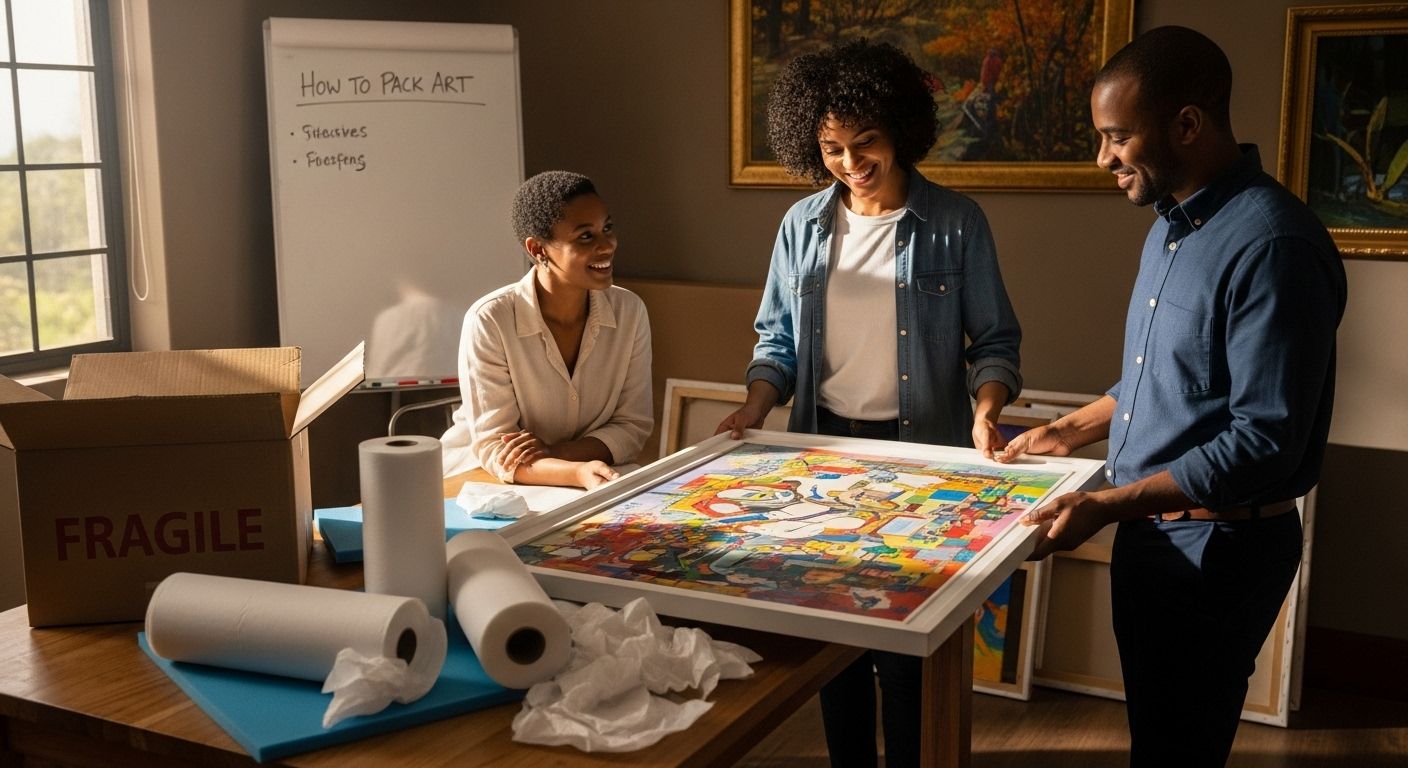
Packing art for shipping in South Africa sounds like a simple task. Most people just wrap it up and hope for the best. But you might be shocked to know that using the wrong materials can ruin a painting faster than a smashed window in a Joburg storm. Acid from basic cardboard or newspaper can stain and destroy artwork in transit. Here is the surprise. Swapping out those everyday supplies for proper archival materials like acid-free tissue and special foams actually cuts damage risk by over half. Most collectors never even think about this, and that is often the difference between a safe delivery and a disaster.
Table of Contents
- Choosing The Right Packing Materials
- Step-By-Step Guide To Packing Art Safely
- Best Practices For Shipping In South Africa
- Mistakes To Avoid When Packing Artwork
Quick Summary
| Takeaway | Explanation |
|---|---|
| Use archival quality materials | Archival materials protect artwork from damage during transit, ensuring longevity and integrity. Examples include acid-free tissue and polyethylene foam. |
| Tailor packaging to artwork type | Different artworks require specific packing techniques, such as using rigid boards for paintings or custom solutions for fragile pieces. |
| Understand shipping regulations | Familiarize yourself with local shipping laws, including permits and insurance requirements, to avoid legal complications. |
| Avoid common packing mistakes | Steer clear of materials like newspaper that can damage art, and ensure proper documentation to safeguard against loss or damage. |
| Consult professional handlers when in doubt | For valuable or fragile artworks, seek advice from art professionals or handlers to ensure proper care and packaging. |
Choosing the Right Packing Materials
Packing art for shipping requires selecting the right materials to protect valuable pieces during transportation. Art collectors in South Africa need to understand how to pack art for shipping using materials that prevent damage and preserve the artwork’s integrity.
Understanding Archival Quality Packing Materials
Choosing archival-quality packing materials is crucial for protecting artwork during transit. The National Museums Scotland emphasizes the importance of using inert, chemically stable materials that prevent potential damage. Recommended materials include:
- Acid-free tissue: Provides a protective barrier without chemical interactions
- Polyethylene foam: Offers cushioning and shock absorption
- Tyvek sheeting: Creates a protective outer layer
- Unbleached cotton tape: Secures packaging without risking artwork damage
Collectors must avoid materials that can potentially harm artwork, such as standard newspaper, wood-based products, or materials containing harmful chemicals. These can transfer acidity, release damaging gases, or create environmental conditions that degrade artworks over time.
Here is a comparison table highlighting commonly used packing materials and their effects on artwork, helping collectors make informed choices:
| Material | Archival Safe | Typical Use | Potential Risk to Artwork |
|---|---|---|---|
| Acid-free tissue | Yes | Inner wrapping/barrier | None – recommended |
| Polyethylene foam | Yes | Cushioning/shock-absorb | None – recommended |
| Tyvek sheeting | Yes | Protective outer layer | None – recommended |
| Newspaper | No | Wrapping/filling (avoided) | Acidic, can stain/damage artwork |
| Standard cardboard | No | Boxing/support (avoided) | Acidic, may transfer chemicals |
| Regular bubble wrap | No | Cushioning (avoided) | May cause sticking, no acid protection |
| Unbleached cotton tape | Yes | Securing packaging | None – recommended |
Selecting Protective Packaging for Different Art Types
The Canadian Conservation Institute recommends tailoring packing materials to specific artwork characteristics. Paintings require different protection compared to sculptures or delicate prints. For framed artwork, use custom-sized foam supports that prevent movement during transportation. Unframed pieces need additional layers of protection, typically involving acid-free tissue and rigid backing boards.
When packing paintings, create a protective sandwich using:
- Acid-free tissue paper between artwork surfaces
- Rigid support boards on front and back
- Protective foam corners for additional impact protection
- Outer packaging with sufficient cushioning
Custom Packaging Solutions
The Northeast Document Conservation Center suggests considering custom packaging options for unique or particularly fragile artworks. Professional art shipping companies offer specialized solutions like:
- Prefabricated protective boxes with custom foam interiors
- Climate-controlled shipping containers
- Shock-absorbing packaging materials
For art collectors in South Africa, investing in high-quality packing materials is not an expense but a necessary protection for valuable art pieces. Proper packaging prevents potential damage during shipping, ensuring artworks arrive in pristine condition.
Remember that each artwork is unique and may require specific packing considerations. When in doubt, consult professional art handlers or conservators who can provide personalized advice for your specific pieces.
Step-by-Step Guide to Packing Art Safely
Successfully packing art requires a systematic approach that protects valuable pieces during transportation. Art collectors in South Africa must follow precise techniques to ensure their artwork arrives safely and undamaged.
Preparing the Artwork for Packaging
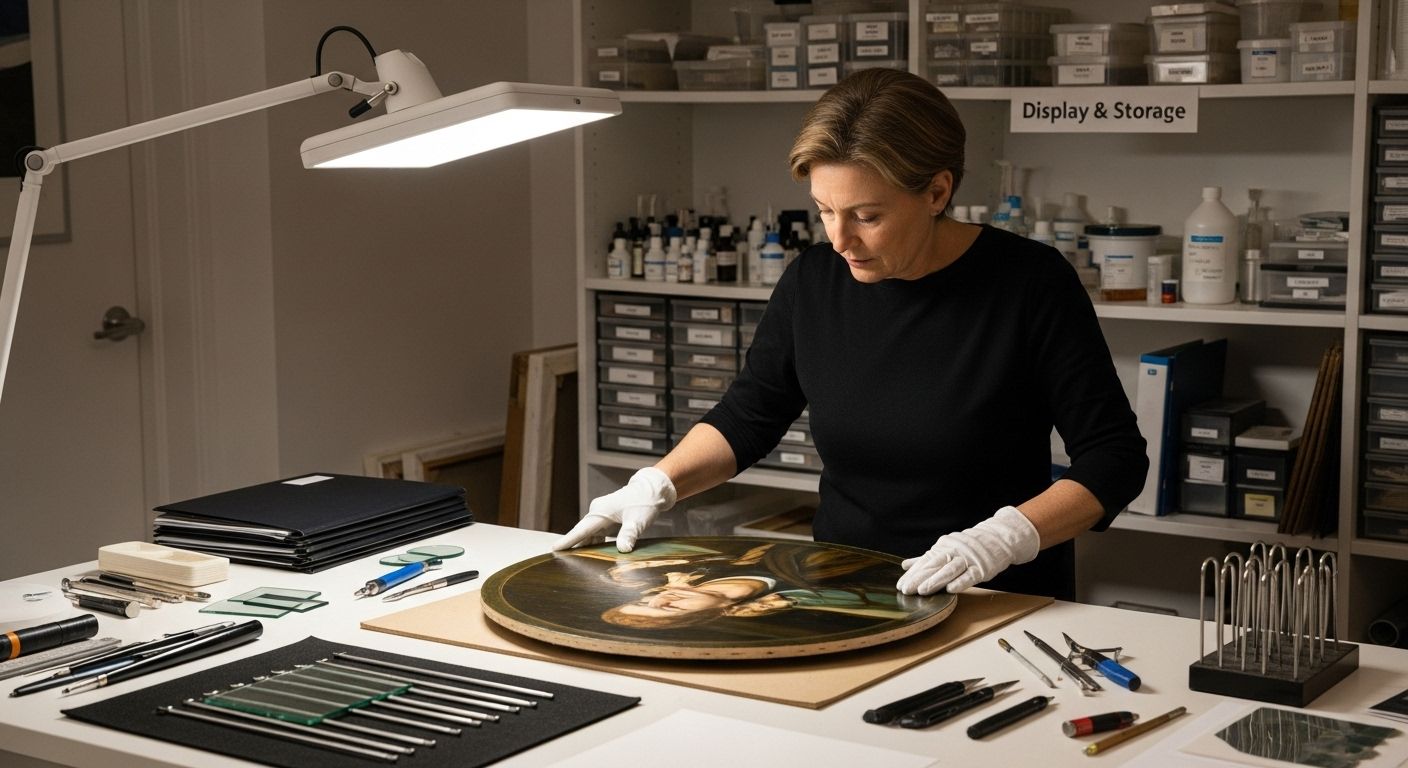
The Canadian Conservation Institute recommends thorough preparation before packaging. Start by cleaning the artwork gently with appropriate materials, ensuring no dust or debris remains that could scratch surfaces during transit. For paintings, inspect the frame and canvas for any existing vulnerabilities that might worsen during shipping.
Check the artwork’s condition carefully:
- Examine frame integrity
- Look for existing cracks or loose elements
- Clean surfaces with appropriate soft brushes or specialized art cleaning tools
- Document the artwork’s current condition with photographs
Wrapping and Initial Protection
The Northeast Document Conservation Center emphasizes creating a protective barrier around artwork. Begin by using acid-free tissue paper to create an initial protective layer. For framed pieces, wrap the frame edges with corner protectors to prevent potential impact damage. Unframed artworks require extra care, using multiple layers of archival tissue and rigid backing boards.
Wrapping techniques depend on artwork type:
- Paintings: Use glassine paper over the surface
- Prints: Place between acid-free archival boards
- Sculptures: Wrap individually with bubble-free protective materials
Final Packaging and Securing
Flying Arts Alliance provides critical guidance on final packaging. Choose a shipping container slightly larger than the artwork, allowing space for protective padding. Use custom-cut foam or bubble wrap to create a snug fit that prevents movement during transit. For delicate art pieces, consider double-boxing for additional protection.
Final packaging steps include:
- Select appropriate box size
- Create custom foam padding
- Mark package as fragile
- Include climate considerations for South African shipping conditions
- Use strong, high-quality packing tape
Remember that each artwork is unique and may require specialized handling. Professional art handlers can provide personalized advice for particularly valuable or delicate pieces. Taking time to pack carefully can prevent potential damage and preserve the artwork’s condition during transportation.
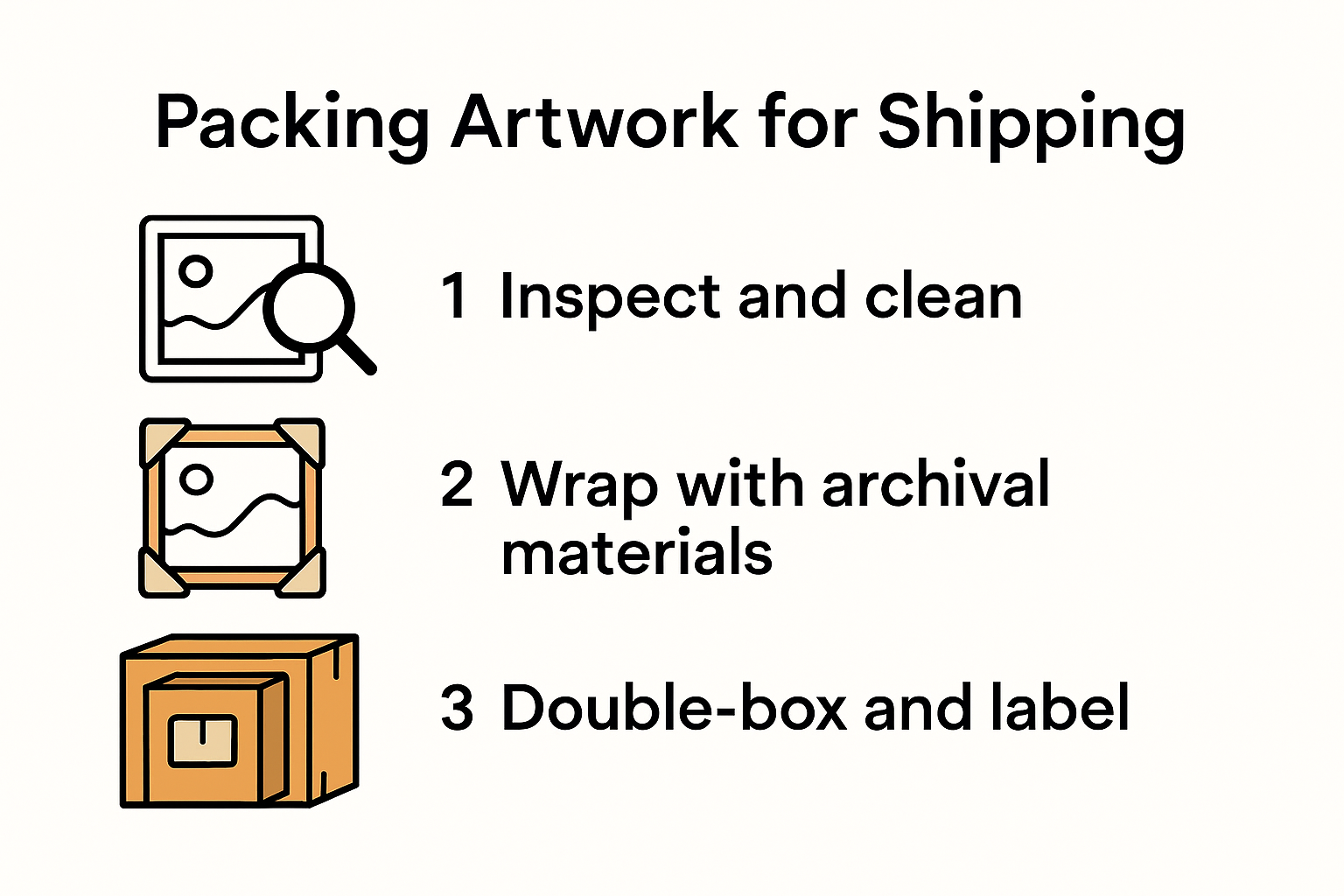
Below is a step-by-step process table to guide you through safely packing your artwork for shipping:
| Step | Action | Key Tip or Tool Used |
|---|---|---|
| 1. Preparation | Clean artwork and inspect frame/canvas | Soft brush, camera for documentation |
| 2. Condition Documentation | Photograph artwork and note any vulnerabilities | Digital photos, written report |
| 3. Initial Wrapping | Use acid-free tissue or glassine paper as first layer | Acid-free material, glassine |
| 4. Edge & Corner Protection | Add corner protectors and rigid boards (for paintings/prints) | Foam/board edge protectors |
| 5. Outer Protection | Encase in polyethylene foam or Tyvek sheet | Polyethylene foam, Tyvek |
| 6. Boxing | Place securely in slightly larger box with custom padding | Custom-cut foam, double boxing |
| 7. Securing & Labelling | Seal with strong tape, mark as fragile, include climate considerations | Packing tape, clear labels |
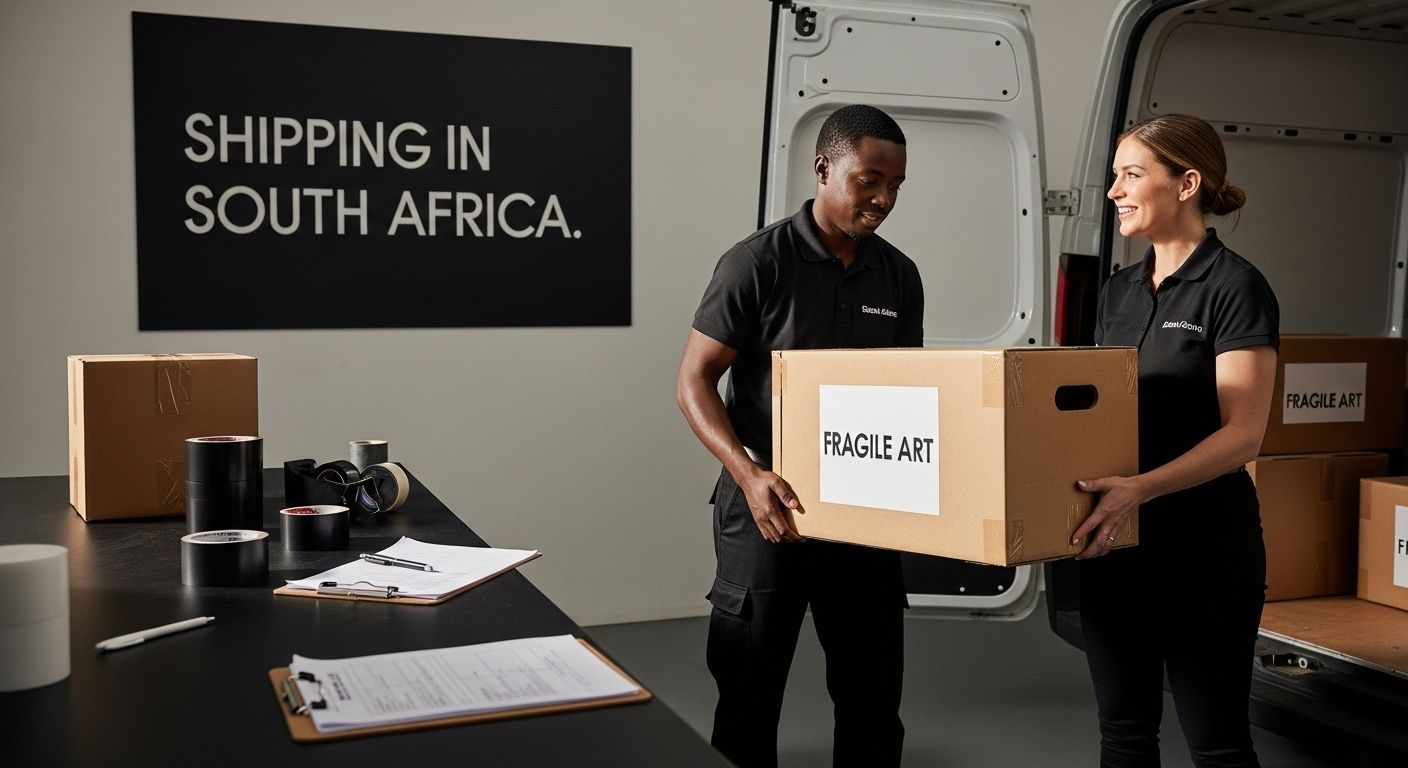
Best Practices for Shipping in South Africa
Shipping artwork within South Africa requires careful navigation of logistical challenges and regulatory requirements. Art collectors must understand the nuanced approaches to safely transporting valuable pieces across the country.
Understanding Shipping Regulations
The Visual Arts Network of South Africa emphasizes the importance of understanding industry-specific shipping practices. Art transportation involves more than simply packaging artwork it requires comprehensive knowledge of local shipping regulations and best practices.
Key regulatory considerations include:
- Obtaining necessary permits for high-value artwork
- Understanding insurance requirements
- Documenting artwork provenance and value
- Complying with national transportation guidelines
Selecting Appropriate Shipping Services
The South African Revenue Service highlights the critical nature of choosing specialized art shipping services. Not all courier companies are equipped to handle delicate artworks. Art collectors should prioritize services with:
- Specialized art handling experience
- Climate-controlled transportation options
- Comprehensive insurance coverage
- Tracking and secure delivery mechanisms
For international and local art shipping requirements, consider working with professional art logistics companies that understand the unique challenges of transporting valuable pieces.
Minimizing Transportation Risks
Minimizing potential damage during shipping requires a proactive approach. Implement strategies that protect artwork throughout its journey:
- Use shock-absorbing packaging materials
- Choose transportation routes that minimize handling
- Schedule shipments during moderate temperature periods
- Provide clear handling instructions
- Maintain comprehensive documentation
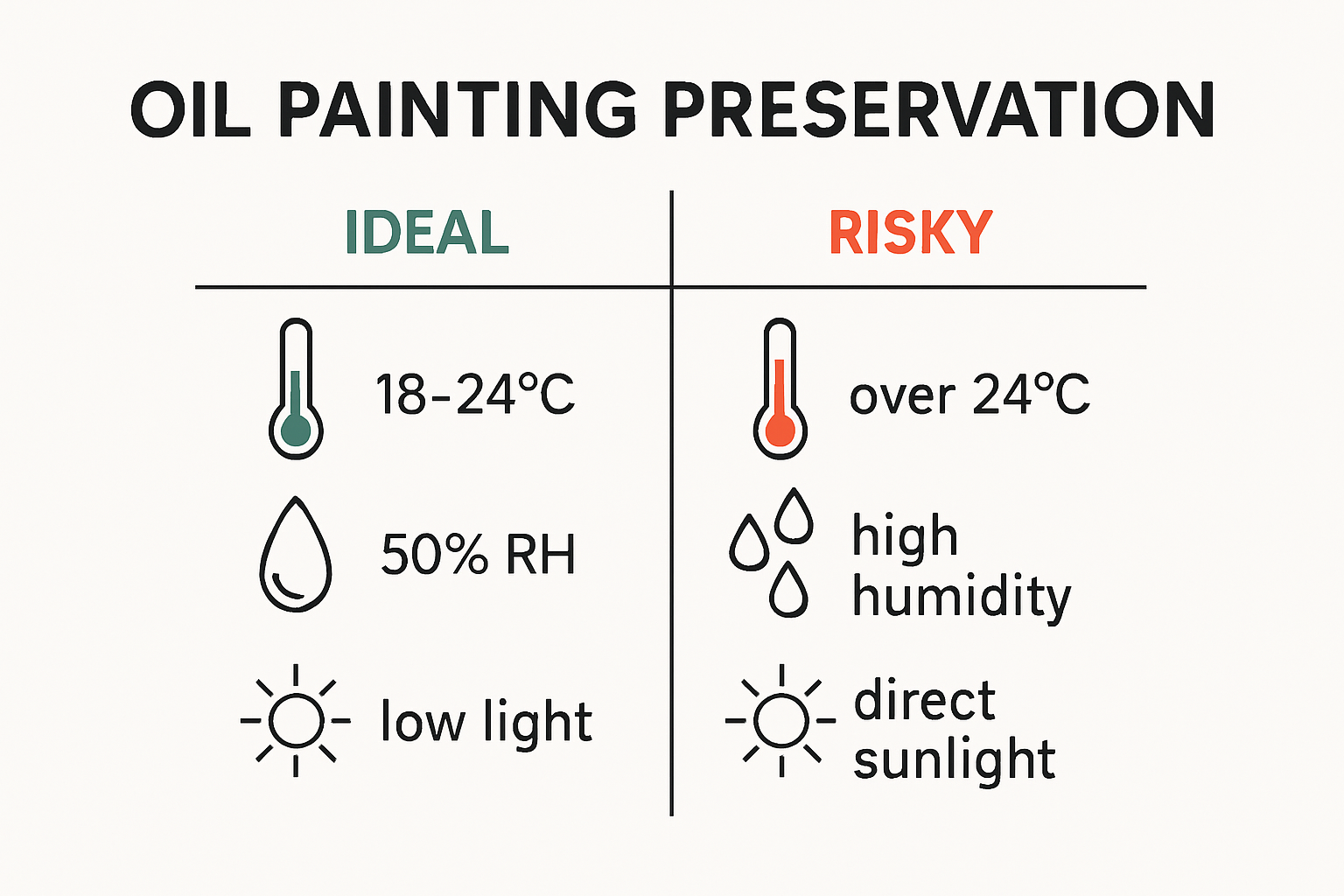
Art collectors should also consider seasonal variations in South African climate, which can impact artwork transportation. Summer temperatures in regions like Gauteng and the Northern Cape can exceed 35°C, potentially affecting packaging and artwork preservation.
Professional art handlers recommend additional precautions such as:
- Using humidity-controlled containers
- Avoiding direct sunlight during transportation
- Implementing redundant protective packaging
- Obtaining specialized art transportation insurance
Ultimately, successful art shipping in South Africa demands meticulous planning, understanding of local regulations, and a commitment to preserving the artwork’s integrity. By following these best practices, collectors can ensure their valuable pieces arrive safely and intact.
Mistakes to Avoid When Packing Artwork
Packing artwork requires precision and careful attention to detail. Art collectors in South Africa must be aware of common pitfalls that can potentially damage valuable pieces during transportation.
Material Selection Errors
The Smithsonian Museum Conservation Institute highlights critical mistakes in material selection that can compromise artwork integrity. Using inappropriate packing materials is one of the most frequent errors art collectors make. Newspapers, regular cardboard, and standard bubble wrap can cause significant damage due to chemical interactions and insufficient protection.
Common material mistakes include:
- Using acidic packaging materials
- Selecting non-archival quality wrapping
- Employing insufficient cushioning
- Failing to use protective layers between artwork and packaging
For delicate art pieces, understanding the specific protection requirements becomes crucial. Different materials demand unique approaches to prevent potential damage during shipping.
Environmental and Handling Risks
Art transportation involves more than just physical protection. Environmental factors play a significant role in artwork preservation during shipping. South African climate variations can pose unique challenges, with extreme temperatures and humidity levels potentially causing irreversible damage.
Key environmental considerations include:
- Avoiding direct sunlight exposure
- Maintaining consistent temperature during transit
- Protecting artwork from humidity fluctuations
- Preventing sudden temperature changes
Handling mistakes can be equally destructive. Improper lifting, incorrect positioning, and excessive movement can cause structural damage to artwork. Collectors must train themselves and any shipping personnel in proper art handling techniques.
Documentation and Insurance Oversights
Perhaps the most overlooked aspect of art shipping involves proper documentation and insurance. Many collectors underestimate the importance of comprehensive documentation and adequate insurance coverage. Failing to properly document an artwork’s condition before shipping can lead to complications in case of damage.
Critical documentation steps include:
- Detailed condition reports before shipping
- High-resolution photographs documenting artwork condition
- Comprehensive value assessments
- Proper insurance documentation
- Tracking and shipping records
Art collectors should approach shipping as a comprehensive process that extends beyond physical packaging. Each step requires meticulous attention, from material selection to final delivery. Understanding potential mistakes allows collectors to develop a more robust and careful approach to art transportation.
Remember that professional art handlers and specialized shipping services can provide additional guidance tailored to specific artwork requirements. When in doubt, consulting experts can save valuable pieces from potential shipping disasters.
Frequently Asked Questions
What materials should I use to pack artwork for shipping?
Use archival-quality materials like acid-free tissue, polyethylene foam, and Tyvek sheeting for optimal protection. Avoid standard cardboard and newspaper as they can damage artwork due to their acidic content.
How do I ensure my artwork is safe during transportation?
Prepare the artwork carefully by cleaning it, using protective wrapping like acid-free tissue or glassine paper, and employing custom-cut foam for cushioning. Double boxing is recommended for delicate pieces to minimize movement and impact.
What packing techniques are specific to different types of artwork?
Tailor your packing techniques according to the artwork type: for framed paintings, use corner protectors and rigid supports; for unframed pieces, include multiple layers of acid-free tissue; and for sculptures, wrap them in bubble-free materials for cushioning.
How can I navigate shipping regulations in South Africa when sending artwork?
Familiarize yourself with local shipping regulations regarding permits and insurance requirements for high-value artwork. Ensure you document the artwork’s provenance and value, and comply with all national transportation guidelines.
Ship With Confidence, Collect With Peace of Mind
Is your art collection causing you stress when it comes to safe shipping? This article highlights the risks of poor packaging, from acid damage to climate threats during transit. Collectors across South Africa know that losing a prized work due to improper packing is heartbreaking. At Art Online, we understand these frustrations. We see how vital it is to use archival-quality materials, tailor protection for each artwork, and secure reliable shipping. Collectors want their investment to arrive in perfect condition every time.

Why worry about damage or complex logistics? Connect with Art Online to discover a collection curated with professional standards at every step, from delicate art pieces to international shipping needs. Choose art you love, have it packed correctly, and enjoy total confidence that your artwork is ready for the journey. Make your next acquisition stress-free by starting at South Africa’s largest online art gallery. Visit Art Online now and see the difference expert care can make.
Recommended
- Top Art Festivals in South Africa 2025 for Collectors & Decorators – Art-Online
- Buying Art for Investment in South Africa: 2025 Guide – Art-Online
- Black Artists in South Africa: Top Trends and Collectors’ Guide 2025 – Art-Online
- Famous South African Artists: 2025 Guide for Collectors & Decorators – Art-Online