
What is Street Art? Understanding Its Impact and Purpose
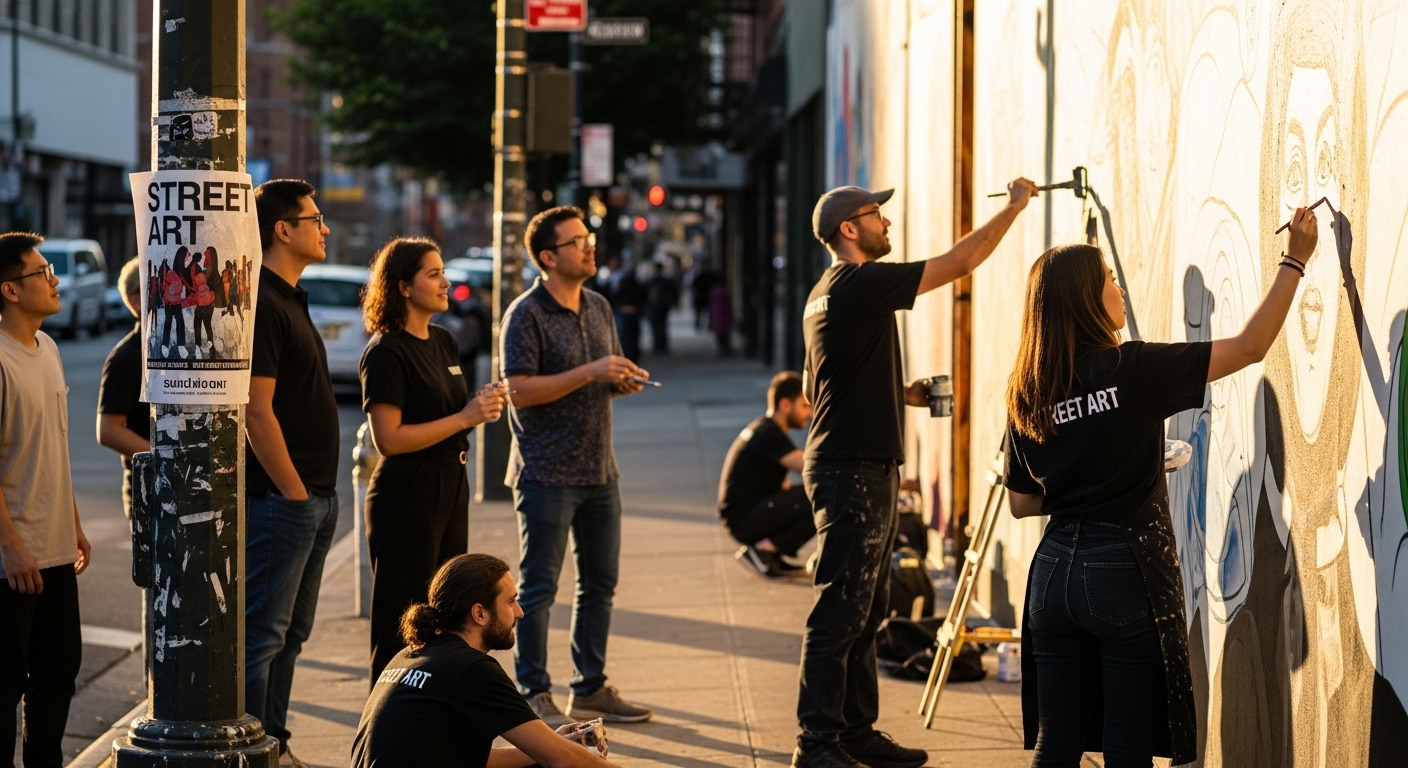
Street art lights up concrete walls and abandoned buildings with raw, bold colour. Over 70 percent of major cities now host organised street art tours, turning what once was called vandalism into tourist attractions. But while everyone stops for a selfie in front of a mural, most people miss the real story. The power of street art is not about pretty pictures, it lies in how these artworks give a voice to communities and turn neglected spaces into places of pride.
Table of Contents
- Defining Street Art And Its Forms
- The Cultural Importance Of Street Art
- How Street Art Engages With Communities
- The Role Of Artists And Their Messages
- Navigating The Evolution Of Street Art
Quick Summary
| Takeaway | Explanation |
|---|---|
| Street art engages communities directly. | It transforms public spaces into platforms for cultural dialogue and storytelling, allowing community narratives to be shared visually. |
| Street art is a tool for social critique. | Artists use their work to highlight inequalities, political issues, and community stories, encouraging public discussions on these matters. |
| Collaboration is vital in street art. | Artists often partner with local residents to ensure that artworks authentically reflect the cultural and social dynamics of their communities. |
| Street art evolves with technology. | The integration of digital tools and innovative techniques has expanded the artistic possibilities and reach of street art globally. |
| Street art acts as a historical archive. | It captures contemporary social movements and community experiences that might otherwise go unrecorded, preserving them for future generations. |
Defining Street Art and Its Forms
Street art represents a vibrant, dynamic form of artistic expression that transcends traditional gallery spaces and transforms urban landscapes into open canvases. Emerging from underground cultural movements, street art challenges conventional artistic boundaries by bringing creativity directly into public spaces.
What Exactly Is Street Art?
Street art is a visual art form created in public locations, often without official permission, that communicates social messages, personal perspectives, and creative statements. Unlike traditional art confined within museum walls, street art engages directly with communities, transforming mundane urban environments into extraordinary visual experiences.
Below is a comparison of the primary forms of street art discussed in the article, highlighting their techniques, characteristics, and typical uses.
| Form of Street Art | Technique | Characteristics | Typical Use |
|---|---|---|---|
| Graffiti | Spray paint | Bold, text or imagery; often controversial | Expression of identity, rebellion, social or political themes |
| Murals | Large-scale painting | Covers entire building walls, complex narratives | Community themes, public storytelling, beautification |
| Stencil Art | Pre-cut templates | Precise, reproducible images, sharp lines | Repeated imagery, political messages, quick execution |
| Wheatpasting | Paper affixed to surfaces | Temporary, often detailed images, easy removal | Posters, quick social commentary, event promotion |
Primary Forms of Street Art
Street art encompasses multiple artistic techniques, each with unique characteristics:
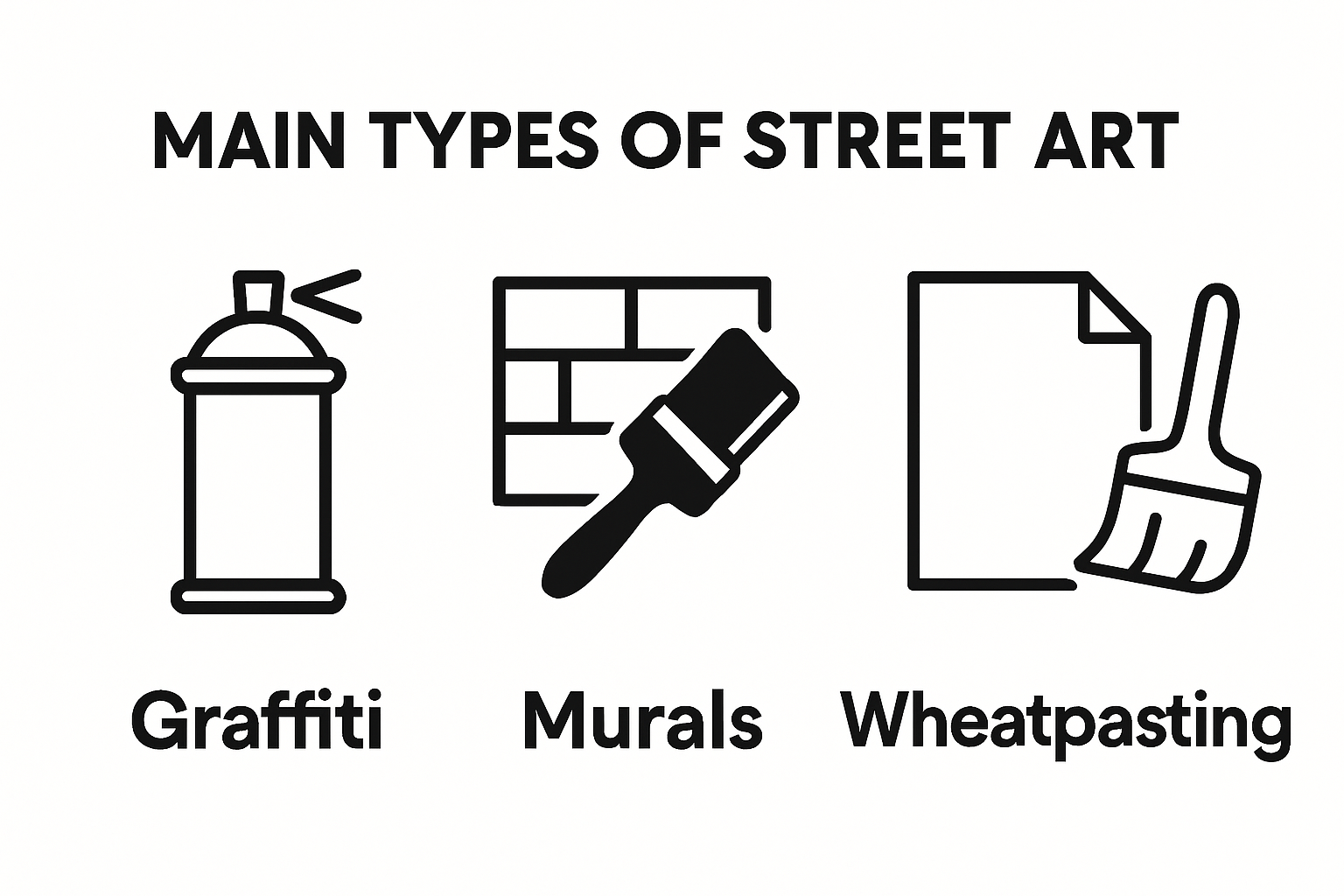
- Graffiti: Typically spray-painted text or imagery on walls, representing the most recognizable and controversial form of street art
- Murals: Large-scale painted artworks that cover entire building walls, often depicting complex narratives or community themes
- Stencil Art: Precise, reproducible images created using pre-cut templates
- Wheatpasting: Paper artworks temporarily affixed to public surfaces
Cultural Significance
Street art serves more than aesthetic purposes. It functions as a powerful medium for social commentary, political expression, and community storytelling. Our guide on South African artists can provide additional context about how local artists use public spaces to communicate complex narratives.
By reclaiming public spaces, street artists challenge traditional art consumption models, democratizing artistic experience and making creativity accessible to everyone, regardless of socioeconomic background or formal art education.
The Cultural Importance of Street Art
Street art represents far more than aesthetic decoration, emerging as a profound mechanism for social dialogue, cultural expression, and community empowerment. According to urban anthropologists, street art functions as a critical platform for marginalized voices to communicate complex narratives that challenge existing power structures.
Voice of the Voiceless
Street art serves as a powerful communication channel for communities often excluded from traditional artistic platforms. By transforming public spaces into canvases, artists create accessible narratives that speak directly to social realities, addressing issues like inequality, political oppression, and cultural identity. These visual commentaries bypass institutional barriers, enabling direct engagement with urban populations.
Sociopolitical Commentary
The cultural significance of street art extends beyond visual aesthetics. It operates as a dynamic form of social critique, allowing artists to:
- Highlight systemic inequalities
- Challenge dominant political narratives
- Represent marginalized community experiences
- Provoke critical public dialogue
- Reclaim public spaces as platforms for democratic expression
Preservation of Cultural Memory
Street art functions as an alternative historical archive, documenting contemporary social movements and preserving community narratives that might otherwise remain unrecorded. Our exploration of South African art trends demonstrates how public art captures the evolving cultural landscape.
By democratizing artistic expression, street art transforms urban environments into living museums that reflect the immediate emotional and intellectual pulse of communities. It challenges traditional art consumption models, making creativity accessible and inviting public participation in cultural discourse.
How Street Art Engages with Communities
Community-driven artistic interventions transform public spaces into dynamic platforms for collective storytelling and social interaction. Street art goes beyond visual aesthetics, creating powerful mechanisms for community dialogue, healing, and collective identity formation.
Collaborative Art Creation
Street art frequently involves direct community participation, breaking traditional boundaries between artists and audiences. Community members become active contributors, not passive observers. Artists often collaborate with local residents, hosting workshops, gathering narratives, and incorporating community perspectives directly into their creative process. This participatory approach ensures artworks authentically represent local experiences and cultural nuances.
Spatial Transformation and Healing
Public art interventions can fundamentally reshape urban environments, transforming neglected spaces into vibrant community landmarks. Street art serves multiple transformative functions:
- Reclaiming abandoned or marginalized urban spaces
- Creating visual narratives of community resilience
- Reducing perceptions of urban decay
- Encouraging community pride and collective ownership
- Providing alternative platforms for cultural expression
Dialogue and Social Commentary
Street art operates as a democratic communication platform, enabling communities to articulate complex social experiences. Our exploration of South African creative power reveals how public art becomes a critical tool for social dialogue.
By democratizing artistic expression, street art invites broader social engagement. It challenges traditional power structures, amplifies marginalized voices, and creates immersive, accessible platforms for community storytelling.
This table summarises the various ways street art engages communities, focusing on the main channels and their impact on public space, identity, and collective experience.
| Engagement Channel | Community Involvement | Impact on Space or Identity | Example Outcomes |
|---|---|---|---|
| Collaborative Art Creation | Direct participation | Reflects authentic local culture | Community-driven murals/workshops |
| Spatial Transformation | Indirect and direct | Revitilises neglected spaces, fosters pride | Landmarks, improved urban perception |
| Dialogue and Social Commentary | Broad public engagement | Promotes open communication on social issues | Increased social awareness |
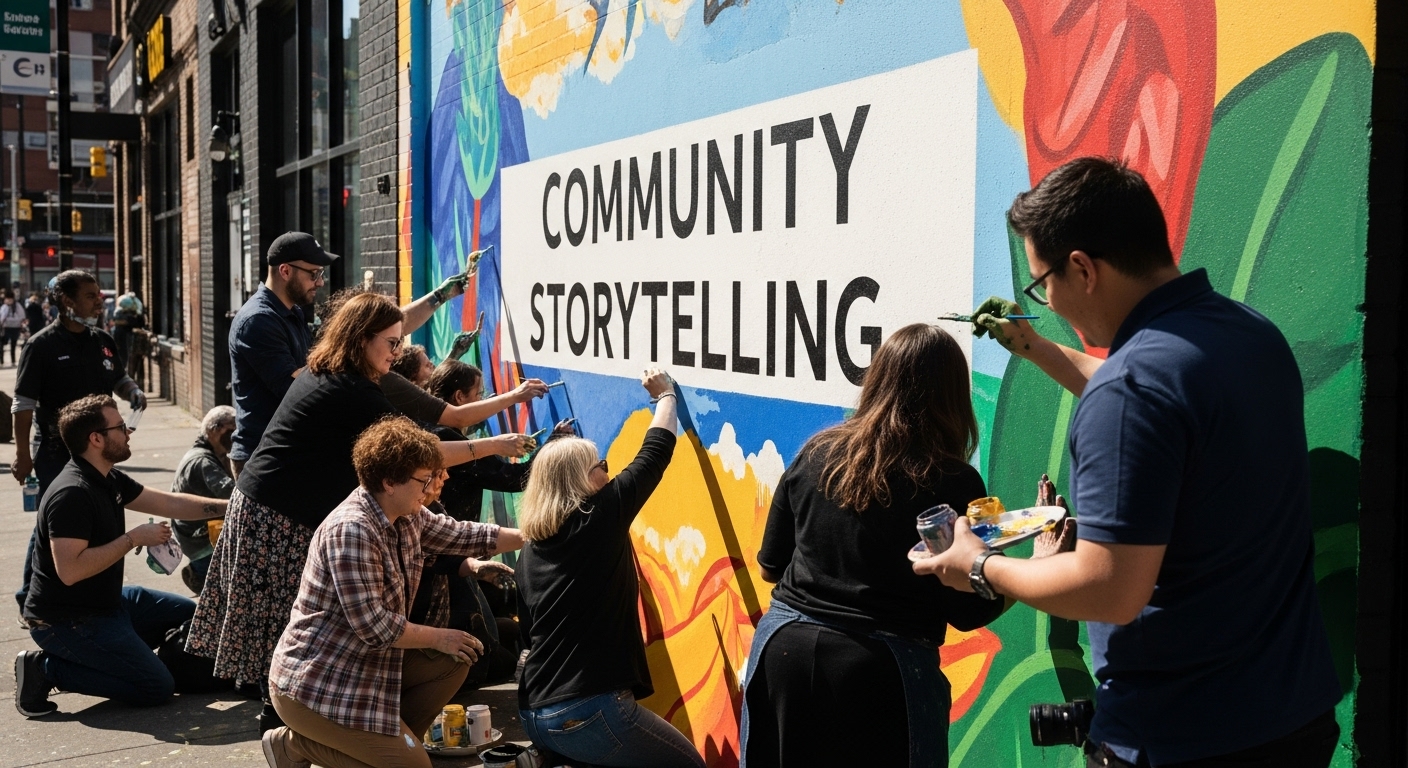 These artistic interventions transform urban landscapes into living, breathing archives of collective memory and social transformation.
The Role of Artists and Their Messages
Street artists emerge as critical social commentators, utilizing public spaces as platforms for profound cultural and political communication. These creative individuals transcend traditional artistic boundaries, transforming urban landscapes into powerful mediums of expression and social critique.
Artistic Vision and Social Responsibility
Street artists occupy a unique position as cultural provocateurs, deliberately challenging societal norms and institutional narratives. Their work represents more than aesthetic creativity it is a deliberate strategy of visual resistance. By choosing public spaces as their canvas, these artists ensure their messages reach diverse audiences, bypassing traditional art world gatekeepers and directly engaging communities.
Methodology of Message Transmission
Artists employ various sophisticated techniques to communicate complex social messages:
- Using symbolic imagery to represent systemic inequalities
- Creating visually compelling narratives that challenge dominant political discourses
- Documenting lived experiences of marginalized communities
- Transforming abstract social concepts into tangible visual experiences
- Generating immediate emotional and intellectual responses from viewers
Personal Risk and Artistic Integrity
Street art demands significant personal courage, as artists often navigate legal uncertainties and potential social repercussions. Check out our blog for more artistic insights into the intricate world of creative expression. These artists willingly embrace potential consequences, viewing their work as a critical form of social activism that transcends personal safety.
By converting public spaces into dynamic communication platforms, street artists challenge viewers to reconsider established narratives, provoke critical thinking, and imagine alternative social possibilities. Their art becomes a form of democratic dialogue, inviting collective reflection and potential transformation.
Navigating the Evolution of Street Art
Street art has dramatically transformed from underground subculture to mainstream artistic expression, representing a profound journey of cultural recognition and artistic legitimacy. This evolution reflects broader societal shifts in understanding creativity, public space, and artistic representation.
From Marginalization to Mainstream
Initially perceived as vandalism, street art emerged from urban subcultures characterized by rebellion and social critique. Early practitioners risked legal consequences, creating artworks in unauthorized spaces as acts of cultural resistance. Graffiti writers and street artists challenged traditional artistic boundaries, using city walls as canvases for personal and collective narratives. Over time, municipalities, cultural institutions, and art collectors began recognizing the profound artistic merit of these public interventions.
Technological and Stylistic Transformations
Street art’s evolution has been marked by significant technological and artistic developments:
- Transition from basic spray paint techniques to sophisticated multimedia installations
- Integration of digital technologies and projection mapping
- Emergence of more intricate stencil and mixed media approaches
- Increased global connectivity enabling cross-cultural artistic exchanges
- Development of specialized tools and techniques for urban art creation
Institutional Recognition and Global Impact
Contemporary street art has transcended its initial underground status, gaining substantial institutional recognition. Our exploration of artistic creativity offers deeper insights into these transformative artistic movements. Museums, galleries, and international art festivals now actively commission and showcase street art, acknowledging its critical role in documenting social experiences and challenging conventional artistic narratives.
This journey represents more than an artistic transition it symbolizes a broader cultural shift towards democratizing artistic expression, recognizing diverse voices, and understanding public spaces as dynamic platforms for creative dialogue.
Bring Street Art’s Energy Into Your South African Home
If you have been inspired by the dynamic social commentary and community spirit described in our article on street art, you might be searching for a way to capture that vibrant creativity in your own space. Many South Africans feel challenged by blank walls at home or work, wishing for art that carries real meaning and local relevance. Street art thrives on public expression and cultural storytelling, but finding authentic works from renowned artists can feel out of reach.

You do not have to only admire public murals from a distance. At Art Online, you have direct access to powerful pieces from South Africa’s leading artists. Explore stories of identity, resilience, and change through original artworks that echo the purpose and impact of street art. If you want to own a piece of this movement, visit Art Online today to browse a curated selection that brings the heart of our urban creativity into your own hands. Your opportunity to invite true South African expression into your life starts now.
Frequently Asked Questions
What defines street art?
Street art is a visual art form created in public spaces, often without permission, that communicates social messages and personal perspectives, engaging directly with communities and transforming urban environments.
What are the primary forms of street art?
The main forms of street art include graffiti, murals, stencil art, and wheatpasting, each using different techniques to express creativity and social commentary.
How does street art serve as a medium for social commentary?
Street art acts as a powerful platform for social critique, allowing artists to highlight systemic inequalities, challenge political narratives, and represent marginalized community experiences through visual narratives.
In what ways does street art engage with communities?
Street art fosters community engagement by involving residents in the creative process, transforming neglected spaces into vibrant landmarks, and facilitating dialogue on social issues, promoting collective identity and pride.