
What is Modern Art? Understanding Its Essence and Impact

Modern art shook the foundations of what we thought art could be, swapping strict rules for wild experimentation and emotional freedom. Many still believe art should look like something in real life. That idea got left far behind more than a century ago. More than 60 percent of the most valuable paintings today come from modern movements that once shocked the world, showing just how powerful breaking the rules can really be.
Table of Contents
- Defining Modern Art: Key Features And Characteristics
- The Historical Context: How Modern Art Evolved
- The Importance Of Modern Art In Today’s Society
- Understanding Key Movements And Artists In Modern Art
- Connecting Modern Art To Personal And Interior Spaces
Quick Summary
| Takeaway | Explanation |
|---|---|
| Modern art prioritises experimentation and subjectivity | Artists reject traditional norms to explore personal and collective emotions through innovative methods. |
| Key movements redefine artistic expression | Movements like Impressionism and Cubism challenge conventional aesthetics, pushing boundaries of visual representation. |
| Art serves as a medium for social commentary | Modern artists address societal issues, amplifying marginalized voices and stimulating cultural discourse. |
| Integrating art enhances personal spaces | Carefully selected modern art can transform environments, creating emotional resonance and reflecting individual identities. |
| Artistic selections impact emotional well-being | The right artwork can stimulate curiosity and create a dynamic atmosphere in living spaces, enhancing personal experiences. |
Defining Modern Art: Key Features and Characteristics
Modern art represents a radical transformation in artistic expression that emerged during the late 19th and early 20th centuries. Unlike traditional art forms, modern art breaks away from established representational techniques and embraces experimentation, subjectivity, and conceptual approaches. Modern art explores innovative ways of perceiving and interpreting the world around us.
Philosophical Foundations of Modern Art
The emergence of modern art was deeply rooted in significant societal and cultural shifts. Artists began challenging conventional aesthetic norms, rejecting realistic representation in favor of expressing inner emotional landscapes and abstract interpretations. These artists sought to:
- Question traditional artistic conventions
- Explore personal and collective psychological experiences
- Represent complex human emotions beyond literal depiction
Key philosophical movements like existentialism, psychoanalysis, and phenomenology profoundly influenced artists’ perspectives, encouraging them to deconstruct established visual language and create entirely new modes of artistic communication.
Characteristics of Modern Art
Modern art distinguished itself through several distinctive characteristics that fundamentally transformed artistic expression. Experimentation became a core principle, with artists exploring unconventional materials, techniques, and conceptual frameworks. They deliberately challenged viewers’ perceptions by:
-
Rejecting naturalistic representation
-
Emphasizing subjective interpretations
-
Incorporating abstract and symbolic elements
Artists like Pablo Picasso, Wassily Kandinsky, and Marcel Duchamp pioneered radical approaches that redefined artistic boundaries. Their work demonstrated that art could be a powerful medium for intellectual and emotional exploration, transcending mere visual reproduction.
For art collectors and decorators interested in understanding these nuanced artistic movements, our guide on South African artists provides deeper insights into how local artists interpreted and integrated global modern art trends.
The Historical Context: How Modern Art Evolved
Modern art emerged as a profound cultural response to the transformative social, technological, and philosophical changes of the late 19th and early 20th centuries. According to historical research, this artistic movement represented a radical departure from traditional representational techniques, reflecting the rapidly changing world around artists.
Origins and Societal Transformations
The roots of modern art are deeply intertwined with significant global shifts. The Industrial Revolution, urbanization, and technological advancements created unprecedented social dynamics that challenged existing artistic paradigms. Artists began to question established aesthetic conventions, seeking new ways to represent human experience in an increasingly complex world.
Key historical triggers for modern art’s evolution included:
- The emergence of photography, which challenged traditional representational painting
- Rapid industrialization and its impact on human perception
- Growing intellectual movements like psychoanalysis and existentialism
Artistic Movements and Revolutionary Approaches
Different artistic movements emerged as artists sought to redefine visual expression. Impressionism, Cubism, Surrealism, and Abstract Expressionism represented distinct approaches to understanding and representing reality. Pioneering artists like Pablo Picasso, Wassily Kandinsky, and Marcel Duchamp fundamentally reimagined artistic boundaries, challenging viewers to reconsider their understanding of art.
These movements shared a common thread: rejecting literal representation in favor of exploring subjective experiences, emotional landscapes, and conceptual interpretations.
Below is a table outlining major modern art movements and their defining characteristics, helping you quickly compare how each movement reshaped artistic expression.
| Modern Art Movement | Time Period | Defining Features |
|---|---|---|
| Impressionism | Late 19th Century | Captured fleeting light, momentary impressions, outdoor scenes |
| Cubism | Early 20th Century | Deconstructed objects, multiple perspectives, geometric shapes |
| Surrealism | 1920s–1940s | Explored the unconscious, dream imagery, symbolic content |
| Abstract Expressionism | 1940s–1950s | Emphasised emotional spontaneity, non-representational forms |
| Modern South African Art | 20th Century–Today | Integrated global trends, reflected cultural and social change |
Explore our collection of South African tribal art to understand how global artistic movements influenced local creative expressions and cultural representations during this transformative period.
The Importance of Modern Art in Today’s Society
Modern art continues to play a critical role in shaping cultural discourse, challenging societal perspectives, and stimulating intellectual engagement. Far beyond aesthetic appreciation, contemporary art serves as a powerful medium for social commentary, personal expression, and collective understanding.
Cultural and Social Significance
In an increasingly complex global landscape, modern art provides a unique platform for addressing profound social issues. Artists use their work to explore themes of identity, inequality, technological transformation, and human experience. Creative expression becomes a nuanced language that communicates complex emotions and experiences that traditional communication methods cannot capture.
Modern art’s social importance is evident through:
- Challenging established power structures
- Amplifying marginalized voices
- Promoting cross-cultural understanding
- Encouraging critical thinking and dialogue
Economic and Intellectual Impact
Beyond cultural significance, modern art contributes substantially to economic and intellectual ecosystems. Creative industries generate substantial economic value, while artistic innovations stimulate broader intellectual and technological developments. Museums, galleries, and cultural institutions serve as crucial platforms for preserving and disseminating artistic knowledge.
Intellectual contributions of modern art include:
- Pushing boundaries of creative expression
- Introducing innovative conceptual frameworks
- Inspiring interdisciplinary collaborations
- Documenting contemporary social experiences
Artists function as cultural interpreters, translating complex societal dynamics into visual narratives that provoke thought, challenge perceptions, and generate meaningful conversations. Their work reflects and simultaneously shapes collective understanding of human experiences.
Explore South African artistic creativity to understand how local artists contribute to this global artistic dialogue, demonstrating the profound power of creative expression in representing cultural identity and social transformation.
Understanding Key Movements and Artists in Modern Art
Modern art movements represent revolutionary approaches to artistic expression, each challenging conventional aesthetic norms and introducing groundbreaking perspectives on visual representation. These movements were not merely stylistic choices but profound intellectual and emotional explorations of human experience.
Pioneering Artistic Movements
Several transformative artistic movements emerged during the modern art era, each with unique characteristics and philosophical foundations:
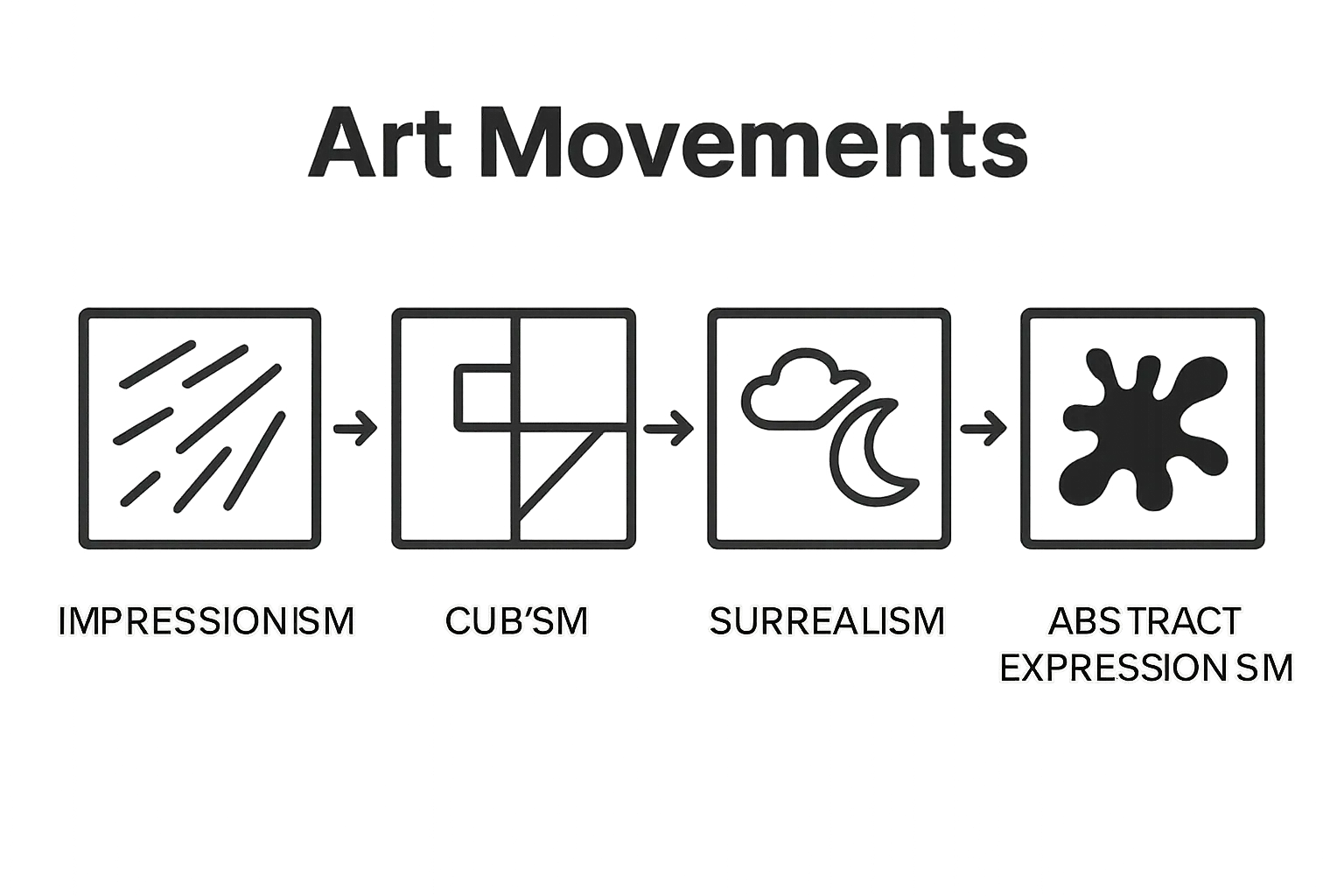
- Impressionism: Focused on capturing momentary visual impressions and light
- Cubism: Deconstructed objects into geometric shapes, presenting multiple perspectives simultaneously
- Surrealism: Explored unconscious mental processes and dream-like imagery
- Abstract Expressionism: Emphasized spontaneous, emotional creation and non-representational forms
These movements represented more than artistic styles. They were radical intellectual statements that challenged existing perceptions of reality, representation, and human consciousness.
Revolutionary Artists and Their Contributions
Groundbreaking artists fundamentally transformed artistic language through their innovative approaches. Figures like Pablo Picasso, Henri Matisse, and Wassily Kandinsky did not simply create art but redefined what art could be. They:
- Challenged traditional representational techniques
- Introduced revolutionary conceptual frameworks
- Expanded the boundaries of artistic expression
- Reflected complex psychological and social dynamics
Picasso’s Cubist works fragmented visual reality, Matisse revolutionized color usage, and Kandinsky created entirely non-representational compositions that expressed pure emotional and spiritual experiences.
Explore our guide to South African artists to understand how global modern art movements influenced local artistic expressions and contributed to a rich, diverse creative landscape.
Connecting Modern Art to Personal and Interior Spaces
Modern art transcends traditional aesthetic boundaries, offering individuals powerful opportunities to transform personal environments and express complex emotional landscapes through visual narratives. Artistic selections become more than decorative choices they represent profound statements of personal identity and intellectual engagement.
Psychological Impact of Art in Personal Spaces
The strategic placement of modern art within interior environments can fundamentally alter spatial perception, emotional atmosphere, and personal well-being. Carefully chosen artworks communicate individual narratives, creating dynamic interactions between physical spaces and personal experiences.
Key psychological benefits of integrating modern art include:
- Stimulating intellectual curiosity
- Creating emotional resonance within living spaces
- Reflecting personal growth and transformative experiences
- Generating conversational focal points
Artworks function as emotional anchors, transforming mundane environments into deeply personal landscapes that reflect individual complexity and creative sensibilities.
Practical Considerations for Art Integration
Selecting modern art requires thoughtful consideration of spatial dynamics, color interactions, and personal aesthetic preferences. Successful art integration involves understanding how different artistic styles communicate with existing interior elements.
Effective art selection strategies involve:
- Analyzing room lighting and color schemes
- Considering scale and spatial proportions
- Understanding personal emotional responses
- Exploring complementary artistic styles
The relationship between artwork and interior space becomes a nuanced dialogue, where visual elements communicate beyond traditional decorative boundaries.
Explore landscape art perspectives to understand how different artistic approaches can transform interior environments and create deeply personal visual narratives.
Bring the Power of Modern Art Into Your Home
Are you inspired by the new ideas and emotional depth of modern art, but unsure how to make it part of your life? Many readers wonder how these complex movements and bold expressions translate from the canvas to personal spaces. Maybe you want your walls to reflect your individuality, or to experience that sense of transformation discussed in the article on the essence and impact of modern art. At Art Online, we help South Africans bridge the gap between artistic theory and everyday living by connecting you directly with works from our nation’s most celebrated artists.

Let your home celebrate South African creativity and bold expression. Browse our curated collections, discover artists who interpret modern art with a uniquely local voice, and transform your interiors into spaces that challenge and inspire. Start your journey today at Art Online, where each piece is ready to make an impact. Not sure where to begin? Explore our guide to South African artists and find the perfect work for your style and story. Now is the time to turn inspiration into action. Modern art is closer than you think.
Frequently Asked Questions
What are the main characteristics of modern art?
Modern art is characterized by experimentation, subjective interpretations, and the use of abstract and symbolic elements. It breaks away from traditional representational techniques to explore innovative artistic expressions.
How did societal changes influence the emergence of modern art?
The emergence of modern art was influenced by significant societal shifts such as the Industrial Revolution, urbanization, and advancements in technology, prompting artists to reject traditional aesthetic norms in favor of exploring personal and collective psychological experiences.
What role does modern art play in contemporary society?
Modern art plays a critical role in addressing cultural and social issues, challenging established perspectives, and promoting dialogue. It serves as a powerful medium for personal expression and social commentary, reflecting complex human experiences.
Who are some pioneering artists associated with modern art movements?
Pioneering artists like Pablo Picasso, Wassily Kandinsky, and Marcel Duchamp are associated with modern art movements. They fundamentally transformed artistic language by introducing revolutionary conceptual frameworks and redefined the boundaries of artistic expression.