
Understanding Art for Commercial Spaces for Impact
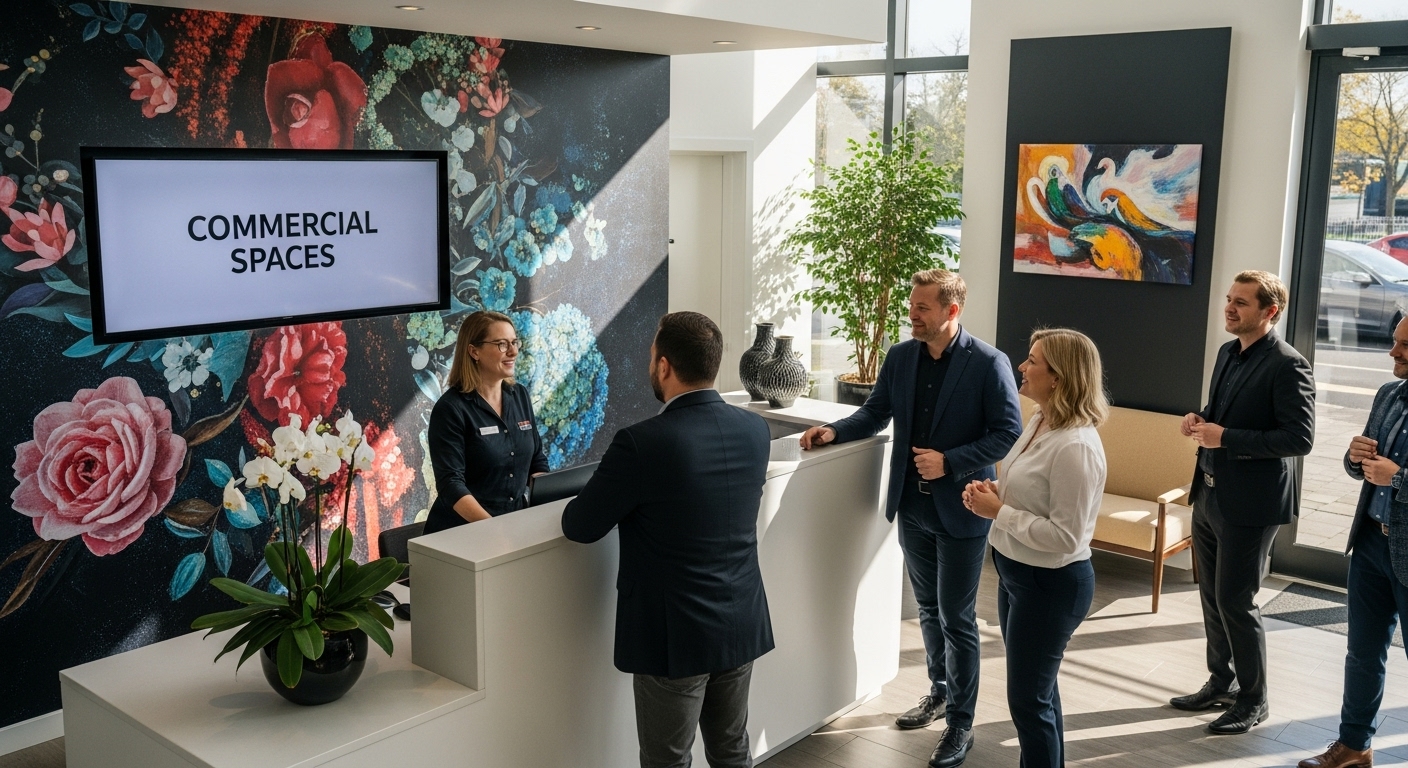
Art in commercial spaces does a lot more than fill empty walls. In fact, studies show that the right artwork in workplaces can actually reduce stress and boost productivity among employees. Most people think it’s all just about aesthetics, but art in business settings quietly shapes company culture, influences customer emotions, and tells a brand story without saying a word.
Table of Contents
- What Is Art For Commercial Spaces?
- Why Art Matters In Commercial Environments
- How Art Influences Customer Experience
- Key Concepts In Curating Art For Businesses
- Real-World Examples Of Effective Art Use
Quick Summary
| Takeaway | Explanation |
|---|---|
| Strategic art enhances brand identity. | Curated art reflects an organization’s values, promoting deeper connections with employees and clients. |
| Art improves workplace psychology. | Thoughtfully selected art reduces stress, boosts morale, and fosters creativity among employees. |
| Cultural relevance elevates customer experiences. | Art that reflects local traditions adds authenticity, enhancing customer engagement and brand perception. |
| Effective curation requires holistic strategies. | Integrating art should align with organizational goals, aesthetic values, and spatial dynamics for meaningful impact. |
| Art transforms spaces into narrative platforms. | Beyond decoration, art communicates stories that resonate, elevating the overall experience in commercial environments. |
What is Art for Commercial Spaces?
Art for commercial spaces represents a strategic approach to integrating visual art into professional environments, transforming functional areas into dynamic, engaging experiences that communicate brand identity and enhance workplace atmosphere. These art selections go beyond mere decoration, serving as powerful communication tools that reflect organizational values, stimulate creativity, and create meaningful connections with employees and visitors.
The Strategic Purpose of Commercial Art
Commercial art installations are carefully curated selections designed to achieve specific organisational objectives. Unlike residential art, which often prioritizes personal aesthetic preferences, art for commercial spaces must align with broader institutional goals. These artworks serve multifaceted purposes:
- Create visual narratives that reinforce company culture and identity
- Improve workplace psychological environments by reducing stress and increasing employee engagement
- Communicate professional sophistication and organisational values to clients and stakeholders
When businesses select art strategically, they transform blank walls into storytelling platforms that communicate beyond words. Our comprehensive guide on selecting art for professional environments provides deeper insights into this nuanced selection process.
Types of Art in Commercial Environments
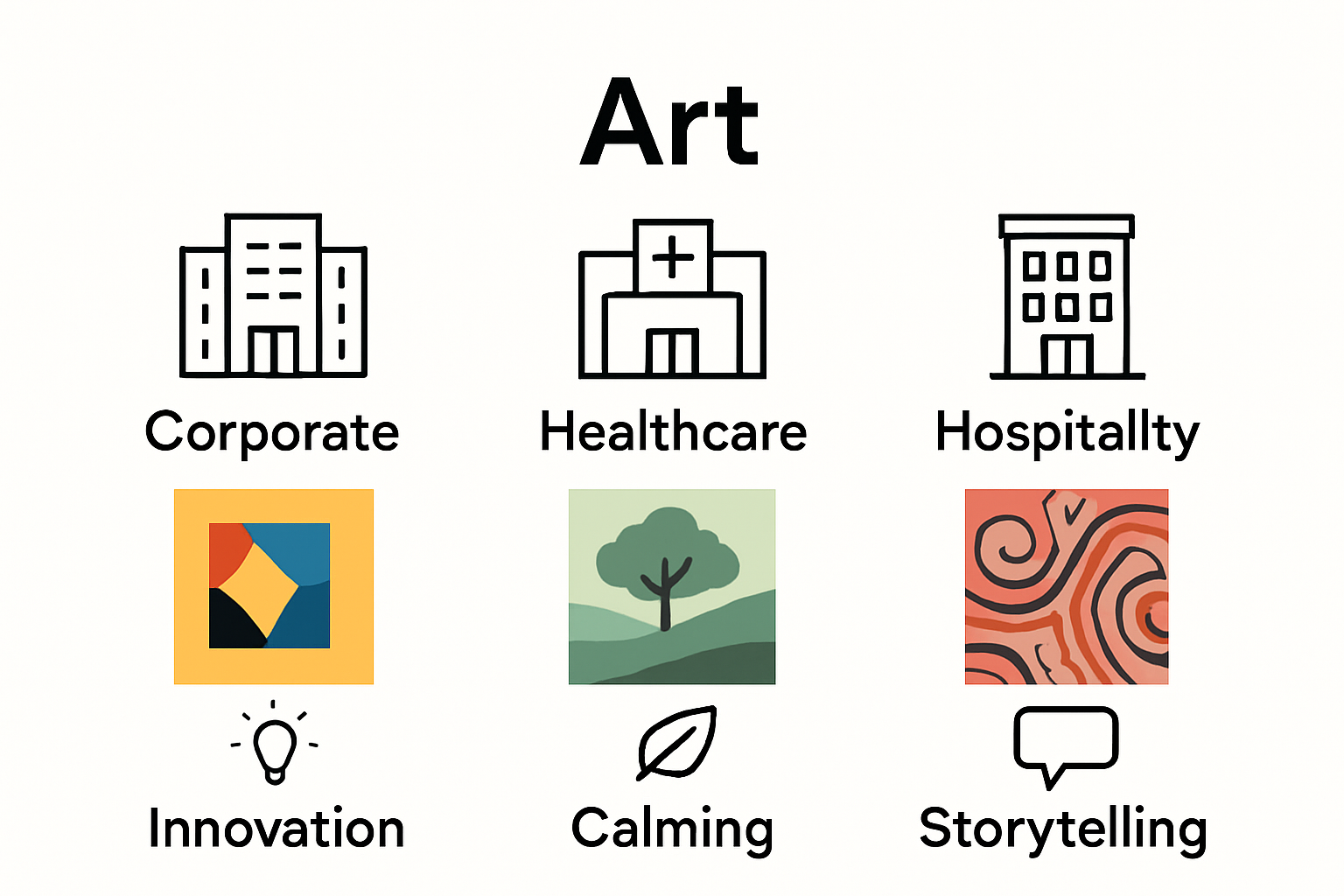
Commercial art encompasses diverse mediums and styles tailored to specific institutional contexts. From corporate headquarters to healthcare facilities, each environment demands unique artistic approaches
 :
:
- Corporate Spaces: Large-scale abstract paintings, photographic installations, and sculptures that communicate innovation and professionalism
- Healthcare Settings: Calming landscape art, nature-inspired compositions that reduce patient anxiety and create healing environments
- Hospitality Sectors: Regional artistic representations, local cultural artworks that enhance guest experience and provide authentic environmental storytelling
According to research exploring exhibition spaces in South Africa, art in commercial environments transcends aesthetic considerations, becoming a critical medium for spatial communication and cultural expression.
Below is a table comparing different types of art used in various commercial environments, summarising their typical forms and intended impact.
| Commercial Environment | Typical Art Forms | Intended Impact |
|—————————-|————————————————|nullified|
| Corporate Spaces | Large-scale abstract paintings, sculptures | Communicate innovation, professionalism |
| Healthcare Settings | Calming landscape art, nature-inspired pieces | Reduce stress, create healing environments |
| Hospitality Sectors | Regional cultural artworks, local representations| Enhance guest experience, provide authentic storytelling|
| Design Studios | Rotating exhibitions, contemporary pieces | Demonstrate creative commitment, stimulate innovation |
Understanding art for commercial spaces requires recognizing its potential to transform mundane environments into vibrant, meaningful landscapes that inspire, communicate, and elevate human experiences.
Why Art Matters in Commercial Environments
Art in commercial environments transcends aesthetic decoration, serving as a sophisticated communication tool that profoundly influences workplace psychology, brand perception, and organisational culture. By strategically integrating visual art, businesses can create environments that inspire creativity, enhance employee wellbeing, and communicate complex organisational narratives without uttering a single word.
Psychological and Performance Impact
The presence of thoughtfully selected art directly influences human psychological responses within professional spaces. Research demonstrates that visual stimuli can dramatically alter workplace dynamics, motivation, and overall employee experience.
Specific psychological benefits include:
- Reducing workplace stress and mental fatigue
- Stimulating creative thinking and innovative problem solving
- Creating a sense of pride and belonging among team members
- Improving overall workplace mood and emotional engagement
By understanding these subtle yet powerful interactions, organisations can leverage art as a strategic management tool.
Here is a table highlighting the key psychological and business benefits of art integration in commercial spaces, as described in the article.
| Benefit | Explanation |
|---|---|
| Reduced stress and mental fatigue | Visual art helps alleviate day-to-day workplace pressures |
| Stimulated creativity and innovation | Inspiring art encourages creative thinking and problem-solving |
| Sense of pride and belonging | Art fosters an emotional connection to the organisation |
| Improved mood and emotional engagement | Thoughtfully curated works boost overall workplace positivity |
| Enhanced brand communication and culture | Art visually communicates organisational values and identity |
Brand Communication and Cultural Expression
Commercial art functions as a non-verbal communication platform, allowing organisations to express their core values, cultural identity, and professional ethos. Unlike traditional marketing materials, art communicates authentically and emotionally, creating deeper connections with employees, clients, and stakeholders.
According to research exploring public art development in South Africa, art serves as a powerful medium for cultural exchange and organisational storytelling. By selecting artworks that reflect regional aesthetics, diversity, and creative traditions, businesses can demonstrate commitment to local cultural contexts and social narratives.
Ultimately, art in commercial environments represents an intelligent investment in human experience, transforming functional spaces into dynamic, inspiring landscapes that nurture creativity, communication, and collective identity.
How Art Influences Customer Experience
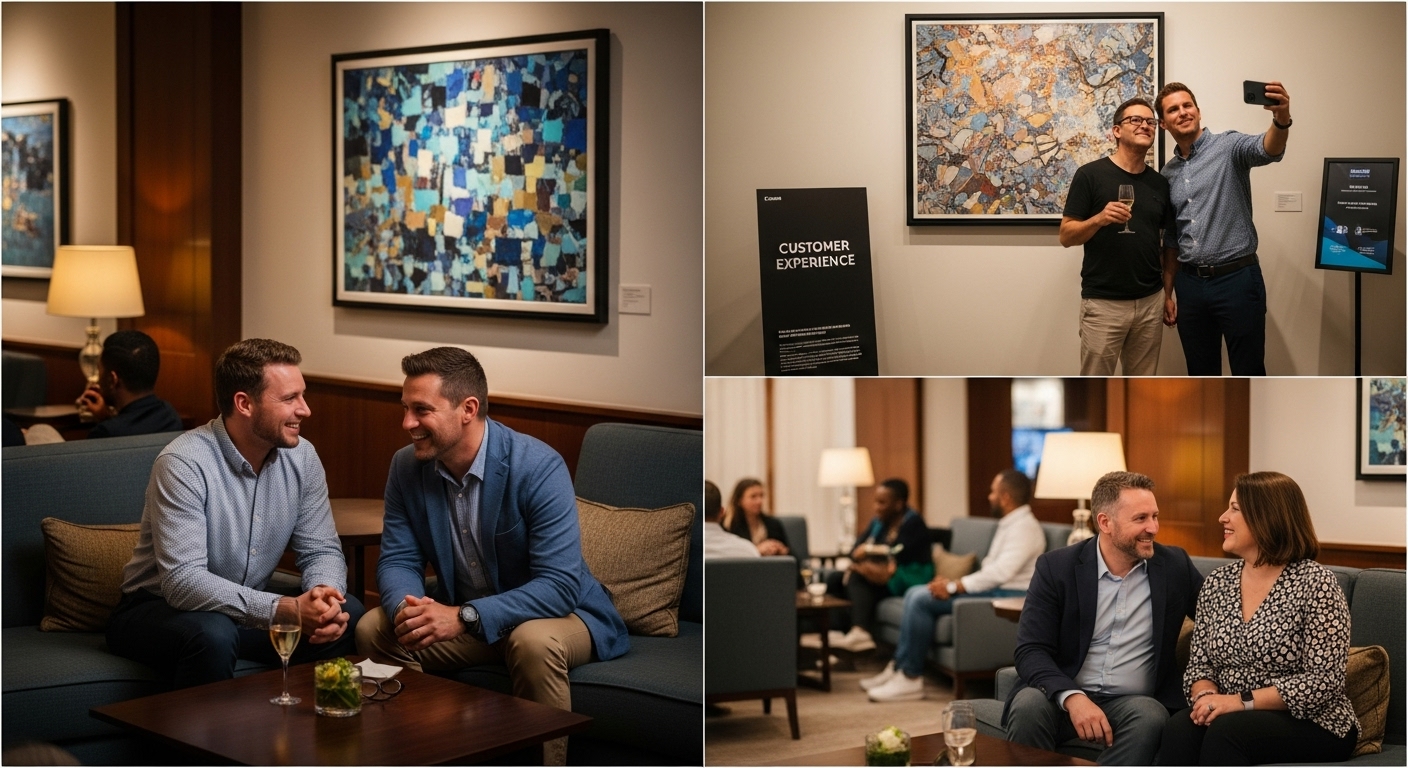
Art serves as a powerful experiential tool that transforms customer interactions from transactional encounters into meaningful, emotionally resonant journeys. By strategically integrating visual art, businesses can create immersive environments that subtly guide customer perceptions, enhance brand narratives, and generate profound psychological connections that extend far beyond traditional marketing approaches.
Emotional Engagement and Brand Perception
Customer experiences are fundamentally emotional responses shaped by environmental stimuli. Art plays a critical role in curating these emotional landscapes, influencing how clients perceive and interact with commercial spaces. Strategic art selection can:
- Generate feelings of trust and sophistication
- Create memorable, distinctive brand experiences
- Communicate organisational values without explicit messaging
- Reduce perceived waiting times and psychological stress
Businesses that understand these nuanced interactions can transform physical spaces into powerful narrative platforms. Discover how South African artists are redefining commercial aesthetics and creating compelling customer experiences.
Sensory Navigation and Spatial Psychology
Art functions as an unspoken guide within commercial environments, subtly directing customer movement, attention, and emotional responses. Through carefully curated visual elements, organisations can design intuitive spatial experiences that feel organic and engaging.
According to research exploring public art development in South Africa, art interventions can fundamentally reshape how individuals perceive and interact with spaces. By integrating local artistic traditions and contemporary design principles, businesses create environments that feel both familiar and innovative.
Ultimately, art in customer-facing spaces represents a sophisticated communication strategy that transforms mundane interactions into memorable, emotionally resonant experiences that distinguish brands in an increasingly competitive marketplace.
Key Concepts in Curating Art for Businesses
Curating art for commercial environments transcends aesthetic selection, representing a sophisticated strategic process that requires nuanced understanding of organisational identity, spatial dynamics, and psychological impact. Effective art curation transforms physical spaces into powerful narrative platforms that communicate complex organisational values and emotional landscapes.
Strategic Art Selection Principles
Successful art curation for businesses demands a holistic approach that integrates multiple considerations beyond visual appeal. Organisations must develop comprehensive strategies that align artistic selections with broader institutional objectives:
- Reflect authentic organisational culture and values
- Create meaningful emotional connections with employees and clients
- Demonstrate commitment to creativity and innovation
- Support local artistic communities and cultural diversity
Professional curators understand that art selection is not merely decorative but a complex communication mechanism. Explore our comprehensive guide on selecting impactful artworks for deeper insights into strategic art integration.
Contextual and Cultural Relevance
Art curation requires profound understanding of spatial context, organisational narrative, and cultural nuances. Businesses must consider how artistic selections interact with architectural environments, communicate brand identity, and resonate with diverse stakeholder groups.
According to research exploring corporate art collections in South Africa, successful art integration depends on leadership support and strategic alignment. By treating art as an intellectual and emotional investment rather than mere decoration, organisations can create transformative spatial experiences.
Ultimately, effective art curation represents a sophisticated dialogue between artistic expression, organisational identity, and human psychological experience, generating environments that inspire, communicate, and elevate collective imagination.
Real-World Examples of Effective Art Use
Successful integration of art in commercial environments demonstrates the transformative power of strategic visual storytelling. By examining practical applications across diverse sectors, businesses can understand how art transcends decorative purposes and becomes a powerful communication and engagement tool.
Corporate and Professional Environments
Leading corporations have discovered that art can fundamentally reshape workplace dynamics and brand perception. Progressive organisations implement art strategies that go beyond aesthetic considerations:
- Technology companies using large-scale abstract installations to symbolize innovation
- Financial institutions displaying local artwork to communicate cultural sensitivity
- Healthcare facilities selecting calming landscape paintings to reduce patient anxiety
- Design studios curating rotating exhibitions to demonstrate creative commitment
Explore inspiring South African artist collections that demonstrate how local creativity can transform professional spaces.
Hospitality and Customer Experience Spaces
Hotels, restaurants, and retail environments leverage art as a critical experiential element. Strategic art placement can dramatically enhance customer perception and emotional engagement. Successful implementations include:
- Boutique hotels displaying regional artistic traditions
- Restaurants using commissioned murals to create unique atmospheric experiences
- Retail spaces integrating interactive art installations
- Conference centers featuring local contemporary artworks
According to research on public art development in South Africa, art interventions can attract economic activity and create distinctive spatial experiences that differentiate businesses from competitors.
These real-world examples illustrate how thoughtful art curation transforms commercial spaces from mere functional environments into dynamic, narrative-rich experiences that communicate organisational identity, stimulate emotional connections, and elevate human interaction.
Transform Your Business Space with South African Art
Are you struggling to create a meaningful impression in your commercial environment? The article highlights how businesses often face blank walls, uninspired decor, and a disconnect between their values and their workspace atmosphere. This can leave both clients and employees feeling uninspired or disengaged. By embracing strategic art curation and understanding the true impact of visual storytelling, you have the power to shift your environment from ordinary to extraordinary.

Step into a new way of working and connecting with your clients and staff. Art Online offers premier access to the largest collection of South African art, handpicked from renowned local artists. Bring your brand, culture, and organisational story to life with curated pieces that foster creativity and a sense of belonging. Ready to make your workspace unforgettable? Visit Art Online now and discover how authentic art can transform your business today. For practical tips on selecting pieces with meaning, check out our comprehensive guide on selecting art for professional environments.
Frequently Asked Questions
What is the significance of art in commercial spaces?
Art in commercial spaces serves as a powerful communication tool that enhances brand identity, fosters employee engagement, and creates a positive atmosphere. It can influence workplace psychology and contribute to a dynamic environment.
How can art improve employee wellbeing in a workplace?
Strategically selected art can reduce stress, stimulate creativity, and create a sense of pride and belonging among employees. This leads to improved overall mood and emotional engagement within the workplace.
What types of art are suitable for corporate environments?
Large-scale abstract paintings, photographic installations, and sculptures that resonate with innovation and professionalism are often suitable for corporate environments. The art should align with the organizational culture and values.
How does art influence customer experience in commercial spaces?
Art enhances customer experiences by creating emotional engagement and memorable brand interactions. It can guide customer perceptions, reduce perceived waiting times, and communicate organizational values subtly without explicit messaging.