
Public Art in South Africa: Inspiring Collectors and Decorators 2025

Public art in South Africa is so much more than murals and sculptures on city corners. Some works have been known to completely transform entire neighbourhoods, and one precinct in Johannesburg saw property value rise by over 30 percent after public art installations. Now, you might expect these pieces to simply brighten up the scenery or tell a historical tale. Turns out, they also spark community healing, challenge political power, and have inspired even interior designers to rethink their spaces.
Table of Contents
- Exploring South Africa’s Iconic Public Artists
- Top Public Art Installations In South Africa
- Incorporating Public Art Themes In Interior Spaces
- Investing In Public Art: Tips For Collectors
Quick Summary
| Takeaway | Explanation |
|---|---|
| Public Art as Social Commentary | South African public artists, like Willie Bester, use their work to challenge historical narratives and promote social transformation through powerful visual storytelling. |
| Integration of Cultural Heritage in Design | Decorators can enhance interiors by incorporating public art themes, such as traditional Ndebele geometric patterns, to reflect cultural complexity and social history. |
| Navigating the Art Market | Collectors should understand art market dynamics, focusing on artists with cultural significance and maintaining comprehensive documentation for provenance to safeguard investments. |
Exploring South Africa’s Iconic Public Artists
Public art in South Africa represents a powerful narrative of cultural expression, social transformation, and artistic innovation. Artists in this vibrant landscape have consistently used their work to challenge historical narratives, celebrate diversity, and reimagine national identity through visual storytelling.
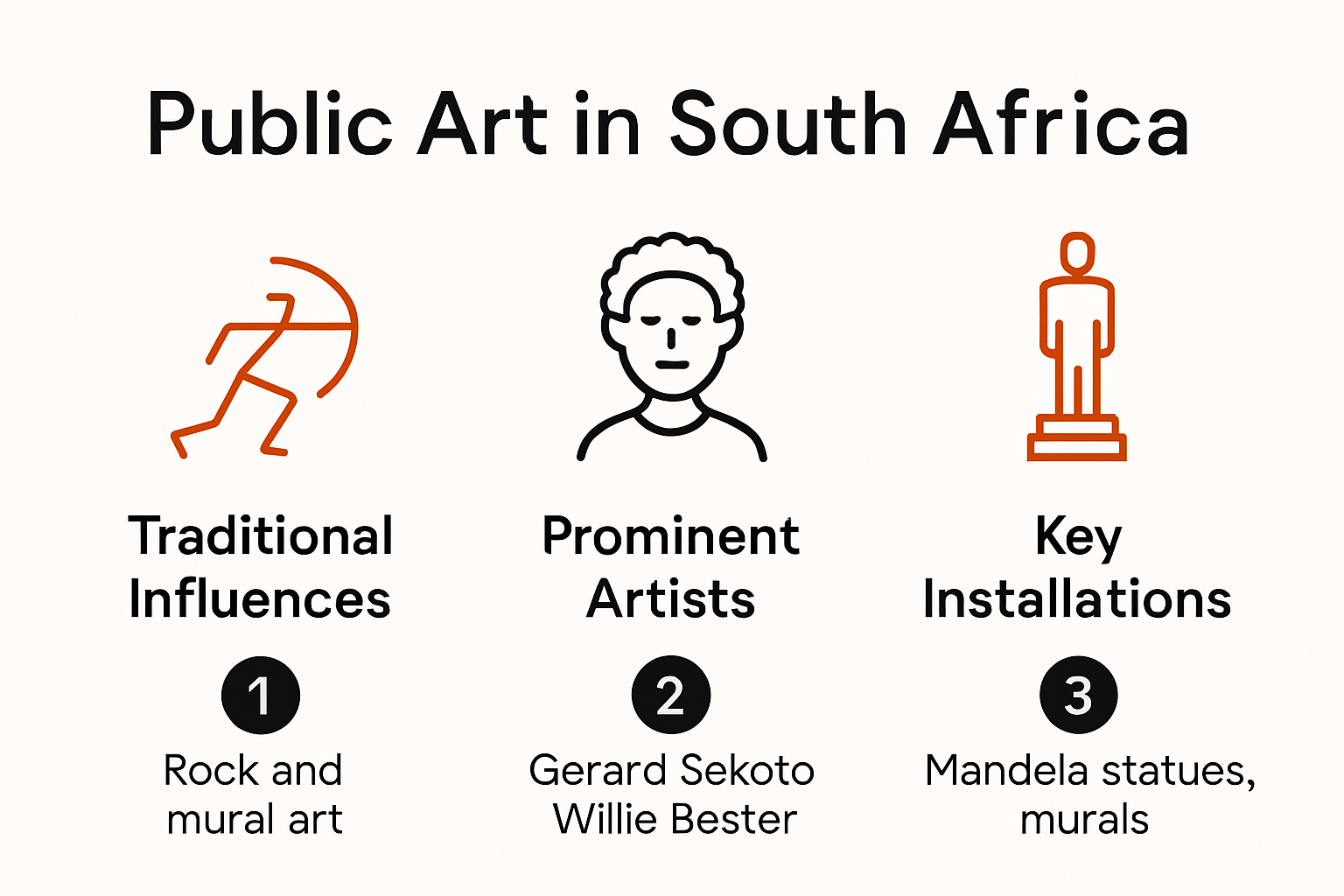
Pioneering Artists of Social Transformation
South African public artists have played a critical role in documenting and reshaping societal perspectives. Research from the University of Pretoria reveals the profound impact of artists who have historically challenged representation barriers. Artists like Willie Bester, known for his provocative mixed media works critiquing apartheid, exemplify how public art serves as a medium of social commentary.
Bester’s sculptures and installations, often constructed from recycled materials like scrap metal, powerfully deconstruct racial and political inequalities. His work transforms discarded objects into potent symbols of resistance and resilience, making complex social narratives accessible through visual language.
Cultural Pluralism Through Public Art
Research in Visual Anthropology highlights how public art in cities like Durban articulates multicultural experiences. Artists such as Esther Mahlangu, renowned for her distinctive Ndebele geometric paintings, have brought traditional indigenous artistic practices into contemporary public spaces. Her large scale murals and public installations celebrate cultural heritage while simultaneously challenging contemporary art paradigms.
Mahlangu’s work demonstrates how public art transcends mere aesthetic representation. Her vibrant geometric patterns, rooted in Ndebele traditional painting, become a visual language communicating cultural identity, resilience, and intergenerational knowledge transmission.
Contemporary Public Art Perspectives
Contemporary South African public artists continue to push boundaries, using urban spaces as canvases for critical dialogue. Research examining public art at the University of the Free State reveals how artists are reimagining institutional spaces through visual interventions that promote diversity and reconciliation.
Artists like Blessing Ngobeni create large scale public artworks that interrogate political corruption, social inequality, and systemic injustices. His mixed media pieces, often displayed in prominent public locations, transform urban environments into platforms for critical social discourse.
For collectors and interior decorators interested in understanding the depth of South African artistic expression, exploring iconic public artists offers invaluable insights into the nation’s rich cultural landscape. These artists do not merely create art they construct narratives that challenge, heal, and reimagine societal frameworks through powerful visual storytelling.
To help readers easily compare prominent South African public artists discussed above, here’s a summary highlighting each artist’s style, themes, and contribution:
| Artist | Artistic Style | Signature Themes | Notable Contribution |
|---|---|---|---|
| Willie Bester | Mixed media, recycled objects | Social commentary, resistance, inequality | Critiques apartheid, transforms waste into art |
| Esther Mahlangu | Ndebele geometric painting | Cultural identity, tradition, resilience | Brings indigenous patterns to public spaces |
| Blessing Ngobeni | Mixed media, large scale | Political critique, urban transformation | Interrogates social and political issues |
Top Public Art Installations in South Africa
Public art installations in South Africa represent more than aesthetic expressions they are powerful narratives of cultural transformation, historical reconciliation, and collective memory. These remarkable works transform urban spaces into dynamic canvases that challenge perceptions and invite dialogue.
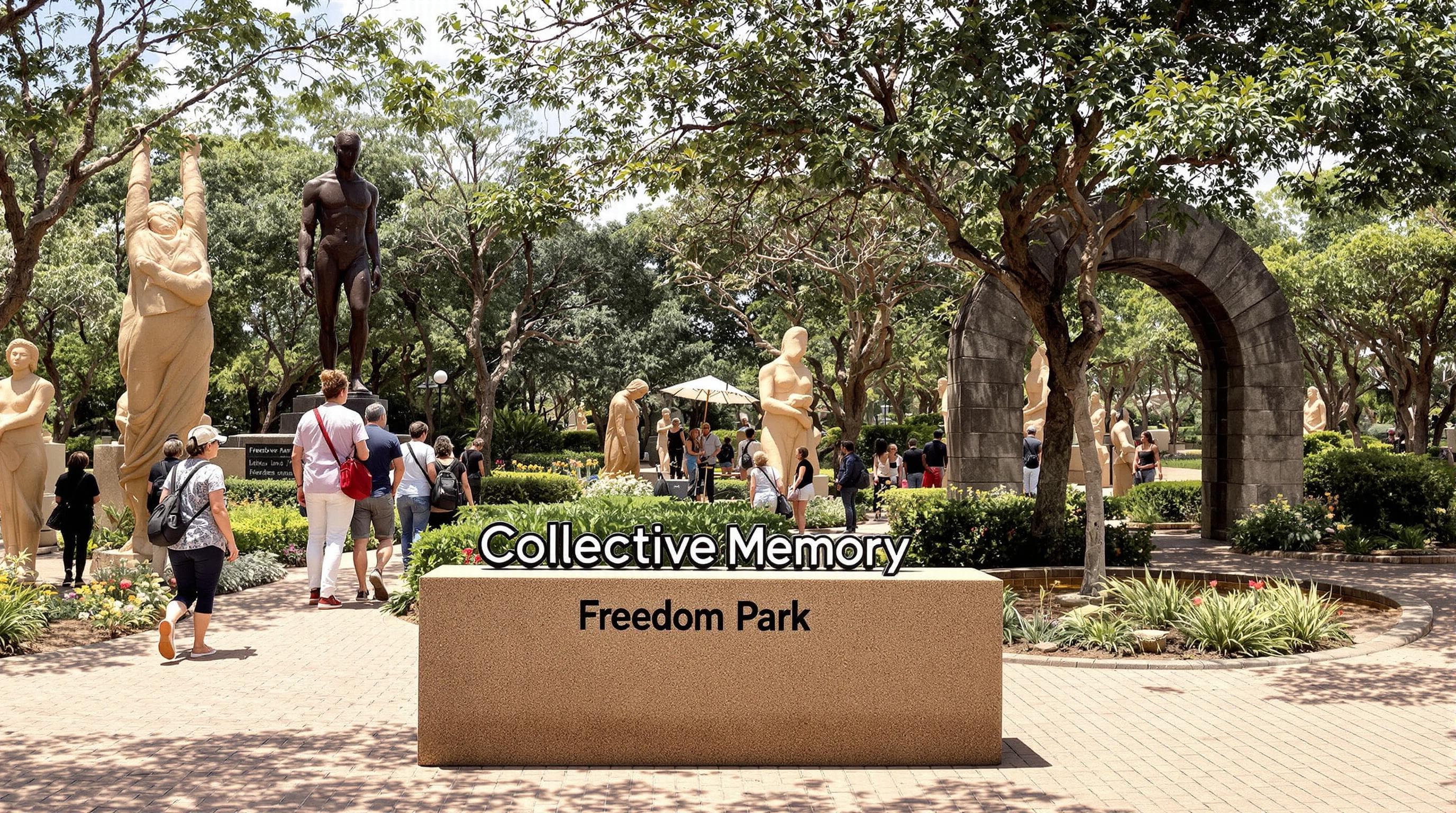
Monumental Narratives of Reconciliation
Research from Wits University highlights how public art installations in South Africa serve critical nation-building functions. Freedom Park in Pretoria stands as a quintessential example. This expansive memorial complex integrates multiple artistic elements to commemorate South Africa’s complex struggle for liberation. Its indigenous garden, museum, and massive sculptural interventions create a holistic landscape of remembrance.
The park’s impressive Isivivane (symbolic resting place) features a sweeping stone arc that honors victims from various conflicts, representing diverse cultural experiences. Each stone and installation carefully weaves personal histories into a collective narrative of healing and understanding.
Urban Art Transformations
Research by the African Centre for Cities demonstrates how public art reimagines urban spaces. The Maboneng Precinct in Johannesburg exemplifies this transformation. Once an abandoned industrial area, it now hosts vibrant murals and street art installations that celebrate urban creativity.
Artists like Dbongz Mahlathi have created massive wall paintings that transform mundane architectural surfaces into extraordinary visual experiences. These interventions do more than decorate they redefine spatial narratives and challenge traditional perceptions of urban environments.
Community Engagement and Cultural Expression
Research in Visual Anthropology emphasizes public art’s role in expressing cultural diversity. The District Six Museum in Cape Town represents a profound example of community-driven artistic intervention. Its installations reconstruct the memories of a community forcibly removed during apartheid, using photographs, personal artifacts, and collaborative art pieces.
The museum’s street map installation, where former residents mark their original home locations, transforms historical trauma into a powerful act of remembrance and resistance. This approach demonstrates how public art can be a medium of social healing and collective storytelling.
For collectors and interior decorators seeking to understand the depth of South African artistic expression, exploring contemporary public art offers profound insights into the nation’s creative landscape. These installations are not merely visual experiences they are living testimonies of South Africa’s complex, resilient cultural narrative.
Here is a quick comparison of three major public art installations featured in this section, including their purpose and key features:
| Installation/Location | Main Purpose | Key Features | Community Impact |
|---|---|---|---|
| Freedom Park, Pretoria | Remembrance, reconciliation | Sculptures, indigenous gardens, Isivivane arc | Healing narratives across cultures and histories |
| Maboneng Precinct, JHB | Urban regeneration, creativity | Murals, street art, wall paintings | Revitalisation, increased property value, social dialogue |
| District Six Museum, CPT | Historical memory, community engagement | Photographs, artifacts, map collaboration | Restores memory, promotes healing, collective storytelling |
Incorporating Public Art Themes in Interior Spaces
Incorporating public art themes into interior spaces represents a sophisticated approach to design that transcends mere decoration. It transforms living and working environments into narratives that reflect cultural complexity, social history, and artistic innovation.
Cultural Narratives Through Visual Design
Research from the International Journal of Arts, Recreation and Sports highlights the profound impact of integrating artistic elements into interior environments. Collectors and decorators can draw inspiration from South African public art by selecting pieces that communicate powerful social and cultural stories.
Consider incorporating large scale photographic prints documenting significant moments in South African history, or textile artworks that reflect traditional Ndebele geometric patterns. These design elements do more than decorate they create conversation pieces that invite deeper engagement with cultural narratives.
Modernist African Art in Interior Contexts
According to the Financial Times, African modernist art is experiencing a global renaissance. This trend offers decorators unique opportunities to integrate bold, provocative artworks that challenge traditional design aesthetics. South African artists like Willie Bester create mixed media pieces that can serve as striking focal points in contemporary interiors.
Textures and materials inspired by public art installations can also transform spaces. Recycled metal sculptures, hand woven textiles, and mixed media panels can introduce tactile dimensions that reflect the complexity of South African artistic expression. These elements work particularly well in minimalist spaces where they can stand as powerful artistic statements.
Celebrating Cultural Heritage Through Design
An Associated Press article featuring Esther Mahlangu’s retrospective underscores the potential of cultural art in interior design. Mahlangu’s vibrant Ndebele paintings offer inspiration for color palettes, geometric patterns, and design motifs that can be integrated into modern interiors.
Decorators can approach this integration strategically by selecting art pieces that complement existing architectural elements. A large Ndebele inspired geometric artwork can transform a neutral wall, while smaller decorative elements like ceramics or textile pieces can add subtle cultural references to a room’s design.
For interior design professionals seeking to elevate their approach, exploring South African artistic traditions provides a rich source of inspiration. The key is to view art not as mere decoration but as a dynamic narrative element that breathes life and meaning into interior spaces.
Investing in Public Art: Tips for Collectors
Investing in public art represents a nuanced approach to collecting that goes beyond traditional art acquisition. It requires a sophisticated understanding of cultural value, artistic significance, and potential future appreciation.
Understanding Art Market Dynamics
RBC Wealth Management emphasizes that art investment is not merely about financial returns but also personal enjoyment and cultural appreciation. South African public art offers unique opportunities for collectors who seek pieces with profound social and historical significance.
Successful art collectors approach investment with a strategic mindset. This means researching emerging South African artists, understanding their historical context, and evaluating their potential long-term cultural and financial value. Artists like Willie Bester and Esther Mahlangu, who have international recognition, demonstrate how public art can transcend local markets.
Documentation and Provenance
The National Arts Program Foundation highlights the critical importance of proper documentation when investing in art. For South African public art, this means verifying the artwork’s origin, understanding its historical context, and maintaining comprehensive records.
Collectors should prioritize artworks with clear provenance, ideally accompanied by certificates of authenticity, exhibition history, and detailed artist documentation. This not only protects the investment but also adds layers of cultural and historical significance to the piece.
Strategic Collection Management
The Museum Trustee Association recommends developing a comprehensive strategy for art collection management. This involves creating a diversified portfolio that includes different styles, mediums, and artists representing various periods of South African artistic expression.
Consider factors like the artist’s reputation, the artwork’s condition, its historical significance, and potential for appreciation. Public art pieces that reflect significant social movements or cultural transformations often hold exceptional long-term value.
For those looking to deepen their understanding of South African art investment, exploring original art acquisition strategies can provide valuable insights. Remember that investing in public art is not just a financial decision it is an opportunity to preserve and celebrate cultural narratives that define South Africa’s complex and vibrant artistic landscape.
Frequently Asked Questions
What is public art in South Africa?
Public art in South Africa includes various artistic expressions, such as murals and sculptures, that are displayed in public spaces. These artworks transform urban environments and reflect the country’s cultural heritage and social narratives.
How does public art impact local communities?
Public art can significantly impact local communities by enhancing the visual landscape, promoting social healing, and even increasing property values, with reports indicating up to a 30% rise in property values in areas with public art installations.
Who are some notable public artists in South Africa?
Notable public artists in South Africa include Willie Bester, known for his mixed media works critiquing apartheid, and Esther Mahlangu, celebrated for her Ndebele geometric paintings that celebrate cultural heritage.
How can interior decorators incorporate public art themes in their designs?
Interior decorators can incorporate public art themes by selecting artworks that reflect cultural narratives, such as traditional patterns or significant historical moments, thus creating engaging and meaningful interior spaces.
Bring South African Public Art Into Your Space Today
Have the powerful murals and vibrant installations featured in this article left you wondering how to truly capture that creative energy in your own home or office? Many art enthusiasts and decorators feel inspired by the cultural narratives and bold statements of South African public art, yet struggle to find authentic original pieces that carry the same significance and impact. You need access to a trusted collection where the works of renowned artists like Willie Bester and Esther Mahlangu are not just admired from afar but available for you to own and showcase.

Now is your chance to elevate your space with museum-quality art that tells a story. Discover an unmatched range of original artworks from South Africa’s most celebrated artists at Art Online. Want to go deeper after reading about these icons? Start exploring our selection of famous South African artists and get inspired by authentic pieces that reflect the spirit of public art. Visit Art Online now to secure the artwork that will transform your collection and your living space.
Recommended
- Famous South African Artists: 2025 Guide for Collectors & Decorators – Art-Online
- South African Tribal Art: Trends and Decor Ideas for 2025 – Art-Online
- Art of South Africa: Inspiring Creativity and Cultural Power – Art-Online
- Blog – Art-Online
- Best South African Red Wines to Try in 2025 | Vinty Favourites
Art Appreciation Basics: A Guide for Collectors and Decorators 2025
– Exclusive Canvas Art