
Understanding South African Art History: A Comprehensive Overview

South African art has roots that stretch back thousands of years, telling stories long before museums and galleries ever existed. The country is home to over 25,000 documented rock art sites, each one a window into ancient spiritual life and cultural tradition. Most would think colonial influences overshadowed this heritage. Yet the real twist is that today’s artists are fusing those indigenous origins with new voices, creating a scene more alive and diverse than ever.
Table of Contents
- The Origins Of South African Art: Cultural Influences
- Evolution Through Time: Key Movements And Styles
- The Role Of Society And Politics In Art Development
- Contemporary South African Art: Trends And Themes
- Art Collecting And Interior Design: Bridging The Past And Present
Quick Summary
| Takeaway | Explanation |
|---|---|
| Indigenous art reflects spiritual significance | Early South African art from indigenous communities reveals deep spiritual and communal meanings, beyond mere decoration. |
| Colonial influences reshaped artistic expression | The merging of indigenous traditions and European techniques created a unique South African artistic identity amidst multicultural interactions. |
| Art as a medium for resistance | During apartheid, artists used their work to challenge political oppression, making art a tool for social commentary and change. |
| Contemporary art explores complex identities | Modern South African artists blend traditional influences with global practices to tell stories of resilience and transformation. |
| Art collecting emphasizes cultural narratives | Today’s art collectors seek pieces that not only enhance aesthetics but also embody and communicate significant cultural stories. |
The Origins of South African Art: Cultural Influences
South African art history is a vibrant narrative deeply rooted in the complex interactions between diverse cultural groups, indigenous traditions, and historical experiences. The origins of artistic expression in this region stretch back thousands of years, reflecting the rich tapestry of human creativity and cultural resilience.
Indigenous Artistic Foundations
The earliest artistic traditions in South Africa emerged from indigenous communities, particularly the San and Khoikhoi peoples. These groups developed sophisticated rock art and petroglyphs that serve as profound historical documents. Research from the South African Heritage Resources Agency reveals that these ancient artworks were not merely decorative but carried deep spiritual and communal significance.
Key characteristics of indigenous South African art include:
- Intricate rock paintings depicting hunting scenes
- Spiritual representations of human and animal transformations
- Symbolic narratives of cultural practices and cosmological beliefs
Colonial and Multicultural Interactions
The arrival of European colonizers fundamentally transformed artistic expressions in South Africa. The interactions between indigenous communities, European settlers, and later Asian immigrants created a complex artistic landscape. Artists began incorporating diverse stylistic influences while simultaneously preserving traditional artistic techniques.
When European settlers arrived, they brought Western artistic techniques that gradually merged with local aesthetic traditions. This cultural fusion produced unique artistic forms that represented the emerging south-african identity. [Explore our guide on famous South African artists who epitomize this rich cultural heritage].
The multicultural nature of South African art reflects the country’s complex history of migration, conflict, and eventual reconciliation. Each cultural group contributed distinctive artistic elements: indigenous symbolism, European realism, African expressionism, and innovative contemporary interpretations.
Contemporary Artistic Evolution
Modern South African art continues to be a powerful medium for expressing cultural identity, social commentary, and historical narratives. Contemporary artists draw inspiration from traditional forms while challenging historical narratives and exploring complex societal transformations.
This ongoing artistic dialogue demonstrates how South African art transcends mere visual representation, serving as a dynamic form of cultural communication and historical documentation.
Evolution through Time: Key Movements and Styles
South African art has undergone profound transformations, reflecting the complex social, political, and cultural dynamics that have shaped the nation. Each artistic movement represents a distinct chapter in the country’s narrative, capturing the evolving spirit of creativity and resistance.
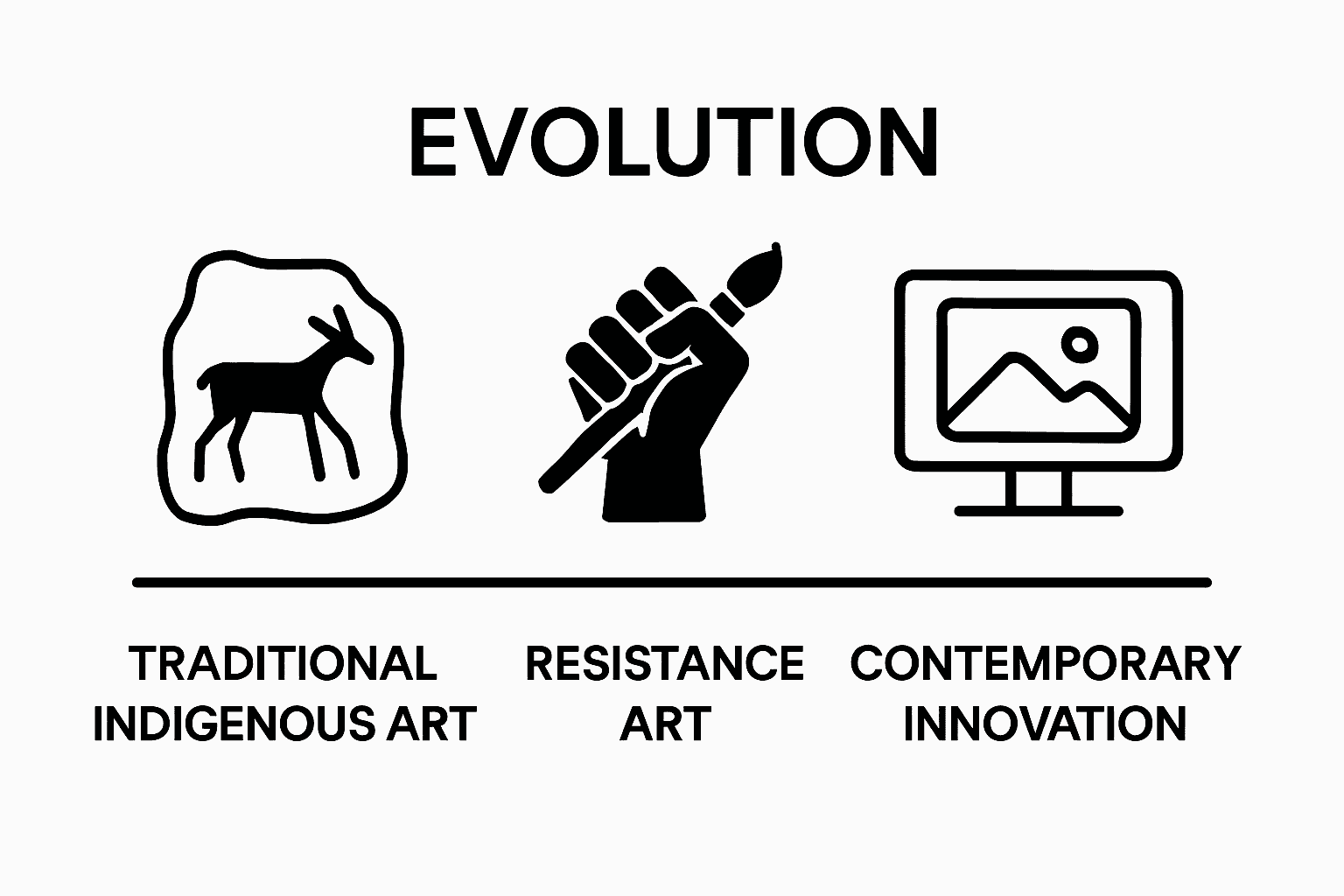
Pre-Colonial and Colonial Artistic Expressions
Before European colonization, indigenous art forms were deeply connected to spiritual and communal practices. Research from the African Arts Journal indicates that these early artistic expressions were characterized by intricate symbolic representations and functional design.
Key characteristics of early artistic movements included:
- Symbolic rock art documenting spiritual beliefs
- Decorative crafts with profound cultural meanings
- Artistic practices integrated with daily life and ritual
Resistance and Transformation: 20th Century Art
The 20th century marked a significant turning point in South African art. During the apartheid era, art became a powerful medium of social commentary and political resistance. Artists like Gerard Sekoto and Irma Stern emerged as critical voices, using their work to challenge oppressive systems and represent marginalized experiences.
[Discover more about South African tribal art trends that influenced these powerful artistic movements]. The artistic landscape became a battleground of cultural representation, where each brushstroke and sculpture carried profound political and social significance.
Significant artistic movements during this period included:
- Resistance art challenging apartheid policies
- Emergence of Black Consciousness artistic expressions
- Fusion of traditional and modernist artistic techniques
Contemporary Artistic Innovations
In the post-apartheid era, South African art has experienced a remarkable renaissance. Contemporary artists are now exploring complex narratives of identity, healing, and transformation. They draw inspiration from diverse cultural traditions while simultaneously pushing artistic boundaries.
Modern south-african artists are characterized by their ability to blend traditional techniques with global contemporary art practices. This approach allows them to create art that is both locally rooted and internationally relevant, telling stories of resilience, diversity, and hope.
Today’s artistic landscape continues to evolve, representing a dynamic dialogue between historical experiences and future possibilities. South African art remains a powerful testament to the nation’s capacity for creativity, resistance, and renewal.
The following table compares the main artistic periods in South African art history, summarising their defining characteristics and cultural influences.
| Artistic Period | Timeframe | Key Characteristics | Cultural Influences |
|---|---|---|---|
| Indigenous Origins | Pre-colonial | Rock art, symbolic narratives, spiritual significance | San and Khoikhoi traditions, cosmological beliefs |
| Colonial & Multicultural Era | 17th – 19th Century | Fusion of Western and local techniques, evolving art forms | European settler techniques, indigenous practices |
| Resistance & Transformation | 20th Century | Art as protest, social commentary, Black Consciousness movement | Apartheid, multicultural dynamics |
| Contemporary Innovations | 1990s to present | Blending traditional and global styles, digital media, identity | Globalisation, technology, cultural hybridity |
The Role of Society and Politics in Art Development
South African art has consistently served as a powerful mirror reflecting societal dynamics, political struggles, and cultural transformations. Artists have used their creative expressions as potent tools for communication, resistance, and social commentary throughout the nation’s complex history.
Art as Social Documentation
Research from the South African Visual Arts Documentation Trust reveals that art has been more than an aesthetic endeavor in South Africa. It emerged as a critical mechanism for documenting social experiences, capturing the emotional landscape of different historical periods.
Artistic documentation has traditionally encompassed several crucial dimensions:
- Recording lived experiences of marginalized communities
- Preserving cultural memories and collective narratives
- Challenging dominant historical perspectives
Resistance Through Creative Expression
During the apartheid era, art became a revolutionary medium of protest and political resistance. Artists transformed canvases, sculptures, and performance spaces into platforms for challenging oppressive systems. Learn more about [famous South African artists who pioneered this approach].
Key strategies of artistic resistance included:
- Creating visual narratives that exposed social injustices
- Using symbolic imagery to critique political systems
- Representing experiences of discrimination and resilience
Post-Apartheid Artistic Transformation
In the democratic era, South African art has continued to play a crucial role in national healing and identity reconstruction. Contemporary artists engage with complex societal themes, exploring narratives of reconciliation, transformation, and ongoing social challenges.
Modern artistic practices have become sophisticated platforms for:
- Exploring intersectional identities
- Challenging historical narratives
- Promoting dialogue about social reconstruction
Today, South African art represents a dynamic dialogue between historical memory and future possibilities, demonstrating the profound interconnection between artistic expression and societal evolution.
Contemporary South African Art: Trends and Themes
Contemporary South African art represents a dynamic landscape of creative expression, reflecting the nation’s complex social fabric, diverse cultural identities, and ongoing process of transformation. Artists are actively engaging with profound themes of identity, healing, and reimagining national narratives.
Emerging Artistic Perspectives
Research from the Contemporary African Art Platform highlights the emergence of multidimensional artistic practices that transcend traditional boundaries. South African artists are increasingly utilizing interdisciplinary approaches, blending digital media, traditional techniques, and conceptual strategies.
Key characteristics of contemporary south-african art include:
- Exploration of intersectional identities
- Critical engagement with historical narratives
- Innovative cross-cultural artistic dialogues
Technological and Global Influences
Contemporary artists are leveraging digital technologies and global artistic networks to expand their creative horizons. [Check out our blog for the latest artistic innovations]. This technological integration allows for more complex storytelling, enabling artists to reach international audiences and challenge traditional artistic conventions.
Significant trends in technological artistic engagement include:
- Digital art and multimedia installations
- Virtual and augmented reality experiences
- Online collaborative artistic platforms
Social Commentary and Transformation
Beyond aesthetic innovation, contemporary South African art continues to serve as a powerful medium for social commentary. Artists are addressing critical issues such as economic inequality, racial reconciliation, environmental challenges, and gender dynamics.
These artistic expressions go beyond mere representation, functioning as important social dialogues that challenge existing power structures and reimagine collective futures. Contemporary artists are creating work that is simultaneously deeply personal and universally resonant, reflecting the ongoing complexity of south-african social experiences.
The current artistic landscape demonstrates remarkable resilience, creativity, and a profound commitment to using art as a transformative social tool.
Art Collecting and Interior Design: Bridging the Past and Present
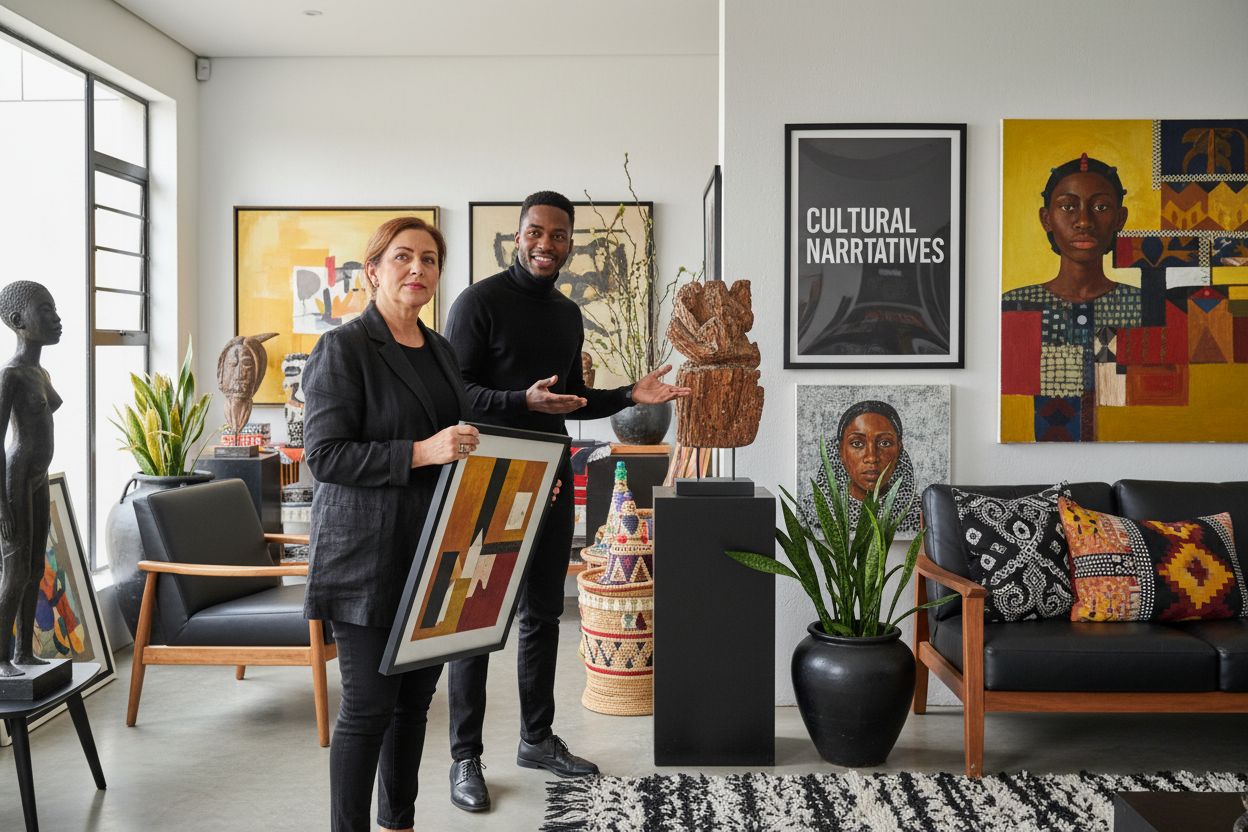
South African art collecting represents a dynamic intersection between cultural preservation, aesthetic appreciation, and interior design innovation. Collectors and design professionals are increasingly recognizing art as more than decorative elements but as powerful narrative devices that communicate complex cultural stories.
Cultural Narratives in Design
Research from the Iziko South African National Gallery reveals that art collecting has transformed from mere acquisition to a sophisticated practice of cultural dialogue. Modern collectors seek artworks that not only complement interior spaces but also communicate profound social and historical narratives.
Key considerations for art collectors include:
- Understanding the historical context of artworks
- Recognizing artistic techniques and cultural significance
- Creating visual dialogues within interior spaces
Investment and Aesthetic Value
Contemporary art collecting in South Africa transcends traditional aesthetic considerations. [Learn more about why you should buy original art in South Africa]. The art market has evolved to recognize the dual potential of artworks as both cultural artifacts and valuable financial investments.
Significant trends in art collecting include:
- Supporting emerging south-african artists
- Diversifying art portfolios across different styles
- Integrating traditional and contemporary artistic expressions
Design Integration Strategies
Interior designers are increasingly adopting sophisticated approaches to incorporating south-african art into living and working environments. They view art as a critical element that transforms spaces, creating emotional connections and visual narratives.
Modern design integration strategies focus on:
- Creating contextual relationships between art and architectural spaces
- Balancing historical artistic references with contemporary design
- Using art as a focal point for spatial storytelling
This nuanced approach to art collecting and interior design demonstrates the profound relationship between artistic expression, cultural memory, and contemporary aesthetic sensibilities.
This table outlines the key features and considerations that define contemporary South African art collecting and its integration into interior design.
| Aspect | Description |
|---|---|
| Cultural Narratives | Artworks chosen for their ability to communicate social and historical narratives within a space |
| Investment Value | The dual importance of collecting for both cultural heritage and potential financial return |
| Design Integration | Strategies to create contextual relationships between art and architecture, balancing past and present |
| Support for Local Artists | Emphasis on acquiring works from emerging and established South African artists |
| Visual Dialogue | Art used as a focal point, fostering connections between viewers, space, and cultural memory |
Experience the Living Story of South African Art in Your Own Space
Are you inspired by the profound journeys, multicultural influences, and vibrant resilience found in South African art history? This article highlights how every artwork, from ancient San rock paintings to contemporary masterpieces, carries deep cultural narratives and personal stories. Yet, many still struggle to bridge this rich artistic legacy with their daily lives, finding it challenging to identify authentic pieces that truly represent the spirit and diversity of South Africa.

Bring these powerful narratives into your home or office through Art Online. As South Africa’s largest online art gallery, we give you direct access to original works from the nation’s most renowned artists. Whether you want to discover more famous South African artists or learn why to buy original art in South Africa, you can connect with the artists and ideas that shape our nation’s artistic legacy. Do not let the story end with what you read. Begin your own journey with truly South African art at Art Online and own a part of our evolving cultural heritage today.
Frequently Asked Questions
What are the key characteristics of indigenous South African art?
Indigenous South African art is characterized by intricate rock paintings, spiritual representations depicting human and animal transformations, and symbolic narratives reflecting cultural practices and cosmological beliefs.
How did colonial influences shape South African art?
Colonial influences introduced Western artistic techniques that merged with local styles, creating a multicultural artistic landscape that represents the diverse cultural identity of South Africa.
What role did art play during the apartheid era in South Africa?
During the apartheid era, art served as a powerful medium for social commentary and political resistance, with artists using their work to challenge oppressive systems and represent marginalized experiences.
What themes do contemporary South African artists explore in their work?
Contemporary South African artists explore themes of identity, healing, and social transformation, often addressing critical issues such as economic inequality, racial reconciliation, and gender dynamics.