
Understanding the Meaning of Expressionism in Art

Expressionism turned art on its head in the early 20th century, trading picture-perfect scenes for raw emotion and bold distortion. You might expect that sticking to traditional beauty would carry more weight in the art world. Yet, expressionist artists broke every rule on purpose, choosing instead to make viewers feel intense psychological states through exaggerated forms and jarring colours. This radical approach reshaped not only painting, but the way we experience art and design to this day.
Table of Contents
- Defining Expressionism: A Unique Artistic Movement
- The Importance Of Emotion In Expressionism
- How Expressionism Influences Art And Decor
- Key Techniques And Styles In Expressionism
- Real-World Examples Of Expressionism’s Impact
Quick Summary
| Takeaway | Explanation |
|---|---|
| Expressionism prioritizes emotion over realism | Unlike traditional art, expressionism focuses on conveying emotional experiences through distorted forms and intense colors. |
| Key techniques include color symbolism and distortion | Artists use vibrant colors and visual deconstruction to evoke and communicate deep psychological states. |
| Challenge traditional aesthetics in art and design | Expressionism encourages breaking conventional artistic rules to create engaging emotional dialogues within artwork. |
| Emotional engagement is central to expressionism | The movement aims to elicit profound psychological responses, demanding an active viewer participation rather than passive observation. |
| Influences extend beyond visual arts | Expressionism’s principles have transformed various fields, including cinema, architecture, and interior design, enhancing emotional expression across disciplines. |
Defining Expressionism: A Unique Artistic Movement
Expressionism emerged as a radical artistic movement in the early 20th century, challenging traditional representational art by prioritizing emotional intensity over realistic depiction. Unlike previous artistic styles that focused on accurate visual reproduction, expressionist artists sought to communicate profound inner experiences and psychological states through deliberate distortion and exaggeration.
Origins and Philosophical Foundations
The meaning of expressionism lies in its fundamental rejection of objective reality. Originating in Germany, this movement represented artists’ deep response to rapid societal transformations brought about by industrialization and urbanization. Artists like Edvard Munch and Emil Nolde used vivid colors, dramatic brushstrokes, and abstracted forms to convey raw emotional landscapes.
Key philosophical principles of expressionism include:
- Subjective interpretation of reality
- Emotional authenticity over visual accuracy
- Psychological exploration through artistic representation
Characteristics and Artistic Techniques
Expressionist artists employed several distinctive techniques to communicate intense emotional states. They deliberately distorted proportions, used jarring color palettes, and created compositions that prioritized psychological impact over visual realism. According to art historians, these techniques were designed to provoke visceral responses from viewers, forcing them to engage with the artwork’s underlying emotional content.
The goal was not to create a pleasant visual experience, but to communicate deep, often uncomfortable psychological truths. By breaking traditional aesthetic conventions, expressionist artists challenged viewers to confront complex human emotions and societal tensions through their provocative visual language.
The following table summarises key characteristics and artistic techniques of expressionism, providing a concise reference for readers comparing these elements within the movement.
| Characteristic / Technique | Description |
|---|---|
| Subjective Interpretation | Prioritises personal perspective over objective reality. |
| Emotional Authenticity | Aims for genuine emotional expression, sacrificing visual accuracy if needed. |
| Deliberate Distortion | Alters proportions, forms, and spatial relationships to intensify psychological impact. |
| Jarring Colour Palettes | Uses bold, clashing colours to evoke strong emotional reactions. |
| Dramatic Brushwork | Features exaggerated, expressive brushstrokes to emphasise mood and turmoil. |
| Provocative Compositions | Constructs scenes that challenge the viewer, focusing on emotional rather than visual appeal. |
| Visual Deconstruction | Breaks down traditional artistic structures to foreground psychological truth. |
The Importance of Emotion in Expressionism
Emotion stands as the fundamental cornerstone of expressionist art, transforming visual representation from mere aesthetic reproduction into a powerful psychological narrative. Unlike traditional artistic movements that sought to capture external reality, expressionism elevated emotional experience as its primary mode of artistic communication.
The Psychological Landscape of Expressionist Art
According to art scholars, expressionist artists viewed emotion not as a supplementary element but as the essential driving force behind artistic creation. They believed that true artistic expression transcended visual accuracy, instead focusing on communicating complex inner states through strategic visual manipulation.
Key emotional dimensions explored in expressionist art include:
- Raw psychological vulnerability
- Intense personal introspection
- Unfiltered human experience
Emotional Distortion as Artistic Language
Expressionist artists deliberately employed visual distortion techniques to amplify emotional intensity.
Exaggerated colors, fragmented forms, and unconventional perspectives served as powerful tools for translating internal psychological landscapes into visual representations. By deliberately breaking traditional aesthetic rules, these artists created works that confronted viewers with unmediated emotional experiences.
The goal was not aesthetic pleasure but profound emotional engagement. Expressionist paintings demanded that viewers move beyond passive observation, compelling them to confront uncomfortable psychological truths and experience the artwork’s inherent emotional resonance. Through this radical approach, emotion became not just a subject of art, but its fundamental expressive medium.
How Expressionism Influences Art and Decor
Expressionism continues to shape contemporary artistic and decorative practices, extending its radical approach far beyond traditional canvas boundaries. Its profound influence permeates modern design, interior aesthetics, and visual communication strategies, transforming how we perceive and interact with artistic environments.
Transformative Impact on Visual Design
According to art historians, expressionist principles have dramatically reshaped design philosophies by emphasizing emotional authenticity over strict representational accuracy. Contemporary designers and artists now embrace distorted forms, unconventional color palettes, and psychological complexity as legitimate artistic expressions. Learn more about influential South African artists who have incorporated these expressive techniques in their work.
Key areas of expressionist influence include:
- Interior design color theory
- Architectural form and spatial representation
- Graphic design and visual communication
Emotional Resonance in Contemporary Spaces
Modern decor increasingly adopts expressionist sensibilities by prioritizing emotional experience over traditional aesthetic conventions. Designers now create spaces that communicate psychological states through strategic use of color, texture, and spatial configuration. Bold, unexpected color combinations, asymmetrical layouts, and intentionally distorted furniture designs reflect the movement’s core philosophy of expressing inner emotional landscapes.

Through this approach, expressionism transcends its origins as an artistic movement, becoming a profound approach to understanding and representing human experience across multiple creative disciplines. Its legacy continues to challenge viewers and inhabitants to engage more deeply with their environment, transforming passive observation into active emotional dialogue.
Key Techniques and Styles in Expressionism
Expressionist artists developed a revolutionary approach to visual representation, deploying innovative techniques that prioritized emotional intensity over realistic depiction. By systematically deconstructing traditional artistic conventions, these artists created a unique visual language that communicated psychological depth and inner turmoil.
Color and Emotional Symbolism
According to art historians, color in expressionist works transcended mere aesthetic choice, becoming a profound psychological instrument. Artists deliberately used vibrant, often jarring color palettes to evoke specific emotional states, transforming chromatic selections into direct emotional communication. Intense reds might symbolize anger or passion, while deep blues could represent melancholy or introspection.
Primary color techniques in expressionist art include:
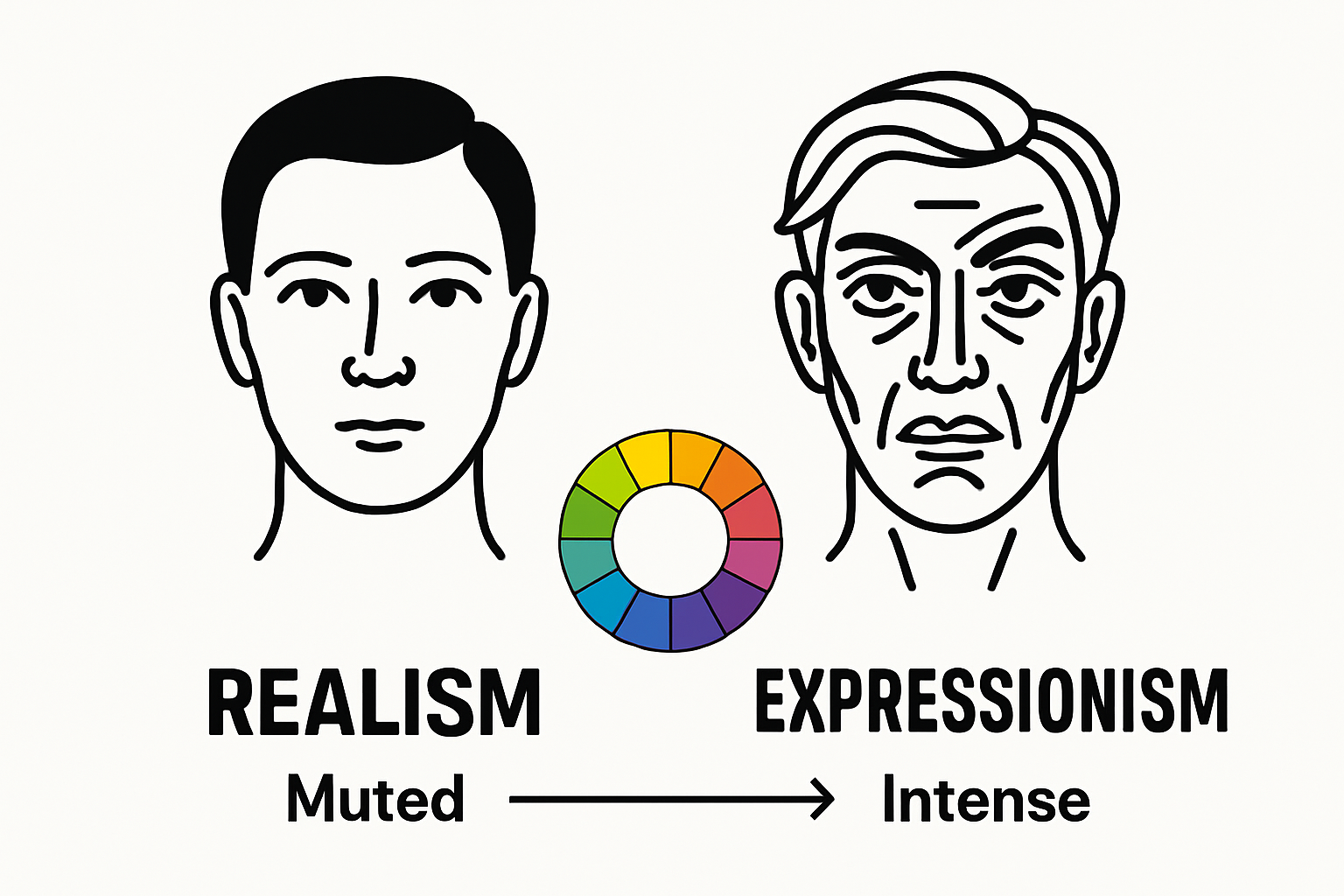
- Emotional color mapping
- Symbolic chromatic representations
- Intentional color dissonance
Structural Deconstruction and Distortion
Expressionist artists systematically dismantled traditional representational approaches through deliberate visual distortion. Figures and landscapes were intentionally fragmented, proportions were exaggerated, and spatial relationships were manipulated to reflect internal psychological landscapes. This technique allowed artists to communicate complex emotional experiences that transcended literal visual representation.
By breaking established artistic rules, expressionists transformed art from a passive visual experience into an active emotional dialogue, challenging viewers to engage with artwork as a profound psychological encounter.
Real-World Examples of Expressionism’s Impact
Expressionism transcended artistic boundaries, profoundly influencing multiple creative disciplines and societal perspectives. Its radical approach to representation emerged as a transformative force that challenged conventional artistic and cultural narratives, reshaping how people understood emotional communication and visual expression.
Landmark Artworks and Cultural Significance
According to art historians, certain artworks became pivotal in demonstrating expressionism’s revolutionary potential. Edvard Munch’s iconic painting “The Scream” exemplifies the movement’s core philosophy, depicting human psychological anguish through distorted figures and intense, swirling color landscapes. This artwork transformed how society conceptualized emotional representation, moving beyond mere aesthetic pleasure toward profound psychological exploration.
Significant expressionist works that revolutionized artistic perception include:
- Edvard Munch’s “The Scream”
- Ernst Ludwig Kirchner’s street scenes
- Wassily Kandinsky’s abstract compositions
Interdisciplinary Cultural Transformation
Expressionism’s influence extended far beyond visual arts, penetrating fields like cinema, theatre, and architecture. German Expressionist cinema, particularly films like “The Cabinet of Dr. Caligari,” utilized distorted set designs and exaggerated performances to communicate psychological states. Architectural movements began incorporating expressionist principles, creating buildings that reflected emotional and spiritual experiences rather than purely functional designs.
By challenging established representational norms, expressionism ultimately provided a radical framework for understanding human experience as fundamentally subjective, emotional, and complex. Its legacy continues to inspire artists and creators across diverse disciplines, encouraging more nuanced, emotionally authentic forms of creative expression.
This table outlines some of the most iconic expressionist artworks and their cultural significance, serving as a helpful reference point for understanding the movement’s impact.
| Artwork / Artist | Description of Significance |
|---|---|
| “The Scream” by Edvard Munch | Captures psychological anguish and existential dread through intense colour and distorted forms. |
| Street Scenes by Ernst Ludwig Kirchner | Reflects urban isolation and anxiety using jagged lines and bold contrasts. |
| Abstract Compositions by Wassily Kandinsky | Moves beyond realism to represent emotion via pure abstraction, colour, and dynamic form. |
| “The Cabinet of Dr. Caligari” (film) | Exemplifies expressionist cinema with distorted set design and psychologically charged narrative style. |
| Expressionist Architectural Works | Emphasises emotional and spiritual experience in building form over mere function. |
Experience True Expressionism With South African Art
Are you searching for art that goes beyond simple visuals, reflecting the deep emotions and intense psychological energy explored in expressionism? The article highlighted how expressionist works move past traditional representation, focusing on powerful colour, distortion, and emotional authenticity. If you want to bring this level of meaning and energy into your space, discover what South Africa’s most talented artists have to offer.

Browse the largest collection of South African expressionist artworks at Art Online. Witness how renowned local artists use bold colours, symbolic forms, and perceptive styles to capture raw human experience. Explore featured collections and find original pieces that speak to your own emotional journey. Embrace expressionism in your home or office and choose compelling local art now at Art Online.
Frequently Asked Questions
What is expressionism in art?
Expressionism is an artistic movement that prioritizes emotional intensity and subjective experience over realistic depiction, aiming to communicate deep inner feelings and psychological states through distortion and exaggeration.
What are the key characteristics of expressionist art?
Key characteristics include the use of vibrant, jarring color palettes, distorted proportions, and compositions designed to evoke strong emotional responses rather than representational accuracy.
How does emotion play a role in expressionist art?
Emotion is the cornerstone of expressionism; artists use visual manipulation to express complex inner states, transforming art from mere visual aesthetics into profound emotional narratives.
Can expressionism influence modern design?
Yes, expressionism continues to influence modern design practices by emphasizing emotional authenticity in areas like interior design, graphic design, and architecture, transforming how spaces and visuals communicate psychological experiences.