
How to Start Journaling Effectively for Art Collectors
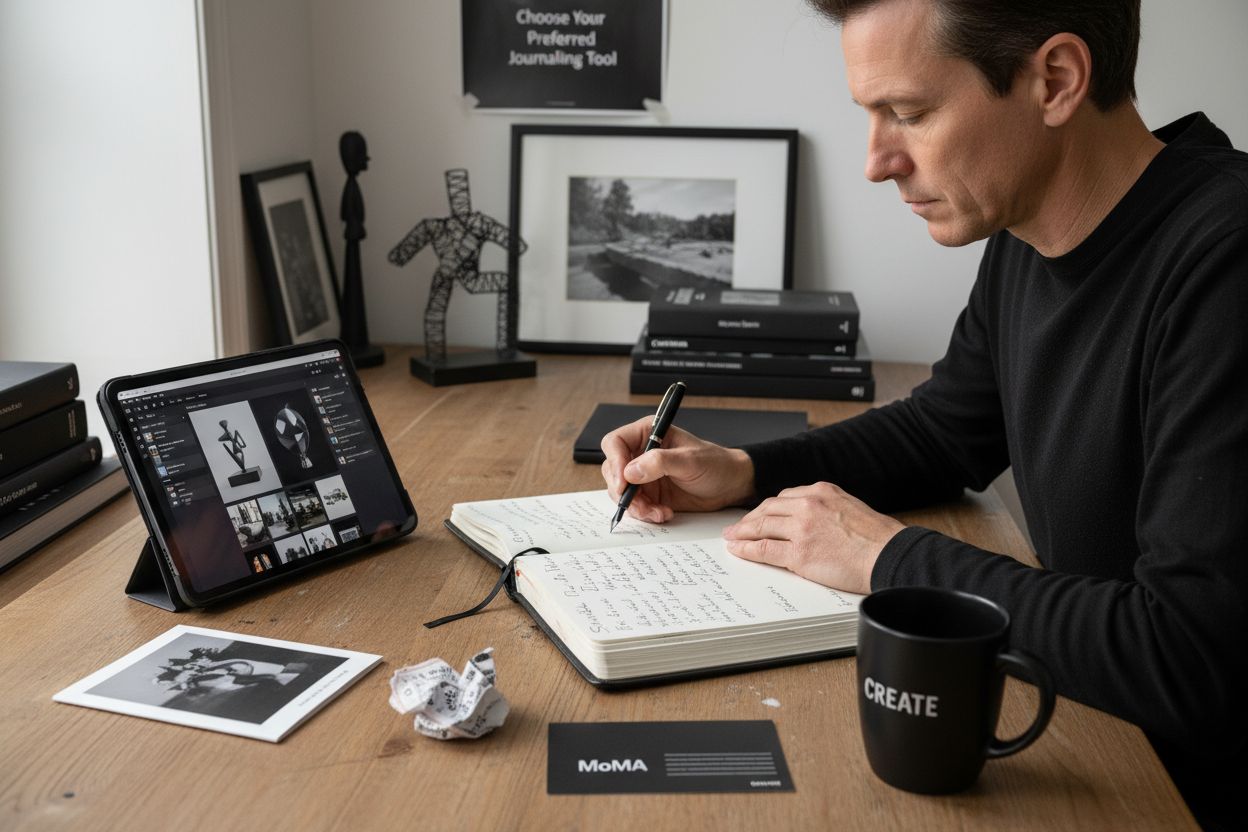
Keeping an art collector’s journal sounds simple enough. Most people think it just means writing down a few details about your paintings and sculptures. Yet the real magic happens when collectors go beyond the basic inventory and use their journals to capture emotional highs, personal growth, and even fresh buying trends. The surprise is that the tool or schedule you pick matters far less than finding your own rhythm and voice along the way.
Table of Contents
- Step 1: Choose Your Preferred Journaling Tool
- Step 2: Set a Consistent Journaling Schedule
- Step 3: Decide on Your Journaling Topics
- Step 4: Begin Writing With A Free Mind
- Step 5: Review And Reflect On Your Entries
- Step 6: Adapt And Evolve Your Journaling Practice
Quick Summary
| Key Point | Explanation |
|---|---|
| 1. Choose the right journaling tool | Select a journaling tool that suits your style and encourages consistent documentation of your art collection journey. |
| 2. Establish a regular journaling schedule | Create a sustainable journaling routine that fits your lifestyle to capture your art experiences effectively. |
| 3. Focus on meaningful journaling topics | Explore deeper topics in your journal, such as the story and emotions behind each artwork to enrich your documentation. |
| 4. Practice freewriting for authenticity | Use freewriting techniques to express your raw thoughts and feelings about your art collecting experience without judgment. |
| 5. Regularly review and reflect on entries | Periodic reflection on your journal helps uncover patterns and insights, enhancing your personal growth and collecting strategy. |
Step 1: Choose Your Preferred Journaling Tool
Starting your art collector’s journal begins with selecting the right tool that resonates with your personal style and collecting journey. Your journaling method should feel comfortable and intuitive, encouraging consistent documentation of your art experiences and insights.
Art collectors have multiple journaling options, each offering unique benefits for capturing their collection’s story. Traditional hardcover notebooks provide a classic approach, allowing you to physically document details about artworks, exhibitions, and personal reflections. These journals offer tactile satisfaction and create a tangible archive of your collecting process. Digital alternatives like specialized note-taking apps or dedicated art collection management software provide flexibility for collectors who prefer digital documentation.
When selecting your journaling tool, consider several key factors that will impact your long-term commitment. Digital platforms allow easy searchability, backup options, and the ability to include photographs or links to artist information. Physical journals offer a more personal, intimate experience and can become cherished artifacts themselves. Research from Nielsen Norman Group emphasizes that the most effective journaling method is one you will consistently use.
Practical considerations should guide your selection. Recommended journaling tools for art collectors include:
- Moleskine art journals with archival-quality pages
- Evernote or OneNote for digital collectors
- Specialized art collection management apps
- High-quality leather-bound notebooks with acid-free paper
- Cloud-based digital journals with image upload capabilities
Ultimately, your chosen tool should feel like a natural extension of your art collecting passion. Test different methods, experiment with formats, and select a journaling approach that inspires you to document your collection’s unique narrative consistently and meaningfully.
Here is a comparison of popular journaling tools and platforms for art collectors, outlining their key features and benefits to help you choose what best suits your personal collecting style and needs.
| Journaling Tool | Physical/Digital | Key Features | Notable Benefit |
|---|---|---|---|
| Moleskine Art Journal | Physical | Archival quality pages, classic design | Tactile, keepsake experience |
| High-quality Leather-bound Notebook | Physical | Acid-free paper, luxurious feel | Long-lasting physical archive |
| Art Collection Management Apps | Digital | Inventory, images, artist links | All-in-one collection logging |
| Evernote/OneNote | Digital | Note organisation, multimedia, search capability | Easy entry retrieval |
| Cloud-based Digital Journal | Digital | Image upload, backup, access across devices | Convenient and secure |
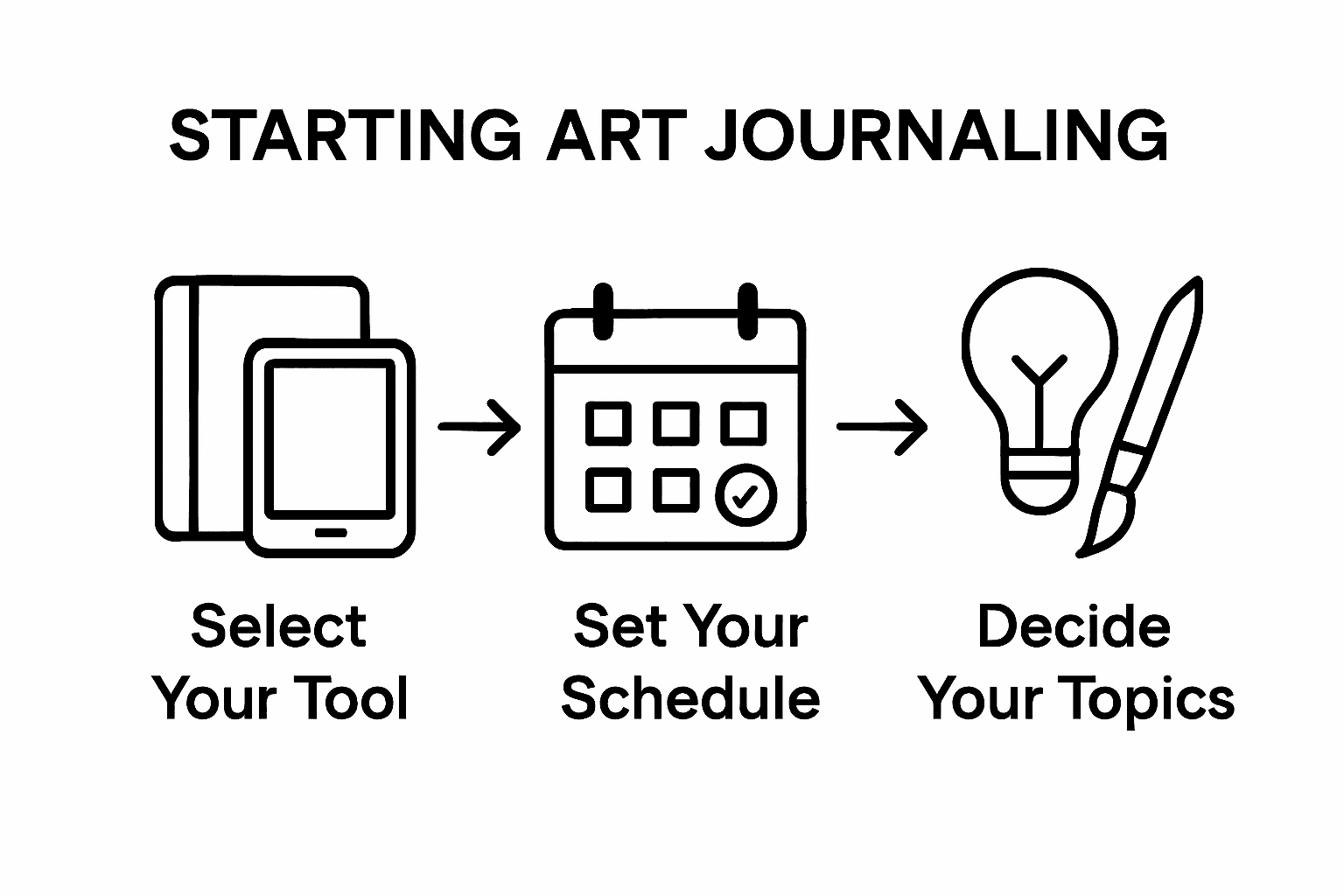
Step 2: Set a Consistent Journaling Schedule
Establishing a reliable journaling routine transforms your art collecting documentation from an occasional activity into a meaningful practice. Consistency is the key to creating a comprehensive and insightful record of your art collection journey. According to research from Verywell Mind, regular journaling helps build a sustainable habit that captures your most nuanced thoughts and experiences.
Art collectors should approach their journaling schedule with intentionality and flexibility. Determine a frequency that feels natural and sustainable – whether that means daily quick entries, weekly in-depth reflections, or monthly comprehensive reviews. Some collectors prefer capturing immediate impressions after gallery visits, while others might dedicate a specific evening each week to comprehensive journaling about recent acquisitions, artist discoveries, or exhibition experiences.
Consider integrating your journaling schedule with your existing art collecting activities. If you frequently attend exhibitions or auctions, schedule your journaling shortly after these events while impressions are fresh and emotions are vivid. This approach ensures you capture authentic, immediate insights rather than relying on potentially fading memories.
Potential scheduling options for art collectors include:
- Weekly Sunday evening reflection sessions
- Immediate post-exhibition documentation
- Monthly comprehensive collection review
- Quarterly deep-dive journaling experience
- Annual retrospective collection analysis
Remember that your journaling schedule should remain adaptable. Some weeks might demand more detailed entries, while others might require brief notes. The goal is maintaining momentum and creating a consistent practice that feels more like a cherished ritual than an obligatory task. By establishing a rhythm that works with your lifestyle and collecting habits, you’ll create a rich, evolving narrative of your art collecting journey.
This table summarises recommended journaling frequency options for art collectors, highlighting the potential benefits and best use cases for each to help you establish a routine that aligns with your lifestyle.
| Journaling Frequency | Best For | Main Benefit |
|---|---|---|
| Immediate Post-Exhibition | Fresh impressions and emotions | Captures spontaneous insights |
| Weekly Reflection Sessions | Regular art event attendees | Builds consistent documentation habit |
| Monthly Comprehensive Review | Busy schedules, larger collections | Ensures holistic collection overview |
| Quarterly Deep-Dive | Strategic planning | Identifies trends and major developments |
| Annual Retrospective Analysis | Long-term collectors | Tracks growth and evolves collecting vision |
Step 3: Decide on Your Journaling Topics
Selecting meaningful journaling topics transforms your art collection documentation from a simple record into a rich, personal narrative. The most compelling journals capture not just the artworks themselves, but the deeper stories, emotions, and context surrounding each piece. Research from the Journal of Creative Behavior highlights the importance of reflective documentation in understanding artistic experiences.
Effective journaling for art collectors goes beyond mere inventory tracking. Your journal becomes a living document that captures the nuanced journey of your collecting experience. Consider exploring topics that reveal the deeper dimensions of your art collection, including personal connections, artistic significance, and the emotional resonance of each piece.
Critical journaling topics for art collectors might encompass multiple dimensions of your collecting experience. Explore areas that provide rich context and personal insight, such as the story behind each acquisition, your emotional response to specific artworks, the artist’s background and technique, and the broader cultural or historical significance of your collection. This approach transforms your journal from a simple list into a meaningful narrative that captures the true essence of your art collecting journey.
Recommended journaling topics for art collectors include:
- Detailed acquisition stories and motivations
- Personal emotional connections to specific artworks
- Artist backgrounds and creative inspirations
- Cultural and historical context of collected pieces
- Technical observations about artistic techniques
- Market trends and potential investment insights
- Exhibition experiences and curatorial perspectives
- Personal growth and evolving artistic preferences
Remember that your journal is a personal exploration. While these suggested topics provide a framework, allow yourself the freedom to explore unexpected insights and connections. The most valuable journals capture not just what you collect, but why you collect, revealing the unique story that makes your art collection truly extraordinary.
Step 4: Begin Writing with a Free Mind
Liberating your thoughts through unrestricted writing is a powerful technique for art collectors documenting their collecting journey. Freewriting allows your most authentic insights to emerge without the constraints of formal structure or self-criticism. Research published in PubMed Central confirms that unfiltered writing enhances self-awareness and emotional clarity, making it an ideal approach for capturing the nuanced experiences of art collecting.
When you begin freewriting, create an environment that encourages spontaneous reflection. Find a quiet space where you feel comfortable exploring your thoughts without judgment. Start by setting a specific time limit – perhaps 10 to 15 minutes – and commit to writing continuously without pausing to edit, correct, or second-guess your thoughts. The goal is to capture the raw, unfiltered essence of your art collecting experience.
Dont worry about grammar, perfect sentences, or creating a polished document. Your initial writing should feel like a direct conversation with yourself, exploring the emotions, memories, and impressions surrounding your art collection. Some collectors find it helpful to begin with a specific prompt or artwork as a starting point, while others prefer to let their thoughts flow naturally from recent gallery visits or newly acquired pieces.
Strategies to support free and authentic journaling include:
- Writing without stopping or editing
- Embracing imperfect and stream-of-consciousness thoughts
- Using sensory descriptions of artworks and experiences
- Exploring emotional responses without self-judgment
- Allowing unexpected connections and insights to emerge
Remember that freewriting is a deeply personal process. Some entries might feel scattered or incomplete, and thats perfectly acceptable. The value lies in creating an unfiltered record of your collecting journey. Over time, these raw writings will reveal patterns, insights, and personal growth that a more structured approach might miss. Embrace the process, be kind to yourself, and enjoy the exploration of your artistic passion.
Step 5: Review and Reflect on Your Entries
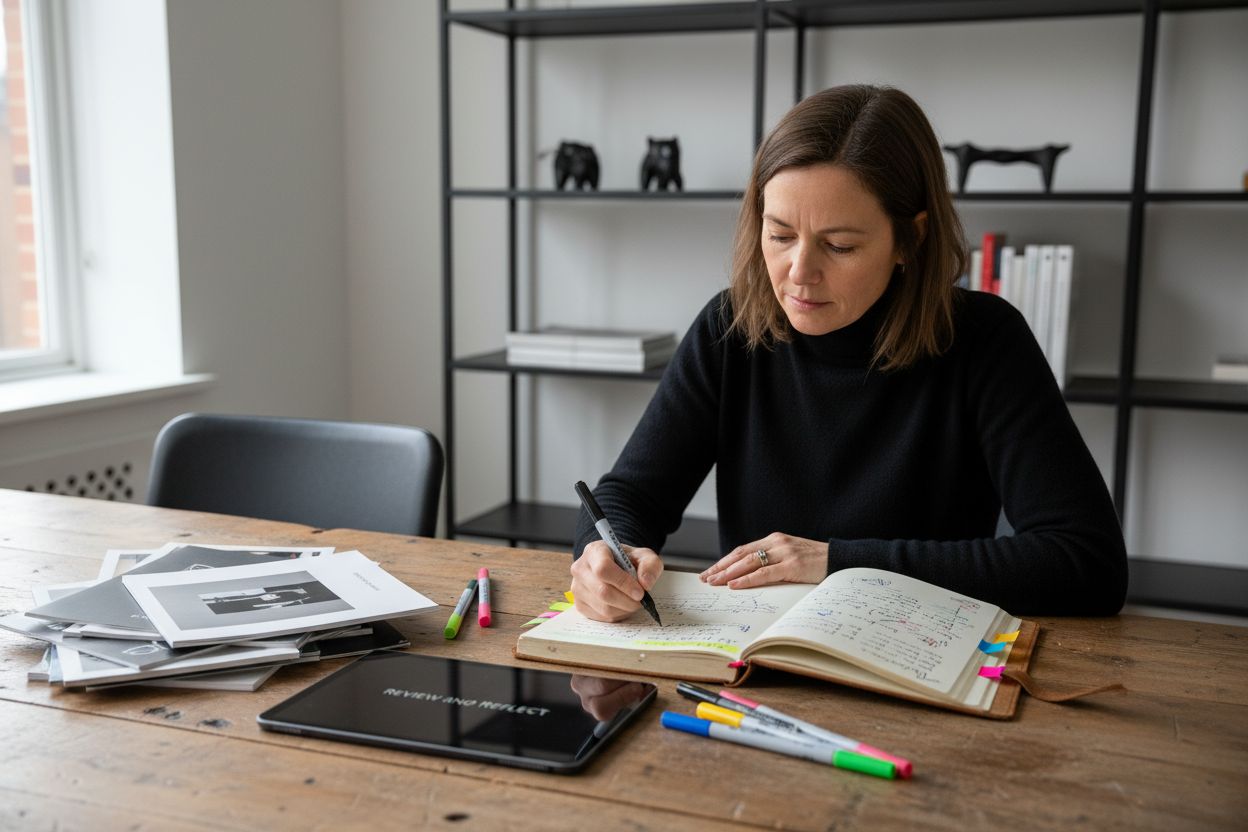
Reviewing and reflecting on your art collecting journal transforms raw documentation into a powerful tool for personal and artistic growth. Periodic reflection allows you to uncover patterns, track your evolving tastes, and gain deeper insights into your collecting journey. According to Vanderbilt University’s Center for Teaching, reflective practice helps connect past experiences with future decision-making, making it an essential skill for discerning art collectors.
Schedule regular review sessions – perhaps quarterly or biannually – where you can immerse yourself in your previous journal entries. Approach these sessions with curiosity and an open mind, looking beyond surface-level observations to understand the deeper motivations and emotional landscapes that drive your art collection. Pay attention to how your perspectives, preferences, and collecting strategies have evolved over time.
During your review, look for meaningful connections and emerging themes. Examine how individual artworks relate to each other, how your collecting interests have shifted, and what personal or cultural influences might have shaped your artistic choices. This process is not about judging your past decisions, but understanding the rich narrative of your collecting journey. Some collectors find it helpful to create visual maps or summaries that highlight key insights and transitions in their artistic exploration.
Strategic reflection techniques for art collectors include:
- Identifying recurring themes in your collection
- Analyzing emotional responses to different artworks
- Tracking changes in artistic preferences
- Exploring connections between collected pieces
- Documenting personal growth and artistic understanding
Remember that reflection is a deeply personal process. Some entries might trigger profound insights, while others might seem mundane. Embrace the entire spectrum of your documented experiences. By consistently reviewing and reflecting on your journal, you transform it from a simple record into a dynamic tool for self-discovery, artistic appreciation, and informed collecting strategies.
Step 6: Adapt and Evolve Your Journaling Practice
Art collecting is a dynamic journey, and your journaling practice should be equally flexible and responsive. Embracing change and continuously refining your documentation approach ensures that your journal remains a relevant and meaningful tool for capturing your artistic exploration. Research from the International Journal of Art and Design Education emphasizes the importance of adaptive documentation in creative practices.
As your art collection grows and your interests evolve, be willing to experiment with different journaling techniques and formats. What worked brilliantly when you first started collecting might feel restrictive or insufficient as your artistic understanding deepens. Pay attention to moments when your current journaling method feels challenging or uninspiring, and view these as opportunities for creative reinvention.
Consider periodically reassessing your journaling approach by asking critical questions about your current practice. Are you capturing the nuances of your collection effectively? Do your entries reflect your current collecting philosophy? Are there emerging aspects of your collection that require more detailed documentation? Your journal should be a living document that adapts to your changing artistic perspective, not a static record trapped in past methodologies.
Strategies for evolving your journaling practice include:
- Experimenting with different writing styles
- Incorporating multimedia documentation
- Adjusting entry frequency and depth
- Adding new categories of reflection
- Integrating technological tools and apps
- Exploring alternative documentation methods
Remember that adaptation is not about achieving perfection, but maintaining an authentic and meaningful connection to your art collecting journey. Be patient with yourself as you explore new approaches. Some experimental techniques might feel awkward initially, while others might unlock unexpected insights. The most valuable journaling practice is one that continues to inspire, challenge, and document your unique artistic narrative with genuine enthusiasm and curiosity.
Transform Your Art Collecting Journal Into a Living Gallery
Are you eager to bring your art collector’s journal to life but finding it difficult to source artworks with rich stories and emotional resonance? Many collectors struggle to find unique pieces that inspire authentic journaling or to build a collection that mirrors their personal journey. This article touched on key pain points such as the challenge of capturing meaningful art experiences and the desire for deeper connections with each piece you document.

Boost your journaling practice by exploring leading artists and captivating collections at Art Online. Discover verified artworks, detailed artist backgrounds and local exhibitions to enrich every entry in your journal. The easiest way to start documenting real stories is to see and experience art firsthand. Visit Art Online and let your next journal entry begin with the perfect piece. Your journey is waiting — connect with South Africa’s largest online gallery today.
Frequently Asked Questions
How do I choose the right journaling tool for art collecting?
Selecting the right journaling tool depends on your personal style and preferences. Consider using traditional hardcover notebooks for a tactile experience, or opt for digital platforms like note-taking apps for flexibility and easy searchability. Test different methods to find what resonates best with you.
How often should I journal as an art collector?
Establish a journaling schedule that feels sustainable, whether that’s daily quick entries, weekly reflections, or monthly reviews. The key is to create a rhythm that captures your experiences authentically and keeps you engaged in the documentation process.
What topics should I cover in my art collector’s journal?
Focus on meaningful topics such as acquisition stories, emotional connections to artworks, artist backgrounds, and cultural significance. Documenting these aspects will help create a rich narrative around your collection and deepen your understanding of your artistic journey.
How can I effectively reflect on my journal entries?
Schedule regular review sessions to immerse yourself in past entries. Look for patterns, emotional responses, and changes in your preferences. This reflective practice allows for deeper insights into your collecting journey and helps document your personal growth in the art world.
Recommended
- Why Buy Original Art in South Africa: Key 2025 Insights – Art-Online
- Art Material Must-Haves: Transforming Cape Town’s Artists – Art-Online
- Painting Prices Unveiled: Explore 5 Types of Captivating Paintings and Their Exceptional Values – Art-Online
- Famous South African Artists: 2025 Guide for Collectors & Decorators – Art-Online