
Understanding the History of Art Galleries

Art galleries stand at the heart of modern cultural life and their impact stretches far beyond just displaying paintings on white walls. Here is something you might not expect. More than 70 percent of art galleries now offer virtual exhibitions that anyone around the world can visit from their living room. It is not the paintings behind glass that define their true power anymore but the way these spaces connect people, transform communities, and rewrite what it means to experience art.
Table of Contents
- The Origins And Evolution Of Art Galleries
- The Role Of Art Galleries In Art Appreciation
- Art Galleries: Cultural Hubs And Community Spaces
- Commercial Vs. Non-Profit Art Galleries: Key Differences
- The Contemporary Landscape Of Art Galleries
Quick Summary
| Takeaway | Explanation |
|---|---|
| Art galleries democratize access to art. | They transitioned from private collections to public spaces, enabling broader societal engagement with artistic expressions. |
| Galleries serve as educational platforms. | They provide context and narratives around artworks, enhancing public understanding and appreciation of various art forms. |
| Galleries act as community hubs. | Modern galleries foster social interaction, support local artists, and help preserve cultural narratives, creating vibrant community spaces. |
| Digital transformation reshapes gallery experiences. | The rise of virtual exhibitions has expanded access, allowing global audiences to engage with art from anywhere. |
| Galleries address social and environmental issues. | Many contemporary galleries focus on themes like climate change and social justice, enhancing their role in critical global conversations. |
The Origins and Evolution of Art Galleries
Art galleries have transformed dramatically from private collections to public spaces of cultural exchange and artistic representation. Smithsonian Magazine highlights how these institutions fundamentally reshaped artistic engagement during the late 19th and early 20th centuries.
The Private Collection Era
Initially, art was primarily a privilege of aristocratic and wealthy individuals who maintained exclusive collections within their private residences. These collections were not accessible to the general public and served as symbols of social status and intellectual refinement. Wealthy European families would commission artists and collect paintings, sculptures, and decorative objects as personal treasures, displaying them in dedicated rooms or salons.
Emergence of Public Art Spaces
The transition from private to public art spaces marked a revolutionary moment in cultural democratization. Museums and galleries began emerging in major European cities, creating platforms where art could be viewed and appreciated by broader segments of society. These institutions started breaking down social barriers, allowing people from different economic backgrounds to experience and engage with artistic expressions.
Transformation into Commercial Platforms
By the mid-20th century, art galleries evolved into complex commercial and cultural platforms. They became not just exhibition spaces but critical nexuses for artists, collectors, critics, and enthusiasts. These spaces began playing crucial roles in discovering new talents, promoting artistic movements, and establishing market values for artworks. Read our comprehensive guide on contemporary art collection strategies to understand how modern galleries operate.
Key developments in art gallery evolution included:
- Transition from exclusive private collections to public exhibitions
- Emergence of commercial gallery models
- Increased global accessibility of artistic works
- Development of curated exhibition experiences
The table below summarizes the changing characteristics of art galleries across their historical evolution, helping readers see the progression from private collections to modern, digital institutions.
| Era or Stage | Key Characteristics |
|---|---|
| Private Collection Era | Exclusive, owned by elite; inaccessible to public; symbol of status |
| Emergence of Public Spaces | Public access established; cultural democratization; rise of museums/galleries |
| Commercial Platform Phase | Art market develops; galleries foster artistic movements; artist-market connections |
| Contemporary/Digital Era | Virtual access; global inclusivity; address social/environmental issues |
These transformations fundamentally reshaped how society perceives, consumes, and values artistic expressions, turning art galleries into dynamic cultural institutions that transcend mere display spaces.
The Role of Art Galleries in Art Appreciation
Art galleries serve as critical cultural platforms that transform passive observation into active engagement with artistic expressions. Research from cultural education institutions demonstrates how these spaces fundamentally shape public understanding and appreciation of artistic works.
Educational Platforms for Artistic Understanding
Galleries function as sophisticated educational environments that go beyond mere display. They create contextual narratives around artworks, helping visitors understand historical, social, and personal dimensions of artistic creation. By providing detailed descriptions, curator notes, and historical backgrounds, galleries transform visual experiences into profound learning opportunities. These spaces decode complex artistic languages, making contemporary and traditional art accessible to diverse audiences.
Cultural Preservation and Interpretation
Beyond education, art galleries play a crucial role in cultural preservation and interpretation. They document artistic movements, preserve significant works, and create dialogues between different cultural expressions. Galleries curate collections that represent various perspectives, enabling visitors to explore diverse artistic traditions and understand how art reflects societal changes. Explore our guide to understanding African artistic heritage to delve deeper into these cultural connections.
Bridging Artists and Audiences
Art galleries function as critical intermediaries between artists and the public, creating platforms for meaningful artistic exchanges. They provide spaces where emerging and established artists can showcase their work, receive critical feedback, and connect with potential collectors and art enthusiasts. These institutions validate artistic expressions, establish market values, and create pathways for artistic recognition.
Key aspects of art galleries in appreciation include:
- Providing comprehensive contextual information about artworks
- Creating immersive educational experiences
- Preserving cultural and artistic heritage
- Facilitating direct engagement between artists and audiences
- Promoting diverse artistic expressions
By transforming visual encounters into intellectual and emotional experiences, art galleries play an indispensable role in cultivating deeper, more nuanced art appreciation among diverse audiences.
Art Galleries: Cultural Hubs and Community Spaces
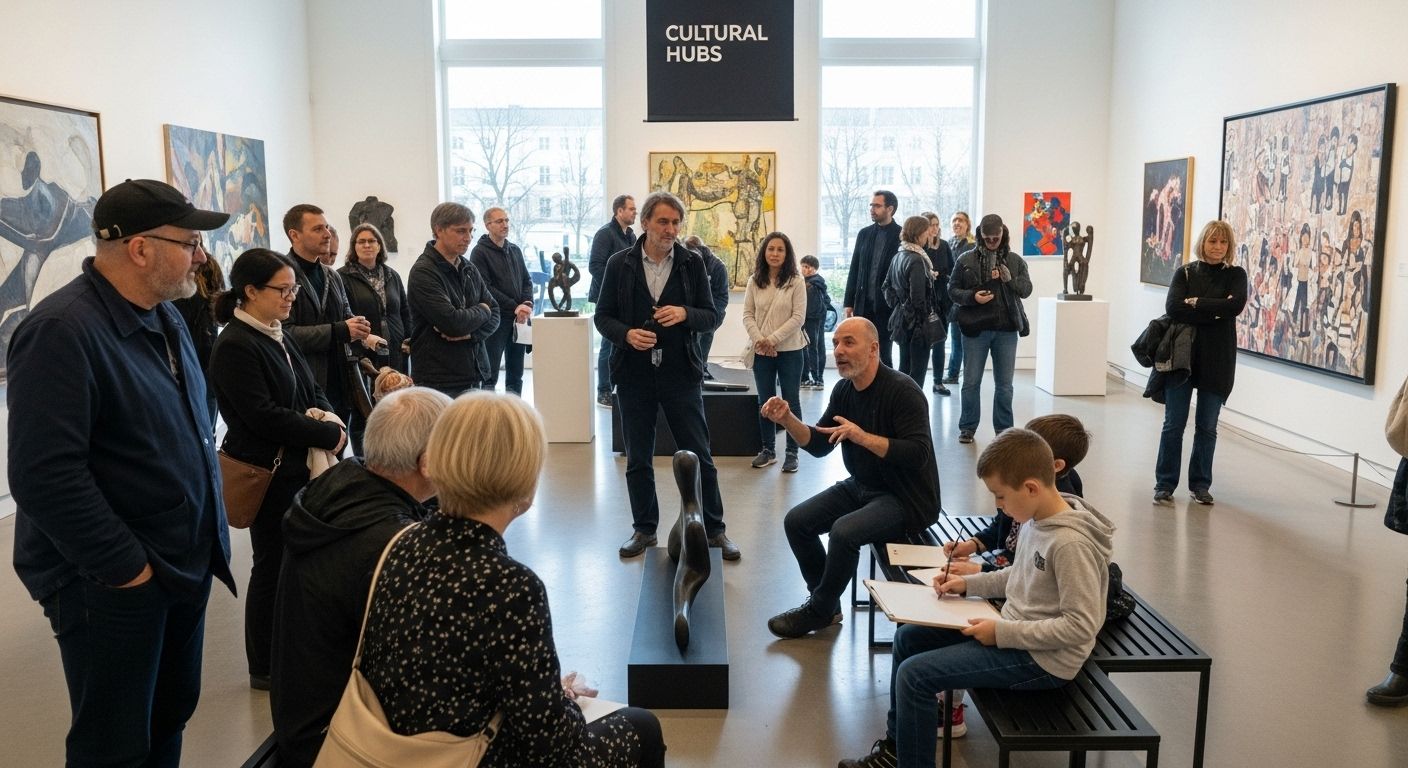
Art galleries have transcended their traditional roles, emerging as vibrant social spaces that foster community engagement and cultural dialogue. Research on cultural institutions highlights their profound impact on social connectivity and community development.
Spaces of Social Interaction
Modern art galleries are more than passive exhibition spaces. They serve as dynamic social platforms where diverse communities converge, share perspectives, and engage in meaningful conversations. These spaces host interactive events like artist talks, workshops, and public discussions that transform art viewing into a collaborative experience. By creating inclusive environments, galleries break down social barriers and provide platforms for cross-cultural understanding and dialogue.
Platforms for Local Cultural Expression
Galleries play crucial roles in amplifying local artistic voices and preserving community narratives. They provide opportunities for emerging artists to showcase their work, document local cultural experiences, and challenge mainstream artistic representations. Discover more about local artistic movements to understand how these spaces nurture regional creativity and cultural identity.
Economic and Social Development
Beyond cultural significance, art galleries contribute to local economic ecosystems. They attract tourists, support creative industries, and generate economic opportunities for artists, curators, and associated professionals. These spaces become catalysts for urban regeneration, transforming neighborhoods and creating vibrant cultural districts that stimulate local economic growth.
Key characteristics of galleries as community spaces include:
- Providing platforms for artistic dialogue
- Supporting emerging local artists
- Creating inclusive cultural experiences
- Generating economic opportunities
- Preserving community cultural narratives
By integrating artistic expression with community engagement, art galleries have evolved into essential social infrastructures that connect people, ideas, and creative experiences.
Commercial vs. Non-Profit Art Galleries: Key Differences
Art galleries operate within complex ecosystems that fundamentally differ based on their organizational structures and primary objectives. Research on art institutions reveals the nuanced distinctions between commercial and non-profit gallery models.
Financial and Operational Structures
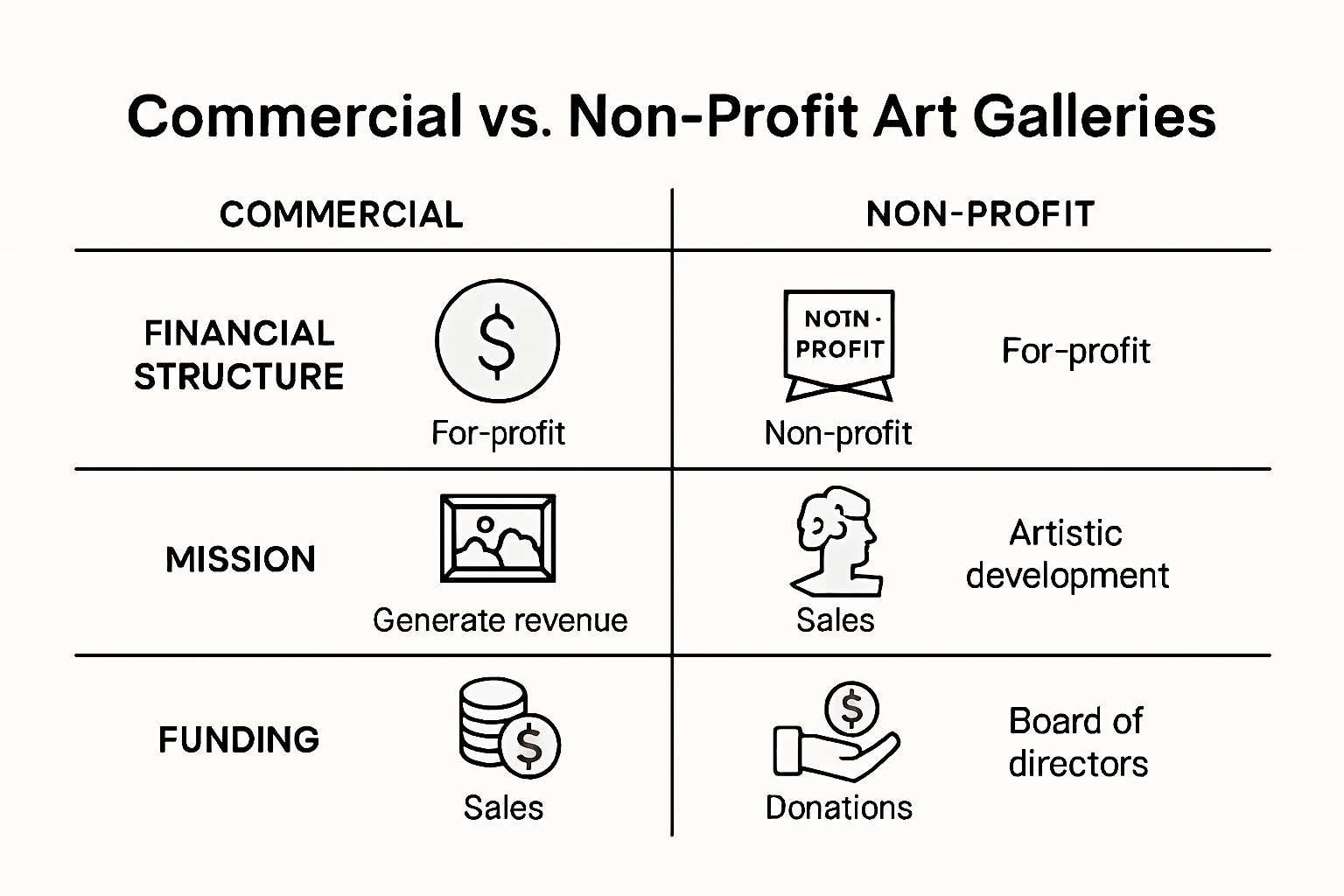
Commercial galleries function as business enterprises focused on selling artworks and generating revenue. They derive income through commission on art sales, typically taking a percentage of each artwork sold by representing artists. These galleries actively curate collections that appeal to collectors and investors, prioritizing marketable artistic expressions. In contrast, non-profit galleries operate with different financial models, often relying on grants, donations, and public funding to support their artistic missions.
Mission and Artistic Focus
The fundamental difference between commercial and non-profit galleries lies in their core missions. Commercial galleries prioritize market dynamics and financial sustainability, selecting artists based on potential sales and market trends. Non-profit galleries, however, emphasize artistic innovation, cultural preservation, and educational outreach. Explore our insights on supporting original art to understand these nuanced artistic ecosystems. These institutions often showcase experimental, emerging, or marginalized artistic voices that might not have immediate commercial appeal.
Institutional Accountability and Governance
Non-profit galleries are typically governed by boards of trustees or committees with specific cultural and educational mandates. They must demonstrate public benefit and adhere to strict regulatory requirements to maintain their non-profit status. Commercial galleries, in contrast, are accountable primarily to their owners, artists, and market performance. This structural difference significantly influences their curatorial decisions, exhibition strategies, and long-term artistic commitments.
Key distinguishing characteristics include:
- Revenue generation methods
- Artistic selection criteria
- Funding sources
- Governance structures
- Primary institutional objectives
Understanding these differences illuminates the complex landscape of art presentation, revealing how diverse gallery models contribute to artistic discourse and cultural preservation.
To help clarify the main distinctions between commercial and non-profit art galleries, the following table compares their key characteristics side by side.
| Aspect | Commercial Art Galleries | Non-Profit Art Galleries |
|---|---|---|
| Revenue Generation | Sales commissions, private sales | Grants, donations, public funding |
| Artistic Selection Criteria | Market-driven, sale potential | Artistic innovation, cultural relevance |
| Funding Sources | Collectors, investors, art buyers | Government, foundations, community donors |
| Governance Structure | Owner or private entity | Board of trustees/committees |
| Mission/Objectives | Profit, market expansion | Education, cultural preservation |
| Typical Exhibitions | Popular, marketable artists | Experimental, marginalized, emerging art |
The Contemporary Landscape of Art Galleries
The art gallery ecosystem has undergone radical transformations, driven by technological innovations, global connectivity, and shifting cultural paradigms. These changes have fundamentally reshaped how art is created, displayed, experienced, and consumed in the 21st century.
Digital Transformation and Virtual Exhibitions
Digital technologies have revolutionized art gallery experiences, creating unprecedented opportunities for global access and interaction. Online platforms now enable virtual exhibitions, allowing audiences to explore curated collections from anywhere in the world. These digital spaces transcend physical limitations, offering immersive 360-degree gallery tours, interactive artist discussions, and real-time artwork acquisitions. Discover contemporary art perspectives to understand these emerging digital art landscapes.
Globalization and Cross-Cultural Exchanges
Contemporary art galleries have become critical spaces for international cultural dialogue. They increasingly showcase diverse artistic voices from previously marginalized regions, challenging traditional Western-centric art narratives. Galleries now actively curate exhibitions that highlight global artistic diversity, promoting cross-cultural understanding and challenging established artistic hierarchies. This shift has democratized art representation, providing platforms for artists from various cultural backgrounds to share their unique perspectives.
Sustainability and Social Responsibility
Modern art galleries are expanding their roles beyond traditional exhibition spaces. They are becoming active participants in social and environmental conversations, curating exhibitions that address critical global issues like climate change, social justice, and cultural identity. Galleries are increasingly selecting artists and artworks that provoke meaningful dialogue, challenge societal norms, and inspire collective action.
Key characteristics of contemporary art galleries include:
- Embracing digital and virtual exhibition technologies
- Promoting global and diverse artistic representations
- Addressing social and environmental challenges
- Creating interactive and immersive art experiences
- Challenging traditional artistic boundaries
These transformations reflect a dynamic, interconnected art world where galleries serve as crucial platforms for cultural exchange, artistic innovation, and global understanding.
Experience the Living Legacy of Art Galleries with Art Online
Curious about how art galleries moved from exclusive salons to inclusive community spaces? You have just explored how public spaces and digital innovation are changing the way we all experience and collect art. Yet many art lovers in South Africa still face a real challenge: finding accessible platforms that showcase both the history and fresh talent of our local art scene. Art Online addresses this need by offering a modern gallery experience where you can view and purchase works by leading South African artists from anywhere. Discover how our platform bridges tradition and technology for meaningful engagement, just as described in the article.

Take part in South Africa’s vibrant artistic journey right now. Visit Art Online to browse works that reflect our unique culture and history. For those who want to go deeper, explore our page on what makes original art so meaningful or get inspired by our guide to public art in South Africa. The story of art galleries is still being written. Start your next chapter with us today.
Frequently Asked Questions
What are the origins of art galleries?
Art galleries originated as private collections maintained by wealthy individuals, serving as symbols of status and intellectual refinement. Over time, they transformed into public spaces for cultural exchange.
How did art galleries evolve into public spaces?
The evolution from private collections to public galleries began in the late 19th and early 20th centuries, democratizing art access and allowing broader segments of society to engage with artistic expressions.
What roles do art galleries play in art appreciation?
Art galleries function as educational platforms that provide context about artworks, facilitate cultural preservation, and connect artists with audiences, thereby enhancing public understanding and appreciation of art.
How do commercial and non-profit galleries differ?
Commercial galleries focus on selling art and generating revenue, while non-profit galleries prioritize artistic innovation and cultural preservation. Their financial structures, missions, and governance significantly influence their operations.
Recommended
- Famous South African Artists: 2025 Guide for Collectors & Decorators – Art-Online
- Black Artists in South Africa: Top Trends and Collectors’ Guide 2025 – Art-Online
- Top Art Festivals in South Africa 2025 for Collectors & Decorators – Art-Online
- The History of African Sculpture: A 2025 Guide for Collectors – Art-Online