
Understanding Interpreting Modern Art for Collectors

Modern art shook the art world by throwing out centuries of neat, perfect pictures and strict rules. Out of nowhere, artists started painting feelings instead of faces and turned ordinary objects into something unrecognisable. The wild part is that modern art movements like cubism and abstract expressionism broke tradition so hard that audiences now spend more time asking what art means than simply admiring how it looks. Turns out, the real revolution was never just on the canvas. It was in the way people learned to see the world all over again.
Table of Contents
- What Is Modern Art And Its Evolution?
- Why Modern Art Matters In Today’s Society
- Key Concepts And Movements In Modern Art
- Techniques For Interpreting Modern Art
- The Impact Of Culture On Modern Art Interpretation
Quick Summary
| Takeaway | Explanation |
|---|---|
| Modern art defies traditional norms. | It challenges established artistic conventions, focusing on innovation and personal expression. |
| Cultural context impacts art interpretation. | Understanding an artwork requires awareness of historical and cultural influences shaping its meaning. |
| Art serves as social critique. | Modern artworks provoke discussions around societal issues, inequalities, and underrepresented voices. |
| Emotional engagement enhances understanding. | Viewing art interactively allows a deeper connection to the emotional and psychological narratives depicted. |
| Modern art reflects societal evolution. | It captures the changing dynamics of culture, technology, and human experience through varied artistic expressions. |
What is Modern Art and Its Evolution?
Modern art represents a groundbreaking transformation in artistic expression that emerged during the late 19th and early 20th centuries. Unlike traditional art forms, modern art challenged established artistic conventions, emphasizing innovative techniques, subjective interpretations, and radical experimentation.
Origins and Philosophical Foundations
The evolution of modern art fundamentally reflects broader societal changes during the industrial revolution and subsequent technological advancements. Research from the University of Pretoria highlights how artists began rejecting strict representational approaches, instead exploring more abstract and conceptual modes of creative expression.
Key philosophical shifts that influenced modern art include:
- Rejection of Traditional Representation: Artists moved away from literal depictions towards emotional and psychological interpretations
- Emphasis on Individual Perspective: Artwork became a medium for personal expression rather than objective documentation
- Challenging Aesthetic Norms: Breaking established artistic rules and exploring unconventional aesthetic experiences
Critical Characteristics of Modern Art
Modern art distinguished itself through several defining characteristics. Artists prioritized emotional authenticity over technical perfection, using art as a powerful tool for communication and social commentary. These approaches fundamentally transformed how audiences perceived and engaged with artistic works.
The movement encompasses diverse styles including cubism, surrealism, abstract expressionism, and minimalism. Each style represented unique approaches to interpreting human experience, reflecting the complex, rapidly changing world of the 20th century. Explore our guide on South African artistic trends to understand how these global movements intersected with local creative expressions.
Collectors and art enthusiasts appreciate modern art not just for its visual appeal, but for its ability to challenge perceptions, provoke thought, and capture the essence of human experience in increasingly abstract and nuanced ways. By breaking traditional boundaries, modern artists created a revolutionary language of visual communication that continues to inspire and intrigue audiences worldwide.
Why Modern Art Matters in Today’s Society
Modern art transcends aesthetic appreciation, serving as a powerful lens through which society examines its complex cultural, social, and psychological dynamics. It represents more than visual expression it functions as a critical dialogue platform addressing contemporary challenges and human experiences.
Social Commentary and Cultural Reflection
Artists use modern art as a provocative medium to challenge existing narratives, expose societal inequalities, and stimulate critical thinking. Public Art Development Programme research demonstrates how creative expressions can transform public spaces and generate meaningful social discourse.
Key societal roles of modern art include:
- Challenging Dominant Narratives: Providing alternative perspectives on historical and contemporary issues
- Amplifying Marginalised Voices: Creating platforms for underrepresented communities to share experiences
- Promoting Cultural Understanding: Bridging diverse perspectives through visual storytelling
Psychological and Emotional Significance
Beyond social commentary, modern art serves profound psychological functions. It provides individuals with nuanced ways of processing complex emotions, personal experiences, and collective traumas. Read our guide on South African artistic expressions to understand deeper cultural dimensions of artistic representation.
Modern art encourages viewers to engage actively with artwork, moving beyond passive observation. This interactive approach transforms art appreciation into a deeply personal, introspective experience that challenges preconceived perceptions and stimulates intellectual curiosity.
Ultimately, modern art matters because it reflects humanity’s continuous evolution. It captures the zeitgeist of our times, documenting social transformations, technological advancements, and shifting cultural paradigms. By embracing complexity, ambiguity, and multiple interpretations, modern art provides a dynamic, ever-changing mirror of our collective human experience.
Key Concepts and Movements in Modern Art
Modern art encompasses a rich tapestry of innovative movements that fundamentally transformed artistic expression during the 20th century. These movements challenged traditional artistic conventions, introducing radical approaches to representation, perception, and creative communication.
Foundational Artistic Movements
Research from the Iziko Museums highlights how modernist art emerged as a complex, multifaceted phenomenon reflecting broader societal transformations. The primary movements that defined modern art include:
- Cubism: Pioneered by Pablo Picasso and Georges Braque, fragmenting and reconstructing visual forms from multiple perspectives
- Surrealism: Exploring subconscious imagery and dream-like representations
- Abstract Expressionism: Emphasizing spontaneous, emotional artistic creation
- Minimalism: Reducing artistic expression to essential geometric forms and colors
Conceptual Approaches and Philosophical Foundations
Modern art movements were characterized by their underlying philosophical principles. Artists began rejecting literal representation, instead focusing on conveying emotional and psychological experiences. This approach transformed art from a purely visual medium to a complex form of intellectual and emotional communication.
Explore our guide to famous South African artists to understand how global artistic movements intersected with local creative expressions. Each movement represented a unique approach to interpreting human experience, challenging viewers to reconsider their understanding of visual representation.
The table below compares the key foundational movements of modern art and highlights their main characteristics for collectors and enthusiasts seeking to understand their distinct approaches.
| Movement | Key Features | Notable Focus |
|---|---|---|
| Cubism | Fragmentation, multiple perspectives, geometric shapes | Analysis of form, visual deconstruction |
| Surrealism | Dream-like imagery, exploration of the subconscious | Psychological depth, symbolic language |
| Abstract Expressionism | Spontaneity, emotional intensity, gestural painting | Individual emotion, action painting |
| Minimalism | Simplicity, reduction to basic forms and colours | Essence of form, depersonalisation |
The conceptual foundations of modern art movements emphasized individual perspective, emotional authenticity, and the power of artistic innovation. Artists sought to break free from traditional artistic constraints, using their work as a medium for social commentary, personal expression, and philosophical exploration. This revolutionary approach transformed art from a passive visual experience to an active, provocative dialogue between the artwork, the artist, and the viewer.
Techniques for Interpreting Modern Art
Interpreting modern art requires a nuanced approach that goes beyond traditional aesthetic evaluation. Collectors and art enthusiasts must develop sophisticated analytical skills to understand the complex layers of meaning embedded within contemporary artistic expressions.
Contextual Analysis
Research from the University of Pretoria emphasizes the importance of understanding an artwork’s historical, social, and personal context. Effective interpretation involves examining multiple dimensions beyond the visual representation:
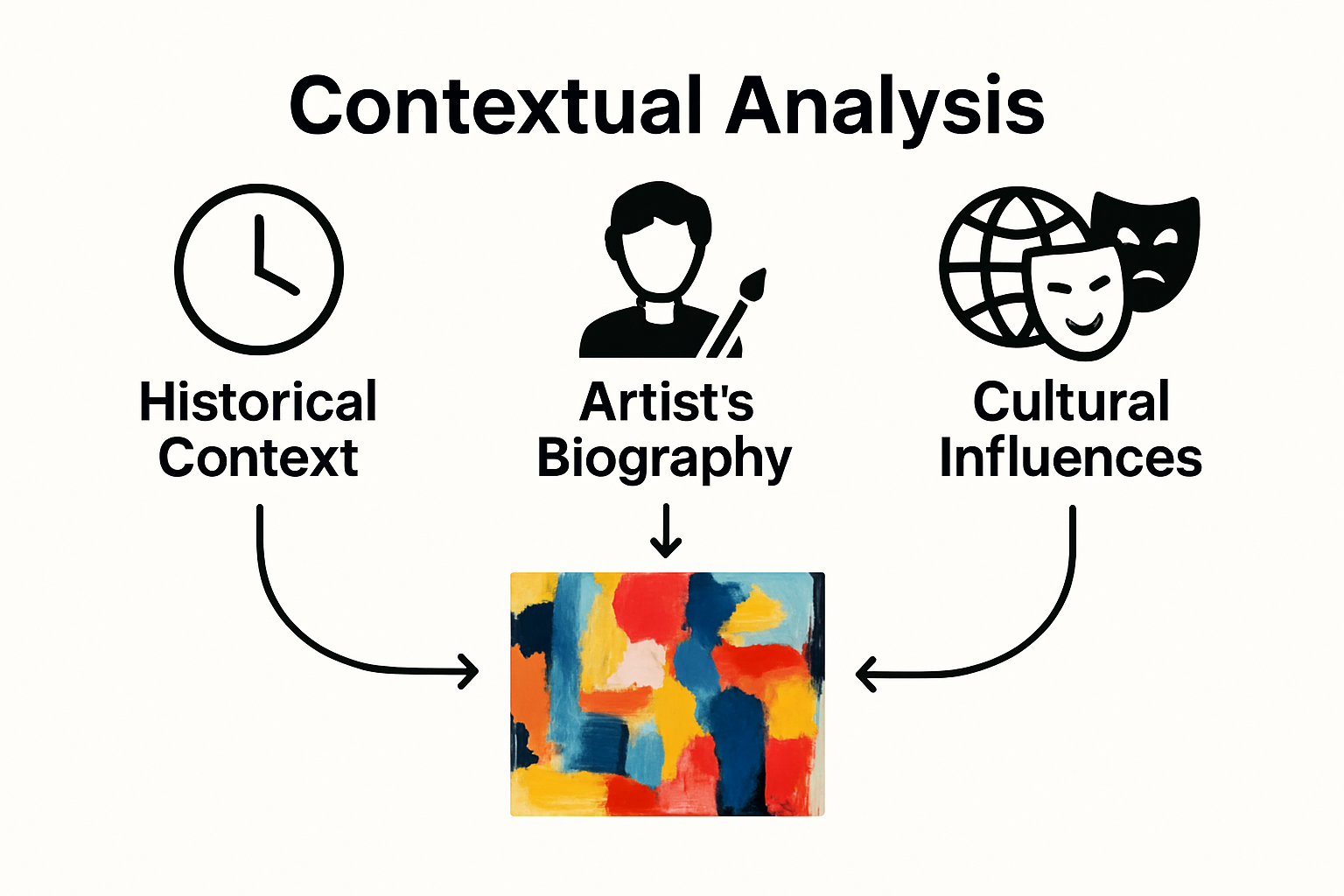
- Historical Context: Exploring the socio-political environment during the artwork’s creation
- Artist’s Biography: Understanding the personal experiences and philosophical perspectives of the creator
- Cultural Influences: Identifying broader cultural movements and artistic trends
Decoding Symbolic and Emotional Layers
Modern art often communicates through symbolic language and emotional resonance rather than literal representation. Collectors should develop skills to:
- Recognize metaphorical elements and abstract representations
- Understand the emotional and psychological dimensions of the artwork
- Explore the artist’s intentional use of color, form, and composition
Learn more about South African artistic perspectives to appreciate the unique local interpretations of global modern art movements.
Successful interpretation requires intellectual curiosity, emotional intelligence, and a willingness to engage with art as a complex form of communication. By approaching modern art with an open mind and analytical perspective, collectors can unlock deeper understanding and appreciation of these profound artistic expressions.
Here is a table outlining the critical techniques used for interpreting modern art, clarifying their purpose and the dimensions they examine to help collectors approach artworks more analytically.
| Interpretation Technique | Purpose | Dimensions Explored |
|---|---|---|
| Contextual Analysis | Situates the artwork within specific frameworks | Historical, social, cultural, personal context |
| Decoding Symbolic & Emotional | Uncovers deeper meanings and psychological layers | Symbolism, metaphor, emotional impact |
| Artist Biography Study | Informs understanding via personal history | Artist’s experiences, philosophies |
| Cultural Reference Evaluation | Reveals meaning based on cultural perspective | Cultural symbols, traditions, local influences |

The Impact of Culture on Modern Art Interpretation
Culture serves as a fundamental lens through which modern art is perceived, understood, and valued. It shapes not only the creation of artistic works but also the complex processes of interpretation, appreciation, and meaning-making that collectors and art enthusiasts engage with.
Cultural Contexts and Artistic Expression
The Revised White Paper on Arts, Culture and Heritage emphasizes how cultural diversity profoundly influences artistic representation. Different cultural backgrounds introduce unique perspectives that transform the way artworks are understood:
- Symbolic Meaning: Cultural symbols and traditions embedded in artistic representations
- Emotional Resonance: How cultural experiences shape emotional interpretations
- Historical Narratives: The role of cultural memory in understanding artistic expressions
Navigating Intercultural Art Perspectives
Modern art interpretation requires a nuanced approach that acknowledges the multiplicity of cultural viewpoints. Collectors must develop cultural sensitivity and intellectual flexibility to appreciate the diverse narratives embedded within artistic works.
Discover insights into collecting original art to understand how cultural context enhances art appreciation. Each cultural perspective offers a unique lens, transforming the way we perceive and value artistic expressions.
Ultimately, culture is not just a background context but an active participant in the artistic dialogue. It provides the complex linguistic, emotional, and symbolic frameworks through which art communicates its most profound meanings. By recognizing and embracing cultural diversity, collectors can develop a more enriched, holistic understanding of modern artistic expressions.
Art Collecting Made Personal: Unlock the Meaning in Modern Art
Are you finding it difficult to interpret the deeper stories behind modern art? If the concepts of cultural context, symbolic language and emotional resonance in South African art have left you searching for more meaning, you are not alone. Many collectors struggle to connect authentically with works that break traditional boundaries or use abstract expression. You want to move beyond just admiring and start truly understanding the heart of the artwork.

Let your art journey come alive with us. At Art Online, you can explore a curated collection featuring pieces by famous South African artists and fresh artistic trends that bring modern creativity to your space. Each artwork tells a layered story of culture and emotion waiting for you to discover it. Start your search for meaning and inspiration now by visiting Art Online and find an original piece that truly speaks to you.
Frequently Asked Questions
What is the importance of understanding context in interpreting modern art?
Understanding context helps collectors analyze the historical, social, and personal influences that shape an artwork. This includes the socio-political environment at the time of creation, the artist’s background, and broader cultural movements.
How can collectors decode the emotional layers in modern art?
Collectors can decode emotional layers by recognizing metaphorical elements, understanding the psychological dimensions, and exploring the artist’s use of color, form, and composition. Engaging with the emotional impact of the artwork enhances appreciation.
What are some common approaches to interpreting modern art?
Common approaches include contextual analysis, decoding symbolic and emotional layers, and appreciating the diverse cultural narratives that influence artistic expression. This multifaceted approach allows for a deeper understanding of the artwork.
Why is cultural context significant in modern art interpretation?
Cultural context is significant because it shapes how artworks are perceived and valued. Different cultural backgrounds provide unique perspectives that can influence symbolic meanings, emotional resonance, and historical narratives within the artwork.
Recommended
- Famous South African Artists: 2025 Guide for Collectors & Decorators – Art-Online
- South African Tribal Art: Trends and Decor Ideas for 2025 – Art-Online
- Why Buy Original Art in South Africa: Key 2025 Insights – Art-Online
- Painting Prices Unveiled: Explore 5 Types of Captivating Paintings and Their Exceptional Values – Art-Online