
How to Hang Art: Create Stunning Walls by 2025
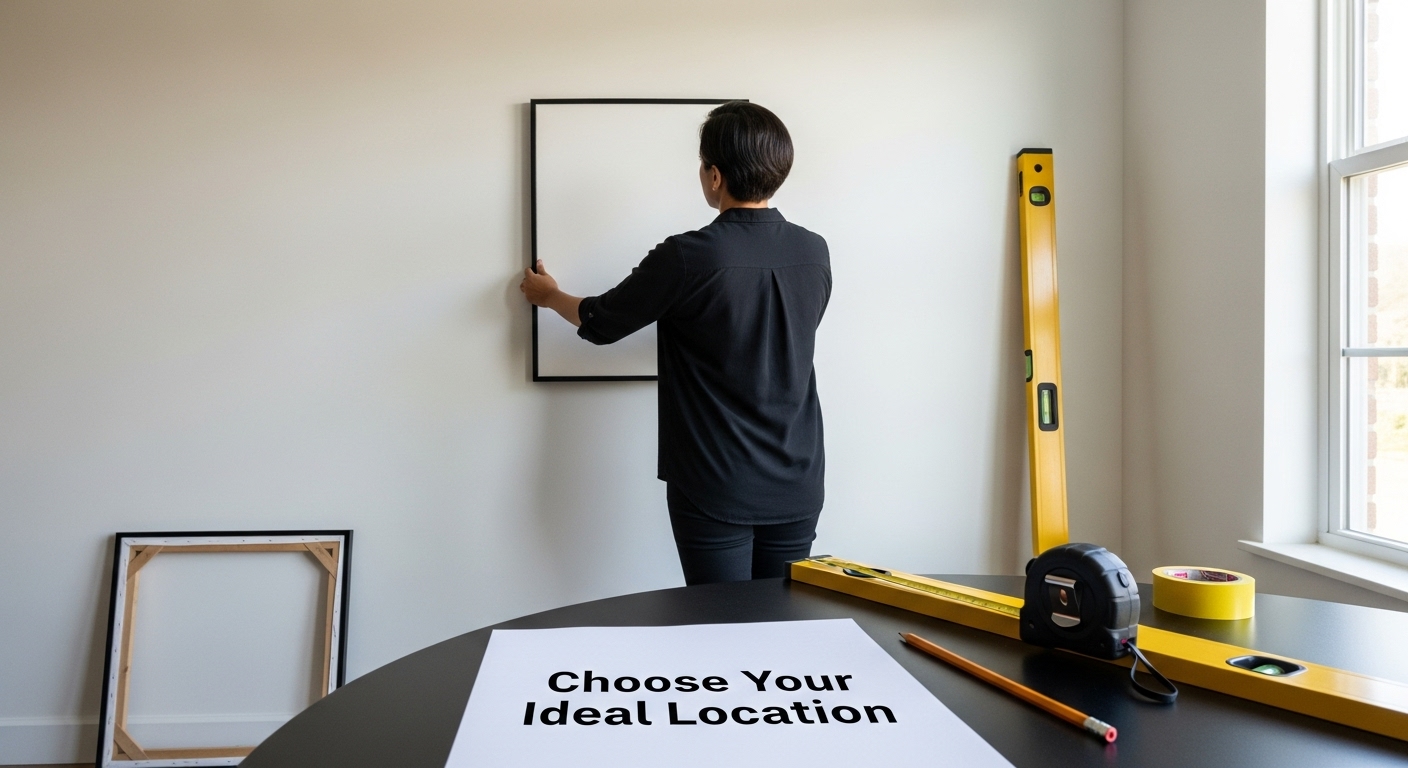
Hanging art on your walls can change an ordinary space into something unforgettable. Most people think it’s just about banging a nail and hoping for the best. But nearly one centimetre of adjustment can make or break the whole look, turning a rushed job into a curated statement piece. The hidden magic is not in the artwork itself but in the way you place and hang it to speak louder than words.
Table of Contents
- Step 1: Choose Your Ideal Location
- Step 2: Measure And Mark Your Space
- Step 3: Select Proper Hanging Hardware
- Step 4: Hang Your Art With Precision
- Step 5: Step Back And Adjust As Needed
Quick Summary
| Key Point | Explanation |
|---|---|
| 1. Choose a focal point for artwork | Select locations that naturally attract attention while ensuring minimal traffic to avoid damage to artwork. |
| 2. Measure and mark accurately | Use essential tools to ensure artwork hangs level and at eye level, creating a visual balance in the space. |
| 3. Use appropriate hanging hardware | Select hardware based on the artwork’s weight and wall material to ensure a secure and safe installation. |
| 4. Hang with precision | Double-check alignment and ensure the artwork is mounted securely, preventing any damage to walls during installation. |
| 5. Step back and assess final placement | Review the artwork’s impact from various angles, making small adjustments for optimal visual harmony in the space. |
Step 1: Choose Your Ideal Location
Selecting the perfect location for hanging art transforms an ordinary wall into a stunning visual narrative. Your chosen spot will not only showcase the artwork but also define the entire aesthetic and emotional atmosphere of your space.
Begin by surveying your room with an artist’s perspective. Look for walls that naturally draw the eye – areas with good lighting, minimal obstruction, and sufficient negative space. Natural gathering points like above a sofa, beside a staircase, or across from an entrance are ideal. Avoid high-traffic areas where artwork might be accidentally bumped or damaged.
Measure your wall carefully before committing to a location. Standard recommendations suggest hanging art at eye level, which typically means the center of the artwork should be approximately 57-60 inches from the floor.
This universal guideline ensures optimal viewing without straining one’s neck or disrupting the room’s visual balance.
Consider the artwork’s characteristics when selecting its home. Large statement pieces demand spacious walls with minimal competing visual elements. Smaller works thrive in clustered arrangements or as part of a gallery wall. Delicate watercolors require gentle, indirect lighting, while bold oil paintings can withstand more dramatic illumination.
According to the George Municipality’s Visual Artwork Management Policy, artwork placement involves understanding both aesthetic and practical considerations. Factor in potential challenges like direct sunlight exposure, proximity to moisture sources, and temperature fluctuations that might damage your artwork.
Key verification for ideal art placement includes:
- Wall can support artwork weight
- Sufficient surrounding space for visual breathing room
- Minimal glare or shadow interference
- Comfortable viewing angle from primary room positions
Remember that art placement is an intuitive process. Trust your visual instincts while remaining mindful of practical constraints. The right location will make your artwork sing, transforming it from a mere decoration to a focal point that tells a story and captures attention.
Below is a handy checklist table to verify your art is placed in an ideal location, summarising the placement criteria discussed above.
| Verification Point | What to Check | Why It Matters |
|---|---|---|
| Wall supports artwork weight | Wall structure is strong enough | Prevents damage and falling art |
| Sufficient surrounding space | Area around art is uncluttered | Allows artwork to “breathe” visually |
| Minimal glare/shadow | Lighting does not cause unwanted glare | Ensures viewing comfort and artwork longevity |
| Comfortable viewing angle | Art is visible from main spots | Enhances guest engagement |
| No direct sunlight exposure | Art not in harsh sunlight | Avoids fading or heat damage |
| Avoids moisture and heat | Not near bathrooms/kitchens | Preserves materials and frame |
| At focal point of room | Placement naturally draws the eye | Maximises impact and atmosphere |
Step 2: Measure and Mark Your Space
Measuring and marking your wall with precision transforms the art hanging process from a guessing game into a professional-level execution. This critical step ensures your artwork will be positioned perfectly, creating a polished and intentional display that elevates your entire room’s aesthetic.
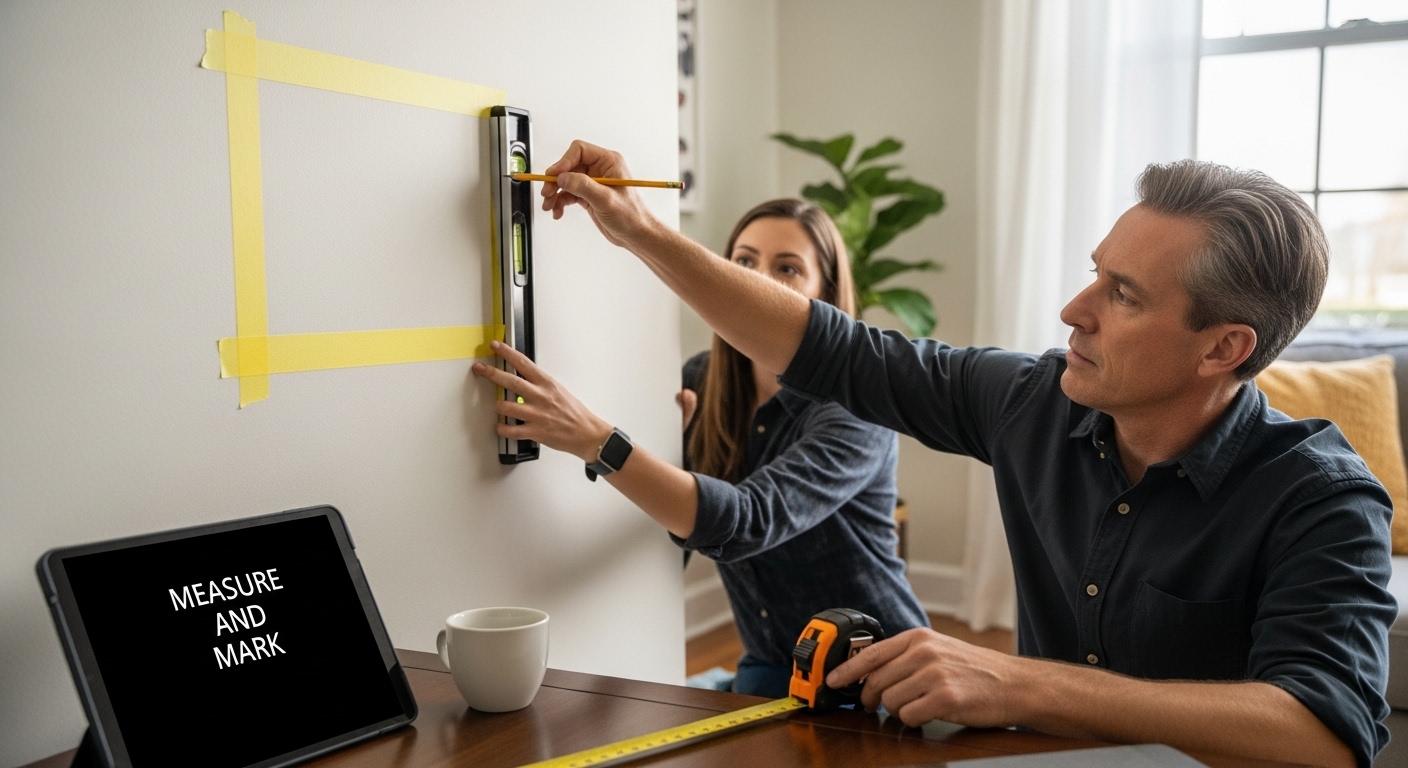
Start by gathering essential tools: a tape measure, pencil, spirit level, and painter’s tape. These simple instruments will become your allies in achieving a flawless art installation. Begin by determining the artwork’s center point, which traditionally sits at eye level (approximately 57-60 inches from the floor). This standard creates a balanced visual experience that feels natural and comfortable for viewers.
Carefully measure your artwork’s dimensions, paying special attention to its weight and hanging mechanism.
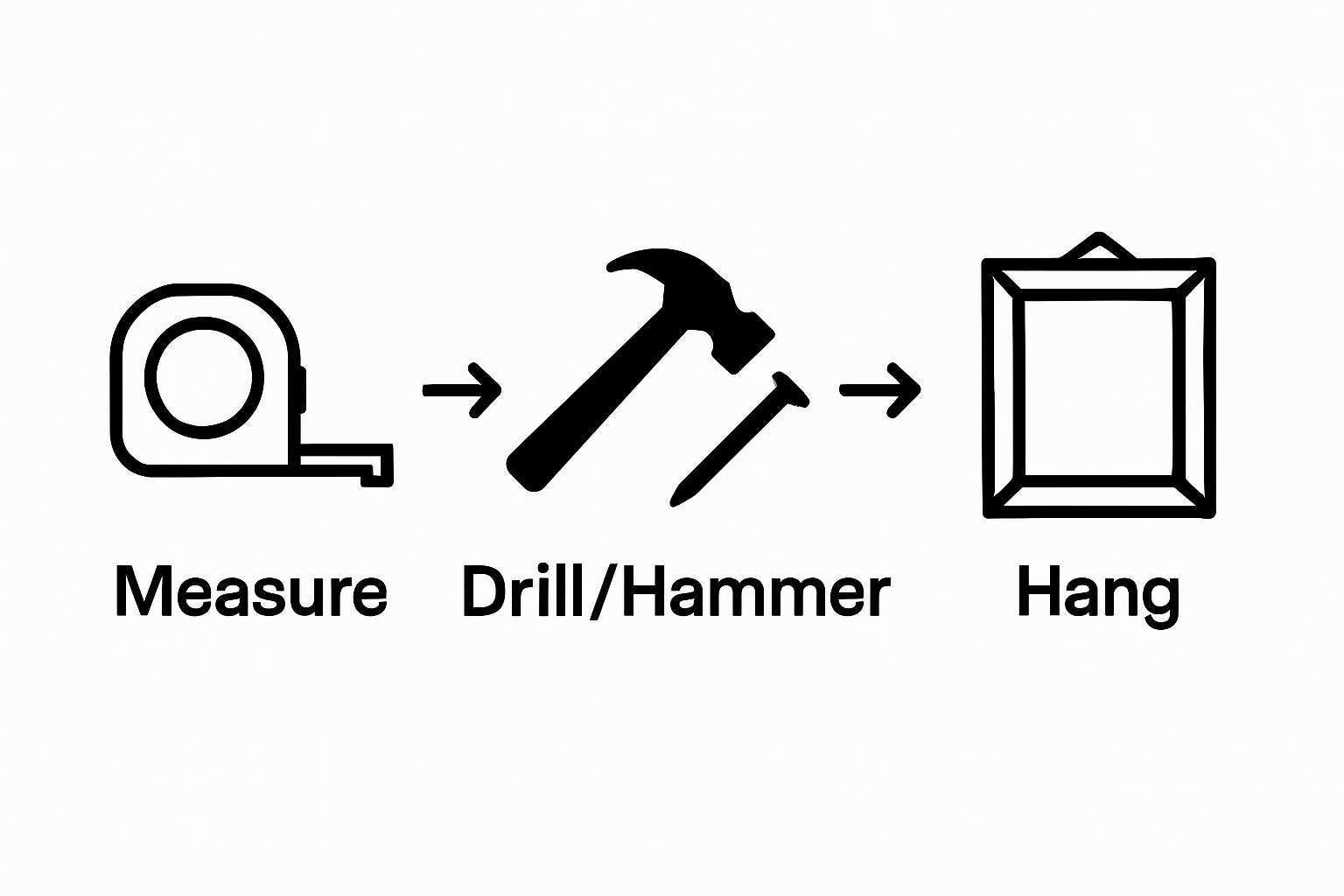 Wire-backed frames require different marking techniques compared to those with D-rings or sawtooth hangers. For wire-hung pieces, measure the distance between the wire’s highest point when stretched and the frame’s top edge. This measurement will help you calculate the precise nail or hook placement.
According to the Postal Museum’s comprehensive guide, preparation is key to successful art hanging. Use painter’s tape to create a temporary outline of your artwork’s placement. This allows you to visualize the final positioning without making permanent marks. Step back and assess the artwork’s location from multiple angles, ensuring it complements surrounding furniture and architectural elements.
Key verification steps include:
- Artwork center sits at 57-60 inches from floor
- Spirit level confirms horizontal alignment
- Painter’s tape outline looks balanced in the space
- Measurements account for hanging mechanism
- No obstruction from furniture or architectural features
Remember that slight adjustments are normal. Trust your visual instincts while maintaining technical precision. A perfectly hung piece of art doesn’t just decorate a wall – it transforms the entire room’s character, telling a story and creating an emotional connection with those who experience it.
Here is a summary table outlining the essential tools and their purposes required for hanging art like a pro.
| Tool | Purpose | Comments |
|---|---|---|
| Tape measure | Measure wall and art dimensions accurately | Essential for correct height and spacing |
| Pencil | Make erasable marks on wall for reference | Ensures no permanent damage during planning |
| Spirit level | Ensure artwork is perfectly horizontal | Prevents a skewed, unprofessional look |
| Painter’s tape | Temporary outlines for placement | Safe for walls and easy to adjust |
| Drill/hammer | Secure mounting hardware | Method depends on wall material |
| Wall anchors/hooks | Support artwork weight | Chosen based on wall and art type |
Step 3: Select Proper Hanging Hardware
Choosing the right hanging hardware is a critical step that bridges the gap between your carefully selected artwork and its final display. The wrong hardware can lead to disastrous consequences – imagine your prized painting crashing to the floor because of an inadequate hanging solution.
Weight determines everything when selecting hanging hardware. Lightweight pieces under 5 kilograms can typically use simple solutions like picture hooks or adhesive wall hangers. For medium-weight artworks between 5-10 kilograms, consider using wall anchors or toggle bolts that provide additional support. Heavier pieces exceeding 10 kilograms demand professional-grade solutions like heavy-duty wall anchors, mounting brackets, or even direct mounting into wall studs.
The wall’s material plays an equally crucial role in hardware selection. Drywall requires different approach compared to brick, concrete, or wooden surfaces. Plasterboard walls need specialized anchors that distribute weight evenly and prevent crumbling. Concrete and brick walls might need specialized drill bits and masonry anchors to create secure mounting points.
According to the Institute of Design’s hanging hardware guide, matching your hardware to both artwork weight and wall composition ensures long-term stability and safety. Consider the artwork’s hanging mechanism – whether it uses wire, D-rings, or sawtooth hangers – when selecting appropriate hooks or mounting points.
Key hardware selection criteria include:
- Matches artwork weight precisely
- Compatible with wall material
- Provides secure and level mounting
- Accommodates specific hanging mechanism
- Offers aesthetic alignment with artwork style
Beyond technical considerations, remember that hanging hardware is an investment in your artwork’s preservation. Cheap, inappropriate hardware might save money initially but risks potential damage to both your walls and cherished pieces. Take time to select quality hardware that provides both functional security and visual elegance, transforming your art hanging from a simple task into a professional installation.
Step 4: Hang Your Art with Precision
Hanging art is where careful preparation transforms into visual poetry. This critical moment demands steady hands, patience, and a methodical approach that elevates your artwork from a mere object to a carefully curated statement piece.
Begin by double-checking your measurements and marking points. Hold the artwork against the wall exactly where you intend to hang it, using painter’s tape to create a temporary outline. This visual preview allows final adjustments before making permanent holes. If working with multiple pieces, consider creating a paper template using kraft paper or newspaper to map out complex gallery wall arrangements.
Drill or hammer your mounting hardware with deliberate, controlled movements. Drill slightly slower than normal to maintain precision and prevent wall material from cracking. For plasterboard walls, apply gentle pressure to ensure anchors sit flush and secure. When using a hammer, tap nails at a slight angle to increase holding strength and reduce potential wall damage.
According to the South African Government’s Research Report on Visual Arts, professional art installation requires meticulous attention to alignment and support. Use a spirit level to confirm your artwork sits perfectly horizontal. Even a millimeter’s deviation can create a visually jarring effect that disrupts the entire room’s aesthetic.
Key precision verification steps include:
- Artwork sits perfectly level
- Mounting hardware fully embedded
- No visible wall damage around mounting points
- Artwork sits at predetermined height
- Minimal gap between artwork and wall
Remember that hanging art is part science, part art. Trust your measurements, but also trust your eye. Small adjustments can make significant differences. Step back frequently during installation, viewing your artwork from multiple angles to ensure it feels harmonious within the space. Your goal isn’t just to hang a piece of art – it’s to create a visual moment that speaks to everyone who enters the room.
Step 5: Step Back and Adjust as Needed
The final stage of art hanging is a delicate dance of perception and precision. Stepping back transforms your technical installation into a moment of artistic revelation, allowing you to evaluate the artwork’s true impact on the space.
Initially, view your artwork from multiple perspectives. Walk across the room, observe it from different seating positions, and consider how natural and artificial light interact with the piece throughout the day. Lighting dramatically changes artwork appearance, so test the visual effect during morning, afternoon, and evening hours. Shadows, glare, and color temperature can significantly alter how the artwork is perceived.
Pay attention to the artwork’s relationship with surrounding furniture and architectural elements. Does it create visual harmony or feel awkwardly positioned? Subtle shifts of just a few centimeters can dramatically improve the overall composition. If working with multiple pieces, ensure they create a cohesive visual narrative rather than competing for attention.
According to the George Municipality’s Visual Artwork Management Policy, successful art installation goes beyond technical precision – it requires an intuitive understanding of spatial dynamics. Consider removing or adjusting the piece if it feels disconnected from the room’s overall aesthetic.
Key adjustment verification criteria include:
- Artwork feels balanced in the space
- No visual tension with surrounding elements
- Lighting enhances artwork details
- Piece aligns with room’s overall design
- Comfortable viewing from multiple angles
Remember that art hanging is part technical skill, part creative intuition. Trust your visual instincts while remaining open to refinement. The perfect art placement doesn’t just decorate a wall – it transforms the entire room’s emotional landscape, creating a dialogue between the artwork, the space, and those who experience it. Sometimes, the most impactful adjustments are the most subtle, turning a simple hanging into a curated moment of visual poetry.
Ready to Hang Art Like a Professional?
You have mastered the steps to hanging art with precision and care. But the real challenge is making your walls speak to your personal style and turning every room into an inspiring space. It’s easy to get overwhelmed by choices, struggle with art placement at eye level, or worry that what you have doesn’t truly elevate your home. Only the right artworks can create that bold visual statement and emotional connection described in your journey, from measuring to adjusting lighting for maximum impact.

Bring your vision to life by discovering a wide selection of original South African artworks from Art Online. Choose from pieces perfectly suited for any wall, ensuring your next art installation becomes the focal point of your home. Now is the time to transform your knowledge into action. Explore the curated collections on our main website and unlock inspiring options that will truly let your walls sing. Don’t let your perfect wall wait another day.
Frequently Asked Questions
How high should I hang my artwork?
The center of the artwork should be approximately 57-60 inches from the floor to ensure it’s at eye level for optimal viewing.
What tools do I need to hang art properly?
You will need a tape measure, pencil, spirit level, and painter’s tape. These tools will help you achieve precise measurements and a professional-looking installation.
How do I choose the right hanging hardware for my art?
Select hanging hardware based on the weight of your artwork and the material of your wall. Lightweight pieces can use simple hooks, while heavier pieces may require wall anchors or brackets for stability.
What should I do if my artwork looks misaligned after hanging?
Step back and view the artwork from different angles. Minor adjustments of just a few centimeters can significantly improve the visual balance and cohesion with the surrounding elements.
Recommended
- Famous South African Artists: 2025 Guide for Collectors & Decorators – Art-Online
- South African Tribal Art: Trends and Decor Ideas for 2025 – Art-Online
- Art Material Must-Haves: Transforming Cape Town’s Artists – Art-Online
- Blog – Art-Online
- Open Shelving Organization Ideas for Stylish Homes 2025 – BLUSHBEES USA
- Master Mixing Tile Patterns for Stunning Spaces – Tile Choices