
Master Reselling Art Online: Profit from Your Passion

Everyone wants to make money doing what they love, and reselling art online is turning heads with real results. Professional art dealers agree that depth beats breadth, with focused expertise leading to far greater success than trying to sell everything under the sun. Most people think they need to know everything about art or have deep pockets to even start. Actually, your personal connection and a clear niche can mean you outshine big competitors right from day one.
Table of Contents
- Step 1: Identify Your Niche In The Art Market
- Step 2: Source Quality Artwork For Reselling
- Step 3: Set Up Your Online Selling Platform
- Step 4: Create Compelling Listings For Your Art
- Step 5: Promote Your Art To Targeted Audiences
- Step 6: Analyze Sales And Adapt Your Strategy
Quick Summary
| Key Point | Explanation |
|---|---|
| 1. Focus on Your Art Niche | Specialization enhances competitive advantage and attracts serious collectors by showcasing your expertise. |
| 2. Source Quality Artwork | Build strong connections in the art community to access unique pieces and ensure quality in your collection. |
| 3. Establish a Professional Online Platform | Your digital storefront must be well-planned, showcasing your art effectively while ensuring easy navigation for buyers. |
| 4. Create Engaging Art Listings | Compelling narratives and high-quality images in your listings create emotional connections, increasing buyer interest. |
| 5. Analyze Sales Data Regularly | Use sales metrics to understand market trends and adapt your strategies for better performance and customer satisfaction. |
Step 1: Identify Your Niche in the Art Market
Successful reselling art online begins with pinpointing your unique market position. Understanding your niche determines how effectively you can transform your passion into a profitable venture. Selecting the right art category requires strategic research and self-reflection.
Every successful art reseller recognizes that specialization creates competitive advantage. Rather than attempting to sell every type of artwork, focus on areas where you have genuine expertise or personal connection. This might mean concentrating on specific genres like contemporary African art, local landscape paintings, or emerging South African artists. Your authentic passion will translate into more compelling sales narratives and attract serious collectors.
To determine your niche, start by evaluating your existing knowledge and network. Consider your personal art collection, professional background, or cultural connections that give you unique insights. Professional art dealers understand that depth of understanding matters more than breadth of offerings. Analyze market trends by exploring current collector interests. Learn more about emerging art market trends to refine your strategy.
Critical factors to consider when selecting your art reselling niche include:
- Market demand and potential buyer interest
- Your personal expertise and credibility
- Profit margins within specific art categories
- Accessibility of artworks in your chosen genre
Researching potential niches requires persistent investigation. Attend local art exhibitions, connect with galleries, join online art communities, and study auction results. Track which types of artworks consistently sell and at what price points. Your niche should balance your passion with market viability.
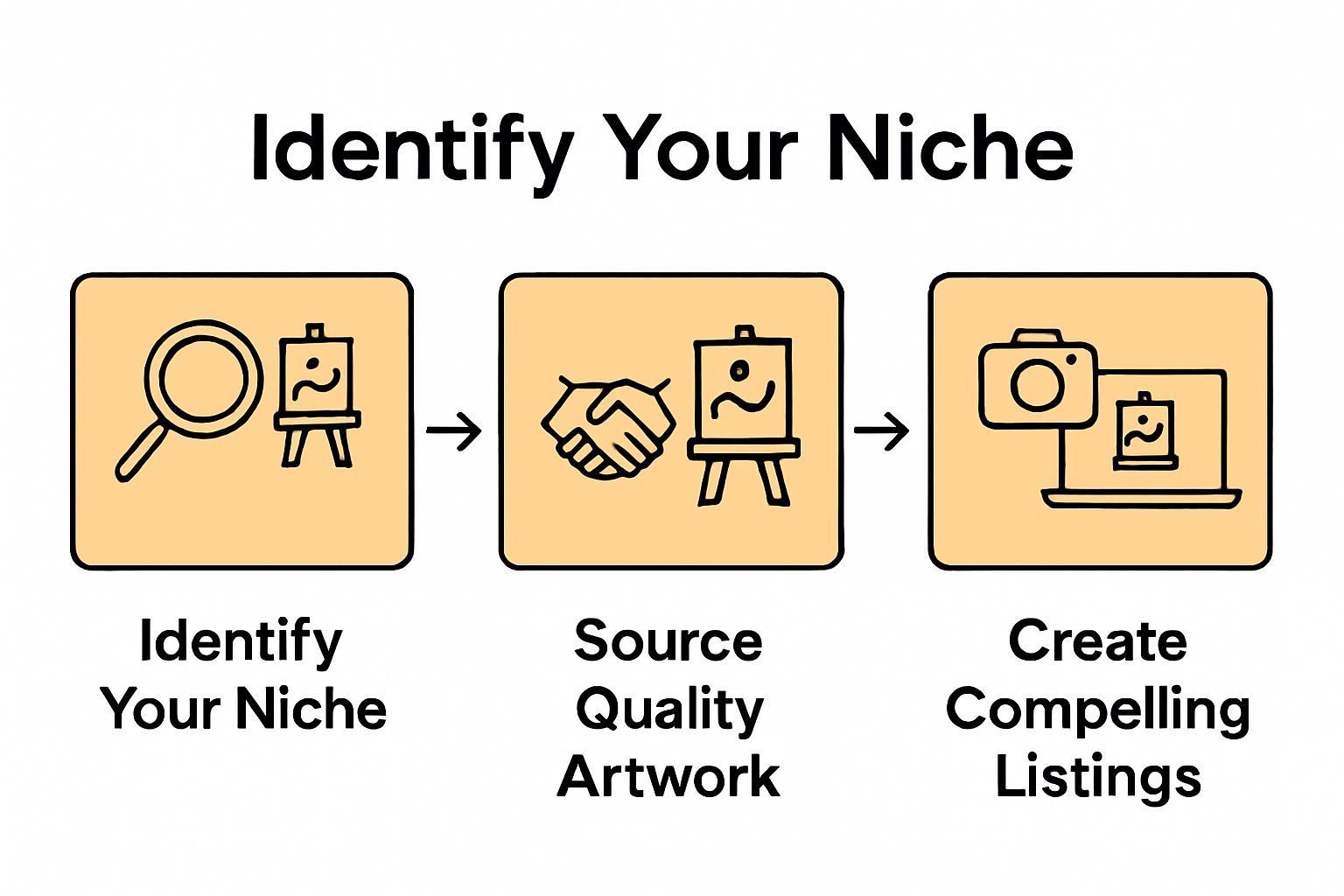
Successful niche selection means understanding not just what art you want to sell, but who wants to buy it. Develop a clear profile of your ideal art collector. Are they corporate buyers seeking statement pieces? Interior designers looking for specific color palettes? Young collectors interested in emerging artists? The more precisely you can define your target audience, the more effectively you can curate and market your art collection.
Step 2: Source Quality Artwork for Reselling
Sourcing exceptional artwork requires a strategic approach that blends art appreciation with business acumen. Quality determines your success in reselling art online, making this step crucial for building a reputable collection that attracts serious collectors and generates consistent revenue.
Begin by establishing robust connections within the art community. Local art galleries, artist studios, university art departments, and regional exhibitions provide excellent opportunities to discover unique pieces. Personal relationships often unlock access to artworks not available through standard commercial channels. Network extensively and develop genuine relationships with artists, gallery owners, and local art curators who can recommend emerging talent or provide insider knowledge about potential acquisitions.
Explore captivating painting types and their market values to understand pricing dynamics and investment potential. Developing a keen eye for quality involves more than aesthetic appreciation. Examine artwork condition, provenance, artist reputation, and market trends. Authenticity documentation, artist signatures, and professional appraisals add significant value to your resellable pieces.
Critical factors for artwork selection include:
- Technical skill and artistic innovation
- Condition and preservation quality
- Rarity and limited availability
- Potential appreciation in market value
- Alignment with your identified market niche
Expand your sourcing strategies beyond traditional channels. Online platforms, artist websites, social media, and international art marketplaces offer diverse opportunities for discovering exceptional artworks. Consider participating in art auctions, both physical and digital, which can provide access to unique pieces from established and emerging artists.
Verifying artwork quality requires thorough research and sometimes expert consultation. Develop relationships with art authenticators, conservators, and experienced collectors who can provide insights into artwork valuation. Always request comprehensive documentation, including certificates of authenticity, previous ownership history, and detailed condition reports. Your diligence in sourcing will directly translate into trust and credibility among potential buyers.
Step 3: Set Up Your Online Selling Platform
Establishing a professional online platform transforms your art reselling ambition from a casual hobby into a serious business venture. The digital marketplace requires strategic planning and thoughtful presentation to attract serious collectors and distinguish your brand from competitors.
Your online platform serves as the digital storefront for your art collection, representing your unique curatorial vision. While numerous options exist, selecting the right platform demands careful consideration of functionality, user experience, and marketing potential. Professional art sellers often choose between dedicated art marketplaces, custom websites, and established ecommerce platforms that offer integrated sales and marketing tools.
Comprehensive online platforms enable seamless art selling experiences by providing critical features like secure payment processing, high-resolution image galleries, and detailed artwork descriptions. Invest time in creating compelling visual presentations that showcase each artwork’s unique characteristics. Professional photography matters immensely art buyers make purchasing decisions based on digital representations.
Critical platform selection criteria include:
- Ease of use for both seller and buyer
- Commission rates and transaction fees
- Quality of integrated marketing tools
- Payment security and processing options
- Customer support infrastructure
Develop a consistent brand identity across your chosen platform. This means creating professional profiles, writing engaging artist and artwork descriptions, and maintaining a cohesive visual aesthetic. Your platform should communicate expertise, authenticity, and passion for the art you are reselling.
Below is a table comparing key online platform options for art reselling, summarising functionality, costs, and unique considerations to help you choose the best fit for your business.
| Platform Type | Features | Advantages | Considerations |
|---|---|---|---|
| Dedicated Art Marketplace | Integrated gallery, artist profiles | Art-focused audience, exposure | Often charge commission rates |
| Custom Website | Full customisation, own branding | Total control, unique vision | Requires setup and ongoing management |
| Ecommerce Platform | Payment processing, templates | Easy setup, broad reach | Generic experience, competition |
| Social Media Shop | Direct sales via Facebook, Instagram | Wide reach, social discovery | Limited branding, less control |
Consider implementing additional features that build trust with potential buyers. Detailed artwork provenance, artist biographies, condition reports, and transparent pricing strategies demonstrate professionalism. Include clear shipping information, return policies, and authentication processes. Potential collectors appreciate transparency and comprehensive information that reduces purchasing uncertainties.
Step 4: Create Compelling Listings for Your Art
Crafting compelling art listings transforms simple product descriptions into immersive storytelling experiences that capture potential buyers’ imagination and emotional connection. Successful art reselling hinges on your ability to communicate each artwork’s unique narrative and intrinsic value.
Photography represents the critical foundation of exceptional art listings. Professional, high-resolution images that capture artwork details, texture, and context are non-negotiable. Invest in quality lighting and multiple angle shots that showcase the piece comprehensively. Include close-up images revealing brushwork, canvas texture, and signature details.
Learn how to professionally showcase your creative works to maximize visual presentation.
Your artwork description should transcend mere technical specifications. Craft a narrative that provides context about the artist, inspiration behind the piece, and its potential significance to collectors. Describe the artwork’s emotional resonance, artistic techniques employed, and cultural or historical relevance. Potential buyers seek more than a visual object they want a connection, a story that resonates with their personal aesthetic and emotional landscape.
Critical elements for compelling art listings include:
- High-quality, professional photography
- Detailed, emotionally engaging descriptions
- Clear provenance and authenticity information
- Transparent pricing and condition details
- Artist background and artistic context
Pricing strategy demands careful consideration. Research comparable artworks in your niche, factor in artist reputation, artwork condition, and market trends. Be transparent about pricing rationale. Include information about artwork dimensions, medium, year of creation, and any unique characteristics that justify the price point.
Verify your listing’s effectiveness by seeking feedback from fellow art professionals or potential collectors. A compelling listing should generate interest, prompt questions, and create an emotional connection that transforms casual browsers into serious art collectors.
This checklist helps ensure each artwork listing is complete and compelling, boosting buyer confidence and increasing sales potential in your online art business.
| Checklist Item | Description | Completion Status |
|---|---|---|
| High-quality, professional photography | Images from multiple angles, clear close-ups | |
| Detailed, emotionally engaging description | Story behind the artwork, artist context | |
| Provenance and authenticity information | Certificates, history, or supporting documents | |
| Transparent pricing and condition | Clarity on price, artwork size, year, medium, condition | |
| Artist background and artistic context | Brief artist bio and unique selling points |
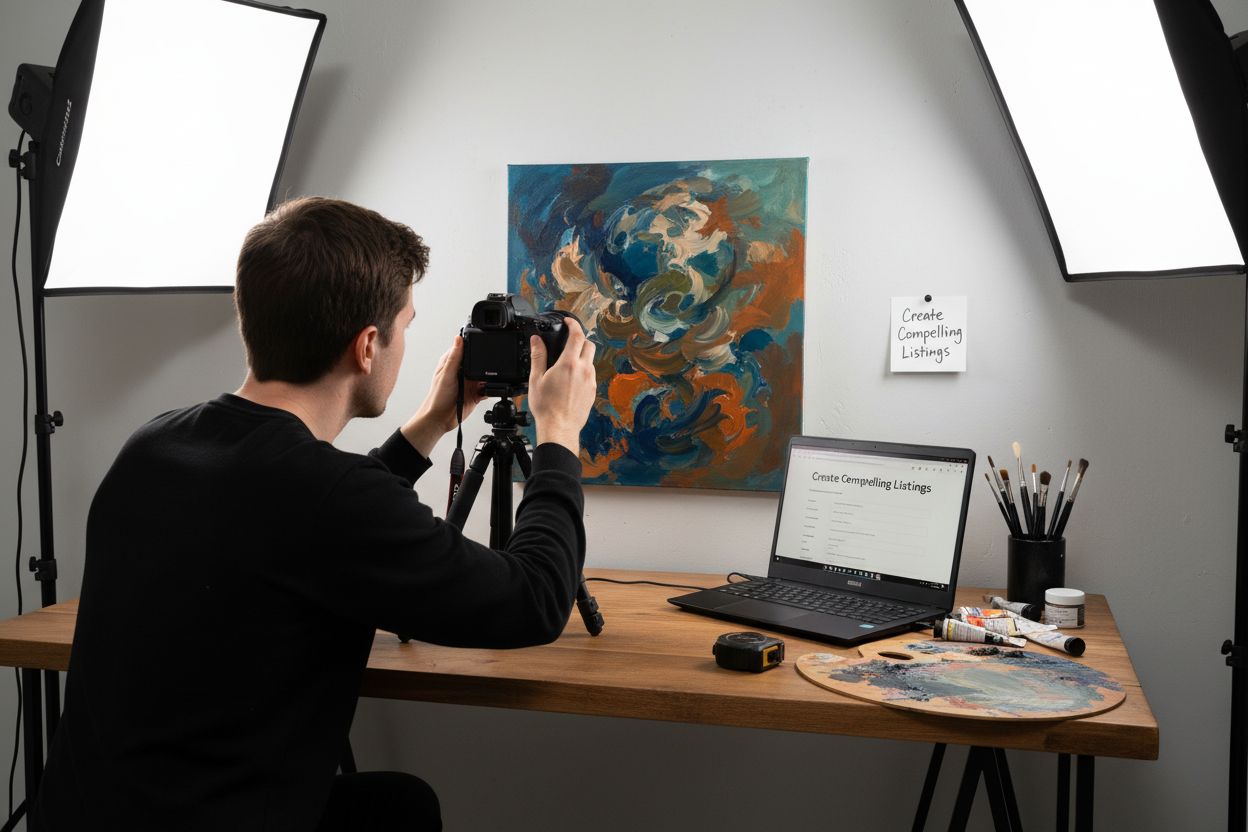 Remember that each listing is an opportunity to not just sell an artwork but to share a profound artistic experience.
Step 5: Promote Your Art to Targeted Audiences
Effective art promotion requires strategic targeting and multi-channel communication that connects your curated collection with passionate collectors. Successful art resellers understand that marketing is an art form itself, demanding creativity, persistence, and nuanced understanding of audience psychology.
Social media platforms offer powerful opportunities for visual storytelling and audience engagement. Instagram, Pinterest, and Facebook provide ideal environments for showcasing artwork, sharing artist narratives, and building community around your collection. Create consistent, visually compelling content that offers glimpses into your artistic selections, artist backgrounds, and the unique stories behind each piece. Explore professional strategies for art commissions and marketing to enhance your promotional approach.
Networking remains fundamental in art reselling. Attend local art exhibitions, gallery openings, and cultural events to establish personal connections with potential buyers, artists, and collectors. Virtual networking through specialized art forums, online collector groups, and professional platforms like LinkedIn can expand your reach beyond geographical limitations. Develop a professional persona that communicates expertise, passion, and curatorial vision.
Critical promotion strategies include:
- Consistent, high-quality visual content
- Targeted social media advertising
- Personal networking and relationship building
- Email marketing to collector databases
- Participation in art community events
Email marketing offers a direct communication channel with potential buyers. Build a curated mailing list of art enthusiasts, collectors, and interior designers interested in your specific art niche. Design newsletters that provide value beyond sales pitches. Share insights about artistic trends, artist spotlights, and exclusive preview opportunities that make subscribers feel part of an exclusive community.
Measure your promotional efforts through engagement metrics, conversion rates, and direct feedback. Track which marketing channels generate the most interest and sales. Continuously refine your approach, experimenting with different content strategies and audience targeting to optimize your art reselling business.
Step 6: Analyze Sales and Adapt Your Strategy
Sales analysis transforms raw data into actionable insights that drive strategic decision making in art reselling. Successful art entrepreneurs view sales metrics not as static numbers, but as dynamic narratives revealing deeper market trends and buyer preferences.
Implement comprehensive tracking systems that capture more than just transaction volumes. Monitor metrics like average artwork price, time-to-sale, customer demographic information, and seasonal purchasing patterns. These insights reveal nuanced understanding of your market beyond simple revenue calculations. Research indicates systematic data analysis can significantly improve sales strategies across digital marketplaces.
Utilize digital analytics tools integrated with your selling platform to generate detailed reports. Platforms offering advanced reporting capabilities help you understand customer journey, from initial artwork viewing to final purchase. Pay attention to engagement metrics like artwork views, time spent on listing pages, and conversion rates.
This table summarises key sales metrics to track and how each one informs better business decisions, making it easier to analyse and adapt your strategy as your art resale business grows.
| Sales Metric | What It Measures | Why It Matters |
|---|---|---|
| Average Artwork Price | Mean sale price of artworks | Informs pricing and profit margins |
| Time-to-Sale | Time between listing and sale | Identifies demand and listing effectiveness |
| Customer Demographics | Buyer age, location, profession etc. | Helps target marketing and inventory choices |
| Seasonal Trend Analysis | Patterns in sales over time | Spot peak periods and adjust promotions |
| Artwork Category Performance | Which art types sell most | Guides future sourcing and curation |
| Marketing Channel Effectiveness | Sales by social, email, in-person | Optimises where to focus outreach efforts |
Critical sales analysis elements include:
- Comprehensive transaction tracking
- Customer demographic profiling
- Seasonal purchasing trend identification
- Artwork category performance metrics
- Marketing channel effectiveness
Regular strategy adaptation requires flexible thinking. If certain artwork categories consistently underperform, reassess your curation approach. Consider factors like pricing, presentation, or market demand. Conversely, identify high-performing artwork types and develop strategies to source similar pieces. Your ability to pivot quickly distinguishes successful art resellers from passive sellers.
Client feedback represents another invaluable analytical tool. Encourage post-purchase reviews, conduct periodic surveys, and maintain open communication channels with buyers. Their insights can reveal unexpected preferences, potential improvements in your selling process, and emerging market trends that data alone might not capture.
Ready to Profit from Your Passion for Art?
You have explored every critical step to master reselling art online in South Africa from identifying your market niche, to sourcing quality artwork, and presenting compelling listings. Still, the toughest part is building trust and reaching serious collectors who genuinely value authentic South African art. The market can be overwhelming, and standing out with a credible platform is essential for your growth and success.

Join Art Online, South Africa’s largest online art gallery, and connect your curated vision with real buyers looking for extraordinary talent. With our expert support and a vast audience, your collection gains the credibility and exposure you need. Take advantage of our easy-to-use platform and detailed artist resources to showcase your art to collectors who are actively searching for the next remarkable piece. Do not let your passion stay hidden act now to start your journey on Art Online and watch your art business thrive.
Frequently Asked Questions
What is the first step to becoming a successful art reseller?
To become a successful art reseller, start by identifying your niche in the art market. Focus on specific genres or styles where you have expertise or personal connection, as this will help you connect with potential buyers more effectively.
How can I source quality artwork for reselling?
You can source quality artwork by building relationships within the art community, visiting local galleries, participating in art exhibitions, and exploring online platforms for unique pieces. Authentication and condition verification are crucial when selecting art to ensure its value.
What should I include in my online art listings?
Your online art listings should feature high-quality images, detailed descriptions that narrate the artwork’s story and context, and clear information about the artist, artwork provenance, and pricing. Include any necessary documents to establish authenticity.
How can I effectively promote my art to potential buyers?
To promote your art effectively, utilize social media platforms, network at art events, and engage in email marketing. Create visually appealing content and share insights about your art niche to connect with your target audience.