
Commissioning original art might sound like a high-stakes move for collectors and everyday buyers alike, especially when every choice could shape your space and story. Surprise yourself here. The most successful commissions often come down to just one thing: how well you communicate your artistic vision from the start. You would think talent alone seals the deal but the real magic happens when client and artist build trust and clarity right from day one.
Table of Contents
- Step 1: Identify Your Artistic Vision And Needs
- Step 2: Research And Select Suitable Artists
- Step 3: Initiate Contact And Discuss Commission Details
- Step 4: Establish Payment Terms And Contractual Agreement
- Step 5: Monitor The Artistic Progress And Provide Feedback
- Step 6: Verify Final Artwork And Complete The Transaction
Quick Summary
| Key Point | Explanation |
|---|---|
| 1. Clearly define your artistic vision | Art commissions start with a detailed understanding of desired emotions, styles, and themes to guide the creative process. |
| 2. Select artists based on compatibility | Research various artists to find those whose style aligns with your vision and who communicate effectively. |
| 3. Establish clear communication early | Initial conversations with the artist should cover visions, expectations, and practical details to ensure mutual understanding. |
| 4. Draft a comprehensive contract | Create an agreement detailing the scope, payment structure, and revision policies to protect both parties. |
| 5. Provide structured feedback during progress | Maintain regular check-ins and offer specific, constructive feedback to help the artist align with your vision without undermining creativity. |
Step 1: Identify Your Artistic Vision and Needs
Successful art commissions begin with crystal clear communication and a profound understanding of your artistic goals. This initial step is about transforming abstract ideas into a concrete vision that will guide the entire creative process. Defining your artistic vision is not just about describing what you want but understanding the emotional and aesthetic impact you desire.
Start by reflecting deeply on the purpose of your commissioned artwork. Are you seeking a piece that captures a specific emotion, commemorates a significant moment, or complements a particular space? Consider the mood, color palette, style, and overall atmosphere you want the artwork to evoke. This introspective phase requires honest self-assessment and clarity about your aesthetic preferences.
Documenting your vision becomes crucial during this stage. Create a comprehensive artistic brief that includes key details such as preferred mediums, size requirements, color schemes, and any specific themes or subjects you want represented. If you are uncertain about certain technical aspects, consider exploring artist consultation resources that can help refine your artistic direction.
While developing your vision, remain open to collaborative input. Professional artists often bring unique perspectives that can enhance your initial concept. Communicate your ideas clearly but also be receptive to creative suggestions. The most successful commissions emerge from a dynamic dialogue between the client and the artist, where mutual understanding and creative respect form the foundation of the project.
To verify you have successfully completed this step, ask yourself these key questions:
- Have I clearly articulated the emotional and aesthetic goals of the artwork?
- Can I describe the artwork in vivid, specific terms?
- Have I documented my vision in a detailed artistic brief?
- Am I prepared to have an open, collaborative conversation with potential artists?
By meticulously defining your artistic vision, you set the stage for a commission that not only meets but potentially exceeds your creative expectations.
Step 2: Research and Select Suitable Artists
Researching and selecting the right artist represents a critical phase in the art commission process where your vision transforms from concept to potential reality. Strategic artist selection goes beyond aesthetic preference it requires understanding an artist’s unique creative language and professional compatibility.
Begin your research by exploring multiple channels. Professional art galleries, online portfolios, social media platforms, and recommended artist networks offer diverse opportunities to discover talented artists. Pay attention to their previous works, technical skills, and stylistic approaches. Look for artists whose existing portfolio demonstrates a resonance with the emotional and visual aesthetic you outlined in your initial artistic vision.
Your selection process should involve a comprehensive evaluation. Review each potential artist’s professional background, understanding their training, exhibitions, and prior commission experiences. Technical proficiency matters, but equally important is their ability to interpret and translate client visions. Request portfolios, review their past commission work, and if possible, arrange preliminary discussions to assess their creative approach and communication style.
When narrowing your selection, consider practical factors beyond artistic skill. Evaluate the artist’s availability, turnaround times, pricing structure, and willingness to collaborate. Some artists might specialize in specific mediums or styles that align perfectly with your project requirements. Transparent communication during initial interactions can reveal whether an artist is genuinely interested in bringing your vision to life.
To verify you have successfully completed this step, confirm the following:
- Have I researched multiple artists across different platforms?
- Does the selected artist’s portfolio demonstrate relevant skills and style?
- Have I initiated preliminary conversations with potential artists?
- Am I comfortable with the artist’s communication style and professional approach?
By methodically evaluating potential artists, you significantly increase the likelihood of finding a creative partner who can transform your artistic vision into a compelling, personalized artwork.
Step 3: Initiate Contact and Discuss Commission Details
Initiating contact with your selected artist marks a pivotal moment in the art commission process. This step transforms your artistic vision from a personal concept into a collaborative creative journey. Professional, clear, and respectful communication sets the foundation for a successful artistic partnership.
Reach out to your chosen artist through their preferred professional communication channel, whether that is email, professional portfolio platforms, or gallery contact information. Craft an initial message that is concise, professional, and comprehensive. Introduce yourself briefly, explain your artistic vision, and express genuine interest in their specific artistic style. Learn more about connecting with local artists to refine your approach and understand the nuanced communication protocols in the art world.
During your initial discussions, focus on establishing mutual understanding and exploring creative possibilities. Transparency about your expectations, budget, timeline, and artistic requirements is crucial. Discuss practical details such as artwork dimensions, preferred medium, color palette, and any specific contextual or emotional elements you want incorporated. Encourage the artist to share their perspective, creative interpretations, and potential recommendations that might enhance your original vision.
Navigate the financial aspects of the commission with professionalism and clarity. Discuss pricing structures, including potential deposit requirements, progress payment schedules, and final artwork delivery terms. Request a detailed proposal that outlines the project scope, estimated completion timeline, revision policies, and total cost. Be prepared to negotiate respectfully, understanding that artists invest significant time, skill, and creative energy into commissioned work.
To verify you have successfully completed this step, confirm the following:
- Have I communicated my artistic vision clearly and comprehensively?
- Did I discuss practical details like size, medium, and timeline?
- Have I received a detailed project proposal from the artist?
- Am I comfortable with the proposed financial terms and creative approach?
By fostering open, respectful communication, you create an environment of collaborative creativity that increases the likelihood of a remarkable commissioned artwork.
Step 4: Establish Payment Terms and Contractual Agreement
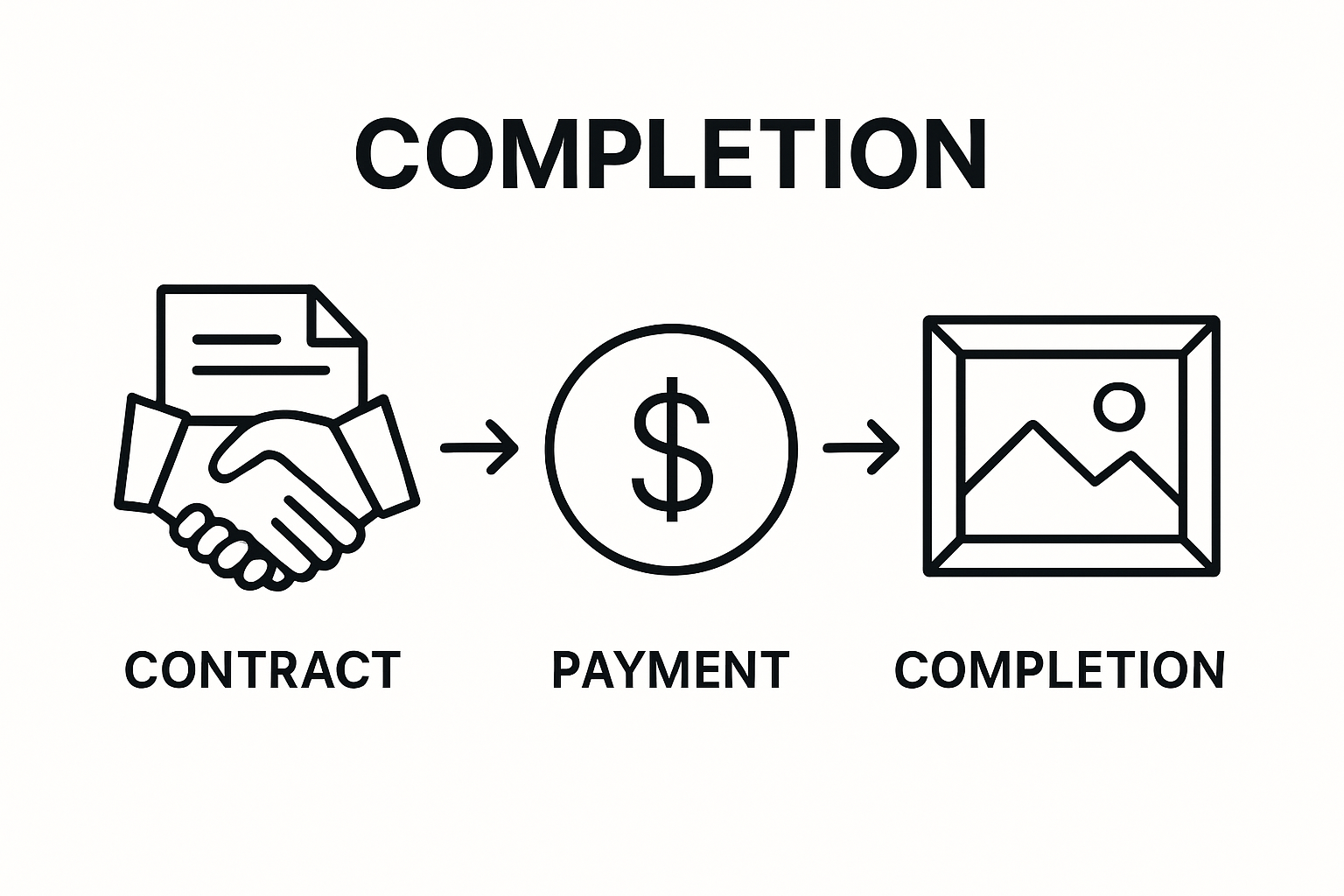
Establishing clear payment terms and a comprehensive contractual agreement represents the foundational legal framework that protects both the artist and the client. This critical step transforms your artistic collaboration from an informal conversation into a professional, legally recognized arrangement.
Begin by drafting a detailed contract that comprehensively outlines every aspect of the commission. This document should explicitly state the scope of work, including precise artwork specifications, dimensions, medium, color palette, and any specific creative requirements you discussed during initial conversations. Explore professional art commission resources to understand standard contractual practices in the art world.
Payment structure requires meticulous attention. Most professional art commissions follow a staged payment model that protects both parties. Typically, this involves an initial deposit ranging from 30% to 50% of the total project cost, with subsequent payments tied to specific project milestones. These milestones might include initial concept approval, preliminary sketch completion, and final artwork delivery. Clearly outline payment amounts, due dates, and acceptable payment methods to prevent potential misunderstandings.
Address potential scenarios that might arise during the creative process. Include provisions for project revisions, defining the number of complimentary modifications and the cost of additional changes. Specify delivery expectations, including artwork ownership transfer, potential reproduction rights, and any exhibition or publication permissions. Your contract should also detail cancellation terms, protecting both the artist’s time investment and your financial commitment.
To verify you have successfully completed this step, confirm the following:
- Have I drafted a comprehensive contract covering all project details?
- Are payment terms clearly defined with specific milestones?
- Does the agreement outline revision processes and associated costs?
- Have both parties reviewed and agreed to all contract terms?
By establishing a clear, fair contractual agreement, you create a professional foundation that allows creative energy to flourish while maintaining mutual respect and legal protection.
Step 5: Monitor the Artistic Progress and Provide Feedback
Monitoring artistic progress and providing constructive feedback represents a delicate balance between maintaining your artistic vision and respecting the creative process. This step is about fostering collaborative communication that nurtures the artwork’s development while ensuring alignment with your original expectations.
Establish a structured communication rhythm with your artist, scheduling regular check-ins that allow you to review progress without micromanaging the creative process. These interactions should be designed to provide meaningful insights and gentle guidance. Explore professional art consultation techniques to refine your feedback approach and understand effective communication strategies with artists.
Effective feedback requires a careful, nuanced approach. When reviewing preliminary sketches or work-in-progress, focus on specific elements rather than making broad, sweeping statements. Describe what you observe, articulate your emotional response, and offer constructive suggestions that provide clear direction without undermining the artist’s creative autonomy. For instance, instead of saying “I don’t like this,” try “The color palette feels different from our initial discussion. Could we explore how to bring it closer to the warm, earthy tones we originally discussed?”
Remain open to the artist’s creative interpretations and professional expertise. Sometimes, their unique perspective might offer unexpected and exciting dimensions to your original concept. Approach each interaction with respect, curiosity, and a willingness to collaborate. Document your feedback in writing, ensuring clarity and providing a reference point for both parties.
To verify you have successfully completed this step, confirm the following:
- Have I maintained regular, constructive communication with the artist?
- Are my feedback sessions specific, respectful, and solution-oriented?
- Have I documented all feedback and artist responses?
- Am I balancing my vision with the artist’s creative expertise?
By approaching artistic progress monitoring with empathy, clarity, and professionalism, you create an environment that nurtures creativity and increases the likelihood of a truly remarkable commissioned artwork.
Step 6: Verify Final Artwork and Complete the Transaction
Verifying the final artwork and completing the transaction represents the culmination of your artistic collaboration, transforming months of creative dialogue into a tangible masterpiece. This step requires meticulous attention to detail, ensuring the artwork meets every specification outlined in your original agreement.
Initiate the verification process by scheduling an in-person or virtual review of the completed artwork. Carefully examine the piece against the original brief, comparing it with the preliminary sketches and progress discussions. Explore professional art verification techniques to ensure a comprehensive assessment. Pay close attention to technical details such as color accuracy, dimensionality, medium consistency, and overall artistic interpretation.
During the verification, document your observations methodically. Create a comprehensive review that acknowledges the artwork’s strengths and identifies any potential discrepancies from the original vision. If minor adjustments are necessary, discuss them professionally with the artist, referring back to your original contract’s revision clauses. Approach these conversations with respect, understanding that the final artwork represents a collaborative creative journey.
Once you are satisfied with the artwork, proceed with the final transaction. Confirm that all contractual obligations have been met, including any agreed-upon reproduction rights, framing specifications, or delivery arrangements. Process the final payment promptly and according to the terms established in your original agreement. Request proper documentation, including a certificate of authenticity, detailed artwork description, and any relevant provenance information.
To verify you have successfully completed this step, confirm the following:
- Have I thoroughly examined the artwork against the original brief?
- Did I document my observations and any potential adjustments?
- Have all contractual obligations been fulfilled?
- Have I processed the final payment and received necessary documentation?
By approaching the final verification with professionalism, attention to detail, and mutual respect, you conclude the art commission process on a positive note, potentially establishing a foundation for future creative collaborations.
Below is a concise checklist table to help you verify successful completion of each stage in the art commission process as outlined in this guide.
| Commission Stage | Key Completion Checks |
|---|---|
| Define Artistic Vision | Emotional and aesthetic goals articulated; vision described in detail; brief documented; open to collaboration |
| Select Suitable Artist | Artists researched on various platforms; portfolio matches style; conversations held; comfortable with professionalism |
| Discuss Commission Details | Vision communicated; practical requirements covered; detailed proposal received; agreeable on financial/creative terms |
| Finalise Contract and Payment | Comprehensive contract drafted; milestones and payments specified; revision/cancellation terms included; both parties agreed |
| Monitor Progress and Feedback | Regular, constructive communication; respectful, specific feedback; ongoing documentation; balance of vision and artistic input |
| Verify Final Artwork and Complete Payment | Thorough review of artwork; discrepancies noted; contract fulfilled; payment processed; documentation received |

Bring Your Art Commission Vision to Life with South Africa’s Top Talent
Are you struggling to find the perfect artist who truly understands your creative brief, communicates clearly, and delivers exactly what you imagine? Many art lovers face challenges with unclear project details, communication breakdowns, or uncertainty about secure transactions. At Art Online, we solve these pain points so you can commission artwork with total confidence. Our guide helped you define your vision, select the right artist, and understand each step. Now, take the next leap and access the country’s largest collection of proven artists, ready to collaborate and create.
Discover the joy of a hassle-free art commission experience. Explore South Africa’s largest online art gallery where you can view artist portfolios, send detailed artistic briefs, and secure trustworthy transactions. Ready to see your one-of-a-kind artwork come to life? Visit Art Online today and connect with South Africa’s most renowned artists. Start your commission now for a result that exceeds your creative expectations.
Frequently Asked Questions
How do I define my artistic vision for a commission?
To define your artistic vision, reflect on the emotional and aesthetic impact you desire from the artwork. Document key details such as the mood, color palette, style, and purpose of the piece in a comprehensive artistic brief.
What should I look for when selecting an artist for my commission?
When selecting an artist, evaluate their portfolio for relevant skills and style. Consider their professional background, communication style, and ability to interpret your vision. Look for previous commission experiences that resonate with your artistic goals.
What details should I include in the commission proposal to the artist?
In your commission proposal, include the artwork specifications such as dimensions, medium, color palette, and emotional elements. Additionally, discuss your expectations regarding budget, timeline, and any artistic requirements you wish to outline.
How can I provide effective feedback to the artist during the commission process?
Provide specific, constructive feedback by focusing on particular elements of the artwork and articulating your emotional response. Be respectful and encourage dialogue, remaining open to the artist’s creative interpretations while ensuring alignment with your vision.