
How to Start an Art Portfolio: Showcase Your Creative Works
Building a standout art portfolio feels overwhelming at first. Artists hear that their portfolio needs to stand out, yet most end up with a tangled collection and no clear direction. But the truth is, your portfolio is more than just images – it’s the story of who you are as an artist, and with the right approach, it can do most of the talking long before you walk into a gallery.
Table of Contents
- Step 1: Define Your Artistic Identity And Goals
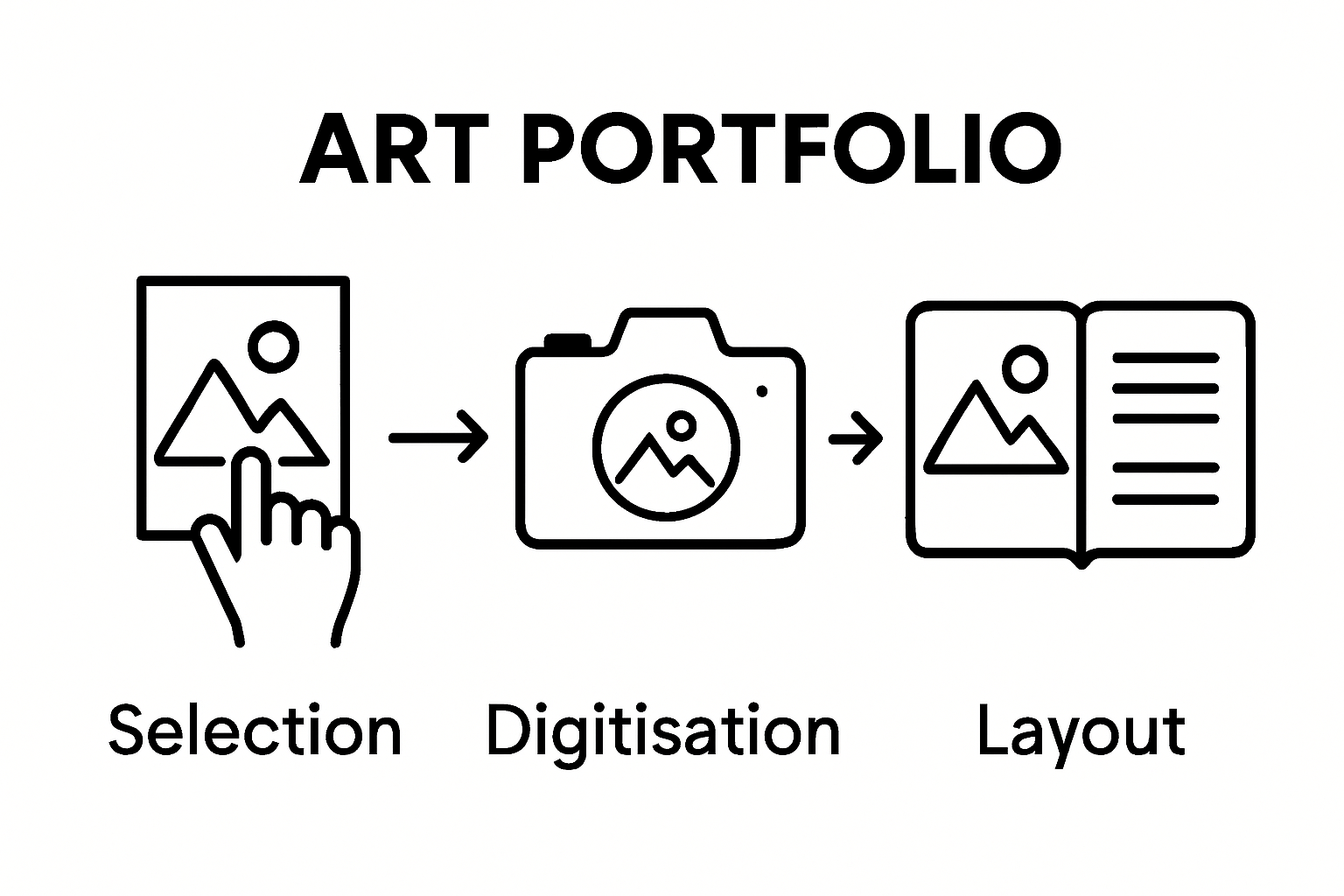
- Step 2: Select And Organize Your Best Artwork
- Step 3: Create A Consistent Presentation Style
- Step 4: Establish An Online Presence
- Step 5: Gather Feedback And Refine Your Portfolio
Quick Summary
| Key Point | Explanation |
|---|---|
| 1. Define your artistic identity clearly | Reflect on your motivations and themes to articulate your unique perspective as an artist. |
| 2. Curate your best artwork strategically | Select pieces that showcase your skills and tell a coherent story rather than overflowing the portfolio with all your works. |
| 3. Maintain consistent presentation style | Use a unified design and layout to enhance the visual impact of your portfolio, ensuring it reflects your artistic identity. |
| 4. Establish a professional online presence | Create an easy-to-navigate digital portfolio on suitable platforms to increase visibility and connect with potential audiences. |
| 5. Seek and incorporate constructive feedback | Gather insights from trusted sources to refine your portfolio while maintaining your artistic authenticity and narrative clarity. |
Step 1: Define Your Artistic Identity and Goals
Creating an exceptional art portfolio begins with understanding your unique artistic identity. This foundational step is about introspection, self-discovery, and strategic planning that will transform a collection of works into a powerful narrative of your creative journey. Your portfolio is more than just images – it’s a visual representation of who you are as an artist.
Start by reflecting deeply on your artistic motivations, preferred mediums, and the emotional landscape that drives your creativity. Consider the themes that consistently emerge in your work – whether it’s environmental landscapes, human emotions, social commentary, or abstract expressions. Ask yourself critical questions: What stories do my artworks tell? What makes my perspective distinctive? What artistic experiences have shaped my current creative vision?
Documenting your artistic goals is equally crucial. These goals should be both immediate and long-term, providing a roadmap for your portfolio’s development. Some artists aim to showcase versatility, while others prefer demonstrating mastery in a specific style or technique. Your goals might include gaining gallery representation, entering art competitions, attracting commission work, or building an online art presence. Learn more about professional artist strategies to refine your approach.
As you map out your artistic identity, consider creating a personal artist statement that encapsulates your creative philosophy. This statement should be concise yet powerful, explaining your artistic motivation, influences, and the unique perspective you bring to your work. It serves as a critical companion piece to your visual portfolio, offering viewers deeper insight into your creative process.
Verify you’ve successfully completed this step by checking these key indicators:
- You can articulate your artistic style in 2-3 clear sentences
- You have identified your primary artistic themes and motivations
- You’ve established clear, measurable goals for your artistic development
- Your emerging portfolio concept aligns with your defined artistic identity
Remember, defining your artistic identity is an ongoing journey. Your portfolio will evolve, but a strong foundational understanding of your creative self ensures that every piece you include tells a meaningful part of your artistic story.
Step 2: Select and Organize Your Best Artwork
Selecting and organizing your artwork is a critical step that transforms a random collection of pieces into a compelling narrative of your artistic journey. Your portfolio is a curated showcase, not an exhaustive archive, requiring careful selection that highlights your strengths and creative range.
Begin by gathering all your existing artworks across different mediums and periods. Spread them out physically or digitally, creating a comprehensive visual inventory. This process allows you to step back and view your body of work objectively. Look for pieces that demonstrate technical skill, emotional depth, and unique artistic perspective. Avoid the temptation to include every piece simply because you created it. Professional portfolios are about quality, not quantity.
Critically evaluate each artwork through multiple lenses. Consider technical execution, conceptual strength, emotional resonance, and how each piece represents your artistic identity. Select works that show progression, versatility, and your most distinctive creative voice. Explore professional artist portfolio strategies to refine your selection approach.
Organization is equally crucial. Arrange your selected pieces in a logical sequence that tells a coherent story. This could be chronological, thematic, or based on technical complexity. Some artists prefer organizing by medium or concept, while others might arrange works to demonstrate their creative evolution. Aim for a flow that guides viewers through your artistic narrative seamlessly.
Digital organization is now essential.
Invest time in creating high-quality digital scans or photographs of your artwork. Ensure consistent lighting, accurate color representation, and professional presentation. Use neutral backgrounds and maintain consistent image sizes and resolution. Name your digital files systematically – include your name, artwork title, and creation date.
Verify you’ve successfully completed this step by checking these key indicators:
- You have 10-15 pieces that comprehensively represent your artistic range
- Your selected works demonstrate technical skill and creative vision
- Artworks are organized in a logical, narrative-driven sequence
- Digital files are professionally prepared with consistent quality
Remember, your portfolio is a living document. Be prepared to update and refine it regularly as your artistic skills grow and your creative vision evolves.
Step 3: Create a Consistent Presentation Style
Presentation transforms a collection of artworks into a professional, cohesive portfolio that communicates your artistic identity. Consistency is the key to creating a memorable visual experience that allows viewers to focus on your creative work rather than being distracted by inconsistent formatting or design choices.
Start by selecting a unified color palette and layout strategy that complements your artistic style. This doesn’t mean your presentation should overshadow your artwork, but rather enhance its visual impact. For physical portfolios, choose high-quality materials like professional binders or archival presentation folders that protect your work and reflect your artistic sensibility. Digital portfolios require equally thoughtful design considerations, focusing on clean, intuitive interfaces that showcase your artwork professionally.
Photography and digital presentation are critical elements of modern art portfolios. Invest time in creating high-quality, consistent documentation of your artwork. This means using neutral backgrounds, maintaining consistent lighting, and ensuring color accuracy across all images. Professional photographers or advanced smartphone cameras with good lighting can help achieve uniformity. Explore professional artist presentation techniques to elevate your portfolio’s visual quality.
Consider the metadata and accompanying information for each artwork. Develop a standard template for artwork descriptions that includes consistent details like title, medium, dimensions, year of creation, and a brief contextual statement. This standardized approach demonstrates professionalism and helps viewers understand the narrative behind each piece. Typography plays a crucial role – select a clean, readable font that remains consistent across all digital and physical portfolio elements.
Think strategically about the sequence and spacing of your artworks. Create breathing room between pieces, allowing each work to stand independently while contributing to the overall narrative. In digital portfolios, consider interactive elements that allow viewers to zoom, explore details, or navigate seamlessly. For physical portfolios, consider how the physical arrangement guides the viewer’s eye and emotional journey through your artistic landscape.
Verify you’ve successfully completed this step by checking these key indicators:
- All artwork images have consistent lighting and color representation
- Your portfolio follows a uniform layout and design aesthetic
- Artwork descriptions use a standardized, professional format
- The presentation style authentically reflects your artistic identity
Remember that your portfolio’s presentation is a living extension of your artistic expression. Periodically review and refine your approach, ensuring it continues to evolve alongside your creative journey.
Step 4: Establish an Online Presence
In today’s digital landscape, an online portfolio is no longer optional but essential for artists seeking visibility and professional opportunities. Your digital presence serves as a dynamic, accessible platform that can connect you with potential collectors, galleries, and collaborators worldwide. Creating a compelling online portfolio requires strategic thinking and careful curation.
Begin by selecting the right digital platforms that align with your artistic goals. Professional websites, art-focused social media platforms, and dedicated portfolio sites each offer unique advantages. Consider platforms that allow high-resolution image uploads, provide customization options, and enable easy navigation. WordPress, Squarespace, and Behance are popular choices that offer artist-friendly interfaces and professional templates tailored for visual creators.
Website design should prioritize simplicity and visual impact. Your online portfolio must mirror the carefully curated aesthetic of your physical portfolio. Use clean, intuitive layouts that allow your artwork to take center stage. Ensure responsive design that looks equally impressive on desktop and mobile devices. Explore professional artist online strategies to refine your digital presentation approach.
Content strategy is crucial for maintaining an engaging online presence. Regularly update your portfolio with new work, include a compelling artist statement, and provide context about your creative process. Consider adding a blog or journal section where you can share insights into your artistic journey, inspiration, and creative methodology. This not only keeps your content fresh but also helps potential clients and collaborators understand your artistic vision more deeply.
Social media platforms offer additional opportunities for portfolio exposure. Instagram, Pinterest, and art-specific networks can help you reach broader audiences. However, approach social media strategically. Choose platforms where your target audience is most active, maintain a consistent posting schedule, and use relevant hashtags to increase discoverability. Remember that each platform requires a slightly different approach – what works on Instagram might not be as effective on LinkedIn.
Verify you’ve successfully completed this step by checking these key indicators:
- You have a professional, easy-to-navigate online portfolio website
- Your digital portfolio reflects the same quality and aesthetic as your physical portfolio
- You’ve established presence on at least 2-3 relevant social media platforms
- Your online platforms provide clear contact information and professional context
Remember that your online portfolio is a living, evolving representation of your artistic identity. Regularly review and update your digital platforms, ensuring they continue to reflect your current creative vision and professional aspirations.
Step 5: Gather Feedback and Refine Your Portfolio
Refining your art portfolio is a continuous process of growth, reflection, and strategic improvement. Constructive feedback is the catalyst that transforms a good portfolio into an exceptional one. This step is about creating opportunities for professional critique and using insights to elevate your artistic presentation.
Seek feedback from diverse sources within the artistic community. Professional artists, art educators, gallery curators, and peers can offer unique perspectives that you might not see yourself. Attend portfolio review sessions, art workshops, and exhibition events where you can present your work and receive direct, honest feedback. Be open-minded and receptive – criticism is not a personal attack, but a valuable tool for artistic development.
Explore professional artist development strategies to understand how successful artists approach portfolio refinement. Online platforms and art communities also provide opportunities for digital portfolio reviews. Participate in online forums, artist groups, and professional networking platforms where you can share your portfolio and receive constructive critique from a global artistic community.
When receiving feedback, develop a systematic approach to evaluation. Create a structured feedback collection method where you document suggestions, identify recurring themes, and assess the credibility of each critique. Not all feedback will be equally valuable, so learn to discern between constructive suggestions that can genuinely improve your portfolio and opinions that might not align with your artistic vision.
Refining your portfolio is not just about incorporating feedback, but also about maintaining your artistic integrity. Use critiques as a tool for growth, not as a directive that compromises your unique creative voice. Analyze feedback objectively, looking for patterns in suggestions about technical skills, presentation, artwork selection, and narrative coherence. Consider creating multiple portfolio versions that can be tailored to different opportunities, such as gallery submissions, commission applications, or academic programs.
Verify you’ve successfully completed this step by checking these key indicators:
- You have sought feedback from at least 3-5 professional sources
- You’ve documented and analyzed feedback systematically
- Your portfolio has been refined based on constructive suggestions
- You maintain your artistic authenticity while incorporating improvements
Remember that portfolio development is an ongoing journey. Each iteration brings you closer to a more refined, powerful representation of your artistic identity. Embrace feedback as a collaborative process of artistic growth and professional development.
Here is a checklist table to help you verify progress at each portfolio-building stage.
| Step | Completion Indicator |
|---|---|
| Define Artistic Identity | Can clearly articulate your style and motivations in 2-3 sentences |
| Set Artistic Goals | Have both immediate and long-term, measurable goals established |
| Curate Artwork | Have 10-15 representative pieces that showcase technical skill and creative vision |
| Organise Artworks | Works are arranged in a logical, narrative-driven sequence |
| Prepare Digital Files | All digital artworks are high quality, consistently formatted and systematically named |
| Create Presentation Style | Portfolio maintains a uniform layout, design, and artwork descriptions |
| Build Online Portfolio | You have a professional, easy-to-navigate website with accurate contact details |
| Gather and Integrate Feedback | Sought feedback from different sources, documented feedback, and refined portfolio accordingly |
Ready to Turn Your Art Portfolio Into Real Opportunities?
Building a powerful art portfolio is about more than just picking your best pieces. As discussed in this article, artists often struggle with curating their own work, presenting it consistently and finding the right audience. If you feel unsure about how to showcase your unique artistic identity or want your creative journey to reach more people, you are not alone. Many South African artists face these same challenges as they step into the professional art world.

At Art Online, you can present your portfolio alongside South Africa’s most celebrated artists. Whether you are looking for expert presentation guidance or want to grow your online presence, our platform is designed to support your artistic ambitions at every step. Make your mark on the art community now and discover how your creative vision can stand out. Start by exploring Art Online today and see how your art portfolio can help you unlock new opportunities.
Frequently Asked Questions
What is the first step in creating an art portfolio?
The first step is to define your artistic identity and goals. Reflect on your artistic motivations, preferred mediums, and the themes that emerge in your work. Document your artistic goals to provide a roadmap for your portfolio’s development.
How do I select the best artwork for my portfolio?
Begin by gathering all your existing artworks and evaluating each piece based on technical execution, conceptual strength, and how well it represents your artistic identity. Choose 10-15 pieces that demonstrate your skill and creative voice while avoiding the temptation to include everything you’ve created.
What are the key elements of a professional presentation style for my portfolio?
A professional presentation style includes a consistent color palette, layout strategy, high-quality images, and standardized artwork descriptions. Aim for a cohesive aesthetic that enhances your artwork without overshadowing it, ensuring that viewers can focus on your creative work.
How important is an online presence for an artist’s portfolio?
An online presence is essential for visibility and professional opportunities in today’s digital landscape. It serves as a dynamic platform to connect with potential collectors, galleries, and collaborators, making it crucial to create a compelling and easily navigable online portfolio.