
What is Mosaic Art? Understanding Its Beauty and Technique

Mosaic art catches the eye with every tiny piece locked into place and together they build images that feel alive. You might expect this ancient technique to belong in dusty corners of history books but that is not the case. Today mosaic art is a living medium and the first works appeared nearly 4,000 years ago in Mesopotamia yet artists keep pushing new boundaries using everything from recycled glass to digital design tools. Wait until you see how these fragments tell stories that are bigger than any single piece.
Table of Contents
- Defining Mosaic Art: Materials And Techniques
- The Historical Significance Of Mosaic Art
- Cultural Variations In Mosaic Art Around The World
- The Role Of Mosaic Art In Modern Interior Design
- Exploring The Appeal: Why Mosaic Art Matters Today
Quick Summary
| Takeaway | Explanation |
|---|---|
| Mosaic art uses various materials. | Artists can use ceramic, glass, stone, and even recycled materials to create versatile designs. |
| Tesserae are the building blocks. | Small colored pieces are carefully arranged to create detailed images and patterns. |
| Mosaic art has deep historical roots. | Originating around 3000 BCE, mosaics document cultural narratives and human experiences. |
| Different cultures feature unique techniques. | Mosaic styles vary globally, reflecting local traditions, symbols, and materials. |
| Mosaics enhance modern interior spaces. | Designers use mosaics to create focal points and emotional atmospheres, transforming environments. |
Defining Mosaic Art: Materials and Techniques
Mosaic art represents a fascinating visual medium where artists create intricate images and designs by meticulously arranging small, colored pieces called tesserae. These fragments can be crafted from diverse materials including ceramic, glass, stone, shells, and even unconventional elements like mirrors or recycled objects.
The Essential Components
At its core, mosaic art involves assembling tiny pieces to form a cohesive visual narrative. The fundamental components include:
- Tesserae: Small pieces cut into precise shapes and sizes
- Substrate: A stable base like wood, concrete, or wall surface
- Adhesive: Material used to secure tesserae in place
- Grout: Fills spaces between tesserae, providing structural integrity
According to research on traditional mosaic techniques, this art form dates back approximately 4,000 years, originally emerging with terracotta cone decorations pressed into backgrounds.
Techniques and Artistic Approaches
Mosaic artists employ various techniques to create their compositions. Some prefer direct method placement, where tesserae are positioned directly onto the final surface. Others utilize indirect techniques, assembling designs on a temporary backing before transferring them to the permanent location.
Interestingly, contemporary artists are expanding traditional boundaries by incorporating unique art materials and experimenting with unconventional design approaches. Modern mosaics can range from hyper-realistic portraits to abstract geometric patterns, demonstrating the remarkable versatility of this ancient art form.
The complexity of mosaic art lies not just in selecting materials, but in understanding how different fragments interact visually.
To help you easily understand the essential components of mosaic art, the table below summarises each main element and its purpose in the creative process.
| Component | Description |
|---|---|
| Tesserae | Small pieces cut into precise shapes and sizes to build up the design |
| Substrate | A stable base like wood, concrete, or a wall surface |
| Adhesive | Material used to secure tesserae in place |
| Grout | Fills the spaces between tesserae for structural integrity |
| Artists must consider color gradation, texture, light reflection, and spatial relationships to create compelling compositions that transform individual pieces into a unified, stunning artwork. |
The Historical Significance of Mosaic Art
Mosaic art transcends mere decorative technique, representing a profound cultural communication method that has connected human societies across millennia. From ancient civilizations to contemporary artistic expressions, mosaics have served as powerful narratives documenting human experiences, beliefs, and societal transformations.
Origins and Cultural Foundations
The earliest mosaic artworks emerged in Mesopotamia around 3000 BCE, where craftsmen used colored stones and clay fragments to create intricate floor decorations. These early compositions were not just aesthetic statements but complex visual records of cultural practices and spiritual symbolism.
Key historical periods of mosaic development include:
- Mesopotamian civilizations (3000 BCE): Initial geometric patterns
- Greek and Roman empires: Sophisticated narrative and decorative mosaics
- Byzantine era: Religious and imperial iconographic representations
- Islamic golden age: Geometric and calligraphic mosaic designs
Symbolic and Communicative Power
Mosaics functioned as more than ornamental art. According to research from the University of South Africa, these artworks were critical communication platforms that preserved historical narratives, religious teachings, and social hierarchies.
In many societies, mosaic art represented a democratic art form. Unlike paintings restricted to elite spaces, mosaics decorated public buildings, religious structures, and communal areas, making artistic expression accessible to broader populations.
Global Cultural Transmission
The Public Art Development Programme highlights how mosaic techniques traveled through trade routes, cultural exchanges, and migrations. Each civilization adapted the art form, infusing local aesthetic sensibilities while maintaining core technical principles.
Modern mosaic artists continue this rich tradition, transforming ancient techniques into contemporary expressions that speak to current social dynamics, personal narratives, and collective experiences. The enduring legacy of mosaic art lies in its remarkable ability to fragment individual pieces into a unified, meaningful whole – a metaphor for human connection and collective understanding.
To give you a broad view of how different regions have shaped mosaic art, this table compares signature characteristics and materials used in major cultural traditions.
| Region/Culture | Key Mosaic Features | Typical Materials |
|---|---|---|
| Roman Empire | Narrative scenes, mythology, historical events | Stone, glass, ceramic |
| Byzantine Culture | Religious iconography, spiritual symbolism | Glass, gold leaf, stone |
| Islamic Art | Geometric patterns, calligraphic motifs | Glazed tiles, ceramics, stone |
| Indigenous African | Nature-inspired, ancestral symbols | Ceramic, stone, natural pigments |
Cultural Variations in Mosaic Art Around the World
Mosaic art reflects the unique cultural identities and artistic expressions of diverse societies, transforming local materials and traditions into breathtaking visual narratives. Each region develops distinctive styles that communicate profound cultural meanings beyond aesthetic beauty.
Regional Artistic Approaches
Different global cultures have developed unique mosaic techniques that reveal deep connections to their historical and geographical contexts. Mediterranean civilizations pioneered intricate floor and wall mosaics, while Middle Eastern traditions emphasized geometric precision and symbolic complexity.
Significant regional mosaic traditions include:
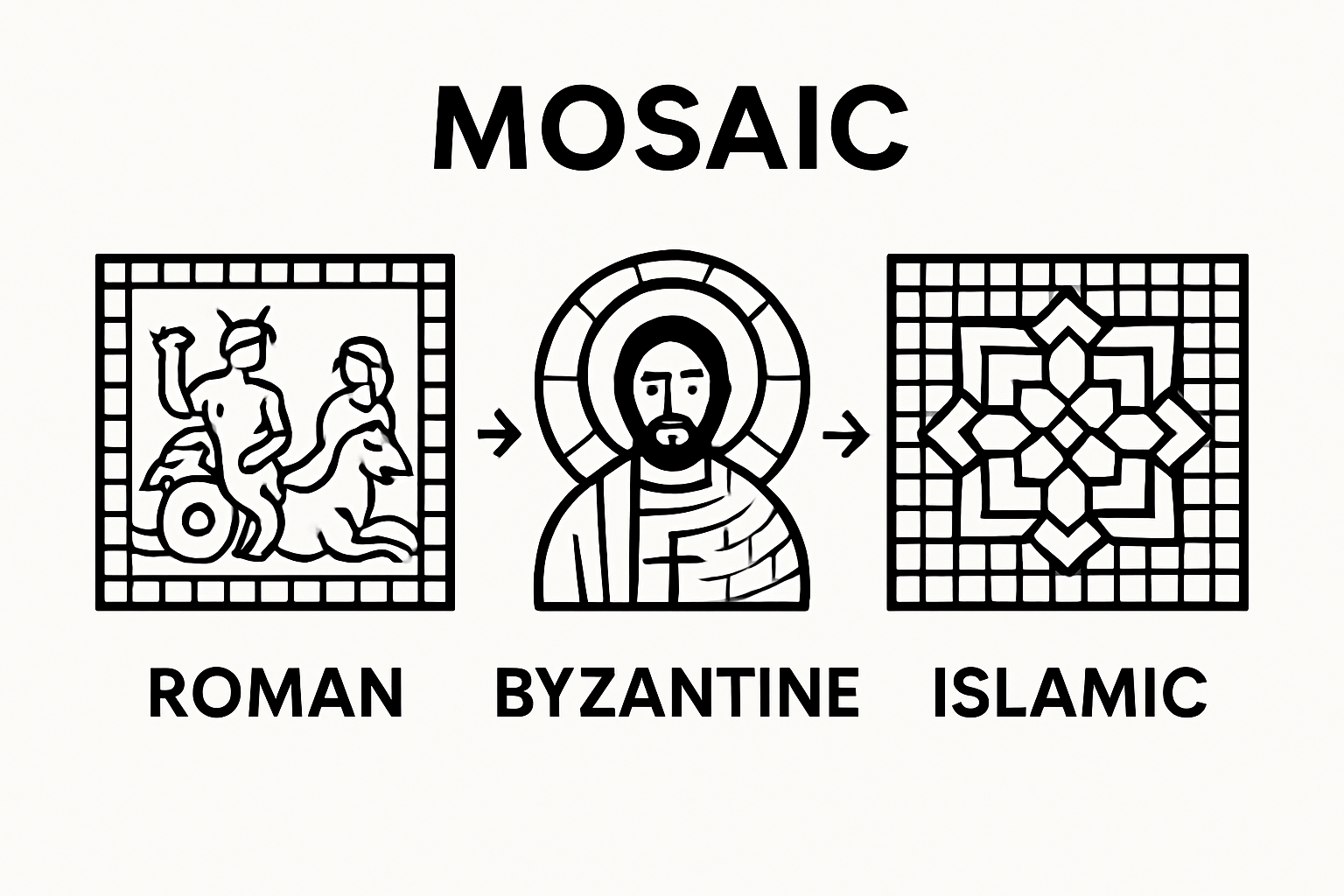
- Roman Empire: Narrative scenes depicting mythology and historical events
- Byzantine Culture: Religious iconography with spiritual symbolism
- Islamic Art: Complex geometric patterns representing cosmic harmony
- Indigenous African Traditions: Nature-inspired designs using local materials
Material and Symbolic Diversity
The choice of materials in mosaic art profoundly reflects cultural identities. Indigenous African communities, for instance, often incorporate locally sourced materials like ceramic fragments, stones, and natural pigments. These artistic choices communicate deep relationships with landscape and ancestral heritage.
According to research on South African tribal art trends, contemporary African mosaic artists are reimagining traditional techniques by blending indigenous design principles with modern artistic expressions.
Contemporary Global Dialogue
Modern mosaic art transcends traditional geographical boundaries, emerging as a powerful medium for cross-cultural communication. Artists worldwide now collaborate, share techniques, and create works that blend multiple cultural influences.
The global mosaic movement represents more than an artistic technique. It symbolizes human creativity’s ability to transform fragments into unified, meaningful compositions, reflecting our shared capacity for connection and understanding across diverse cultural landscapes.
The Role of Mosaic Art in Modern Interior Design
Modern interior design has embraced mosaic art as a transformative medium that transcends traditional decorative boundaries, offering sophisticated spatial storytelling through intricate visual compositions. These artistic installations provide designers and homeowners with powerful tools to create immersive, emotionally resonant environments.
Functional Aesthetic Strategies
Mosaic art serves multiple design functions beyond mere ornamentation. Spatial designers strategically deploy mosaic elements to manipulate perceived space, light interaction, and emotional atmosphere. By carefully selecting materials, colors, and patterns, designers can create focal points, establish visual rhythms, and communicate complex narrative experiences within interior environments.
Key design applications include:
- Accent walls that serve as dramatic visual centerpieces
- Floor installations creating dynamic spatial transitions
- Kitchen and bathroom decorative elements
- Architectural feature walls representing cultural narratives
Material and Emotional Complexity
Contemporary mosaic design goes beyond aesthetic appeal, exploring deeper emotional and cultural dimensions. According to research on South African tribal art trends, modern mosaic techniques integrate indigenous design principles with innovative spatial concepts, transforming interior spaces into meaningful cultural dialogues.
The selection of materials plays a crucial role in this process. Glass, ceramic, stone, and recycled materials offer unique textural qualities that interact dynamically with light, creating multisensory experiences that engage viewers beyond visual perception.
Technological and Artistic Convergence
Advanced digital design technologies have revolutionized mosaic art’s role in interior design. Contemporary artists and designers now use computer-aided design tools to create highly precise, complex patterns that were previously impossible to execute manually.
This technological integration allows for unprecedented customization, enabling designers to develop site-specific mosaic installations that respond directly to architectural contexts, personal narratives, and emotional requirements of individual spaces. The result is a profound reimagining of interior environments as living, breathing artistic canvases that reflect human creativity and cultural complexity.

Exploring the Appeal: Why Mosaic Art Matters Today
Mosaic art represents more than a visual medium. It embodies a profound method of human communication, transforming fragmented experiences into coherent, meaningful narratives that connect individuals across cultural and temporal boundaries.
Contemporary Cultural Significance
In an era of digital saturation and transient visual experiences, mosaic art offers a tactile and deeply intentional form of artistic expression. By meticulously assembling individual pieces, artists create complex visual stories that invite viewers to contemplate interconnectedness and the beauty of diverse fragments coming together.
Key contemporary relevance includes:
- Celebrating cultural diversity and heritage
- Promoting sustainable art practices through material recycling
- Providing therapeutic creative experiences
- Bridging generational artistic knowledge
Psychological and Social Dimensions
Mosaic art serves profound psychological functions beyond aesthetic appreciation. The process of creating mosaics mirrors human social experiences, demonstrating how individual elements can form powerful collective narratives. Each fragment represents a unique perspective, yet contributes to a larger, unified composition.
According to research on South African artistic creativity, contemporary mosaic practices offer transformative spaces for personal and communal storytelling, allowing artists to explore complex emotional landscapes.
Global Artistic Dialogue
Modern mosaic art transcends traditional boundaries, emerging as a global language of visual communication. Artists worldwide are reimagining this ancient technique, using innovative materials and digital technologies to create increasingly complex and meaningful works.
The global mosaic movement represents a powerful metaphor for human potential. It demonstrates how seemingly disparate elements can be integrated into beautiful, meaningful wholes, offering hope and inspiration in an increasingly fragmented world. By valuing each small piece and understanding its role in the larger composition, mosaic art provides a compelling model for mutual understanding and collective creativity.
Bring the Beauty of Mosaic Art Into Your Space with Art Online
Have you ever admired how mosaic art brings together small fragments to create a breathtaking whole? If you feel inspired by the article’s discussion of tesserae, vibrant techniques, and South Africa’s living mosaic traditions, now is your moment to see these wonders up close. Our artists use the same meticulous attention to detail and passion for heritage that echoes throughout the history and modern appeal of mosaic creation.

Discover authentic South African artworks crafted in the spirit of mosaic storytelling at Art Online. Browse through curated collections featuring both contemporary and traditional styles, each one a tribute to artistry and culture. Do not wait to transform your home or office into a space that celebrates unity and creative brilliance. Explore South Africa’s premier online art gallery today and connect with pieces that give new meaning to every fragment and colour.
Frequently Asked Questions
What materials are commonly used in mosaic art?
Mosaic art can be created using a variety of materials including ceramic, glass, stone, shells, mirrors, and even recycled objects. Artists select materials based on desired color, texture, and visual effects.
What techniques are used to create mosaic art?
Artists use several techniques in mosaic art, such as the direct method, where tesserae are placed directly onto the surface, and the indirect method, where designs are assembled on a temporary backing before being transferred to the final location.
How does mosaic art contribute to interior design?
Mosaic art adds aesthetic value and functional elements to interior design. It can create focal points, enhance spatial perception, and convey complex narratives within spaces such as accent walls, floors, and decorative elements in kitchens and bathrooms.
What is the historical significance of mosaic art?
Mosaic art has deep historical significance as a form of cultural communication. It has documented human experiences and beliefs throughout history, serving as decoration in public and religious buildings, making artistic expression accessible to wider populations.