
What is Minimalist Art? Understanding Its Essence and Impact

Minimalist art is everywhere now, shaping everything from galleries to living rooms. What most people miss is that this movement has gone far deeper than just making things look neat and tidy. Minimalism strips artwork down to absolute basics, sometimes using just a single shape or colour in a whole piece. The real surprise is that by removing almost everything, minimalist artists actually open up a whole new world of meaning for anyone willing to look closer.
Table of Contents
- Defining Minimalist Art: Key Characteristics And Elements
- The Historical Context Of Minimalist Art: Roots And Influences
- The Philosophy Behind Minimalist Art: Meaning And Interpretation
- Practical Applications Of Minimalist Art In Interior Design
- The Impact Of Minimalist Art On Contemporary Art Trends
Quick Summary
| Takeaway | Explanation |
|---|---|
| Minimalism focuses on essential forms. | The movement emphasizes geometric shapes, clean lines, and reduces complexity in art. |
| Artworks are autonomous objects. | Minimalist pieces exist without representing external concepts, inviting direct viewer engagement. |
| Simplicity enhances interior design. | Applying minimalist principles creates serene spaces through functional furnishings and limited colour palettes. |
| Emphasize experiential engagement with art. | Minimalist art encourages active interaction, making viewers participants in their aesthetic experience. |
| Industrial materials define contemporary minimalism. | Utilising materials like steel and concrete fosters a connection between art and modern design practices. |
Defining Minimalist Art: Key Characteristics and Elements
Minimalist art represents a radical departure from traditional artistic expression, stripping artwork down to its most fundamental visual elements. Developed in the 1960s, this artistic movement emerged as a direct response to the emotional complexity of abstract expressionism, presenting a stark, geometric approach to creative representation.
The Philosophy Behind Minimalism
At its core, minimalist art challenges viewers to engage with pure form, colour, and spatial relationships. Artists deliberately eliminate unnecessary decorative elements, focusing instead on essential geometric shapes, clean lines, and a deliberate reduction of artistic complexity. This philosophy stems from a belief that art should communicate through simplicity rather than elaborate ornamentation.
Key philosophical principles of minimalist art include:
- Rejection of emotional or representational content
- Emphasis on objective visual experience
- Exploration of space and material relationships
- Prioritization of geometric precision
Fundamental Visual Characteristics
Minimalist artworks typically demonstrate several defining visual traits. These include a restricted colour palette, typically featuring neutral or monochromatic tones, and the use of industrial or manufactured materials like steel, concrete, or standardized geometric forms. According to the Tate Modern, the movement seeks to create art that is “non-referential” – meaning the artwork exists purely as its own autonomous object, without attempting to represent something external.
The visual language of minimalism can be characterized by:
- Repetitive, modular structures
- Precise, mathematical compositions
- Absence of personal emotional expression
- Strategic use of negative space
By reducing art to its most fundamental components, minimalist artists invite viewers to experience pure visual form, challenging traditional notions of artistic representation and encouraging a more contemplative, analytical engagement with creative expression.
To clarify the main visual and philosophical features of minimalist art mentioned in the article, the table below organises these defining characteristics for quick reference.
| Characteristic | Description |
|---|---|
| Geometric Shapes & Clean Lines | Emphasis on pure, essential forms; structured geometric arrangements; deliberate reduction of complexity |
| Restricted Colour Palette | Use of neutral or monochrome tones to focus attention on form and material |
| Industrial or Manufactured Materials | Preference for materials like steel, concrete, and standardised elements |
| Objective Visual Experience | Artwork exists without representing external concepts; avoids emotional or symbolic meaning |
| Minimal Decorative Elements | All unnecessary ornamentation is removed; focus remains solely on essential aspects |
| Repetitive/Modular Structures | Use of repetition and modularity in compositions |
| Spatial & Material Relationships | Exploration of how objects, negative space and materials interact |
The Historical Context of Minimalist Art: Roots and Influences
Minimalist art emerged as a transformative movement during the tumultuous cultural landscape of the 1960s, representing a radical departure from traditional artistic expressions. This artistic revolution challenged established aesthetic conventions, stripping art down to its most fundamental visual components and reflecting broader societal shifts in perception and understanding.
Precursor Movements and Philosophical Foundations
The roots of minimalism can be traced to several influential artistic and philosophical movements that preceded it. European modernist movements like Constructivism and De Stijl played crucial roles in establishing the intellectual groundwork for minimalist principles. These earlier movements emphasized geometric abstraction, reduction of visual elements, and a belief in art as a pure, autonomous form of expression.
Key philosophical influences included:
- Russian Constructivist emphasis on geometric precision
- Dutch De Stijl movement’s commitment to pure abstraction
- Bauhaus school’s integration of art and industrial design
- Zen Buddhist concepts of simplicity and emptiness
Sociocultural and Artistic Context
Minimalist art emerged during a period of significant social transformation, reflecting the era’s changing technological and cultural landscapes. Artists were responding to the emotional intensity of Abstract Expressionism, seeking a more objective and rational approach to artistic creation.
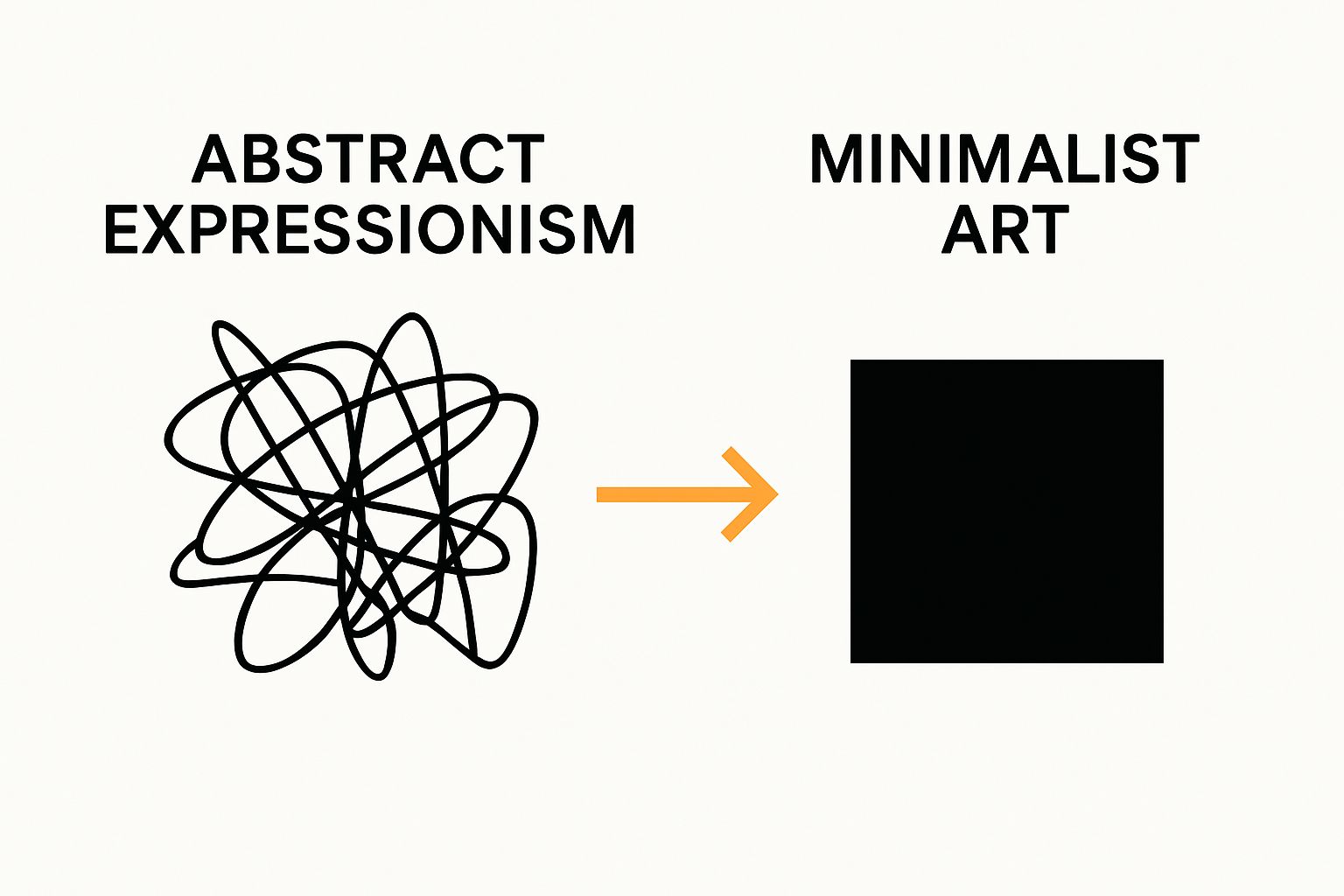 The movement paralleled broader cultural trends, including the rise of industrial design, technological innovation, and a growing interest in streamlined, functional aesthetics.
Significant contextual factors included:
- Post World War II economic reconstruction
- Increasing mechanization and mass production
- Growing global interconnectedness
- Shifting perspectives on individual expression
By rejecting ornamental complexity and embracing fundamental geometric forms, minimalist artists challenged viewers to reconsider their understanding of art, creating a new visual language that celebrated simplicity, precision, and the inherent beauty of pure form.
To deepen your understanding of how minimalism borrowed from earlier movements and philosophies, this table compares the foundational influences that shaped minimalist art as described in the article.
| Precursor Movement / Philosophy | Contribution to Minimalism |
|---|---|
| Constructivism (Russia) | Emphasis on geometric precision and abstraction |
| De Stijl (Netherlands) | Commitment to pure abstraction, focus on primary forms and colours |
| Bauhaus School (Germany) | Integration of art with industrial design and functionality |
| Zen Buddhism (Asia) | Value of simplicity and emptiness in both aesthetic and philosophy |
The Philosophy Behind Minimalist Art: Meaning and Interpretation
Minimalist art philosophy represents a profound reimagining of artistic expression, challenging traditional notions of aesthetic experience by emphasizing pure visual perception and phenomenological engagement. Unlike previous art movements that sought to communicate narrative or emotional content, minimalism invites viewers to experience art as an immediate, unmediated encounter with form, space, and material.
Conceptual Foundations of Minimalist Interpretation
Objective experience stands at the core of minimalist philosophical thinking. Artists deliberately create works that exist independently of external references, encouraging viewers to engage directly with the artwork’s physical presence. This approach rejects the idea that art must represent something beyond itself, instead celebrating the intrinsic qualities of form, material, and spatial relationships.
Key philosophical principles include:
- Rejection of symbolic or representational meaning
- Emphasis on direct perceptual experience
- Exploration of artwork as an autonomous object
- Privileging viewer’s subjective interaction
Experiential Phenomenology in Minimalist Art
Minimalist art transforms the traditional relationship between artwork and viewer by making spatial perception and physical interaction central to aesthetic experience. The artwork becomes less about what is depicted and more about how it is experienced in real time and space. Each piece invites viewers to become active participants, moving around sculptures, perceiving shifts in light, and understanding art through bodily awareness.
Critical aspects of this experiential approach involve:
- Creating interactive spatial relationships
- Challenging traditional passive art viewing
- Highlighting viewer’s perceptual processes
- Exploring the phenomenology of perception
By stripping away narrative complexity and ornamental elements, minimalist artists create a radical framework for understanding art as a direct, unmediated encounter with pure visual and spatial experience. The philosophy demands that viewers engage intellectually and physically, transforming art from a passive visual consumption to an active, embodied exploration.
Practical Applications of Minimalist Art in Interior Design
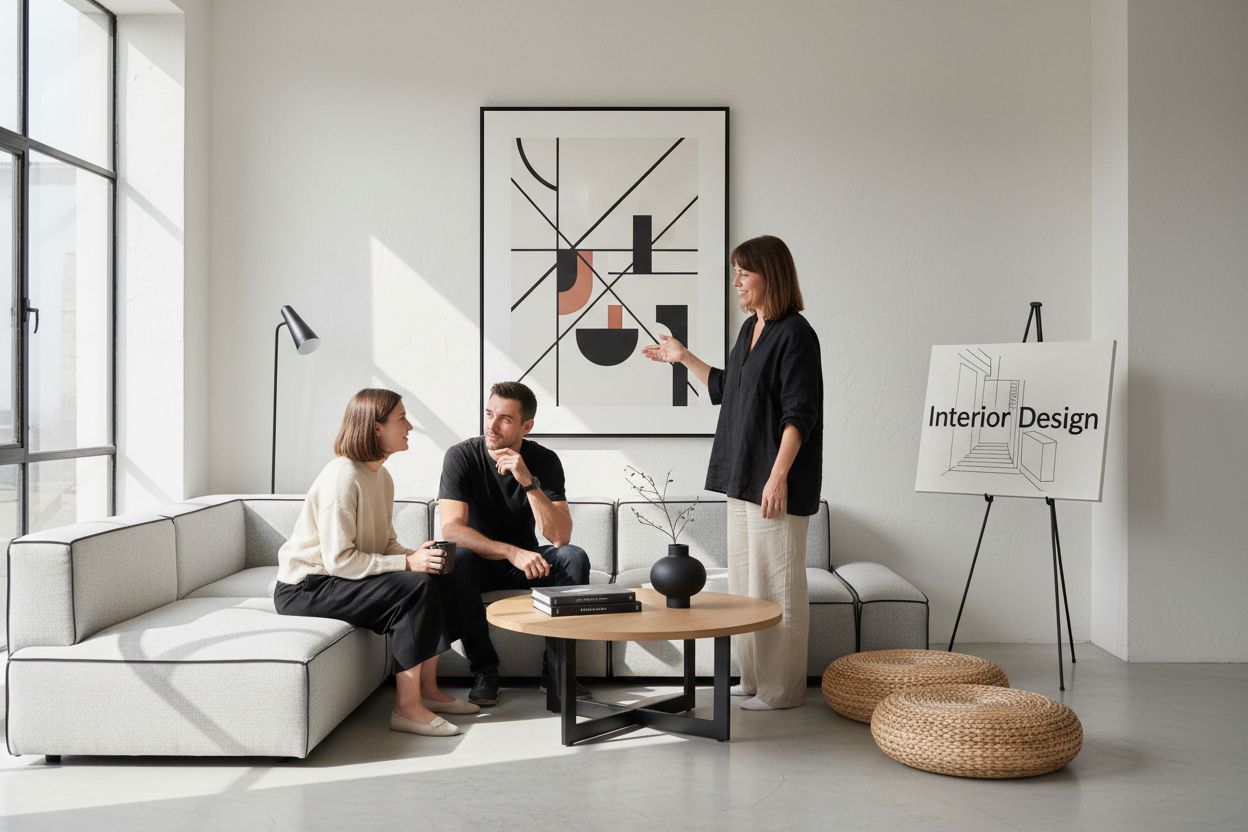
Minimalist art principles have dramatically transformed contemporary interior design, offering a sophisticated approach to creating serene, purposeful living spaces. By embracing simplicity, functionality, and carefully curated aesthetic elements, minimalist art provides designers and homeowners with powerful tools for crafting environments that are both visually striking and emotionally calming.
Spatial Composition and Design Philosophy
Minimalist art’s influence on interior design extends far beyond mere decoration. Spatial arrangement becomes a deliberate art form, where each element is strategically positioned to create balance, harmony, and visual breathing room. Designers leverage minimalist principles to strip away unnecessary clutter, focusing on the essential qualities of form, texture, and negative space.
Key design strategies include:
- Prioritizing functional furniture with clean lines
- Maintaining open, unobstructed spatial flow
- Selecting a restrained color palette
- Emphasizing quality over quantity
Material Selection and Aesthetic Approach
In minimalist interior design, material selection becomes a critical artistic statement. Surfaces, textures, and colors are chosen not just for their visual appeal, but for their ability to communicate simplicity and intentionality. Natural materials like wood, stone, and metal are often employed to create subtle, sophisticated environments that connect art with interior design.
Critical considerations in material selection involve:
- Using high-quality, authentic materials
- Creating visual harmony through subtle texture variations
- Maintaining a consistent design language
- Allowing individual materials to express their inherent beauty
By translating minimalist art’s core principles into interior design, creators craft spaces that transcend traditional decorative approaches. These environments become meditative, offering inhabitants a sense of clarity, purpose, and aesthetic sophistication that reflects the profound simplicity at the heart of minimalist philosophy.
The Impact of Minimalist Art on Contemporary Art Trends
Minimalist art’s profound influence extends far beyond its original historical context, fundamentally reshaping contemporary artistic practices across multiple disciplines. By challenging traditional notions of representation and artistic expression, minimalism has become a crucial philosophical and aesthetic framework that continues to inspire artists, designers, and creative practitioners worldwide.
Interdisciplinary Artistic Transformation
Contemporary art practices have been deeply transformed by minimalist principles, with artists across various mediums adopting its core tenets of simplification, essential form, and conceptual clarity. This approach has transcended traditional artistic boundaries, influencing everything from visual arts and sculpture to digital media, performance art, and architectural design.
Key areas of artistic transformation include:
- Reduction of complex visual elements
- Emphasis on conceptual over representational art
- Integration of industrial materials and techniques
- Exploration of spatial relationships
Global Artistic Dialogue and Philosophical Shift
Minimalism introduced a radical reimagining of art’s fundamental purpose, challenging artists to reconsider the relationship between object, space, and viewer. Contemporary art trends continue to reflect this philosophical shift, with artists exploring how minimal interventions can create profound aesthetic and intellectual experiences.
Critical contemporary artistic developments include:
- Expanding boundaries of artistic representation
- Challenging traditional art consumption methods
- Promoting viewer interaction and phenomenological experience
- Integrating technological and digital perspectives
By stripping art to its essential components, minimalism has created a lasting framework for understanding creative expression as a dialogue between form, perception, and conceptual understanding. Its legacy continues to inspire artists to explore the powerful simplicity that lies at the heart of artistic innovation.
Experience Authentic Minimalist Art in Your South African Space
If this article made you realise how minimalist art can transform a room or how pure artistic form invites calm and clarity into your daily life, you might still be wondering where to find genuine pieces that fit these principles. Many South Africans struggle to find original, carefully curated minimalist pieces that reflect essential beauty and elevate their interiors, as discussed in the sections on material selection and spatial arrangement. When you want more than mass-produced prints, but seek the real touch of skilled artists who understand simplicity, Art Online can make that vision a reality.

Browse Art Online to discover the finest selection of authentic South African art, featuring work by the country’s most celebrated minimalist artists. Whether you are an interior designer in need of impactful simplicity or a homeowner ready to bring a fresh sense of serenity to your living space, our curated gallery offers artworks with the precision and tranquility you have learned about. The chance to own original minimalist art is right here. Visit Art Online now and bring purposeful art into your home before exclusive new works move into private collections.
Frequently Asked Questions
What are the key characteristics of minimalist art?
Minimalist art is defined by its use of essential geometric shapes, a restricted colour palette, and a focus on spatial relationships. It emphasizes simplicity and eliminates unnecessary decorative elements to create a direct visual experience.
How did minimalist art emerge as a movement?
Minimalist art emerged in the 1960s as a response to the emotional complexity of abstract expressionism. It reflects broader cultural shifts towards industrial design, technological innovation, and a desire for rational artistic expression.
What is the philosophy behind minimalist art?
The philosophy of minimalist art focuses on objective visual experiences, rejecting emotional or representational content. It encourages viewers to engage with the artwork’s inherent qualities rather than looking for symbolic meaning.
How can minimalist art principles be applied in interior design?
Minimalist art principles can be applied in interior design by prioritizing functional furniture with clean lines, using a restrained colour palette, and emphasizing quality materials. The focus is on creating serene, clutter-free spaces that promote a sense of clarity and purpose.
Recommended
- Famous South African Artists: 2025 Guide for Collectors & Decorators – Art-Online
- What is Modern Art? Understanding Its Essence and Impact – Art-Online
- Understanding the Meaning of Expressionism in Art – Art-Online
- Painting Prices Unveiled: Explore 5 Types of Captivating Paintings and Their Exceptional Values – Art-Online