
Understanding What is Art Licensing for Collectors
Art licensing sits at the centre of creative business in South Africa and gives artists a way to earn cash from their work without losing ownership. You might expect this just means a once-off payment and a handshake but it is way more involved. Some licensing deals create lasting income and worldwide exposure for artists, not just a single cheque. Nobody tells you upfront that art licensing is less about quick money and more about building long-term financial freedom with every brushstroke.
Table of Contents
- Defining Art Licensing: What It Is And Why It Exists
- The Importance Of Art Licensing In The Creative Marketplace
- How Art Licensing Works: Key Concepts And Mechanisms
- Types Of Art Licensing: Understanding The Different Forms
- Navigating Art Licensing: Practical Considerations For Collectors
Quick Summary
| Takeaway | Explanation |
|---|---|
| Art licensing monetizes creative works | Licensing allows artists to earn income while retaining ownership of their art. |
| Agreements protect intellectual property | Licensing contracts safeguard artists’ rights and define usage terms for their work. |
| Multiple revenue streams for artists | Licensing provides consistent income beyond selling original art, enhancing financial stability. |
| Know your licensing agreements | Collectors should carefully verify terms and usage rights to avoid disputes. |
| Understand valuation and compensation | Evaluating financial aspects ensures informed decisions in art licensing agreements. |
Defining Art Licensing: What It Is and Why It Exists
Art licensing represents a sophisticated legal mechanism that allows artists to monetize their creative works while maintaining strategic control over their intellectual property. At its core, art licensing enables creators to grant specific permissions for their artwork’s reproduction, distribution, or commercial use while retaining fundamental ownership rights.
The Fundamental Mechanics of Art Licensing
Art licensing operates as a contractual agreement between the original artist and interested parties who wish to utilize the artwork in various contexts. According to the Dramatic, Artistic and Literary Rights Organisation, these agreements specify precise terms under which an artwork can be used, including duration, geographical boundaries, and permitted applications.
Key Components of Art Licensing Include:
- Defining the specific usage rights
- Establishing clear financial compensation terms
- Outlining duration and scope of the license
- Protecting the artist’s original intellectual property
Economic and Creative Advantages
For artists, licensing provides a critical revenue stream beyond traditional artwork sales. It transforms a single creative work into a potentially recurring income source. Collectors and businesses benefit by gaining authorized access to exceptional artworks for various commercial and personal applications such as merchandise, home decor, digital platforms, and promotional materials.
The process allows artists to extend their creative reach while maintaining control. Licensing agreements can range from limited, short-term permissions to comprehensive, long-term arrangements that generate sustained income and broader exposure for the artist’s portfolio.
Read more about the nuanced world of art valuation to understand how licensing intersects with broader art market dynamics. By establishing clear contractual frameworks, art licensing creates a structured environment where creativity and commercial opportunity can coexist harmoniously.
The Importance of Art Licensing in the Creative Marketplace
Art licensing emerges as a critical economic mechanism that transforms creative expression into sustainable financial opportunities for artists, collectors, and businesses. According to the Department of Trade, Industry and Competition, protecting intellectual property in the creative sector stimulates economic growth and generates innovative economic outputs.
Economic Empowerment Through Creative Rights
The art licensing ecosystem provides multiple financial advantages for various stakeholders. Artists can generate recurring revenue streams by strategically licensing their original works across different platforms and industries. This approach allows creators to maximize the potential of their artistic portfolios without surrendering complete ownership or artistic integrity.
Key Economic Benefits of Art Licensing Include:
- Creating alternative income sources beyond direct artwork sales
- Expanding artistic visibility and market reach
- Enabling broader commercial applications of creative works
- Protecting intellectual property rights
Strategic Value for Different Stakeholders
For businesses and collectors, art licensing offers unique opportunities to incorporate distinctive creative works into various commercial and personal contexts. Companies can access exceptional artistic content for product design, marketing materials, and brand development, while collectors can explore innovative ways to engage with and monetize their art collections.
Explore why original art investments matter and understand how licensing contributes to the broader art market ecosystem. By establishing structured legal frameworks, art licensing bridges the gap between creative expression and commercial potential, creating a dynamic marketplace that respects artistic innovation and economic opportunity.
How Art Licensing Works: Key Concepts and Mechanisms
Art licensing represents a sophisticated legal framework that governs the authorized use of creative works, enabling artists to strategically manage their intellectual property. According to copyright experts, the process involves complex negotiations that protect both the artist’s creative rights and the licensee’s commercial interests.
Foundational Licensing Structures
Art licensing agreements are intricate legal documents that define precise parameters for artwork usage. These contracts establish comprehensive guidelines about how, where, and for how long a specific artwork can be reproduced or utilized. The mechanisms typically involve defining exclusive or non-exclusive usage rights, specifying geographic boundaries, and determining financial compensation structures.
Essential Components of Licensing Agreements Include:
- Detailed description of permitted artwork usage
- Financial terms and royalty structures
- Duration of licensing permission
- Geographical usage restrictions
- Reproduction and modification limitations
Royalty and Compensation Models
Licensing agreements employ various compensation models tailored to different artistic and commercial contexts.
Royalty structures can be designed as:
- Flat fee arrangements
- Percentage-based royalties
- Tiered payment systems based on usage volume
- Hybrid models combining upfront payments and ongoing royalties
Discover more about art investment strategies to understand how licensing contributes to an artwork’s overall economic potential. By establishing clear, mutually beneficial frameworks, art licensing transforms creative works into dynamic, monetizable assets that support both artistic innovation and commercial exploration.
Types of Art Licensing: Understanding the Different Forms
Art licensing encompasses diverse strategies for protecting and monetizing creative works, offering artists multiple pathways to leverage their intellectual property. According to government intellectual property guidelines, different licensing forms provide unique protections and commercial opportunities.
Exclusive versus Non-Exclusive Licensing
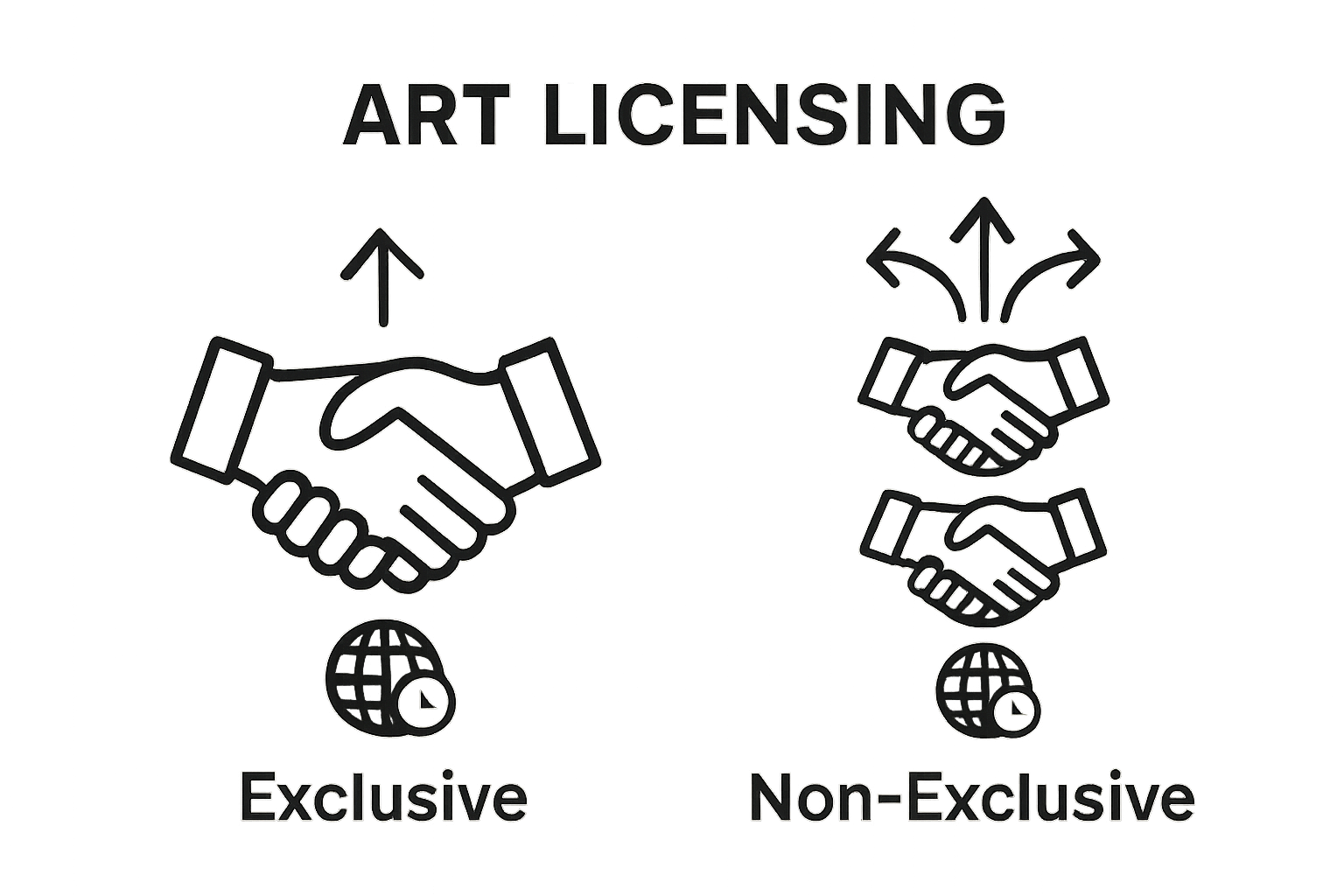
Exclusive licensing represents a specialized contractual arrangement where an artist grants a single entity comprehensive rights to use their artwork across specific contexts. In this model, the original creator cannot license the same work to other parties during the agreement’s duration. Non-exclusive licensing, conversely, allows multiple entities to obtain usage rights simultaneously, providing greater flexibility and potential revenue streams.
Key Characteristics of Licensing Types:
- Exclusive licenses limit usage to one specific entity
- Non-exclusive licenses permit multiple simultaneous users
- Duration and geographic scope vary between agreements
- Compensation structures differ based on licensing type
Below is a comparison table showing the key differences between exclusive and non-exclusive art licensing models, helping collectors and artists understand their distinct features at a glance.
| Licensing Type | Number of Licensees | Artist’s Ability to Re-license | Revenue Opportunities | Typical Use Cases |
|---|---|---|---|---|
| Exclusive | One | Cannot re-license same work | Potentially higher upfront | Major brand collaborations, limited-edition projects |
| Non-Exclusive | Multiple | Can license to others | More consistent, ongoing | Mass merchandise, multiple distributors |
Specific Art Licensing Categories
Art licensing manifests through several specialized categories, each tailored to unique creative and commercial requirements. Primary licensing forms include:
- Reproduction licensing for print materials
- Digital platform usage rights
- Merchandise and product design licensing
- Performance and public display permissions
- Commercial and advertising application licenses
Explore art investment opportunities to understand how different licensing models can transform artistic creations into dynamic economic assets. By comprehending these nuanced licensing approaches, artists and collectors can strategically navigate the complex landscape of intellectual property rights and creative monetization.
The following table summarises the main categories of art licensing mentioned in the article, giving readers an organised overview of the different approaches available to artists and collectors.
| Licensing Category | Description | Common Applications |
|---|---|---|
| Reproduction Licensing | Permission to create physical copies of artwork | Prints, posters, book covers |
| Digital Platform Usage | Rights to display or use art in digital formats | Website banners, digital downloads |
| Merchandise/Product Design | Use of artwork on commercial products | Apparel, home décor, stationery |
| Performance/Public Display | Rights for public exhibition or live presentation | Gallery exhibitions, stage backdrops |
| Commercial/Advertising Application | Use of artwork in advertising and promotional material | Marketing campaigns, branding materials |
Navigating Art Licensing: Practical Considerations for Collectors
Art licensing requires nuanced understanding and strategic approach for collectors seeking to invest in and utilize creative works. According to copyright guidance, successful navigation of licensing mechanisms demands comprehensive knowledge of legal and financial considerations.
Due Diligence and Legal Verification
Collectors must conduct thorough investigations before entering any licensing agreement. This process involves carefully examining the artwork’s provenance, verifying the artist’s legal right to license the work, and understanding the complete scope of potential usage permissions. Comprehensive documentation serves as a critical safeguard against potential future disputes.
Essential Verification Steps Include:
- Confirming the artist’s copyright ownership
- Reviewing complete licensing agreement terms
- Understanding geographical and temporal restrictions
- Assessing potential future value of licensed artwork
- Evaluating reproducibility limitations
Financial and Valuation Considerations
Licensing agreements represent complex financial instruments that require sophisticated evaluation. Collectors should consider multiple economic factors, including potential return on investment, market demand for the specific artwork, and long-term appreciation potential. Pricing models can vary significantly, ranging from flat fee structures to percentage-based royalty arrangements.
Key Financial Aspects to Evaluate:
- Initial licensing costs
- Potential ongoing royalty structures
- Market value of the original and licensed artwork
- Projected commercial applications
- Potential revenue generation capabilities
Discover insights about notable South African artists to understand how individual artistic reputation influences licensing value. By approaching art licensing with meticulous research and strategic thinking, collectors can transform creative works into valuable, dynamic assets that offer both aesthetic pleasure and potential financial opportunity.

Unlock True Value from Art Licensing with Art Online
Are you a collector who wants clarity around owning the rights to your favourite South African masterpieces, but find the practical details of art licensing overwhelming? The article highlighted challenges such as understanding legal agreements, protecting your investment, and ensuring fair compensation for both artists and collectors. It’s common to feel unsure when navigating copyright, agreements and valuation in such a complex field.

Step confidently into the world of art licensing with Art Online, South Africa’s largest online art gallery. We connect you with original artworks from the country’s most renowned artists, providing transparent guidance on copyright and legal frameworks. Discover how to invest securely and maximize the value of your collection with our guide to why you should buy original art in South Africa and learn more about famous South African artists who are shaping the investment art market. Visit Art Online today to secure your art’s future and let your collection work for you now.
Frequently Asked Questions
What is art licensing?
Art licensing is a legal agreement that allows artists to grant specific permissions for the reproduction, distribution, or commercial use of their artwork while retaining ownership rights.
How does art licensing benefit artists?
Art licensing provides artists with a revenue stream beyond just selling their artwork, enabling them to earn recurring income from licensing their works across different platforms and industries.
What should collectors look for in an art licensing agreement?
Collectors should verify the artist’s copyright ownership, review the terms of the licensing agreement, understand any geographical or temporal restrictions, and consider any potential future value of the licensed artwork.
What types of art licensing exist?
Art licensing can be classified into various forms, including exclusive and non-exclusive licenses, as well as specific categories such as reproduction licensing, digital platform usage rights, and merchandise licensing.
Recommended
- Painting Prices Unveiled: Explore 5 Types of Captivating Paintings and Their Exceptional Values – Art-Online
- Why Buy Original Art in South Africa: Key 2025 Insights – Art-Online
- Famous South African Artists: 2025 Guide for Collectors & Decorators – Art-Online
- Why Buy Original Art in South Africa: Key 2025 Insights – Art-Online