
Understanding Print vs Original Painting: A Deep Dive
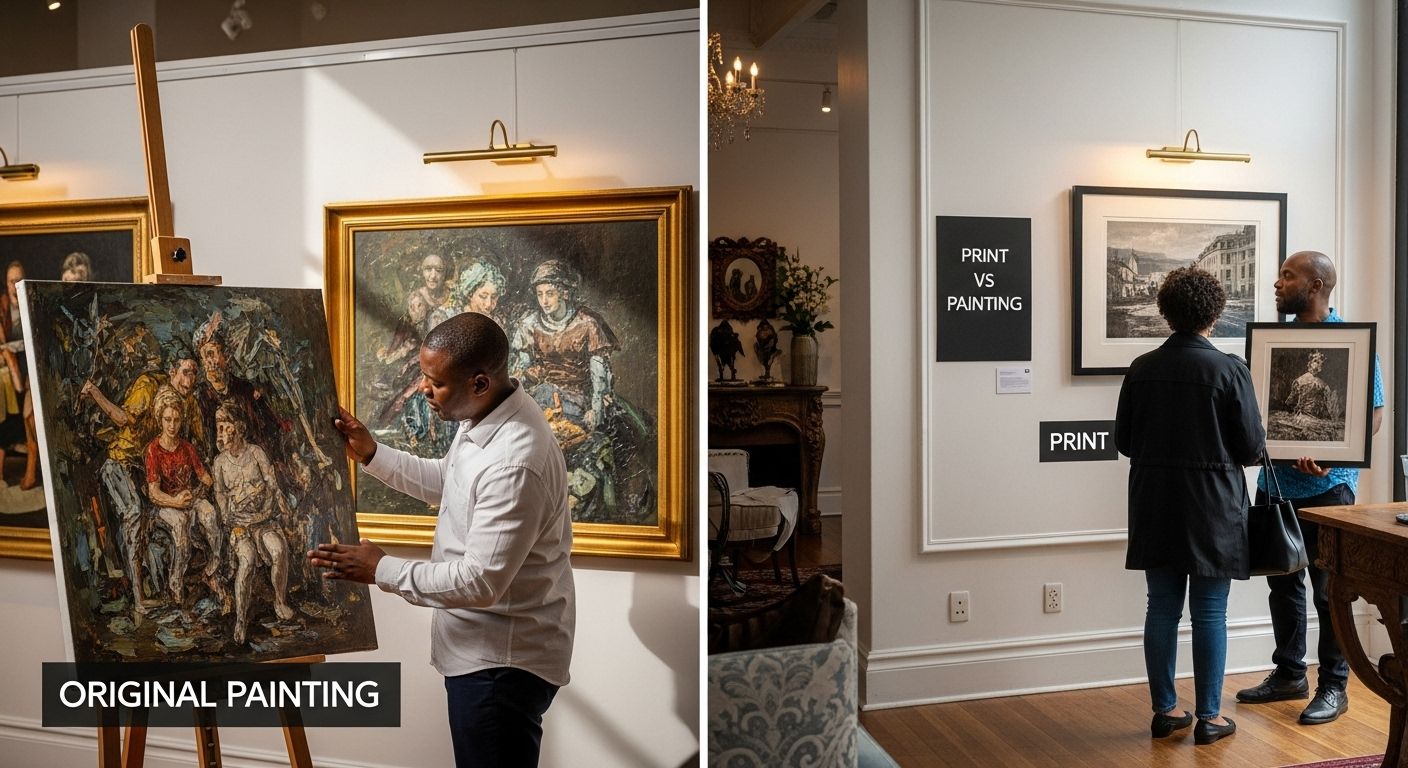
Art buyers in South Africa often wonder if they’re getting true value when picking between a print or an original painting.
Turns out, the price difference is not small. Original paintings can fetch prices up to ten times higher than prints, purely because of their rarity and authenticity. Most think prints are just affordable knockoffs, easy to dismiss. Reality is, some prints come from elaborate, skilled techniques that make their own mark in art history. You might be surprised how much more depth lies behind your choice than just price alone.
Table of Contents
- Defining Print And Original Painting: Key Differences
- The Value Of Original Art: Why It Matters To Collectors
- Prints: Techniques And Their Implications In Art
- The Role Of Authenticity In Art Collection
- How To Choose Between Prints And Original Art For Your Space
Quick Summary
| Takeaway | Explanation |
|---|---|
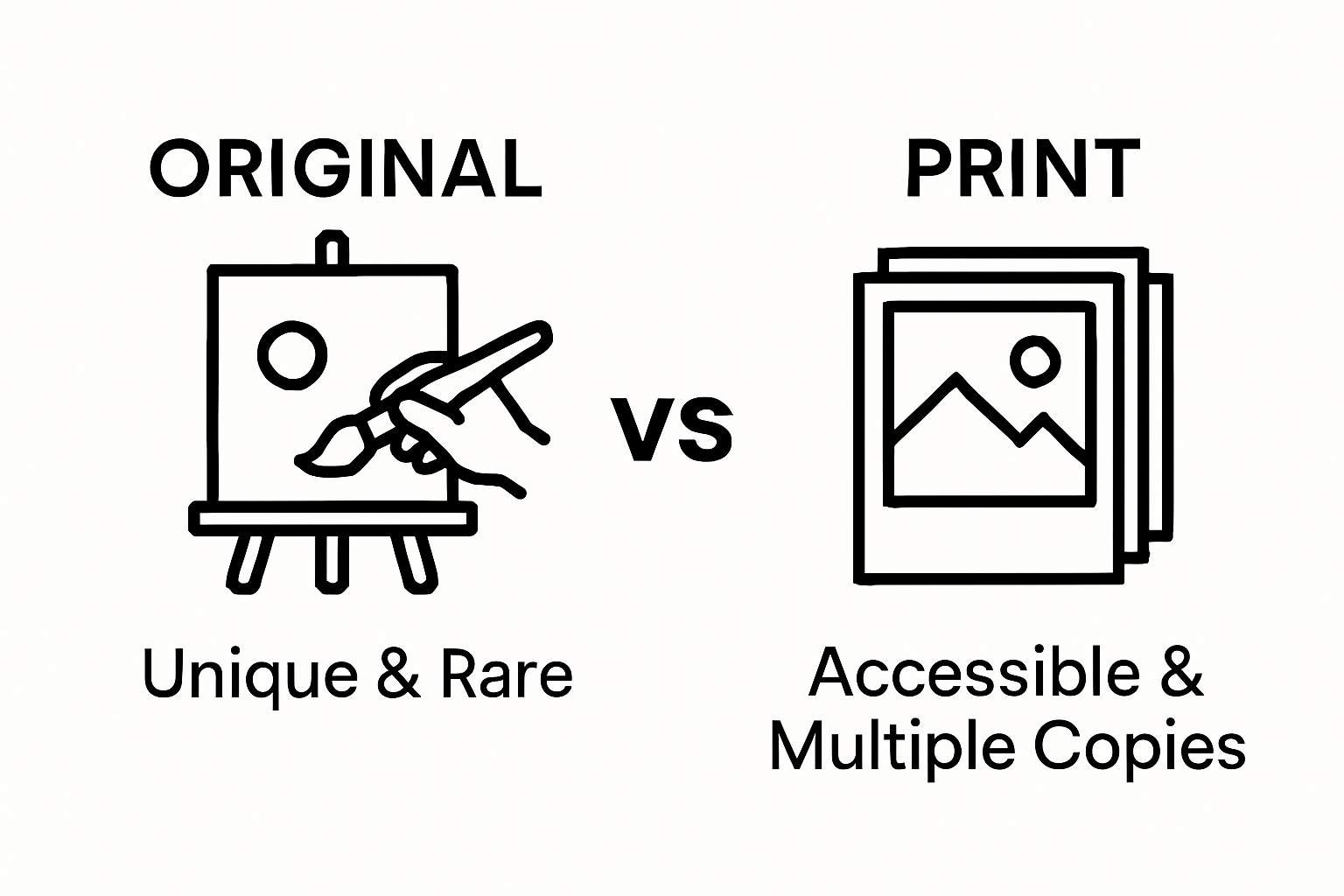
| Original art is unique and one-of-a-kind | Each original artwork reflects the artist’s personal touch and distinct creative vision, making it singular. |
| Prints are reproducible and more accessible | Unlike original paintings, prints can be made in multiple copies, allowing broader access for art lovers. |
| Invest in original art for emotional value | Original pieces convey deeper emotional connections and personal stories of the artist, enriching the collector’s experience. |
| Consider provenance for authenticity | Establishing an artwork’s history is essential to verify its authenticity and influence its market value. |
| Budget impacts selection between prints and originals | Choose based on your financial capacity and desired aesthetic impact; originals require larger investments, while prints are more affordable. |
Defining Print and Original Painting: Key Differences
Art collectors and enthusiasts often grapple with understanding the nuanced distinctions between prints and original paintings. While both can represent artistic expression, they fundamentally differ in creation, value, and authenticity.
What Defines an Original Painting
An original painting emerges directly from an artist’s creative process, involving unique physical manipulation of paint onto a surface like canvas or wood. Each brushstroke represents the artist’s immediate emotional and technical interpretation, making every original artwork inherently singular. Explore the unique value of original artworks reveals that these pieces carry intrinsic worth beyond mere visual representation.
Key characteristics of original paintings include:
- Unique creation by the artist’s hand
- Direct application of paint materials
- Individual artistic expression and technique
- Potential for subtle variations and imperfections
Understanding Prints as Artistic Reproductions
Prints, by contrast, are multiple reproductions of an original artwork created through mechanical or digital processes. According to the Smithsonian American Art Museum, prints can be original artworks themselves when created through techniques like woodcuts, lithographs, or etchings. However, photomechanical reproductions are not considered original artworks.
Print characteristics typically include:
- Mechanical or digital reproduction method
- Multiple identical or near-identical copies
- Typically lower monetary value compared to originals
- Broader accessibility for art enthusiasts
Understanding these differences helps art collectors make informed decisions about purchasing and appreciating artworks, recognizing the unique value each medium represents in the broader artistic landscape.
To help you easily compare the defining features of original paintings and prints, the following table summarises their key characteristics and distinctions as explained in the article.
| Feature | Original Painting | |
|---|---|---|
| Creation Method | Directly crafted by artist’s hand | Mechanical or digital reproduction |
| Uniqueness | One-of-a-kind, singular piece | Multiple identical or near-identical copies |
| Artistic Expression | Individual artistic technique and personal touch | Interprets the original but lacks artist’s direct hand |
| Value | Generally higher monetary and emotional value | Usually more affordable and accessible |
| Accessibility | Limited, due to rarity | Wide, allows broader audience access |
| Imperfections & Variations | Contains subtle differentiations and imperfections | Consistently uniform across the edition |
| Investment Potential | Greater long-term value appreciation | Less potential for significant financial growth |
The Value of Original Art: Why It Matters to Collectors
Art collecting transcends mere decoration. Original artworks represent unique investments that connect collectors with cultural narratives, artistic expressions, and potential financial appreciation. Learn about the strategic advantages of collecting art provides deeper insights into this fascinating domain.
Emotional and Cultural Significance
Original artworks carry profound emotional resonance that reproductions cannot replicate. Each piece embodies the artist’s creative journey, personal experiences, and technical mastery. Collectors are not simply purchasing an object but acquiring a fragment of human expression that communicates complex narratives and aesthetic perspectives.
Key emotional aspects of original art include:
- Direct connection to the artist’s vision
- Unique storytelling through visual language
- Representation of cultural and historical moments
- Personal emotional engagement
Financial and Investment Potential
Beyond emotional value, original artworks represent sophisticated financial assets. According to the Smithsonian Associates Art Collectors Program, strategic art collection involves understanding market dynamics, artist reputation, and provenance.
Investment considerations for original art include:
- Potential long-term value appreciation
- Limited edition and scarcity factors
- Artist’s reputation and career trajectory
- Historical and cultural significance
Collectors approach original art as a multifaceted investment that combines aesthetic pleasure with potential financial growth, making each acquisition a nuanced decision bridging passion and pragmatism.
Prints: Techniques and Their Implications in Art
Printmaking represents a complex and nuanced artistic discipline where creativity intersects with technical precision. Explore the fascinating world of artistic techniques provides context for understanding these intricate processes.
Traditional Printmaking Methods
Printmaking encompasses several sophisticated techniques that transform artistic vision into reproducible art forms. According to the Metropolitan Museum of Art, these methods require specialized skills and understanding of material interactions.
Key traditional printmaking techniques include:
- Woodcut: Carving images into wooden surfaces
- Etching: Using acid to create detailed designs on metal plates
- Engraving: Physically cutting designs into metal surfaces
- Lithography: Drawing on specially prepared stone or metal plates
Contemporary Print Production Technologies
Modern printmaking has expanded beyond traditional methods, incorporating digital technologies and innovative approaches. Contemporary print techniques blend artistic expression with technological precision, enabling artists to explore new creative landscapes.
Contemporary print production methods feature:
- Digital printing technologies
- Screen printing techniques
- Experimental hybrid approaches
- Advanced reproduction methods using high-resolution equipment
Each printmaking technique offers unique possibilities for artistic expression, transforming how artists communicate visual narratives and engage audiences through reproducible art forms. The complexity of these methods demonstrates that prints are far more than simple copies—they are intricate artistic statements with their own aesthetic and cultural significance.
The Role of Authenticity in Art Collection
Authenticity forms the cornerstone of art collecting, transforming an artwork from a simple visual object into a profound cultural artifact. Discover the intricacies of art authentication reveals the complex mechanisms behind verifying artistic legitimacy.
Defining Authenticity in Art
Authenticity encompasses more than mere originality. According to the College Art Association, it represents a comprehensive evaluation of an artwork’s provenance, creator’s intent, and historical context. Authentic artworks carry intrinsic value beyond their physical appearance, reflecting the artist’s unique creative journey.
Key components of art authenticity include:
- Verifiable artist attribution
- Documented creation history
- Preservation of original artistic intent
- Minimal restoration or alteration
Provenance and Its Critical Importance
Provenance serves as the documentary DNA of an artwork, tracing its ownership and historical trajectory. Research demonstrates that well-documented ownership histories significantly impact an artwork’s perceived value and legitimacy. Collectors and institutions meticulously investigate an artwork’s journey, examining historical records, expert testimonials, and physical evidence to establish its authentic narrative.
Critical aspects of provenance verification involve:
- Comprehensive ownership documentation
- Expert authentication processes
- Forensic material analysis
- Comparative research with known works
Authenticity transcends mere technical verification. It represents a profound connection between the artwork, its creator, and the broader cultural narrative, making each validated piece a testament to human creativity and historical significance.
For readers interested in the nuanced process of verifying authenticity in art, here’s an overview of the major components and steps highlighted in the article.
| Component | Description |
|---|---|
| Artist Attribution | Verification that the artwork is genuinely created by the claimed artist |
| Creation History | Documented timeline of when and how the art was made |
| Artistic Intent | Assessment of whether the work expresses the artist’s original vision |
| Restoration/Alteration | Check for minimal restoration to preserve original state |
| Provenance Documentation | Verified ownership history across prior collectors and institutions |
| Expert Authentication | Evaluation by recognised art specialists and historians |
| Forensic Analysis | Scientific analysis of materials and techniques to confirm period and authorship |
| Comparative Research | Comparison to known works to establish consistency in style and technique |
How to Choose Between Prints and Original Art for Your Space
Selecting artwork requires nuanced understanding of aesthetic goals, budget constraints, and spatial considerations. Explore professional art selection strategies provides insights into making informed artistic choices.
Budget and Investment Considerations
According to the Smithsonian Associates Art Collectors Program, art selection involves balancing financial practicality with artistic appreciation. Original artworks typically represent higher financial investments, while fine art prints offer more accessible options for collectors seeking quality aesthetic experiences.
Budget selection factors include:
- Total available investment funds
- Long-term appreciation potential
- Personal financial objectives
- Artwork rarity and artist reputation
Aesthetic and Spatial Requirements
Artwork selection transcends monetary value, encompassing visual harmony and emotional resonance within a specific environment. Prints provide versatility and reproducibility, enabling collectors to experiment with design concepts without significant financial risk. Original paintings offer unique textural qualities and irreplaceable artistic signatures that transform spatial experiences.
Key spatial selection criteria involve:
- Room dimensions and wall characteristics
- Existing interior design palette
- Lighting conditions
- Desired emotional atmosphere
Ultimately, choosing between prints and original art represents a personal journey of aesthetic exploration, balancing individual taste, financial considerations, and the transformative power of visual expression.

Bring Authentic South African Art Into Your Space Today
Are you unsure whether to invest in a print or an original painting? Many collectors in South Africa face this challenge, especially when balancing the emotional pull of originality with budget and space concerns. As highlighted in the article, authenticity and the artist’s unique touch matter deeply, yet prints can offer accessibility and flexibility.

Why wait to experience the power of true South African artistry? Whether you long for the distinct brushstrokes of a renowned artist or the accessible beauty of a high-quality print, Art Online is your trusted partner. Explore our curated selection of original paintings and discover the perfect print or masterpiece for your home. Now is the ideal moment to turn inspiration from knowledge into action—visit us and find the art that transforms your environment.
Frequently Asked Questions
What is the main difference between an original painting and a print?
An original painting is a unique artwork created directly by the artist, featuring individual brushstrokes and expressions, while a print is a mechanical or digital reproduction of an original art piece, typically produced in multiple copies.
Why are original paintings generally more valuable than prints?
Original paintings are considered more valuable due to their uniqueness, the direct involvement of the artist, and their potential for long-term appreciation. They embody the artist’s vision and emotional expression, which cannot be replicated in a print.
Can prints be considered original artworks?
Yes, prints can be considered original artworks if they are created using traditional printmaking techniques like etching, woodcut, or lithography. However, photomechanical reproductions of existing artworks are not classified as original artworks.
What factors should I consider when choosing between a print and an original painting?
When choosing between a print and an original painting, consider your budget, aesthetic preferences, and the emotional impact you wish to achieve in your space. Original paintings often offer unique textural qualities, while prints provide more flexibility and accessibility.
Recommended
- Painting Prices Unveiled: Explore 5 Types of Captivating Paintings and Their Exceptional Values – Art-Online
- Why Buy Original Art in South Africa: Key 2025 Insights – Art-Online
- Art Material Must-Haves: Transforming Cape Town’s Artists – Art-Online
- Canvas vs Framed Art: Guide for South African Collectors 2025 – Art-Online