
Understanding the History of Pottery in Africa

Pottery in Africa is not just about making bowls or jars. It stretches back nearly 10,000 years, making it one of the oldest creative traditions on the continent. Most people assume pottery is only functional, used simply to carry water or store grain. But the real story is about how these clay vessels became canvases for identity, symbols for ceremonies, and threads that hold entire communities together.
Table of Contents
- The Origin And Evolution Of Pottery In Africa
- Cultural Significance Of African Pottery
- Materials And Techniques In African Pottery
- Regional Variations In Pottery Styles
- Contemporary Relevance And Influence Of African Pottery
Quick Summary
| Takeaway | Explanation |
|---|---|
| African pottery has ancient roots | Pottery production in Africa began around 10,000 years ago, showcasing early human creativity and technological skill. |
| Pottery serves multiple cultural purposes | In African societies, pottery is used for rituals, storage, and as expressions of identity and community. |
| Traditional techniques inform contemporary art | Modern African potters blend ancestral methods with contemporary styles, maintaining cultural connections while evolving the art form. |
| Pottery symbolizes social identity | Different pottery styles represent unique tribal identities and convey social narratives, reflecting cultural heritage. |
| Craftsmanship impacts local economies | Pottery is a vital economic activity, with unique styles often becoming valuable trade items that empower local artisans. |
The Origin and Evolution of Pottery in Africa
African pottery represents one of the most profound expressions of cultural heritage, tracing back thousands of years and revealing intricate stories of human adaptation and creativity. Explore our guide on tribal art trends to understand the broader context of African artistic traditions.
Early Origins of African Pottery
The history of pottery in Africa is deeply rooted in prehistoric times, with archaeological evidence suggesting that pottery production began around 10,000 years ago. According to research from Cambridge University, the earliest pottery artifacts were discovered in regions like the Sahara and West Africa, demonstrating sophisticated crafting techniques that emerged long before written historical records.
Primitive African pottery was typically handcrafted using local clay resources, with techniques involving hand-building and coiling. These early potters did not use wheels but instead created vessels through intricate manual processes that required significant skill and understanding of material properties.
Cultural Significance and Technological Evolution
Pottery in African societies was never merely a functional craft but a complex cultural expression. Different ethnic groups developed unique styles reflecting their social structures, spiritual beliefs, and environmental contexts. The pottery often served multiple purposes:
- Ceremonial and religious rituals
- Storage of water and food
- Symbolic representation of community identity
- Trading and economic exchange
As civilizations advanced, pottery techniques became increasingly sophisticated. The introduction of firing technologies allowed for more durable and intricate designs. Regions like the Niger Delta and Great Lakes area became renowned for their distinctive pottery styles, each representing a unique narrative of human creativity and technological progression.
Technological and Artistic Transformation
The evolution of African pottery mirrors the continent’s complex social and technological transformations. From simple clay containers to elaborately decorated vessels, pottery reflects the dynamic nature of African cultural innovation. Archaeological studies reveal a progression from basic functional items to highly artistic and specialized ceramic objects that communicate rich cultural meanings.
Today, African pottery continues to be a vibrant art form, bridging traditional craftsmanship with contemporary artistic expressions and maintaining a powerful connection to historical heritage.
Cultural Significance of African Pottery
Explore our guide on famous South African artists to understand the broader artistic context in which pottery evolved as a critical cultural expression. African pottery transcends mere functional utility, representing a profound medium of cultural communication, spiritual connection, and social narrative.
Spiritual and Ceremonial Dimensions
In numerous African societies, pottery was never simply about creating containers but embodied deep spiritual symbolism. According to research from the African Archaeological Review, ceramic artifacts were integral to ritual practices, serving as conduits between physical and spiritual realms. Different shapes, decorative patterns, and manufacturing techniques carried complex meanings related to community beliefs, ancestral connections, and cosmological understanding.
Pottery often played critical roles in significant life events:
- Birth and naming ceremonies
- Marriage rituals
- Funeral and memorial practices
- Harvest and agricultural celebrations
Social Identity and Communication
Ceramic art emerged as a sophisticated language of cultural expression. Each pottery style represented a unique tribal or regional identity, with intricate designs communicating social status, familial lineage, and community traditions. Pottery became a visual narrative, preserving historical memories and transmitting cultural knowledge across generations.
The manufacturing process itself was a communal activity, often involving women who transferred traditional techniques and stories through their craftsmanship. These ceramic artifacts were not mass-produced but carefully crafted representations of collective cultural consciousness.
Economic and Trade Significance
Beyond spiritual and social dimensions, pottery played a crucial economic role in African societies. Ceramic vessels were essential for trade, food storage, and agricultural practices. Different regions developed specialized pottery styles that became valuable trade commodities, facilitating economic interactions between communities.
The complexity and quality of pottery often indicated a community’s technological advancement and economic sophistication. Intricate designs and advanced manufacturing techniques represented not just artistic skill but also technological innovation and economic potential.
Today, African pottery continues to be a powerful medium of cultural preservation, artistic expression, and historical documentation, bridging ancient traditions with contemporary artistic practices.
Materials and Techniques in African Pottery
Explore our collection of South African tribal art to appreciate the intricate materials and craftsmanship behind traditional pottery making. African pottery represents a sophisticated blend of natural resources, cultural knowledge, and technological innovation.
Clay Selection and Preparation
The foundation of African pottery lies in meticulous clay selection. Different regions utilized locally available clay sources, each with unique mineral compositions that influenced the pottery’s final characteristics. According to archaeological research from the African Pottery Technological Network, potters developed intricate techniques for clay preparation that involved several critical steps:
- Careful selection of clay deposits
- Removing impurities through sifting and washing
- Mixing different clay types to enhance durability
- Adding organic materials for improved plasticity
Traditional potters possessed profound understanding of clay properties, selecting materials that would create vessels capable of withstanding extreme temperatures and providing optimal functionality for water storage, cooking, and ceremonial purposes.
Forming and Shaping Techniques
African pottery makers employed multiple techniques for creating ceramic vessels, with hand-building methods being predominant. The coiling technique emerged as the most widespread method, where potters rolled clay into long rope-like strands and systematically built vessels layer by layer. This method allowed for extraordinary precision and design flexibility.
Other prominent forming techniques included:
- Pinch pot method for smaller containers
- Slab construction for geometric shapes
- Paddle and anvil technique for smoothing and shaping
Each technique required significant skill, with techniques often passed down through generations within specific communities, preserving unique cultural knowledge and artistic traditions.
Firing and Decoration
Firing represented the most critical stage in pottery production, transforming fragile clay into durable ceramic. Open firing techniques, where vessels were placed directly in fire and covered with organic materials, created distinctive surface textures and colors. Decoration methods were equally sophisticated, involving techniques like:
- Incising intricate geometric patterns
- Applying slip and engobe treatments
- Using natural pigments for coloration
- Burnishing to create smooth, reflective surfaces
These decorative techniques were not merely aesthetic but carried deep symbolic meanings, representing community identity, spiritual beliefs, and historical narratives. The complexity of African pottery techniques demonstrates the profound intersection of technological skill, artistic expression, and cultural communication.
This table summarises the core materials and techniques used in traditional African pottery making, providing a clear reference for readers interested in the craftsmanship discussed in the article.
| Stage | Key Processes & Materials | Purpose/Outcome |
|---|---|---|
| Clay Selection & Preparation | Selection of local clay, sifting, washing, mixing, adding organic matter | Ensure durability, proper texture, workability |
| Forming & Shaping | Hand-building (coiling, pinch, slab, paddle and anvil) | Create desired vessel shapes and designs |
| Firing | Open fire, use of organic materials for covering | Harden vessels, create unique surface textures |
| Decoration | Incising, slip/engobe application, natural pigments, burnishing | Add symbolic meaning and visual appeal |
Regional Variations in Pottery Styles
Browse our curated collection of famous South African artists to understand how regional artistic traditions shape ceramic expressions. African pottery represents a vibrant tapestry of localized artistic traditions, with each region developing distinctive styles reflecting unique environmental, cultural, and historical contexts.
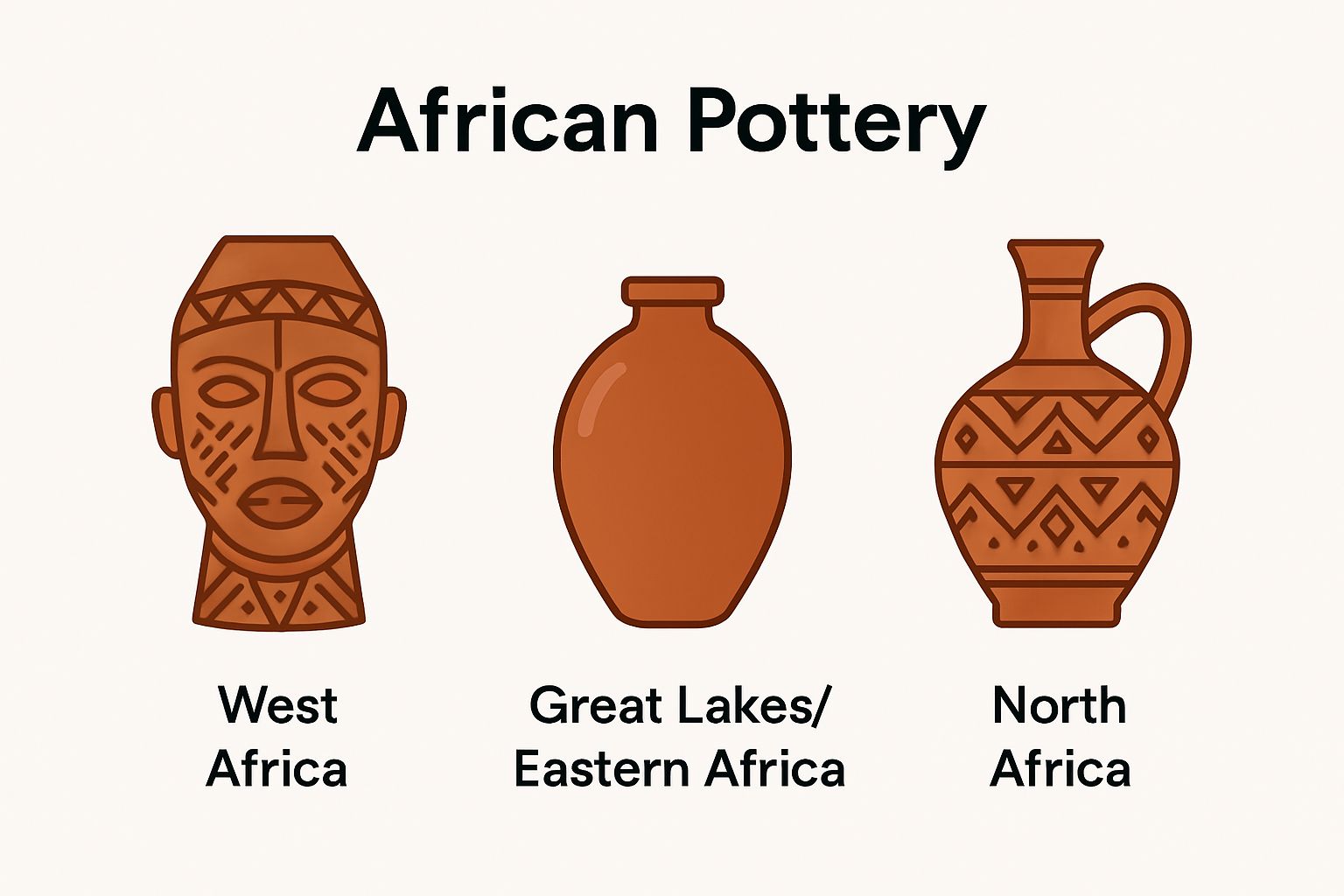
West African Ceramic Traditions
West African pottery styles are characterized by remarkable diversity and intricate design complexity. According to archaeological research from the Britannica Visual Arts Archive, regions like Nigeria and Ghana developed distinctive ceramic traditions that go beyond mere functional objects.
Key characteristics of West African pottery include:
- Highly sculptural terracotta forms
- Elaborate geometric and figurative decorations
- Thin-walled vessels with intricate surface treatments
- Strong connections to spiritual and ritual practices
The Nok culture, for instance, produced extraordinary terracotta sculptures that demonstrated advanced ceramic techniques and profound artistic sophistication, representing some of the most remarkable archaeological discoveries in the region.
Great Lakes and Eastern African Styles
Eastern African and Great Lakes pottery traditions emphasized different aesthetic and functional priorities. These regions developed ceramic styles characterized by exceptional burnishing techniques and refined surface treatments. Pottery in these areas often featured:
- Highly polished ceramic surfaces
- Minimal decorative elements
- Vessels optimized for water storage and transportation
- Designs reflecting nomadic and agricultural lifestyles
The burnishing techniques used in this region created remarkably smooth surfaces that enhanced both aesthetic appeal and functional durability, representing a sophisticated approach to ceramic production.
North African and Saharan Ceramic Expressions
North African pottery styles reflected the complex interactions between indigenous African traditions and Mediterranean influences. Berber and Amazigh pottery traditions, in particular, developed unique ceramic approaches that blended local craftsmanship with external artistic influences.
These ceramic traditions were distinguished by:
-
Geometric pattern complexity
-
Use of distinctive color palettes
-
Incorporation of symbolic motifs
-
Techniques reflecting desert environmental conditions
The diversity of African pottery styles demonstrates the continent’s extraordinary artistic richness, with each region developing ceramic traditions that serve as powerful expressions of cultural identity, technological innovation, and artistic creativity.
Below is a comparison table highlighting the main characteristics and distinguishing features of regional pottery traditions across Africa as discussed in the article.
| Region | Distinctive Features | Notable Cultural Influences |
|---|---|---|
| West Africa | Highly sculptural terracotta, intricate geometric and figurative decorations, thin-walled vessels | Ritual and spiritual practices, Nok culture |
| Great Lakes & Eastern Africa | Highly polished surfaces, minimal decoration, vessels for water storage, refined durability | Nomadic and agricultural lifestyles |
| North Africa & Saharan Regions | Complex geometric patterns, distinctive colour palettes, symbolic motifs, adaptation to desert climate | Berber/Amazigh influences, Mediterranean contact |
Contemporary Relevance and Influence of African Pottery
Learn more about South African creative cultural power to understand how traditional art forms like pottery continue to shape contemporary artistic narratives. African pottery has transcended its historical roots, emerging as a dynamic form of cultural expression and economic opportunity in the modern world.
Global Art and Market Dynamics
Contemporary African pottery represents a powerful intersection of traditional craftsmanship and global artistic trends. According to research from the Smithsonian Magazine, modern African potters are strategically blending ancestral techniques with contemporary design aesthetics, creating works that are highly sought after in international art markets.
Key characteristics of contemporary African pottery include:
- Integration of traditional techniques with modern design principles
- Preservation of cultural heritage through artistic innovation
- Development of unique aesthetic approaches
- Economic empowerment for local artisan communities
These ceramic artists are not merely reproducing traditional forms but actively reinterpreting them, transforming pottery from a utilitarian craft to a sophisticated artistic medium that communicates complex cultural narratives.
Cultural Preservation and Identity
In an era of rapid globalization, contemporary African pottery serves as a critical mechanism for cultural preservation and identity affirmation. Young artists are using ceramic art as a medium to explore and communicate complex social narratives, addressing themes of colonization, cultural resilience, and personal history.
Modern pottery practices are characterized by:
- Intergenerational knowledge transfer
- Reimagining traditional symbolic representations
- Challenging colonial artistic narratives
- Creating platforms for social commentary
Through their work, contemporary potters are bridging historical traditions with current social experiences, ensuring that ceramic art remains a living, evolving form of cultural expression.
Technological and Educational Impact
Contemporary African pottery has also become an important avenue for technological innovation and educational development. Academic and artistic institutions are increasingly recognizing ceramic arts as a valuable domain for research, skill development, and cultural understanding.
Emerging trends in this field include:
- Academic research programs focusing on ceramic heritage
- Professional training initiatives for young artisans
- International collaborations and cultural exchanges
- Documentation and digital archiving of pottery techniques
These developments underscore pottery’s significance beyond aesthetic value, positioning it as a dynamic field of cultural scholarship and economic potential.
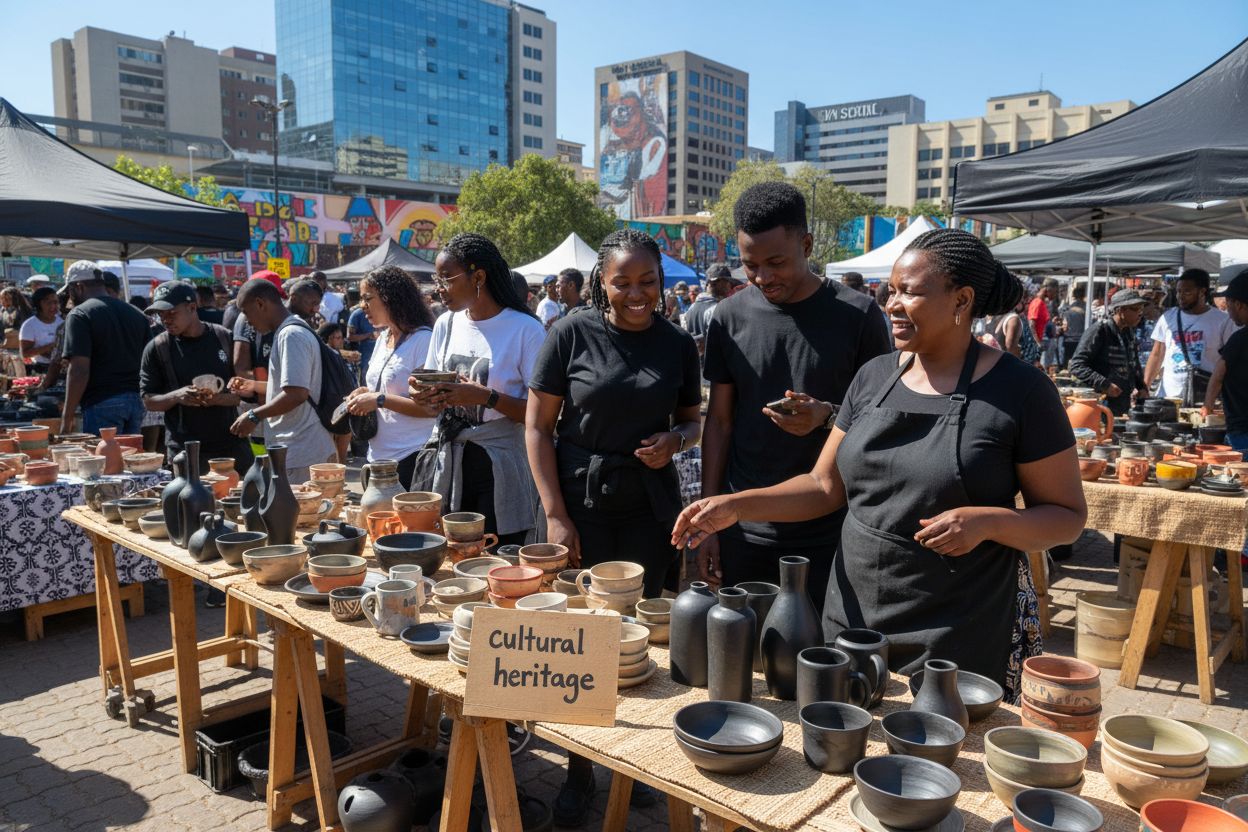 Contemporary African pottery continues to evolve, representing a powerful testament to the continent’s artistic resilience and creative innovation.
Discover the Legacy of African Pottery in Modern Art
Centuries of rich heritage and creativity lie behind the history of African pottery. Are you searching to bring authentic cultural depth into your space, or perhaps you want to connect with South African heritage beyond the classroom? This article has shown that pottery is more than just functional—it is an expression of identity, innovation and storytelling. The challenge for many is in finding genuine, inspired pieces that honour these traditions and let you connect with the makers and their legacy.

Experience the spirit and beauty of Africa brought to life by South Africa’s finest contemporary artists. At Art Online you can explore a curated collection that celebrates both history and fresh creativity. Each artwork is a chance to own a piece of this living tradition. Visit Art Online now to uncover unique art that turns heritage into a conversation piece. Don’t let your appreciation of African pottery remain just a story—make it a part of your world today.
Frequently Asked Questions
What were the early origins of pottery in Africa?
The early origins of pottery in Africa trace back approximately 10,000 years, with evidence suggesting it began in prehistoric times. Explore archaeological findings and markings to better understand the techniques and cultural significance of these ancient artifacts.
How did pottery evolve in different African cultures?
Pottery evolved in African cultures through unique styles and techniques reflecting societal values, spiritual beliefs, and local resources. Research specific regional traditions and focus on their distinct aesthetics and functions to appreciate this diversity.
What materials are commonly used in traditional African pottery?
Traditional African pottery is primarily made from local clay, which is carefully selected and prepared for crafting. Experiment with different clay types from your area to observe how variations impact the durability and appearance of your pottery.
How can I become skilled in African pottery techniques?
To become skilled in African pottery techniques, practice hand-building methods like coiling, pinch pots, and slab construction. Begin by dedicating regular hours each week to honing these skills, allowing for mastery over time.
What cultural significance does pottery hold in African societies?
Pottery holds immense cultural significance, often serving roles in rituals, symbolizing social identity, and facilitating economic exchange. Engage with local artisan communities to gain insights into how pottery is intertwined with their cultural practices.
How is contemporary African pottery influencing the art world today?
Contemporary African pottery blends traditional crafting techniques with modern design, impacting global art markets and cultural narratives. Attend workshops or exhibitions to experience this fusion firsthand and gain a deeper understanding of its relevance.