
Understanding Photography as Fine Art: A Complete Guide
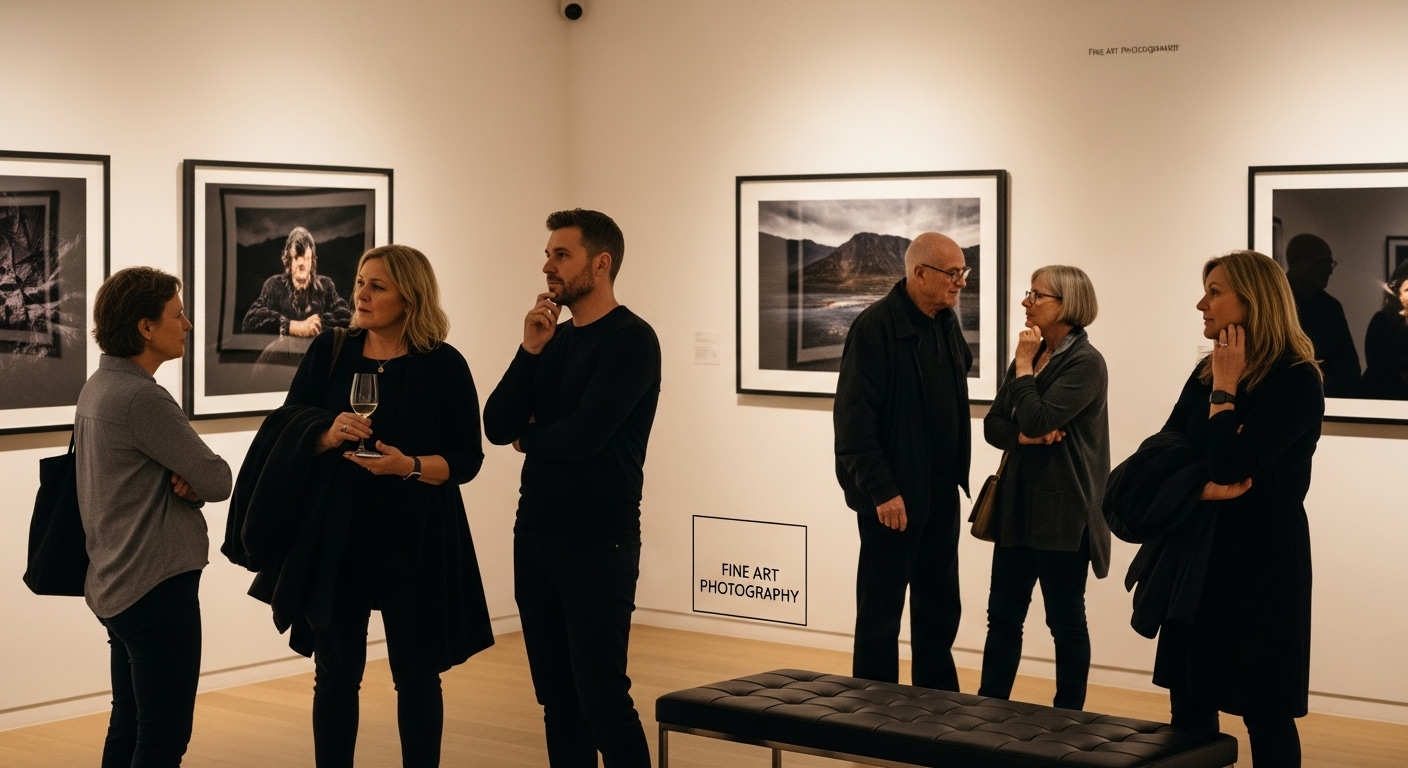
Fine art photography is more than just capturing moments through a lens. It shifts everyday images into intentional visual storytelling that pushes past simple documentation. Forget the idea that a camera just records what you see. The real magic happens when photographers use their craft to challenge how we look at the world and reveal hidden layers of meaning you never expected.
Table of Contents
- Defining Photography As Fine Art: What Is It?
- The Historical Significance Of Photography In The Art World
- Why Photography As Fine Art Matters To Collectors And Decorators
- Key Concepts And Techniques In Fine Art Photography
- Exploring The Contemporary Landscape Of Fine Art Photography
Quick Summary
| Takeaway | Explanation |
|---|---|
| Fine art photography tells intentional stories. | It uses photographic techniques to communicate complex emotions and concepts, moving beyond mere documentation. |
| Artistic intent distinguishes fine art from commercial photography. | While commercial photography focuses on practical needs, fine art seeks to provoke thought and emotional responses. |
| Fine art photography holds investment value. | Unique photographic works can appreciate over time, making them valuable assets for collectors. |
| Contemporary trends blend technology with artistic expression. | Modern photographers utilize digital innovations to create hybrid art forms and expand narrative possibilities. |
| Photography serves as a medium for social commentary. | Photographers explore themes like identity and societal structures, challenging traditional perceptions through their work. |
Defining Photography as Fine Art: What Is It?
Photography as fine art represents a sophisticated approach to image creation that transcends mere documentary or commercial purposes. Unlike traditional photography, which primarily captures reality, fine art photography transforms visual experiences into profound artistic expressions that communicate deeper meanings, emotions, and perspectives.
The Philosophical Essence of Fine Art Photography
Fine art photography is fundamentally about intentional visual storytelling. Photographers working in this domain view their cameras not as recording devices, but as sophisticated tools for creative interpretation. They meticulously craft images that challenge viewers’ perceptions, evoke emotional responses, and explore complex conceptual narratives.
Key characteristics of fine art photography include:
- Prioritizing artistic vision over literal representation
- Demonstrating exceptional technical and creative skills
- Expressing personal perspectives and philosophical ideas
- Challenging conventional visual narratives
Distinguishing Fine Art Photography from Commercial Practices
The critical distinction between fine art photography and commercial photography lies in intentionality and artistic purpose.
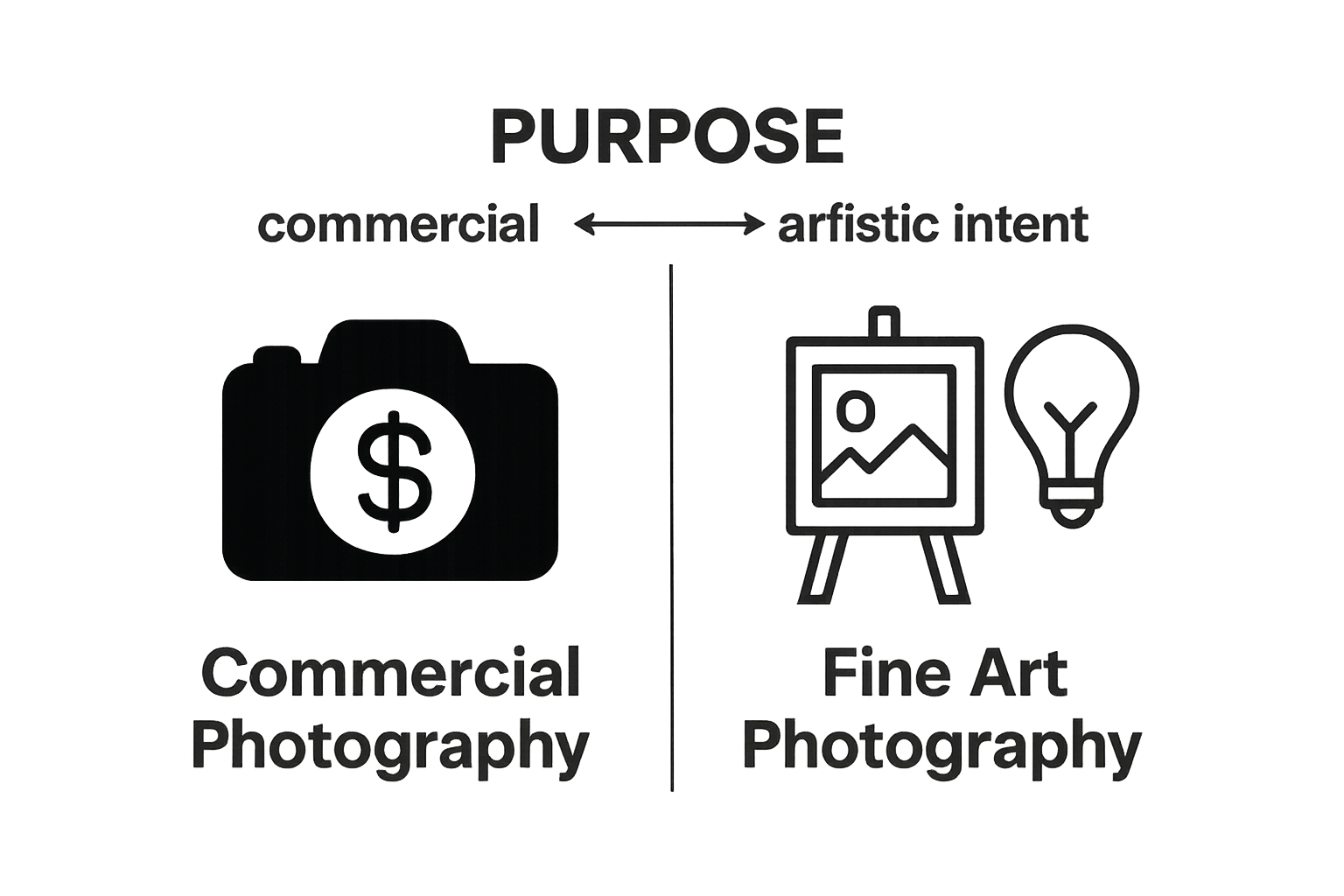 Commercial photography serves pragmatic objectives like advertising or documentation, whereas fine art photography aims to provoke intellectual and emotional engagement.
According to Rhodes University’s Fine Art Practice course, fine art photographers develop individual approaches that explore conceptual concerns underlying contemporary art practices. This means each photographic work becomes a unique visual statement, reflecting the artist’s inner world and critical perspectives on society, culture, or personal experiences.
Ultimately, fine art photography transforms visual capture into a profound medium of artistic expression, inviting viewers to look beyond surface-level imagery and engage with deeper, more nuanced interpretations of human experience.
To clarify the distinctions between fine art photography and commercial photography, the following table compares their purposes, approaches, and outcomes as discussed in this article.
| Aspect | Fine Art Photography | Commercial Photography |
|---|---|---|
| Main Purpose | Artistic expression, provoke thought, evoke emotions | Serve practical needs such as advertising or documentation |
| Artistic Intent | Central focus, drives the entire process | Subordinate to client or commercial goals |
| Approach | Personal, conceptual, challenges perceptions | Objective, meets specific client brief |
| Outcome | Unique, thought-provoking works that invite varied interpretation | Predetermined, functional images serving clear objectives |
| Value to Collectors | Holds cultural, conceptual, and investment value | Generally lacks investment potential beyond its campaign |
The Historical Significance of Photography in the Art World
Photography emerged as a groundbreaking artistic medium that fundamentally transformed how humans perceive, document, and interpret visual experiences. From its earliest inception in the 19th century, photography challenged traditional artistic paradigms and opened unprecedented avenues for creative expression.
The Revolutionary Transition of Photography
Initially regarded as a mechanical reproduction technique, photography gradually evolved into a legitimate art form. Early photographers faced significant resistance from traditional artists who viewed the medium as merely technical rather than creative. However, pioneering photographers demonstrated that capturing an image involves far more than technical skill.
Key milestones in photography’s artistic recognition include:
- The establishment of photography departments in major art museums
- Recognition of photographic works in prestigious international art exhibitions
- Development of specialized photographic techniques and aesthetic approaches
- Academic research exploring photography’s artistic dimensions
Documenting Social and Cultural Narratives
Photography’s artistic significance extends beyond aesthetic appreciation. According to Museum Africa’s research on historical photography, photographs serve as powerful historical documents that capture complex social narratives. They provide intimate glimpses into historical moments, cultural transformations, and human experiences that transcend traditional artistic representations.
Photographic artists began using their craft as a critical storytelling medium, revealing societal dynamics, challenging existing perspectives, and preserving cultural memories. The camera became more than an instrument of recording reality it transformed into a tool for critical commentary and artistic interpretation.
By bridging documentary precision with creative vision, photography established itself as a profound artistic medium that communicates complex human experiences through visual language. Its journey from technical invention to respected art form represents a remarkable chapter in cultural and artistic evolution.
Why Photography as Fine Art Matters to Collectors and Decorators
Fine art photography represents more than a visual artifact it embodies a sophisticated investment and design element that transforms spaces, narratives, and aesthetic experiences. For collectors and decorators, these photographic works offer unique opportunities to curate meaningful environments that reflect artistic complexity and emotional depth.
Investment and Aesthetic Value
Collectors recognize fine art photography as a dynamic asset with significant cultural and financial potential. Unlike mass-produced images, these photographic works carry unique artistic signatures, provenance, and conceptual depth that appreciate in value over time.
Key considerations for collectors include:
- Rarity and limited edition status of photographic works
- Reputation and established track record of the photographer
- Technical and conceptual innovation within the piece
- Historical and cultural significance of the image
Transformative Design Potential
Decorators leverage fine art photography as powerful design tools that transcend traditional decorative elements. These images do not merely occupy wall space they create immersive narrative environments that communicate sophisticated aesthetic sensibilities.
According to narrative portrait photography research, photographic artworks enable deep emotional connections by capturing nuanced human experiences. This makes them particularly valuable for spaces seeking to evoke specific moods or tell compelling visual stories.
For those interested in expanding their understanding of art acquisition, read more about collecting original artworks in South Africa.
Ultimately, fine art photography represents a sophisticated intersection of artistic expression, cultural documentation, and spatial design. It offers collectors and decorators a dynamic medium that simultaneously preserves moments, challenges perceptions, and transforms interior environments.

Key Concepts and Techniques in Fine Art Photography
Fine art photography represents a sophisticated intersection of technical skill, artistic vision, and conceptual depth. It transcends mere image capture, transforming photography into a powerful medium of personal and collective expression through intentional creative strategies and advanced technical approaches.
Conceptual Foundations
At the core of fine art photography lies intentional visual storytelling. Photographers do not simply record reality they construct narratives, challenge perceptions, and communicate complex emotional and intellectual experiences through carefully composed images.
Critical conceptual approaches include:
- Exploring subjective interpretations of reality
- Challenging traditional representational norms
- Using photographic techniques as metaphorical languages
- Interrogating personal and collective identities
Technical Mastery and Creative Techniques
According to University of Cape Town’s photographic practice research, fine art photographers develop sophisticated technical skills that enable nuanced creative expression. These techniques extend far beyond standard photographic practices, incorporating experimental methodologies that transform image creation.
Key technical strategies encompass:
- Advanced digital and analog manipulation techniques
- Experimental lighting and composition approaches
- Strategic use of color, texture, and visual metaphors
- Integration of post-production processing as a creative tool
For photography enthusiasts interested in understanding artistic valuations, explore our guide on painting values to gain broader insights into art market dynamics.
Ultimately, fine art photography represents a complex dialogue between technical proficiency, conceptual innovation, and personal artistic vision.
The table below summarises key conceptual foundations and technical approaches that characterise fine art photography, providing an at-a-glance overview of what distinguishes this genre.
| Category | Description |
|---|---|
| Artistic Vision | Prioritises creative interpretation over literal documentation |
| Conceptual Storytelling | Constructs intentional narratives and challenges perceptions |
| Subjectivity | Explores personal and collective perspectives |
| Technical Mastery | Advanced digital/analogue manipulation, experimental lighting |
| Creative Techniques | Strategic use of colour, composition, texture, and metaphor |
| Post-Production Integration | Utilises processing as a creative extension of image-making |
Exploring the Contemporary Landscape of Fine Art Photography
Contemporary fine art photography represents a dynamic and evolving field where technological innovation, social commentary, and personal expression converge to create powerful visual narratives. Artists are increasingly pushing boundaries, challenging traditional representational methods, and utilizing photography as a sophisticated medium for cultural dialogue.
Emerging Technological and Conceptual Trends
Digital technologies have fundamentally transformed photographic practices, enabling artists to transcend traditional limitations. Contemporary photographers employ advanced digital manipulation, mixed media techniques, and interdisciplinary approaches that blur boundaries between photography, painting, and digital art.
Significant contemporary trends include:
- Integration of artificial intelligence and machine learning
- Hybridization of analog and digital photographic techniques
- Exploration of virtual and augmented reality environments
- Deconstruction of traditional photographic narratives
Socio Cultural Perspectives
According to University of Cape Town’s fine art research, contemporary photographers are using their medium as a powerful tool for social commentary and identity exploration. They are no longer merely documenting reality but actively constructing complex visual arguments about social structures, personal experiences, and collective memories.
Key thematic focuses encompass:
- Interrogating postcolonial identities
- Challenging gender and social constructs
- Documenting environmental transformations
- Exploring individual and collective trauma
Discover more about renowned South African artists who are pioneering these innovative photographic approaches.
Ultimately, contemporary fine art photography represents a sophisticated dialogue between technological capability, artistic vision, and social consciousness. It invites viewers to reconsider their understanding of visual representation, challenging them to engage with images not just as aesthetic objects, but as complex narrative constructions that reflect our multifaceted human experiences.
Elevate Your Space with Authentic Fine Art Photography
If you have ever felt that traditional décor lacks emotional depth or struggles to reflect your personal story, you are not alone. As our guide explored, collectors and decorators often face the challenge of moving beyond surface-level prints and seeking art that truly communicates their vision. Fine art photography is celebrated in the article for its ability to offer intentional visual storytelling and create immersive narrative environments. Yet finding genuine, gallery-quality works from celebrated South African artists can be a daunting task.

Give your space meaning by investing in fine art photography that embodies unique perspectives and lasting value. Visit Art Online, South Africa’s largest online art gallery, and experience a curated collection of original works from the country’s most renowned photographers. Explore the depth and artistry discussed in this guide, and discover why original art makes a difference. Start your collection with confidence and let your home or office showcase true artistic significance. Now is the ideal time to bring profound stories into your life with Art Online.
Frequently Asked Questions
What defines fine art photography?
Fine art photography is characterized by intentional visual storytelling, prioritizing artistic vision over literal representation to convey deeper meanings and emotions.
How does fine art photography differ from commercial photography?
The key distinction lies in intent: fine art photography focuses on artistic and emotional engagement, while commercial photography serves practical purposes like advertising and documentation.
Why should collectors invest in fine art photography?
Collecting fine art photography offers cultural and financial value due to its uniqueness, limited edition status, and the potential for appreciation over time.
What are some key techniques used in fine art photography?
Fine art photographers utilize advanced technical skills, experimental lighting, composition approaches, and digital manipulation to create nuanced and expressive images.
Recommended
- Famous South African Artists: 2025 Guide for Collectors & Decorators – Art-Online
- Painting Prices Unveiled: Explore 5 Types of Captivating Paintings and Their Exceptional Values – Art-Online
- Art Material Must-Haves: Transforming Cape Town’s Artists – Art-Online
- Why Buy Original Art in South Africa: Key 2025 Insights – Art-Online
- Understanding What is Catholic Aesthetics: A Deep Dive – deusdesign
- Understanding the Catholic Art Guide: Faith in Creation – deusdesign