
What is Digital Art? Understanding Its Impact and Value

Digital art is turning South Africa’s creative scene on its head. You might expect traditional paint, clay, and canvas to rule the world of fine art, but now artists are wielding tablets and software to bring bold visions to life. In fact, digital artworks can be reproduced without any loss in quality, letting creators share their work globally at the tap of a button and changing who gets to shape the stories we see.
Table of Contents
- Defining Digital Art: A Contemporary Medium
- The Importance of Digital Art in Today’s Society
- How Digital Art is Created and Shared
- Key Concepts in Digital Art: Tools and Techniques
- The Future of Digital Art: Trends and Collectibility
Quick Summary
| Takeaway | Explanation |
|---|---|
| Digital art merges creativity and technology. | It uses advanced software and tools for artistic expression, transforming traditional practices. |
| Artists can share work globally and instantly. | Digital platforms enable immediate distribution, allowing creators to reach wider audiences without geographical barriers. |
| Digital art fosters cultural communication and awareness. | It serves as a universal language, highlighting social issues and diverse perspectives. |
| Educational institutions are adopting digital art practices. | Integrating digital art into curricula enhances critical thinking and technological skills among students. |
| Investments in digital art are rising rapidly. | The emergence of NFTs and blockchain is changing how collectors view and invest in digital pieces. |
Defining Digital Art: A Contemporary Medium
Digital art represents a transformative approach to artistic creation where technology becomes the primary medium for expression, imagination, and visual communication. Unlike traditional art forms that rely solely on physical materials like paint or clay, digital art leverages advanced digital technologies, computer software, and electronic tools to generate, manipulate, and produce artistic works.
The Technological Canvas
At its core, digital art represents a revolutionary intersection between creativity and technology. Artists now use sophisticated software like Adobe Photoshop, Illustrator, and Procreate, along with graphic tablets, digital cameras, and 3D modeling programs to craft intricate visual experiences. Discover more about technological innovations in art reveals how these digital tools have democratized artistic creation, allowing artists unprecedented flexibility and experimentation.
Key characteristics of digital art include:
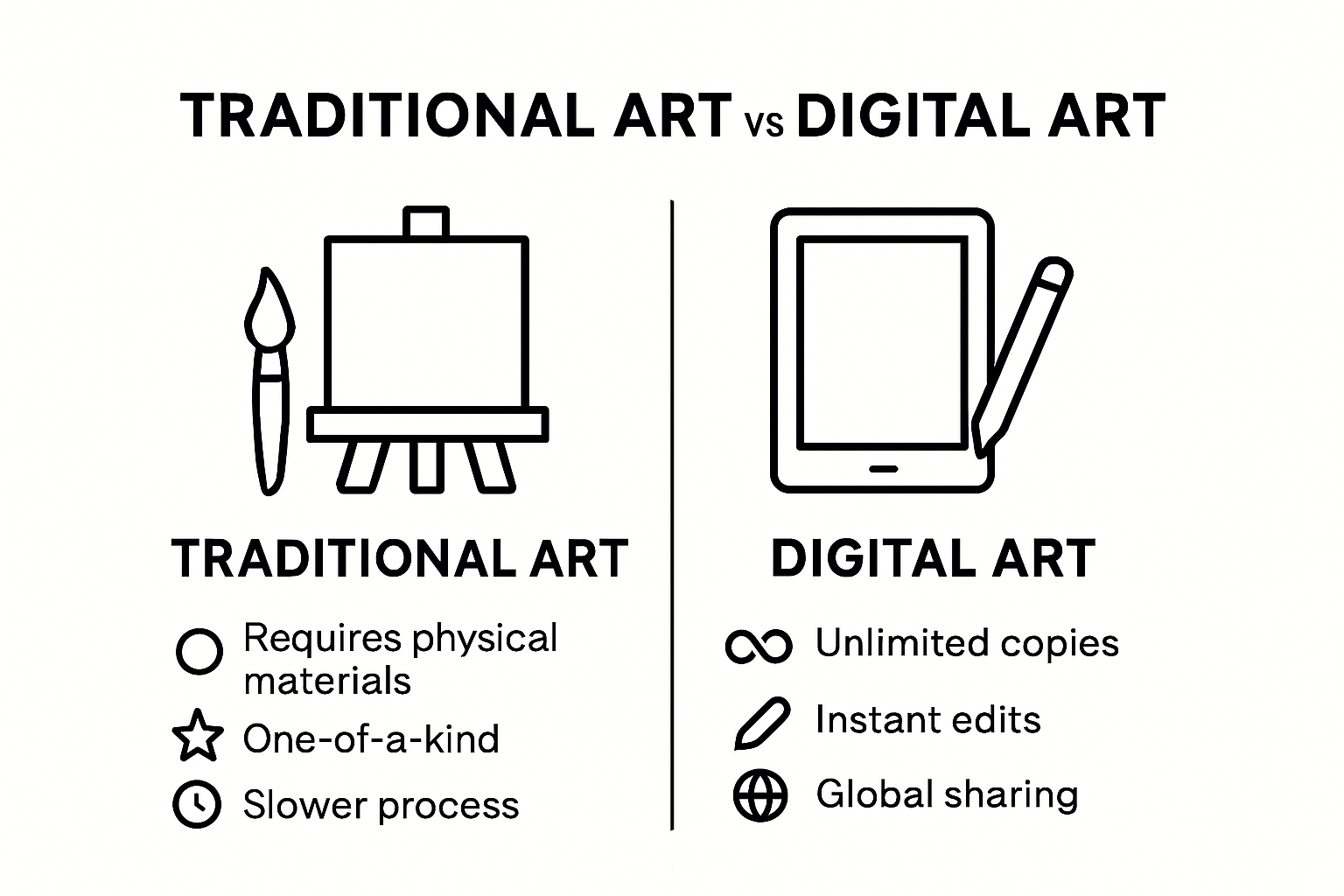
- Flexibility of Creation: Artists can modify, replicate, and transform artwork instantly
- Unlimited Reproduction: Digital works can be duplicated without quality loss
- Global Accessibility: Art can be shared instantly across digital platforms
Expanding Artistic Boundaries
Digital art encompasses multiple disciplines, including digital painting, vector graphics, 3D modeling, generative art, and interactive multimedia installations. According to research from Stellenbosch University, digital technologies are fundamentally reshaping artistic education and practice, challenging traditional boundaries between different artistic mediums.
The evolution of digital art represents more than a technological shift. It signifies a profound reimagining of artistic expression, where the artist’s creativity is amplified and extended through digital tools. These technologies enable artists to explore complex visual narratives, experiment with unprecedented techniques, and engage audiences in immersive, interactive experiences that transcend traditional artistic limitations.
The table below highlights the key features that distinguish digital art from traditional art, providing a clear overview for readers new to this dynamic medium.
| Feature | Digital Art | Traditional Art |
|---|---|---|
| Medium | Software, tablets, computers | Paint, canvas, clay, physical materials |
| Reproduction | Unlimited, no loss in quality | Limited, deterioration possible |
| Modification | Easily editable and reversible | Often difficult or impossible to alter |
| Distribution | Instant global sharing platforms | Typically local and physical galleries |
| Accessibility | Lower barriers, broader audience | Often limited by geography and cost |
| Tools Required | Digital devices and apps | Physical tools and traditional materials |
| Interactivity | Can be interactive, multimedia elements possible | Mostly static, single medium |
The Importance of Digital Art in Today’s Society
Digital art has emerged as a powerful medium for cultural expression, social commentary, and creative innovation, transcending traditional artistic boundaries and reshaping how societies communicate, understand, and interpret visual experiences. Its significance extends far beyond aesthetic appeal, representing a critical platform for communication, education, and technological advancement.
Cultural Representation and Global Communication
In an increasingly interconnected world, digital art serves as a universal language that bridges cultural divides and enables artists to share complex narratives instantaneously. Explore our guide on famous South African artists to understand how digital platforms amplify artistic voices from diverse backgrounds. Digital art allows creators to challenge societal norms, represent marginalized perspectives, and generate meaningful dialogues about identity, social issues, and human experiences.
Key societal contributions of digital art include:
- Social Awareness: Highlighting critical social issues through visual storytelling
- Cultural Preservation: Documenting and archiving cultural heritage in digital formats
- Global Accessibility: Breaking geographical and economic barriers to artistic expression
Economic and Educational Transformation
According to research from the Public Art Development Programme, digital art is not just a creative medium but an economic catalyst. It generates employment opportunities, supports technological skills development, and creates innovative pathways for youth engagement. Educational institutions are increasingly integrating digital art into curricula, recognizing its potential to develop critical thinking, technological literacy, and creative problem-solving skills.
The democratization of artistic tools through digital technologies has fundamentally transformed how individuals create, consume, and interact with art. By lowering entry barriers and providing sophisticated yet accessible platforms, digital art empowers a new generation of creators to express themselves authentically, challenge traditional artistic paradigms, and contribute to a more inclusive, diverse, and technologically integrated cultural landscape.
Here is a summary table showcasing the major types of digital art techniques mentioned in the article, along with a brief description of how each technique contributes to modern artistic practice.
| Technique | Description |
|---|---|
| Vector Graphics | Creation of clean, scalable images using mathematical paths and equations. |
| 3D Modelling | Building digital, three-dimensional forms for environments and characters. |
| Generative Art | Artworks developed autonomously with the use of algorithms or code. |
| Digital Painting | Creating images by simulating real-world painting on a digital canvas. |
| Interactive Media | Engaging audiences through art that responds to user input or movement. |
How Digital Art is Created and Shared
Digital art creation involves a complex interplay of technological tools, creative vision, and innovative techniques that transform artistic expression from traditional physical mediums to dynamic digital platforms. Artists harness sophisticated software, hardware, and digital technologies to conceptualize, design, and distribute their creative works across global networks.
Digital Creation Tools and Techniques
Modern digital artists utilize an extensive array of technological resources to bring their visions to life. Graphic tablets, digital drawing pads, high-resolution displays, and advanced software like Adobe Creative Suite, Procreate, and Blender enable creators to generate intricate visual compositions with unprecedented precision and flexibility. Check out our blog for more insights into digital art techniques and explore the evolving landscape of artistic innovation.
Key digital art creation techniques include:
- Vector Graphics: Creating scalable digital illustrations using mathematical equations
- 3D Modeling: Designing complex three-dimensional digital environments and characters
- Generative Art: Using algorithmic processes to create autonomous artistic works
Digital Distribution and Platforms
According to research from the Public Art Development Programme, digital platforms have revolutionized how artists share and monetize their creative outputs. Social media platforms like Instagram, specialized art websites, NFT marketplaces, and digital galleries provide artists with unprecedented opportunities to reach global audiences, connect with potential buyers, and build international artistic communities.
The digital art ecosystem has democratized artistic creation, removing traditional barriers of geography, institutional access, and economic constraints. Artists can now instantaneously upload, share, and sell their works, transforming the traditional art market and enabling more diverse, inclusive, and dynamic artistic expressions that transcend physical and cultural boundaries.
Key Concepts in Digital Art: Tools and Techniques
Digital art represents a sophisticated fusion of technological innovation and creative expression, requiring artists to master complex tools and conceptual frameworks that extend far beyond traditional artistic practices. Understanding the fundamental techniques and technologies enables artists to translate imaginative visions into compelling digital experiences.
Software and Creative Platforms
Professional digital artists employ an extensive range of specialized software that serves as their primary creative toolkit. Programs like Adobe Creative Suite, Procreate, Blender, and Clip Studio Paint provide comprehensive environments for designing, manipulating, and rendering digital artwork. Learn more about essential art materials for digital creators to understand the evolving landscape of artistic technologies. These platforms offer intricate layers of functionality, allowing artists to experiment with complex visual techniques that were previously impossible in traditional media.
Critical digital art software capabilities include:
- Layering: Creating complex compositions by building multiple transparent visual elements
- Non Destructive Editing: Modifying artwork without permanently altering original content
- Advanced Brush Customization: Designing unique digital painting tools with precise control
Technical Skills and Creative Methodologies
According to research from the University of Cape Town, digital art requires artists to develop a nuanced understanding of both technological tools and creative methodologies. Artists must cultivate skills in digital drawing, 3D modeling, vector graphics, and generative art techniques. These skills demand not just artistic talent but also technical proficiency in understanding how digital platforms translate creative intentions into visual representations.
The intersection of technology and creativity in digital art transforms traditional artistic boundaries, enabling artists to explore unprecedented forms of visual expression. By mastering sophisticated digital tools and techniques, artists can create immersive, dynamic artworks that challenge conventional perceptions of artistic creation and representation.
The Future of Digital Art: Trends and Collectibility
Digital art is rapidly evolving, transforming traditional artistic markets and creating innovative pathways for creators, collectors, and investors. As technological advancements continue to reshape artistic expression, digital art is emerging as a sophisticated and dynamic investment landscape with profound implications for cultural and economic ecosystems.
Emerging Technological Frontiers
The convergence of artificial intelligence, blockchain technology, and immersive digital platforms is revolutionizing how digital art is created, experienced, and collected. Virtual reality environments, augmented reality interfaces, and generative AI tools are expanding the boundaries of artistic creation, enabling artists to develop increasingly complex and interactive visual experiences. Learn more about the value of original art in South Africa to understand the shifting dynamics of art collection in the digital age.
Key technological trends in digital art include:
- AI Generated Art: Machine learning algorithms creating autonomous artistic compositions
- Blockchain Authentication: Ensuring artwork provenance and digital ownership
- Immersive Digital Exhibitions: Virtual galleries and interactive art experiences
Collectibility and Investment Potential
According to research from the University of Pretoria Museums, digital art is transitioning from a niche market to a mainstream investment category. Non Fungible Tokens (NFTs) have dramatically transformed art collectibility, providing verifiable ownership and creating new economic models for digital creators. Collectors are increasingly recognizing digital artworks as legitimate assets with significant appreciation potential, challenging traditional art market structures.
The future of digital art represents a profound reimagining of artistic creation and consumption. By embracing technological innovation, digital artists are not just creating visual experiences but constructing entirely new ecosystems of creative expression that transcend physical and geographical limitations.
Bring Digital Art to Life with Art Online
Many people find it challenging to access original digital artworks and experience the value they add to modern life. After reading about the evolving landscape of digital art, you might feel inspired but unsure where to discover authentic pieces from real artists in South Africa. If you are searching for a trusted place to find digital creations or looking to invest in cutting-edge local talent, you are ready for the next step.

Do not let this moment pass. Explore Art Online to view an exclusive selection of digital art and contemporary works from South Africa’s top artists. Immerse yourself in the vibrant creative energy that defines this medium and learn more about why buying original art in South Africa matters. Choose your new favourite piece today and let your space reflect the future of creative expression.
Frequently Asked Questions
What is digital art?
Digital art is a contemporary medium where technology is used as the primary means for artistic expression, utilizing software, digital tools, and electronic devices to create and produce visual works.
How is digital art created?
Digital art is created using various tools and techniques, including graphic tablets, specialized software like Adobe Creative Suite, and methodologies such as vector graphics and 3D modeling. Artists can manipulate and enhance their work dynamically in digital formats.
What are the benefits of digital art compared to traditional art?
Digital art offers numerous advantages, such as the ability to easily modify and reproduce creations without quality loss, instant global accessibility for sharing and selling, and the use of advanced tools that allow for innovative artistic techniques and experimentation.
How is digital art impacting society?
Digital art serves as a powerful medium for cultural representation and social commentary, enabling artists to share diverse perspectives and address critical social issues while also contributing to economic growth and educational opportunities in the creative sector.
Recommended
- Why Buy Original Art in South Africa: Key 2025 Insights – Art-Online
- Painting Prices Unveiled: Explore 5 Types of Captivating Paintings and Their Exceptional Values – Art-Online
- Famous South African Artists: 2025 Guide for Collectors & Decorators – Art-Online
- Art of South Africa: Inspiring Creativity and Cultural Power – Art-Online