
What is Printmaking? Understanding Artistic Techniques

Printmaking is often seen as a niche technique, tucked away behind the more glamorous worlds of painting and sculpture. Yet printmaking enables artists to produce multiple original artworks from a single design, making art up to ten times more accessible than singular paintings. It does not just multiply images. It multiplies voices, turning a single creative spark into a cultural conversation that can ripple through communities and history alike.
Table of Contents
- Defining Printmaking: An Artistic Process
- The Importance of Printmaking in Art History
- Exploring Different Printmaking Techniques
- Understanding the Materials Used in Printmaking
- The Role of Printmaking in Contemporary Art
Quick Summary
| Takeaway | Explanation |
|---|---|
| Printmaking is a unique artistic technique. | It involves transferring images between surfaces through specialized methods, allowing multiple originals from a single design. |
| Key printmaking methods include Intaglio and Screen Printing. | Each method offers different textures and aesthetic possibilities, enabling intricate artistic expression. |
| Printmaking democratizes art access. | By allowing multiple reproductions, it breaks traditional barriers and widens the audience for artistic works. |
| Printmaking serves as social commentary. | Historically, artists have used prints to critique social issues, making it a powerful medium for resistance. |
| Contemporary artists innovate with printmaking. | They blend traditional techniques with modern technologies, using it to explore complex narratives and engage with audiences. |
Defining Printmaking: An Artistic Process
Printmaking represents a sophisticated artistic technique where artists create unique visual artworks by transferring images from one surface to another using specialized methods and tools. Unlike painting or drawing, printmaking involves a complex process of reproducing images through multiple stages, enabling artists to generate multiple original prints from a single creative design.
The Core Principles of Printmaking
At its fundamental level, printmaking involves transferring an image from a matrix (primary surface) onto another surface, typically paper. Artists use various techniques to create these transfers, each requiring precise skill and understanding of material interactions. The matrix can be constructed from multiple materials like wood, metal, stone, or screens, with each material offering distinct textural and visual characteristics.
Technical Methods and Creative Expression
Artists employ several primary printmaking techniques to create their artwork.
According to research by the University of Cape Town, contemporary South African printmakers have developed sophisticated approaches that blend traditional methods with innovative strategies. The key printmaking methods include:
- Intaglio: Involves etching or engraving images into a metal plate
- Screen Printing: Uses mesh screens to transfer ink onto surfaces
- Lithography: Creates images on limestone or metal plates using oil and water resistance
- Relief Printing: Carves images into surfaces like woodblocks, with raised areas collecting ink
These techniques allow artists to explore complex visual narratives, reproduce intricate designs with remarkable precision, and create multiple original artworks from a single creative conception. Printmaking transcends mere reproduction, representing a nuanced art form that demands technical mastery and creative vision.
The Importance of Printmaking in Art History
Printmaking has played a pivotal role in documenting and shaping human cultural narratives, serving as a powerful medium for artistic expression, social commentary, and historical documentation. Far beyond a mere technical process, printmaking represents a profound method of communication that has transformed how societies understand and represent visual experiences.
Cultural and Social Documentation
Throughout history, printmaking has been an essential tool for artists to capture and critique social realities. Research by the University of Cape Town reveals how printmaking became a critical form of resistance during challenging political periods, particularly in South Africa. Artists used prints as powerful instruments of social commentary, creating works that challenged oppressive systems and amplified marginalized voices.
Democratization of Art
Printmaking fundamentally transformed art accessibility by enabling artists to produce multiple original artworks. This technological innovation meant that art could be distributed more widely, breaking traditional barriers of exclusivity. Key advantages of printmaking include:
- Ability to create multiple identical artworks
- Lower production costs compared to unique paintings
- Opportunity for wider artistic distribution
- Potential for mass communication of artistic ideas
The technique’s ability to reproduce images with precision allowed artists to reach broader audiences, transforming art from an elite practice to a more democratic form of expression. Learn more about painting techniques and values to understand how printmaking influenced artistic markets.
Moreover, printmaking techniques have been crucial in preserving cultural narratives, documenting historical events, and providing visual representations of societal changes. From political posters to intricate artistic prints, this medium has consistently served as a dynamic platform for creative and intellectual exchange, reflecting the complex layers of human experience through visual storytelling.
Exploring Different Printmaking Techniques
Printmaking encompasses a diverse range of artistic techniques, each offering unique opportunities for creative expression and visual storytelling. Artists select specific methods based on their artistic vision, technical skills, and desired aesthetic outcomes, transforming simple materials into complex visual narratives.
Primary Printmaking Methods
The primary printmaking techniques represent sophisticated artistic approaches that require precision, skill, and deep understanding of material interactions.
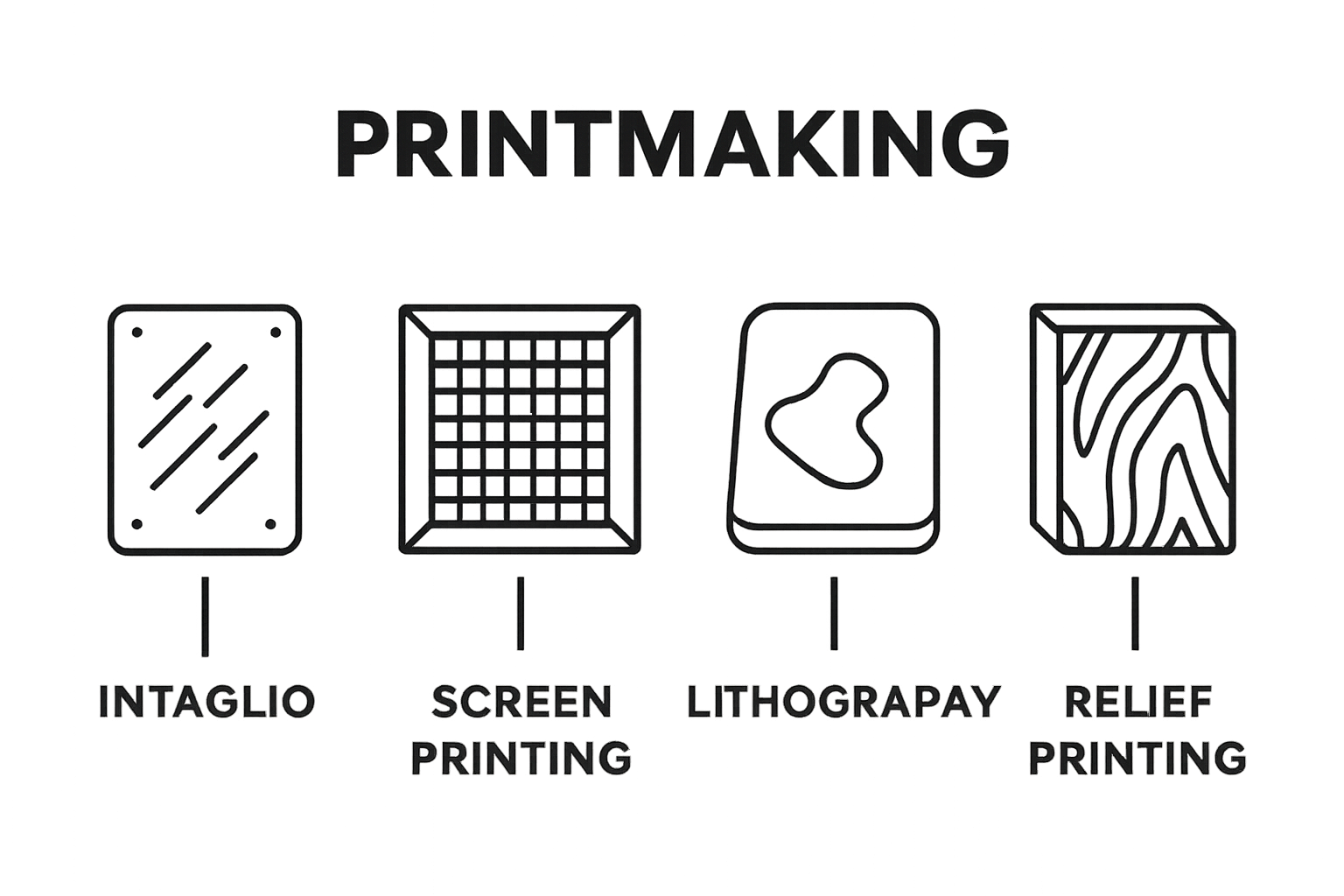 According to research from the South African Visual Arts Sector, these techniques are fundamental to contemporary artistic practice and cultural expression.
Advanced Printmaking Approaches
Each printmaking technique offers distinct characteristics and creative possibilities:
- Intaglio Printing: Involves etching or engraving images into metal plates, creating intricate textures and deep visual depths
- Screen Printing: Uses mesh screens to transfer ink, allowing for vibrant color layering and graphic design possibilities
- Lithography: Creates images on smooth limestone or metal surfaces using oil and water resistance principles
- Relief Printing: Carves images into surfaces like woodblocks, with raised areas collecting ink for precise image transfer
These techniques demonstrate the complexity and versatility of printmaking as an art form. Discover more about painting techniques and artistic values to understand the broader context of visual arts. Artists manipulate these methods to create unique visual experiences, transforming simple materials into profound artistic statements that communicate complex emotions and narratives.
Below is a comparison of the four primary printmaking techniques discussed in the article, highlighting their materials, process characteristics, and unique artistic features.
| Technique | Main Matrix Material | Process Description | Distinctive Features |
|---|---|---|---|
| Intaglio | Metal plates (copper, zinc, aluminium) | Etching or engraving designs into a metal plate | Intricate detail, rich textures |
| Screen Printing | Mesh screens | Forcing ink through screens onto a surface | Bold colours, strong graphic effects |
| Lithography | Limestone/metal plates | Drawing with greasy substances, utilising oil and water resistance | Subtle tonal variation, fluid mark-making |
| Relief Printing | Woodblocks | Carving design into a block, raised surfaces inked | Organic textures, bold contrasts |
Understanding the Materials Used in Printmaking
Printmaking requires a sophisticated selection of materials that directly influence the artistic outcome, visual quality, and durability of the final artwork. Artists carefully choose their materials based on technical requirements, aesthetic goals, and the specific printmaking technique they intend to employ.
Matrix Materials and Characteristics
The matrix, or primary surface used for creating prints, plays a crucial role in determining the artwork’s texture, detail, and overall visual impact. Different materials offer unique properties that artists leverage to achieve specific artistic expressions. Research on material preservation highlights the importance of understanding material interactions in artistic production.
Essential Printmaking Materials
Artists utilize a diverse range of materials in their printmaking practice:
- Metal Plates: Copper, zinc, and aluminum provide smooth surfaces for detailed etching and engraving
- Woodblocks: Offer rich textures and organic grain patterns for relief printing techniques
- Lithographic Stones: Provide a smooth surface for creating intricate designs using oil and water resistance
- Silk Screens: Allow for versatile ink transfer and layered color applications
Explore essential art materials to understand the diverse tools artists use in their creative processes. Each material demands specific skills and understanding, requiring artists to develop technical expertise alongside their creative vision. The selection of materials is not merely a technical decision but an integral part of the artistic narrative, allowing printmakers to translate complex ideas into visual experiences that communicate profound emotional and cultural insights.
This table outlines key printmaking materials and how they contribute unique characteristics to finished artworks.
| Material | Printmaking Application | Artistic Effect or Benefit |
|---|---|---|
| Copper/Zinc/Aluminium | Used for etching and engraving (Intaglio) | Enables fine lines and intricate textures |
| Woodblocks | Carved for relief printing | Introduces natural grain and texture |
| Lithographic Stone | Drawn upon for lithography | Allows for smooth, detailed mark-making |
| Silk Screens | Used in screen printing | Facilitates vibrant colours and layering |
| Specialised Paper | Accepts ink transfers from the matrix | Influences finish, absorbency, and durability |
The Role of Printmaking in Contemporary Art
Contemporary art has embraced printmaking as a dynamic medium for artistic expression, social commentary, and cultural exploration. Far from being a traditional technique, printmaking now represents a sophisticated platform for artists to challenge conventions, communicate complex narratives, and engage with diverse audiences through innovative visual strategies.
Artistic Innovation and Experimentation
Modern artists are continuously pushing the boundaries of printmaking, transforming it from a technical process into a profound method of creative communication. According to research from the University of Cape Town, contemporary South African artists particularly use printmaking as a nuanced tool for exploring identity, history, and social transformation.
Contemporary Printmaking Approaches
Contemporary printmaking demonstrates remarkable versatility through several key characteristics:
- Interdisciplinary Integration: Combining traditional printmaking techniques with digital technologies
- Social Commentary: Using prints as powerful platforms for addressing political and cultural issues
- Experimental Techniques: Blending multiple printmaking methods to create unique artistic expressions
- Global Communication: Facilitating cross-cultural dialogue through reproducible artworks
Learn more about painting techniques and artistic values to understand the broader context of visual arts. Contemporary printmaking transcends traditional boundaries, offering artists a flexible medium to explore complex narratives, challenge societal norms, and create visually compelling works that resonate with global audiences. The technique represents not just an artistic method, but a powerful form of cultural dialogue and creative expression.
Turn Printmaking Inspiration Into Your Own Collection
Have you been captivated by the creativity behind printmaking, but struggle to find authentic, collectable prints or contemporary art that really speaks to you? Many readers want to experience the rich visual narratives, technical mastery and social impact highlighted in printmaking techniques, but are unsure where to discover such unique artworks in one trusted place.
At Art Online, you can explore South Africa’s largest online gallery, featuring original works created by highly regarded local artists, including many prints and mixed media pieces. We understand the value of owning art that carries both historical and cultural weight, and we make it easy to connect you with inspiring, high-quality printmaking examples as well as other exceptional works.

Bring printmaking’s impact and legacy into your own life today. Visit our main gallery to find authentic South African prints and more. Your next piece is just a few clicks away—secure an artwork that tells a real story and supports home-grown talent. Act now and experience the difference a genuine printmaking masterpiece can make in your space.
Frequently Asked Questions
What is printmaking?
Printmaking is an artistic process where artists create unique visual artworks by transferring images from one surface to another using various techniques. It allows for the reproduction of multiple original prints from a single design.
What are the main printmaking techniques?
The primary printmaking techniques include Intaglio, Screen Printing, Lithography, and Relief Printing. Each method varies in the materials used and the image transfer process, showcasing diverse artistic expressions.
Why is printmaking important in art history?
Printmaking has played a significant role in documenting cultural narratives, enabling social commentary, and democratizing art by allowing artists to produce multiple works. It has been essential in preserving history and challenging societal norms through visual representation.
What materials are typically used in printmaking?
Common materials in printmaking include metal plates (like copper and zinc), woodblocks, lithographic stones, and silk screens. Each material influences texture, detail, and the overall impact of the final artwork.