
What is Realism in Art? Guide for South African Collectors 2025

Realist art stands out for its powerful honesty and detail. In fact, realist paintings can capture such technical accuracy that viewers often mistake them for photographs. Most people expect art to beautify or exaggerate reality, making it larger than life. But realism flips this idea and celebrates the raw, everyday scenes we tend to overlook, turning the ordinary into something deeply meaningful.
Table of Contents
- Defining What is Realism in Art
- Key Features and Artistic Techniques
- Realism’s Impact in South African Collections
- Choosing Realist Art for Home and Business Spaces
Quick Summary
| Takeaway | Explanation |
|---|---|
| Realism emphasizes authentic representation | Realism focuses on depicting subjects as they are, without romantic embellishments or idealization. |
| Historical significance in South Africa | Realist art serves as a critical documentation of South African culture, reflecting social experiences and historical events. |
| Technical skill is paramount in execution | Artists employ meticulous techniques like detailed observation and natural color palettes to evoke emotional truths. |
| Art can transform spaces | Realist artworks create emotional connections and enhance the atmosphere in homes and businesses by reflecting genuine human experiences. |
| Consider narrative depth when collecting | Collectors should prioritize artworks that have significant social commentary, historical importance, and emotional resonance. |
Defining What is Realism in Art
Realism emerges as a profound artistic movement that fundamentally transformed how artists represent the world around them. Realism represents more than just a visual style it represents a philosophical approach to capturing human experience with uncompromising authenticity and precision.
The Philosophical Core of Artistic Realism
At its essence, realism is an art movement dedicated to depicting subjects exactly as they appear, stripping away romantic idealization and presenting life in its raw, unembellished state. According to Encyclopaedia Britannica, realism emerged in the mid-19th century as a deliberate rejection of the preceding Romantic period’s tendency to dramatize and idealize subjects.
The movement’s core philosophy centers on representing subjects with unflinching honesty. Artists practicing realism sought to portray everyday people, scenes, and experiences without artificial embellishment. This approach meant capturing the mundane, the imperfect, and the genuine moments of human existence that previously might have been considered too ordinary or unworthy of artistic representation.
Historical Context and Artistic Evolution
Research from the Jerwood Visual Arts reveals that realism was not merely an artistic style but a profound social statement. Artists of this movement used their work to highlight social conditions, challenge prevailing aesthetic norms, and give visibility to subjects often marginalized in traditional art.
The realist approach transcended mere visual representation. It became a powerful tool for social commentary, allowing artists to explore complex human experiences with unprecedented directness. Painters began focusing on laborers, peasants, urban workers, and scenes from daily life that previous artistic movements might have overlooked.
Key characteristics of realist art include:
- Objective Observation: Depicting subjects with scientific precision and emotional neutrality
- Social Authenticity: Representing individuals and environments without romanticization
- Detailed Precision: Capturing intricate details that reveal the true nature of subjects
For art collectors and enthusiasts, understanding realism means appreciating an artistic approach that values truth over beauty, substance over superficial aesthetics. It represents a transformative moment in art history where artists began seeing their role not just as creators of beauty but as documentarians of human experience.
Realism challenged viewers to confront unvarnished representations of life, making it a revolutionary movement that continues to influence artistic practices today. By prioritizing authenticity and rejecting artificial idealization, realist artists opened new pathways for artistic expression and social understanding.
Whether examining a realistic portrait, a street scene, or a landscape, viewers are invited to engage with art that speaks directly to the human condition—unfiltered, unadorned, and profoundly honest.
Key Features and Artistic Techniques
Realist art emerged as a revolutionary approach to visual representation, characterized by its commitment to capturing subjects with extraordinary precision and emotional authenticity. Artistic techniques in realism go far beyond simple visual mimicry, representing a nuanced philosophy of representation that challenges viewers to engage with unfiltered human experiences.
Observational Precision and Technical Mastery
According to The Metropolitan Museum of Art, realist artists developed remarkable technical skills focused on accurate observation and meticulous rendering. These artists rejected idealized representations, instead dedicating themselves to capturing subjects exactly as they appeared, with all their inherent complexity and imperfection.
Key observational techniques included:
- Detailed sketching from live subjects
- Careful study of light and shadow interactions
- Precise color matching and texture representation
- Working directly in natural environments to capture authentic conditions
Color, Composition, and Emotional Depth
Research from Smarthistory highlights that realist artists employed sophisticated color palettes and compositional strategies to communicate deeper emotional truths. They deliberately used natural, muted tones that reflected the genuine atmosphere of a scene, avoiding artificial or dramatic color treatments.
Composition in realist art was intentionally understated. Artists positioned subjects to reveal authentic human experiences, often choosing unconventional angles and everyday settings that challenged traditional aesthetic norms. This approach transformed ordinary moments into powerful visual narratives.
For collectors interested in understanding the nuanced world of realist art, our comprehensive guide to contemporary South African artists offers deeper insights into how local artists have embraced and reimagined these techniques.
Realist artists viewed their work as a form of visual documentation, using technical skill to reveal profound social and emotional realities. Their paintings were not merely images but complex statements about human experience, social conditions, and the intrinsic beauty found in unembellished truth.
The power of realist art lies in its unflinching commitment to authenticity. By rejecting romantic idealization and embracing meticulous observation, these artists created a transformative visual language that continues to challenge and inspire viewers, inviting them to see the world with renewed clarity and empathy.
Below is a table summarising the key artistic techniques and features that define realism in art:
| Feature or Technique | Description |
|---|---|
| Detailed Observation | Studying subjects with scientific care for accuracy |
| True-to-life Colour Palette | Using natural, muted tones to reflect authentic atmospheres |
| Precise Texture Rendering | Replicating surface qualities as seen in reality |
| Focus on Everyday Subjects | Portraying ordinary people and daily life scenes |
| Emotional Neutrality | Avoiding dramatization; presenting scenes as they truly are |
| Understated Composition | Employing simple, direct arrangements to enhance authenticity |
| Direct Study from Life | Working in natural settings for genuine representation |
Realism’s Impact in South African Collections
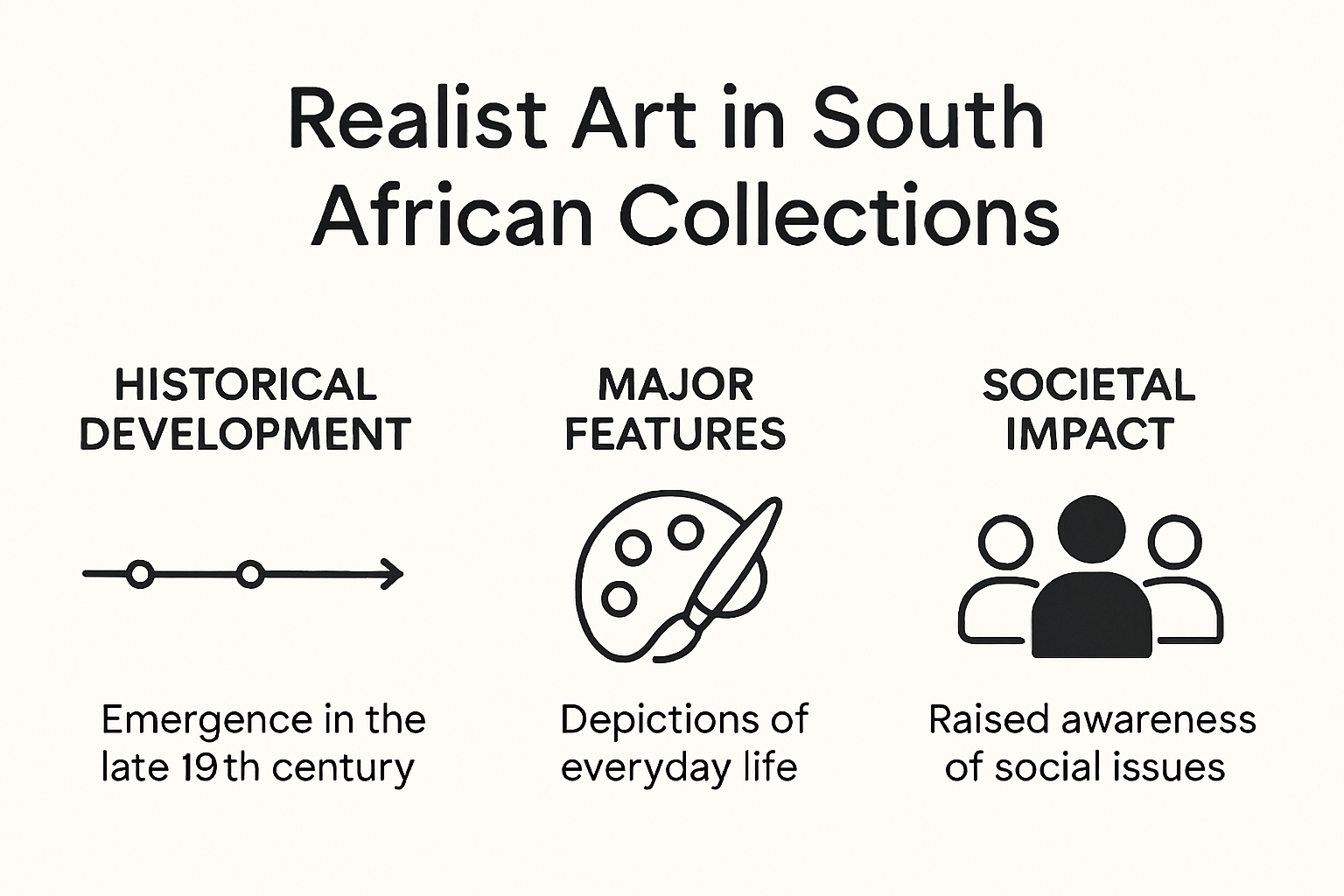
Realism in South African art collections represents more than an aesthetic choice it embodies a profound narrative of cultural expression, social documentation, and artistic resistance. The integration of realist artworks into national and private collections reveals a complex dialogue between artistic representation and societal transformation.
Historical Context and Artistic Representation
According to the Iziko South African National Gallery, the national collection reflects a nuanced journey of artistic representation. Realist artworks have played a critical role in documenting the multifaceted experiences of South African communities, providing visual testimony to historical moments and social dynamics.
The collection demonstrates how realist artists captured the raw authenticity of South African life, moving beyond mere visual documentation to create powerful social statements. These artworks serve as historical records, preserving moments of struggle, resilience, and transformation with unflinching honesty.
Collecting and Preserving Cultural Narratives
Research from the National Institute for Humanities and Social Sciences highlights the significance of realist art in understanding South Africa’s complex cultural landscape. Collectors and institutions have recognized these artworks not just as aesthetic objects but as critical historical documents that narrate untold stories.
Key considerations for South African art collectors include:
- Historical Significance: Artworks that document social experiences
- Artistic Technique: Precise representation and emotional depth
- Cultural Context: Works that reflect specific historical moments
- Preservation of Narrative: Artworks that tell profound social stories
For collectors seeking deeper insights into the rich landscape of South African artistic expression, our comprehensive guide to contemporary South African artists provides extensive background on the evolution of realist art in the region.
The table below outlines important factors South African collectors consider when acquiring realist artworks, and why these criteria matter:
| Collector Consideration | Importance |
|---|---|
| Historical Significance | Preserves documentation of social realities and events |
| Artistic Technique | Shows technical skill and emotional authenticity |
| Cultural Context | Reflects specific times, places, and communities |
| Narrative Preservation | Ensures essential stories and perspectives are not lost |
| Emotional Resonance | Engages viewers on a personal and societal level |
Realist art in South African collections serves as a bridge between past and present, offering viewers a window into the lived experiences of diverse communities. These artworks challenge viewers to confront complex social realities, presenting unfiltered representations of human experience that transcend mere visual representation.
The true value of these collections lies not just in their aesthetic qualities but in their ability to preserve collective memory. Each artwork becomes a testament to the resilience, complexity, and profound humanity of South African society, inviting viewers to engage with history through a deeply personal and authentic lens.
For contemporary collectors, acquiring realist artworks means participating in a broader cultural dialogue. These pieces are more than decorative objects they are powerful historical documents that capture the essence of South African experience with remarkable depth and nuance.
Choosing Realist Art for Home and Business Spaces
Selecting realist art for home and business spaces represents a sophisticated approach to interior design that goes beyond mere decoration. Realist artworks serve as powerful visual narratives, transforming environments by introducing authentic, emotionally resonant pieces that connect viewers with genuine human experiences.
Psychological Impact of Realist Art Selections
According to research published in ScienceDirect, the presence of realistic art can significantly influence the psychological atmosphere of a space. These artworks create environments that feel more welcoming, engaging, and culturally meaningful by presenting familiar scenes and genuine human narratives.
When choosing realist art, collectors should consider:
- Emotional resonance of the artwork
- Thematic alignment with space
- Color palette compatibility
- Narrative depth and cultural significance
- Technical mastery of representation
Contextual Considerations for Art Placement
The Metropolitan Museum of Art emphasizes that realist art goes beyond visual representation, serving as a window into social experiences and human conditions. This perspective is crucial when selecting artworks for different environments, whether residential or professional spaces.
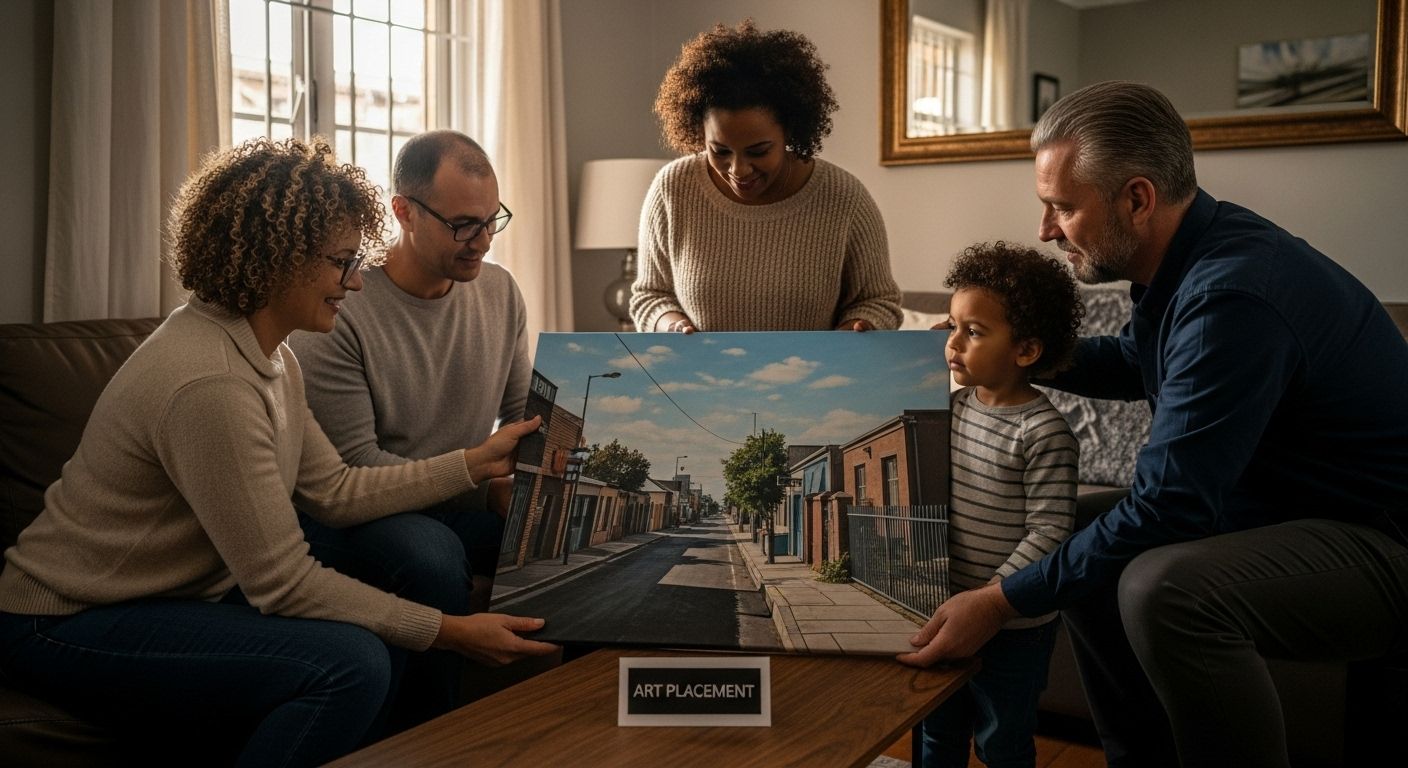
For home spaces, realist art can create intimate, reflective environments. In business settings, these artworks can communicate organizational values, cultural awareness, and aesthetic sophistication. The key is selecting pieces that speak authentically to the intended environment.
For art enthusiasts seeking deeper insights into curating meaningful collections, our guide to understanding contemporary South African artists offers comprehensive strategies for selecting impactful artworks.
Realist art possesses a unique ability to bridge aesthetic pleasure with intellectual and emotional engagement. Unlike more abstract art forms, these pieces invite viewers to recognize themselves and their experiences within the artwork, creating a profound connection between the viewer, the art, and the surrounding space.
Business environments can particularly benefit from realist artworks that reflect local narratives, cultural diversity, and social contexts. Such selections demonstrate organizational sensitivity and commitment to representing complex human experiences.
For home collectors, realist art offers an opportunity to curate spaces that tell personal stories. Each artwork becomes a conversation piece, inviting dialogue about human experiences, social dynamics, and personal memories.
Ultimately, choosing realist art is an intentional act of curation. It requires understanding not just aesthetic qualities, but the deeper narratives and emotional landscapes captured within each piece. The most successful selections will transform spaces from mere physical environments into rich, meaningful experiences that engage, inspire, and provoke thoughtful reflection.
Frequently Asked Questions
What defines realism in art?
Realism in art is an artistic movement that emphasizes authentic representation, focusing on depicting subjects as they truly are, without romantic embellishments or idealization.
How did realism impact South African art collections?
Realism has significantly influenced South African art collections by documenting complex cultural narratives and social experiences, offering a perspective on historical events and everyday life in South Africa.
What techniques are used in realist art?
Realist artists employ techniques such as detailed observation, precise color matching, and natural composition to capture the true essence of their subjects, often focusing on ordinary scenes and individuals.
Why should I consider including realist art in my collection or space?
Including realist art in your collection or space can enhance emotional connection and bring depth to the environment. Realist artworks create a welcoming atmosphere by reflecting genuine human experiences and narratives.
Elevate Your Collection With Authentic South African Realism
Are you searching for original artworks that capture everyday life with honest detail and emotional depth? The article about realism in art highlights the struggle to find pieces that move beyond surface beauty and truly reflect the cultural stories and social realities of South Africa. Many collectors want to preserve historical narratives and make a sophisticated statement in their spaces, but finding artists with genuine technical mastery and emotional authenticity is often a challenge.

Now is the perfect time to discover the powerful impact that realist art can have in your home or business. At Art Online, you will find a curated selection of works from South Africa’s celebrated artists who excel in realism. Browse our collections to connect with pieces that document local history, evoke real emotion, and bring honesty into your environment. Ready to start your journey or expand your existing collection? Begin exploring on our main website and experience the depth that only true realist art can offer.
Recommended
- Famous South African Artists: 2025 Guide for Collectors & Decorators – Art-Online
- What Is Still Life? Guide for South African Collectors 2025 – Art-Online
- Top Art Festivals in South Africa 2025 for Collectors & Decorators – Art-Online
- Blog – Art-Online
Art Appreciation Basics: A Guide for Collectors and Decorators 2025
– Exclusive Canvas Art